2026-04-21 Author : ZCS
Passwords get leaked, keycards get shared, and even fingerprint and face recognition can be degraded by dirt, lighting, or aging. Palm biometrics for identity verification is one of the few authentication approaches built around a trait that can't be surface-copied at all, because the vein pattern it reads isn't on the surface to begin with. This guide explains what palm vein recognition actually is, how a palm biometrics authentication platform processes a scan, how it's applied for workforce and customer authentication specifically, and what limitations to weigh before deploying it.
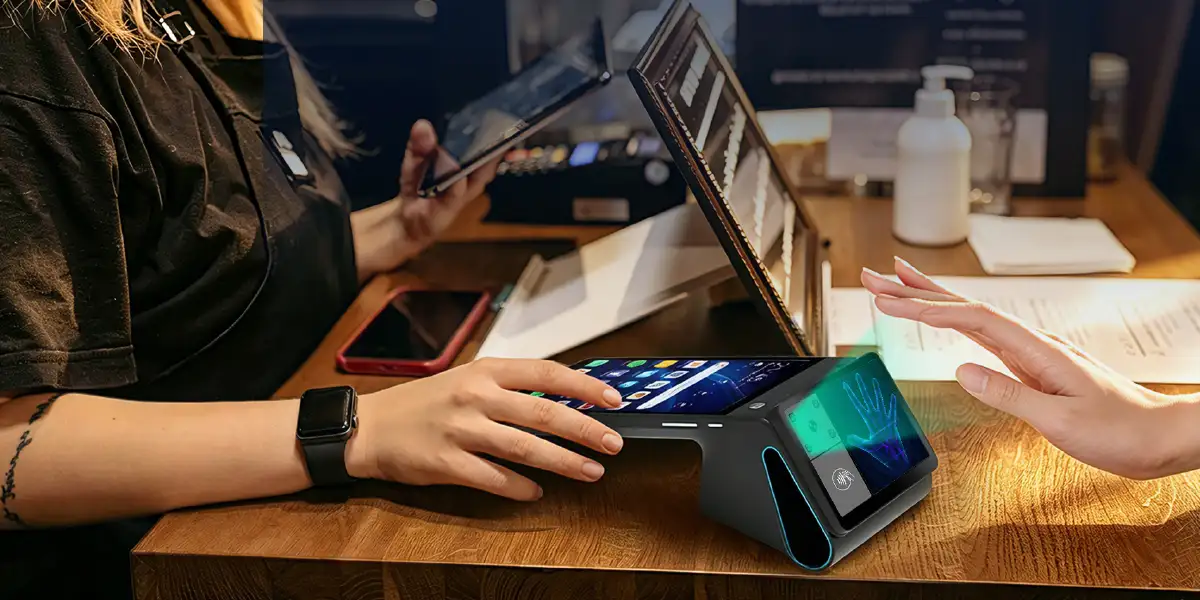
Palm vein recognition — also called palm biometrics or vascular biometrics — is a contactless identification method that captures the pattern of veins beneath a person's palm rather than a surface trait like a fingerprint ridge or facial geometry. These vein patterns are internal, form before birth, and remain structurally stable through adulthood, which is part of why they're treated as one of the more reliable biometric identifiers available today. A scanner emits near-infrared light toward the palm; deoxygenated blood in the veins absorbs that light while surrounding tissue reflects it, producing a high-contrast image of the vein structure that a sensor captures and converts into an encrypted digital template. That template — not a raw image — is what gets stored and matched against future scans.
A palm biometrics authentication platform follows a consistent sequence regardless of the specific hardware involved. The palm is presented above or against a sensor; near-infrared light captures the vein structure; the system converts that image into a mathematical template rather than retaining the raw scan; and the live template is compared against the enrolled record to confirm or reject a match. Because the process requires living tissue with active blood flow, a photograph, mold, or printed replica of a hand produces no usable scan — a form of liveness detection that's built into the physics of the method itself rather than added as a separate software check.
Market analysts have tracked steady growth in this category: one widely cited estimate places the global palm vein biometric market at roughly $1.04 billion in 2024, growing toward $1.23 billion in 2025, driven largely by demand for contactless, high-security authentication in banking and enterprise access control.
Fingerprint and facial recognition remain the most widely deployed biometric methods, but both read a trait that's visible or touchable from the outside — which is exactly the property palm vein recognition avoids. The table below summarizes the practical differences that matter most when evaluating identity verification hardware.
| Dimensions | Fingerprint | Face Recognition | Palm Vein |
|---|---|---|---|
| Trait location | Surface (ridge pattern) | Surface (facial geometry) | Internal (subcutaneous veins) |
| Contact required | Usually yes | No | No |
| Sensitive to | Dirt, moisture, wear | Lighting, angle, coverings | Extreme cold, severe dehydration |
| Surface spoofing risk | Moderate — prints can be lifted | Moderate — photos/video can be attempted | Low — internal trait isn't visible externally |
None of these methods is universally "best" — the right choice depends on environment and use case, a tradeoff covered in more depth in our comparison of palm vein, fingerprint, and face recognition for access control. What palm vein specifically brings to that comparison is a trait that's structurally harder to capture without the person's direct, intentional participation, since there's no external surface image to lift or photograph in the first place.
For clock-in and clock-out verification, palm biometrics for workforce authentication closes the same gap that biometric attendance systems in general are built to close: a vein pattern can't be handed to a coworker the way a badge or PIN can. This matters most in environments with high turnover or shift-based staffing, where the cost of unverified time records tends to be highest. If the underlying concept of biometric attendance tracking is still unfamiliar, our plain-language breakdown of what attendance biometric actually means is a useful starting point before comparing specific hardware.
Palm biometrics for customer authentication enables card-free, PIN-free checkout, where a palm scan is linked to a stored payment method rather than requiring a physical card or phone. This model has already scaled in parts of Asia's banking sector and is expanding into retail loyalty and payment programs elsewhere as contactless authentication becomes a broader consumer expectation. The same verification logic also extends to enterprise access control — replacing cards and codes at restricted entry points with a credential that can't be shared or duplicated. The specific security requirements for that use case go beyond the sensor itself; our guide on what actually makes an access control system secure breaks down that fuller framework.
In healthcare, palm biometrics for identity verification reduces patient misidentification by linking a vein scan directly to a medical record rather than relying on name and date-of-birth matching, which is prone to error at high patient volumes. In banking, it functions similarly to a digital signature for high-value transactions and branch verification, a model several major Japanese banks have used at scale for years.
Hardware selection depends heavily on where the scanner will be deployed and what it needs to integrate with. A fixed, wall-mounted terminal suits a server room or office entry point where the reader stays in one place; a handheld or mobile unit suits field verification, retail checkout, or scenarios where staff need to move rather than stay at a fixed station. As an example of the mobile category, ZCS's Z92 Palm Vein Scanner POS combines palm vein recognition with barcode/QR scanning and payment processing in a single handheld device, illustrating what a field-ready, multi-modal verification terminal looks like in practice rather than remaining a lab-only concept.
For workforce-specific deployments in particular, the hardware decision usually comes bundled with a broader software choice — payroll integration, multi-site management, and how the terminal fits alongside other clock-in methods already in place. Our comparison of modern time and attendance solutions walks through that broader decision for organizations evaluating palm vein against other attendance technologies rather than in isolation.
Palm vein technology isn't without tradeoffs. Hardware costs run higher than basic fingerprint readers, given the more specialized imaging components involved. Performance can dip slightly under extreme cold or severe dehydration, both of which affect blood flow and vein visibility, though modern systems generally compensate for minor variation. And as with any biometric system, matching speed at very large scale depends on database size and backend algorithm efficiency, which is a factor to evaluate for organizations planning enterprise-wide rollouts rather than single-site deployments. None of these are unique to palm vein — every biometric modality carries some combination of cost, environmental sensitivity, and scaling considerations — but they're worth weighing against the security gains before committing to a deployment.

Q1. Is palm vein recognition more secure than fingerprint scanning?
In most respects, yes — because the vein pattern is internal rather than surface-level, it's structurally harder to lift, photograph, or replicate than a fingerprint. Both methods still benefit from additional liveness-detection safeguards for the strongest protection against spoofing.
Q2. Can palm vein patterns change over time?
Vein patterns are stable through adulthood and aren't affected by common surface changes like cuts, calluses, or minor skin conditions that can degrade fingerprint accuracy over time.
Q3. Is palm biometric data stored as an image of my hand?
No. Properly designed systems convert the captured vein pattern into an encrypted mathematical template rather than storing a raw image, and identity matching happens by comparing templates rather than comparing pictures directly.
Q4. Does palm vein recognition require special training for users?
No — the process is a brief, intentional action (holding or placing the palm near a sensor) similar in simplicity to a fingerprint scan or a tap-to-pay gesture, and most users adapt within a single attempt.
Q5. What industries use palm biometrics most today?
Banking and healthcare currently represent the largest adoption, driven by high-value transaction security and patient-identification accuracy respectively, with workforce authentication and customer authentication following as the technology becomes more affordable for broader deployment.
Related Posts
1. What Is a Parking POS System, and How Does It Work in 2026?






 Home
Home  2026 Best Point Of Sale Machine Price Guide and Recommendations?
