
2026-07-08 Author : ZCS
Attendance biometric is a term used to describe time-tracking systems that verify a worker's identity through a physical trait — a fingerprint, face, or vein pattern — instead of a card, PIN, or signature. The term shows up across HR and workforce-management contexts interchangeably with "biometric attendance system" or "attendance system with biometric" verification. This article gives a clear, technical definition: what the term actually means, how the underlying clock-in process works, and which biometric traits are commonly used in this category of system.
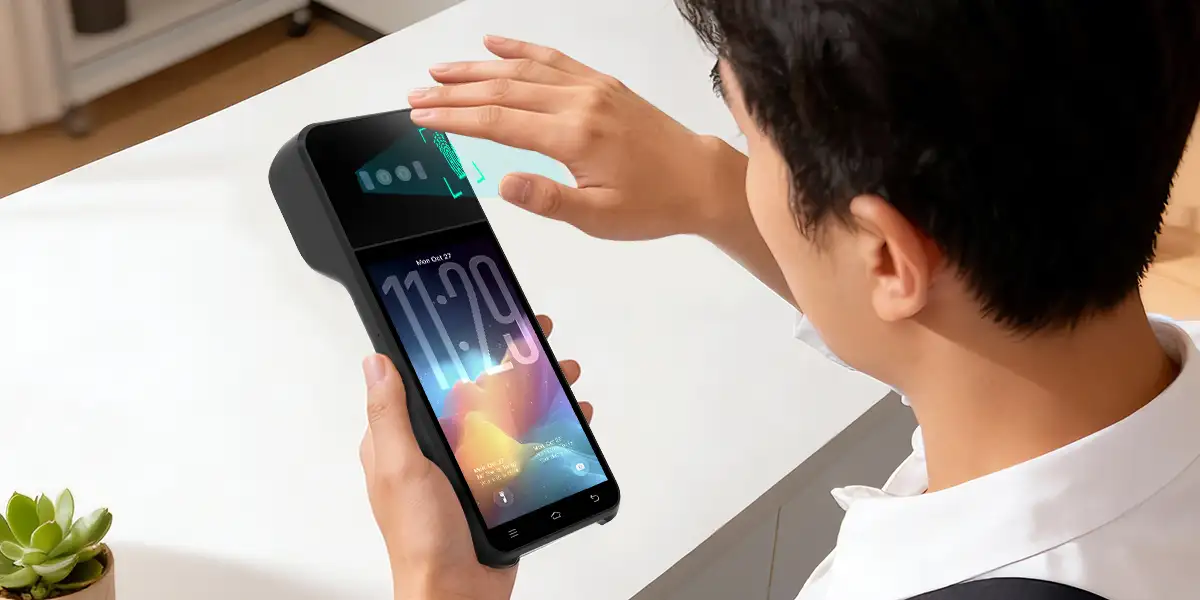
Attendance biometric refers to any time and attendance setup where the clock-in credential is a measurable physical or behavioral trait unique to the individual, rather than something that can be handed to someone else. This falls under the broader definition of biometric technology used to establish or verify personal identity based on a physiological or behavioral characteristic — in an attendance context, that characteristic is captured at the moment of clock-in and matched against a previously enrolled record.
A biometric attendance system follows the same basic sequence regardless of which trait it reads: the employee presents the biometric input (finger, face, or hand), the device converts it into an encrypted digital template, and that template is matched against the employee's enrolled record. Once verification succeeds, the system logs a timestamped clock-in or clock-out event.
The verified timestamp typically flows directly into payroll and HR reporting rather than staying isolated on the device — this is what separates a biometric attendance system from a standalone biometric gadget. Accurate, auditable time records aren't just a convenience either: under the Fair Labor Standards Act, employers are required to maintain accurate time records, and failing to do so — whether intentional or not — can lead to fines, back pay, and legal exposure, which is part of why automated, verifiable clock-in data has become a standard expectation rather than a nice-to-have.
Three physical traits account for most attendance biometric deployments:
Each of these traits behaves differently depending on the work environment, and none of them is universally "correct" — the right choice depends on hygiene requirements, lighting conditions, and daily transaction volume. Businesses weighing time and attendance solutions against card-based and app-based alternatives will find that this tradeoff — accuracy and fraud-resistance versus setup cost and environmental sensitivity — is the deciding factor more often than brand or price.
The core distinction between a biometric and a traditional time and attendance method comes down to whether the credential can be transferred. A card, PIN, or paper sign-in sheet can be used by anyone who has access to it; a biometric trait cannot. This is the mechanical reason biometric systems are effective against buddy punching specifically — time theft, including buddy punching, is estimated to cost employers between 1.5% and 5% of gross payroll, and that cost is concentrated in precisely the kind of credential-sharing that biometric verification structurally prevents.
It's worth noting that "attendance biometric" and "biometric access control" are related but distinct categories — attendance systems are built around logging hours for payroll, while access control systems are built around granting or denying physical entry. The two can share the same underlying hardware, but the security priorities differ, and what actually makes an access control system secure involves a separate set of authentication, audit-logging, and anti-spoofing considerations beyond what an attendance deployment typically needs.

Q1. Is "attendance biometric" the same as "biometric attendance system"?
Yes — these terms are used interchangeably. Both describe a time-tracking setup that verifies identity through a fingerprint, face, or vein scan rather than a card or PIN.
Q2. Does attendance biometric always mean fingerprint scanning?
No. Fingerprint is the most common trait, but "attendance biometric" is a category that also includes face recognition and palm vein recognition, among other methods.
Q3. Is an attendance biometric system the same as facial recognition?
No — facial recognition is one specific type of attendance biometric technology. The category also includes fingerprint and palm vein recognition, each with different accuracy and hygiene tradeoffs.
Q4. Can an attendance biometric system be hacked or spoofed?
It depends on the trait and hardware. Surface-level traits like fingerprints can, in some cases, be lifted or replicated without proper anti-spoofing measures, while internal traits like palm vein patterns are inherently harder to reproduce because they aren't visible on the surface of the skin.
Q5. Do small businesses use attendance biometric systems, or is this only for large enterprises?
Both. Biometric attendance hardware has become affordable enough that small businesses use it as commonly as large enterprises, particularly in industries with high turnover or a documented history of time theft.






 Home
Home  Time and Attendance Solutions in 2026: Comparing Modern Methods (And Why Palm Vein Is Gaining Ground)
