
2026-08-11 Author : ZCS
Palm vein recognition can replace a phone number, a loyalty card, or an app login as the way a business identifies a returning member. A customer scans their palm, and the system pulls up their account instantly. This guide explains how that actually works, why some businesses consider it over standard loyalty lookup methods, and what a major real-world case — Amazon One's rise and 2026 retail shutdown — actually teaches about where this technology succeeds and where it doesn't.
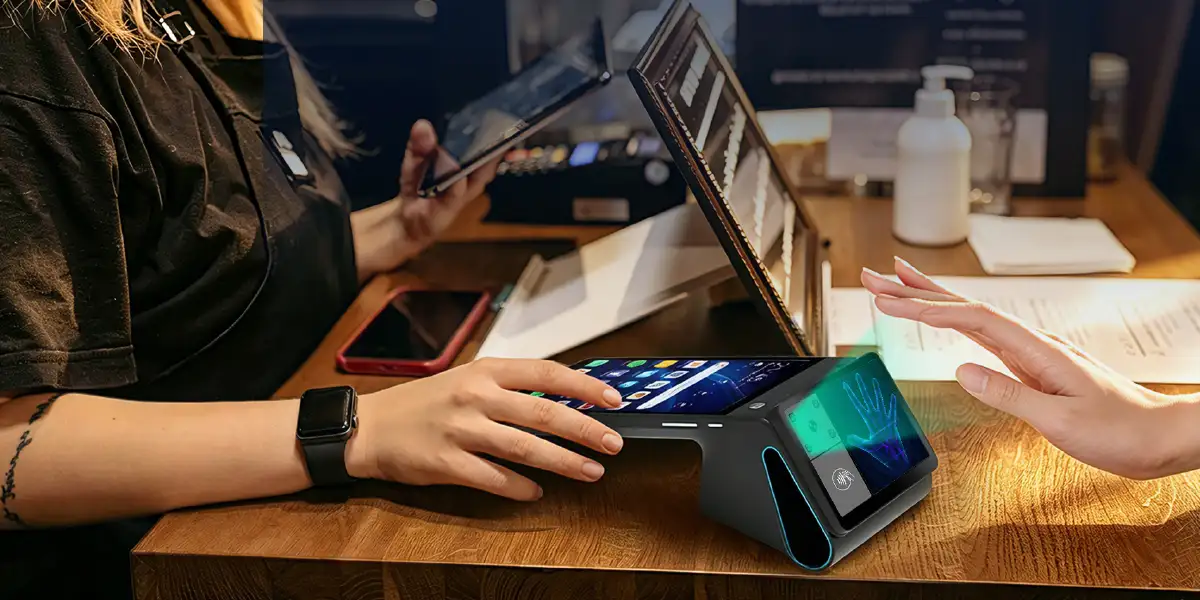
Enrollment happens once. A member's palm vein pattern is scanned and converted into an encrypted template, then linked to their loyalty or membership account in the business's system. The underlying scanning technology itself — near-infrared imaging of the vein pattern beneath the skin — is covered in full technical detail in our guide to how palm vein scanning works.
Recognition happens on every return visit. The member presents their palm at a terminal, the system matches it against the enrolled template, and the account opens automatically. No phone number lookup, no physical card, no app required at the point of recognition.
This entire loop only requires two things to function: a terminal capable of capturing and matching a palm vein template, and a backend system that ties that template to a loyalty account. For a fuller explanation of what makes this identity-verification approach different from fingerprint or facial recognition, our broader guide to palm biometrics for identity verification covers that foundation.
A palm can't be forgotten at home. A phone number can be mistyped, and a loyalty card can be left in another bag — a palm is always available to the person it belongs to.
A palm can't be shared the way a card or phone number can. Some loyalty programs lose accuracy when one card gets used by multiple people in a household; a biometric credential closes that gap by design.
A palm scan doesn't require the customer to have an app installed. Phone-based loyalty lookup depends on the customer downloading and opening an app before they can be identified. Palm recognition works the moment someone is enrolled, regardless of what's on their phone.
Panera Bread launched Amazon One as its loyalty identification method in March 2023. Members linked their MyPanera account — which had more than 52 million members at the time — to an Amazon One palm ID. A palm scan let staff greet returning customers by name, surface their rewards balance, and suggest their usual order.
Amazon announced it was discontinuing Amazon One for retail use in January 2026. According to GeekWire's reporting on the announcement, Amazon cited "limited customer adoption" as the reason, with all retail palm readers — including those at Panera locations — scheduled for removal by 3 June 2026.
The stated reason was adoption, not technology failure. Amazon's own language, reported by Biometric Update, framed the shutdown as a response to how many customers actually enrolled — not a claim that palm recognition itself stopped working or proved unreliable.
Amazon One is continuing in healthcare and enterprise settings. The same reporting confirms Amazon One will keep operating for patient check-in at existing healthcare locations and for enterprise facility access, even as it's removed from retail. This detail matters: the underlying technology wasn't judged a failure across every use case, only in the specific model of asking retail shoppers to opt in to a new payment-linked credential.
Other palm-based systems are still scaling elsewhere. Coverage of the shutdown from industry sources points to providers like Tencent PalmAI, which uses the same dual-modal palm print and palm vein approach, continuing to expand at production scale in other markets. Amazon's retreat from one specific consumer retail model isn't evidence that palm-based identification is a dead end generally.
For the fuller story of how Amazon One developed and what its shutdown means for the broader payments landscape, see our guide to Amazon One and what comes next for biometric payments.
Amazon One's retail model asked casual, one-time shoppers to opt into a new biometric credential just to get loyalty perks. That's a high-friction ask for a low-commitment relationship, which is likely why adoption stayed limited.
Closed membership environments face a different adoption dynamic. A gym, a private club, or an employer-run facility already requires enrollment before access is granted at all. Adding palm recognition to an enrollment step that was mandatory anyway is a much smaller ask than convincing a casual retail customer to sign up voluntarily.
Access-control-adjacent settings are a natural fit for the same reason. Our guide to what actually makes an access control system secure covers how palm vein performs in exactly this kind of mandatory-enrollment environment — the same technology, applied where the adoption barrier Amazon One ran into simply doesn't exist in the same way.

The adoption question matters more than the technology question. Before choosing palm vein for a loyalty or membership system, the more useful question isn't "does the technology work" — it clearly does — but "does our membership relationship already involve mandatory enrollment, or are we asking a casual customer to opt in voluntarily."
Programs with existing sign-up friction are the safer starting point. A subscription club, a paid membership tier, or an employee benefits program already has members going through an enrollment process. Layering palm recognition onto that existing step carries less adoption risk than introducing it as a brand-new, optional layer on top of a walk-in retail relationship.
A palm vein membership system needs a terminal capable of both recognition and point-of-sale functions in many deployments. Businesses evaluating whether their existing point-of-sale setup can support loyalty and rewards tracking at all — independent of biometric recognition — should start with our guide to whether a POS system can handle loyalty programs and customer rewards, since that question needs answering before biometric identification enters the picture.

Q1. Is palm vein recognition for loyalty programs the same technology Amazon One used?
The underlying technology — near-infrared imaging of the vein pattern beneath the skin — is the same general category. Amazon One specifically was one commercial implementation of it, now discontinued for retail use as of June 2026, though other providers continue offering similar palm-based recognition.
Q2. Did Amazon One shut down because palm vein technology doesn't work reliably?
No. Amazon's stated reason was limited customer adoption, not a technical or reliability failure. The service continues in healthcare and enterprise settings, which suggests the technology itself remained functional.
Q3. Is palm vein recognition better suited to membership clubs than general retail loyalty programs?
Based on how the Amazon One case played out, closed membership environments with existing mandatory enrollment appear to face a much lower adoption barrier than optional retail loyalty programs asking casual shoppers to opt in.
Q4. Can a palm vein membership system work without a mobile app?
Yes. Once a member is enrolled, recognition happens through the palm scan itself, without requiring an app to be installed or opened at the point of recognition.
Q5. What happens to a customer's palm vein data if a program using it shuts down?
In Amazon's case, the company stated that all customer data associated with Amazon One would be securely deleted once the service ends. Businesses evaluating any biometric loyalty provider should confirm the same commitment in writing before enrolling members.






 Home
Home  What Does ZCS Offer as a POS Vendor and Manufacturer?
