
2026-07-13 Author : ZCS
Most breaches of a physical entry point don't happen because a lock failed — they happen because the credential behind the lock was cloned, shared, spoofed, or handed to someone who tailgated their way through an open door. That gap is exactly what access control security is supposed to close, and it's why palm vein recognition has increasingly become the reference point people use when discussing what a genuinely secure system looks like. This guide breaks down why palm vein sets that bar, what access control security actually requires beyond the hardware at the door, the threats that undermine weaker systems, and the deployment tradeoffs worth understanding before choosing a setup in 2026.
Palm vein recognition reads the vein pattern beneath the skin using near-infrared imaging rather than a surface trait, which is the structural reason it gets cited as a benchmark. A vein pattern isn't visible on the surface of the hand, can't be photographed from a distance, and can't be lifted from a surface the way a fingerprint can — which removes an entire category of attack that fingerprint and even some face-recognition systems remain exposed to. Paired with liveness detection to confirm a real, living hand is present rather than a replica, the combination addresses both of the two failure modes that undermine most biometric access systems: credential replication and spoofing.
As a concrete example of this in deployed hardware, ZCS's Z108P is an 8-inch OEM palm vein terminal built for high-security identity verification, performing server-side matching at 1:1,000,000 scale in under one second while running liveness detection to screen out spoofing attempts. That combination — sub-second throughput at large-scale matching, with anti-spoofing built into the verification step rather than bolted on afterward — is what people are usually pointing to when they cite palm vein as the technology that access control security gets measured against.
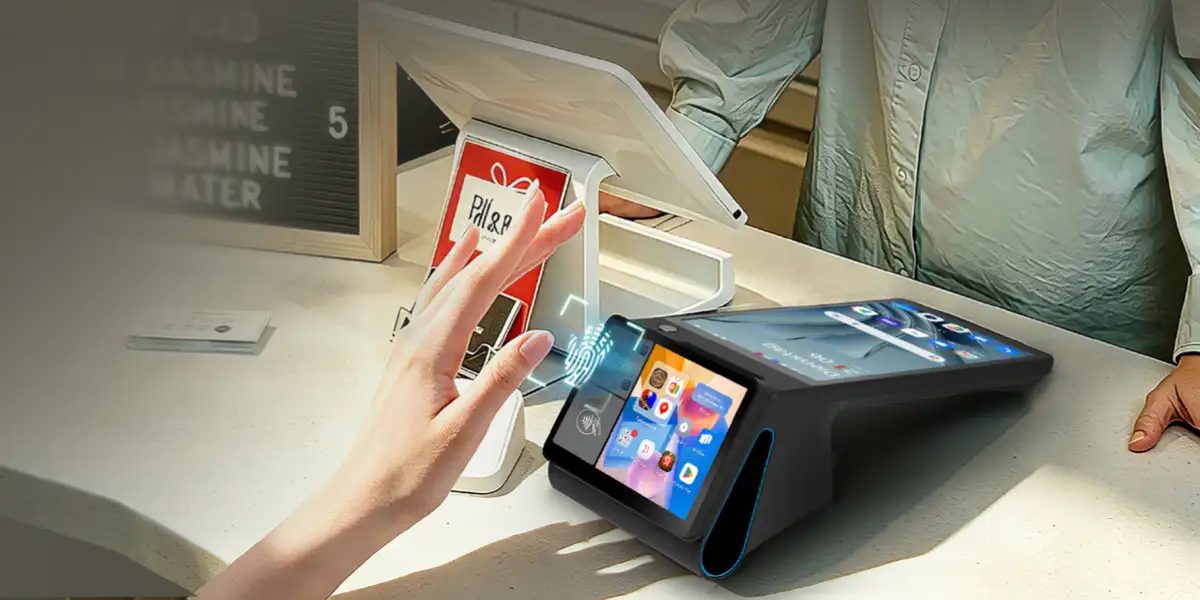
A secure access control system isn't defined by which biometric sensor sits at the door — it's defined by three layers working together: how strongly it authenticates identity, how thoroughly it logs activity, and how resistant the hardware itself is to tampering.
Single-factor systems — a card, a PIN, or even a single biometric scan on its own — still account for the large majority of deployed access control, with key cards and numeric pads alone underpinning roughly 64% of current installations. That's increasingly out of step with where regulation is heading: the EU's NIS2 directive now requires multi-factor authentication and tamper-resistant audit trails at every physical entry point for organizations in scope, which is pushing procurement toward layered authentication rather than a single credential type, even outside the EU as multinational buyers standardize their specifications globally. This is the same pressure driving palm vein adoption in banking, government, and enterprise settings, where mandatory identity verification at a checkpoint makes the case for stronger authentication far more directly than a discretionary retail credential ever could.
A system that authenticates well but logs poorly still leaves a blind spot — if you can't answer "who entered this door, and when" after the fact, you can't investigate an incident or prove compliance. Real-time monitoring adds the ability to flag anomalies as they happen (an after-hours entry, a door propped open) rather than discovering them in a log review days later.
The reader and controller at the door are physical targets in their own right — a system is only as secure as its weakest exposed component, and a reader that can be pried open, rewired, or bypassed at the door itself undermines even strong authentication and logging happening one layer upstream.
Card-based credentials remain vulnerable to duplication with commercially available readers, and this isn't a theoretical risk anymore. This is one of the clearest arguments for biometric credentials over physical ones: a vein pattern or fingerprint can't be duplicated with a handheld reader the way a proximity card can.
Biometric systems aren't automatically immune to fraud — a photo can sometimes defeat a basic face-recognition system, and low-quality fingerprint sensors have been fooled by molds or prosthetics in documented cases. This is exactly why liveness detection matters as much as the recognition method itself; it's the layer that confirms a real, present, living person rather than just a captured pattern, which is the same anti-spoofing logic behind the Z108P example above.
NIST's physical access control guidance treats tailgating and piggybacking as a distinct risk category, one that no credential technology alone can fully solve — the standard response involves interlocking door systems (mantraps) or staffed checkpoints that physically limit entry to one verified person at a time, since even the strongest authentication doesn't stop an unauthorized person from walking in directly behind someone who just badged through.
Not every access control failure comes from outside the organization. An employee sharing a PIN, lending a badge, or failing to report a lost credential promptly creates exposure that's functionally identical to an external breach, which is part of why biometric credentials — which can't be lent even if someone wanted to — close a gap that policy alone struggles to enforce.
On-premise systems keep biometric templates and access logs stored locally, which appeals to organizations with strict data-residency requirements or unreliable connectivity — nothing about door access depends on an internet connection staying up. Cloud-managed systems trade that local control for centralized oversight across multiple sites, faster software updates, and easier credential provisioning and revocation, but they introduce dependency on connectivity and a third party's security posture for data that's arguably as sensitive as the door itself. This tradeoff is becoming more visible at the regulatory level too, as frameworks like NIS2 push cloud-hosted access platforms toward continuous threat-monitoring and documented security pipelines specifically because centralizing this data raises the stakes of a platform-level breach. Neither model is universally more secure — the right choice depends on how many sites you're managing and how much control you need over where the data physically lives.
If you're still deciding which underlying biometric technology fits your environment, our comparison of palm vein, fingerprint, and face recognition for access control walks through that decision in more depth.

Q1. Is palm vein recognition actually more secure than fingerprint for access control?
In most respects, yes — because the vein pattern is internal rather than surface-level, it's inherently harder to lift, photograph, or replicate than a fingerprint. Both technologies still depend on liveness detection to fully resist spoofing.
Q2. Can a multi-factor access control system still be defeated by tailgating?
Yes. Multi-factor authentication strengthens the credential check itself, but it doesn't physically stop an unauthorized person from following an authenticated person through a door. That requires separate controls like mantraps, staffed checkpoints, or door sensors that flag multiple entries per credential.
Q3. Is cloud-managed access control less secure than on-premise?
Not inherently — it depends on the vendor's security posture and your own risk tolerance for connectivity dependency and third-party data storage. Cloud systems can offer stronger centralized monitoring; on-premise systems offer more direct control over where data lives.
Q4. How does audit logging actually improve access control security?
It doesn't prevent an unauthorized entry on its own, but it makes incidents investigable after the fact and creates the evidence trail needed for compliance reporting — a system without reliable logs can't answer basic questions like who accessed a space and when.
Q5. Do small businesses need the same level of access control security as large enterprises?
The core principles — multi-factor authentication, tamper-resistant hardware, and audit logging — scale down reasonably well, but the specific threats to prioritize differ; a small office is more likely to face tailgating and credential sharing than the large-scale credential-cloning campaigns that target enterprise or government facilities.
Related Posts
1. How Palm Vein Scanning Works: The Technology Behind Contactless Biometric Identity






 Home
Home  What Is a Pocket POS, and How Is It Different From Mobile POS?
