
2026-06-17 Author : ZCS
A palm vein scan is a biometric identification method that maps the unique network of blood vessels beneath the skin of your palm, rather than reading surface-level details like fingerprints or facial features. By shining harmless near-infrared light into the hand and capturing how that light interacts with blood flow, a palm vein scanner can verify a person's identity in under a second — without any physical contact. This article breaks down exactly how the technology works, how it compares to other biometric methods, and where it is being deployed in 2026.
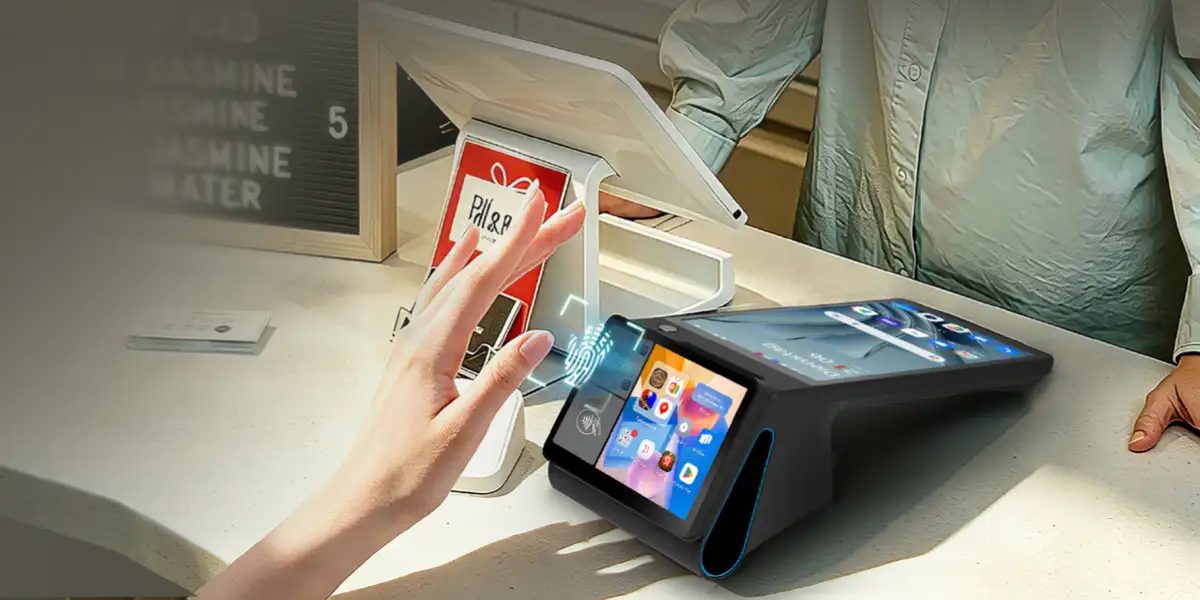
Before going further, it helps to separate two terms that are often confused: palm scanning and palm vein scanning.
"Palm scanning" is a broad category that can refer to several different technologies — including palm print recognition, which photographs the visible lines, ridges, and creases on the surface of your palm (similar to how a fingerprint scanner works, just on a larger surface).
A palm vein scan, by contrast, looks underneath the skin. It captures the palm vein pattern — the specific layout of veins and capillaries running through the palm — which is invisible to the naked eye and effectively impossible to observe by simply looking at someone's hand. Because this vascular network forms before birth and remains structurally stable throughout a person's life, it serves as an extremely reliable and durable biometric identifier.
This internal-vs-external distinction is the single most important thing to understand about the technology, and it's the reason palm vein recognition is treated as a higher-security tier than most surface-based biometrics.
The core principle behind a palm vein scan comes down to basic physiology. Blood that has already delivered its oxygen to the body's tissues — known as deoxygenated hemoglobin — has a distinct optical property: it absorbs near-infrared light far more readily than the surrounding tissue does.
When a palm vein scanner emits near-infrared light (typically in the 760–850 nanometer range) toward the hand, most of that light passes through the skin, fat, and muscle. But wherever it hits a vein carrying deoxygenated blood, the light gets absorbed instead of reflected. The scanner's sensor picks up this contrast and effectively "sees" a map of dark lines against a lighter background — the vein pattern itself.
This is also why the technology only works on living tissue. Without active blood flow, there is no absorption contrast to detect, which provides a natural and effective defense against attempts to use a severed body part or a static printed image to fool the system.
Capturing the image is only step one. The raw near-infrared image is then processed by an algorithm that identifies key features of the vein network — points where veins branch, intersect, curve, or end. These reference points are converted into a mathematical representation called a biometric template.
Critically, in most modern systems this template is an encrypted string of data, not a photograph. The original vein image is typically discarded after the template is generated, and the template itself is usually stored in a way that cannot be reverse-engineered back into an image of the user's hand. This is an important point for anyone evaluating the privacy implications of a palm vein scanner.
The first time you use a palm vein system, you go through an enrollment step. You hold your hand a few centimeters above (or in front of) the scanner — no touching required. The device captures several near-infrared images from slightly different angles or positions to account for natural variations in how a hand is held. An algorithm then extracts the vein pattern data from these images and generates a reference template, which is encrypted and stored in the system's database, linked to your user profile.
Every time afterward, the process is much faster. You present your palm again, the scanner captures a new near-infrared image, and the same feature-extraction algorithm converts it into a fresh template. This new template is compared against the stored reference template using a matching algorithm that calculates a similarity score.
If the score clears a pre-set threshold, the system confirms a match and grants access, completes a payment, or pulls up a record — typically in well under one second. If it doesn't clear the threshold, access is denied. The entire exchange happens without the user touching any surface, which is one of the main reasons palm vein scanning gained traction during and after the COVID-19 pandemic as a hygienic alternative to PIN pads and fingerprint readers.
Two metrics are used across the biometrics industry to measure how reliable an authentication method is:
In one of the most cited academic evaluations of the technology, a large-scale study of 140,000 palms recorded a false acceptance rate of roughly 0.00008% and a false rejection rate of about 0.01% for palm vein authentication, according to a peer-reviewed review published by the International Journal of Engineering Research & Technology. For context, that FAR translates to fewer than one false match in a million attempts.
By comparison, standard optical fingerprint sensors commonly operate with FAR figures in the 0.01%–0.1% range, and 2D facial recognition can see FAR climb to 1%–2% under uncontrolled lighting or angle conditions. Palm vein scanning's advantage comes largely from the sheer amount of unique data available — a single palm contains a far denser and more complex vein network than the ridge pattern on a single finger.
Surface-based biometrics share a common weakness: the data is, to some degree, exposed. Fingerprints can be lifted from surfaces. Faces can be photographed from a distance. Even iris patterns can potentially be captured with a high-resolution camera under the right conditions.
A palm vein pattern, by contrast, is not visible under normal light and cannot be "lifted" the way a fingerprint can. Combined with the liveness requirement created by the need for active blood flow, this makes presentation attacks (using a fake or stolen biometric to trick the scanner) significantly harder to execute against a palm vein scanner than against most other commonly deployed biometric methods.
The most visible consumer-facing use case is palm-based payment, popularized by services like Amazon One in the United States. The user enrolls their palm vein pattern once, links it to a payment method, and afterward can pay by simply hovering their hand over a reader at checkout — no card, phone, or PIN required.
This use case is also expanding into hardware that retailers already use every day. A number of Android POS terminal manufacturers — including ZCS, whose palm vein recognition systems are detailed in this overview — now build near-infrared palm vein modules directly into point-of-sale devices, positioning the technology as one option among several (alongside card and QR payments) rather than a wholesale replacement for existing checkout flows. Beyond one-off payments, retailers are also pairing the same palm vein enrollment with membership and loyalty programs, letting a single palm scan authenticate a customer, apply their tier discounts, and accrue points automatically without a physical card or app.
In healthcare settings, misidentifying a patient can have serious consequences, from medication errors to billing fraud. Palm vein scanning is increasingly used to confirm patient identity at registration, linking a scan directly to an existing medical record without requiring a physical ID card.
This is one of the fastest-growing segments for the technology. The global market for palm vein biometrics in healthcare was valued at approximately $1.8 billion in 2025 and is projected to grow at a compound annual growth rate of around 12.5% through 2034, according to a market research report from Dataintelo, driven in part by tightening data-security regulations and the ongoing shift toward contactless identification in clinical environments.
Outside of consumer-facing use cases, palm vein scanners are widely deployed for physical access control — securing server rooms, restricted laboratories, and executive areas — as well as for employee time-and-attendance tracking, where the immutability of vein patterns helps prevent "buddy punching" (one employee clocking in for another).
Key advantages of palm vein scanning include its hygienic, fully contactless operation; its long-term stability, since the underlying vein structure does not change meaningfully due to aging, minor injuries, or surface conditions like dry skin or calluses that can interfere with fingerprint readers; and its strong resistance to spoofing, thanks to the internal nature of the biometric data and the liveness requirement.
Current limitations are worth noting for an objective view of the technology. Palm vein scanners are generally more expensive per unit than fingerprint or basic camera-based systems, which has historically limited adoption to higher-budget deployments. Performance can also be affected by extreme environmental conditions — for example, very cold hands can temporarily reduce blood flow and alter the vein pattern's visibility, sometimes requiring a re-scan. Finally, because the technology is still less familiar to the general public than fingerprint or face unlock, user education remains a real factor in rollout success.
Far from being a niche concept, palm vein recognition is moving into mainstream infrastructure during 2026. Testing organization Pearson has partnered with Redrock Biometrics to roll out palm-based authentication across its global certification network — a system that delivers nearly 21 million exams annually through roughly 20,000 test centers in over 180 countries, with deployment beginning at sites that already use palm-vein verification before expanding further. Separately, Tencent and Bupa Hong Kong have launched a palm-based patient check-in service across 20 clinics, one of the first healthcare rollouts of its kind in the region, according to reporting from Next Move Strategy Consulting.
These deployments point to a broader trend: palm vein recognition is shifting from a specialized, high-security tool into a feature increasingly bundled into everyday hardware — from healthcare kiosks to point-of-sale terminals — as the underlying sensors and SDKs become more standardized and cost-effective to integrate.
A palm vein scan works by using near-infrared light to detect how hemoglobin in your blood absorbs that light differently than surrounding tissue, revealing a vein pattern that is unique, internal, and remarkably stable over a lifetime. That combination of accuracy, hygiene, and resistance to spoofing is why the technology has moved well beyond its original niche in high-security facilities and into payments, healthcare, and everyday retail hardware. As deployments scale through 2026, palm vein scanning is on track to become a familiar — if largely invisible — part of how people prove who they are.
Q1: Is a palm vein scan safe to use?
Yes. Palm vein scanning uses low-power near-infrared light, similar in intensity to the light emitted by a remote control or certain medical pulse oximeters, and is considered non-invasive and safe for repeated daily use.
Q2: How accurate is palm vein scanning compared to fingerprints?
Palm vein scanning generally outperforms fingerprint recognition on false acceptance rates, with peer-reviewed research recording figures around 0.00008% for palm vein versus a typical range of 0.01%–0.1% for standard fingerprint sensors, largely due to the greater amount of unique data in a vein pattern.
Q3: Can a palm vein scanner be hacked or spoofed?
It's significantly harder than spoofing surface biometrics. Because the vein pattern is internal and invisible under normal light, and because the system requires active blood flow (a liveness signal), common spoofing methods like fake fingerprints or photos are largely ineffective against palm vein systems.
Q4: What's the difference between palm vein scanning and palm print scanning?
Palm print scanning captures the visible lines and ridges on the surface of your palm — similar to a fingerprint. Palm vein scanning captures the internal vein pattern beneath the skin using near-infrared light. They are related but distinct technologies, and some systems combine both for added accuracy.
Q5: Where is palm vein scanning used today?
Common applications include contactless payments at retail checkout, patient identification in hospitals and clinics, secure access control for restricted facilities, and employee time-and-attendance systems — with healthcare and point-of-sale integration among the fastest-growing use cases in 2026.
Related Posts
1. Paying With Your Palm: How Amazon One Changed Biometric Payments (And What Comes Next)
2. Why a Handheld Pharmacy POS Terminal is Essential for Home Delivery Services?
3. Full-Stack ZCS Android POS Terminals: The Open SDK & Custom ODM Guide
4. Palm Vein Security and Access Control: What Actually Makes a System Secure in 2026






 Home
Home  Palm Vein vs Fingerprint vs Face: Which Biometric Is Right for Your Access Control System?
