
2026-11-26 Author : ZCS
Merchant acquiring is one part of the wider merchant services package that may also include terminals, gateways, reporting and support. The acquiring function is the regulated and network-connected layer that gives the merchant a route into card acceptance.
Merchant acquiring is the service through which an acquirer signs or sponsors merchants, receives their card transactions, routes authorization and clearing messages, manages settlement obligations and funds merchants according to the merchant agreement. The acquirer is commonly called an acquiring bank, merchant acquirer or merchant bank, although the licensed entity and customer-facing service provider are not always the same company.
That distinction explains why a merchant may speak to a payment company every day without seeing the acquiring bank’s name on the checkout screen.
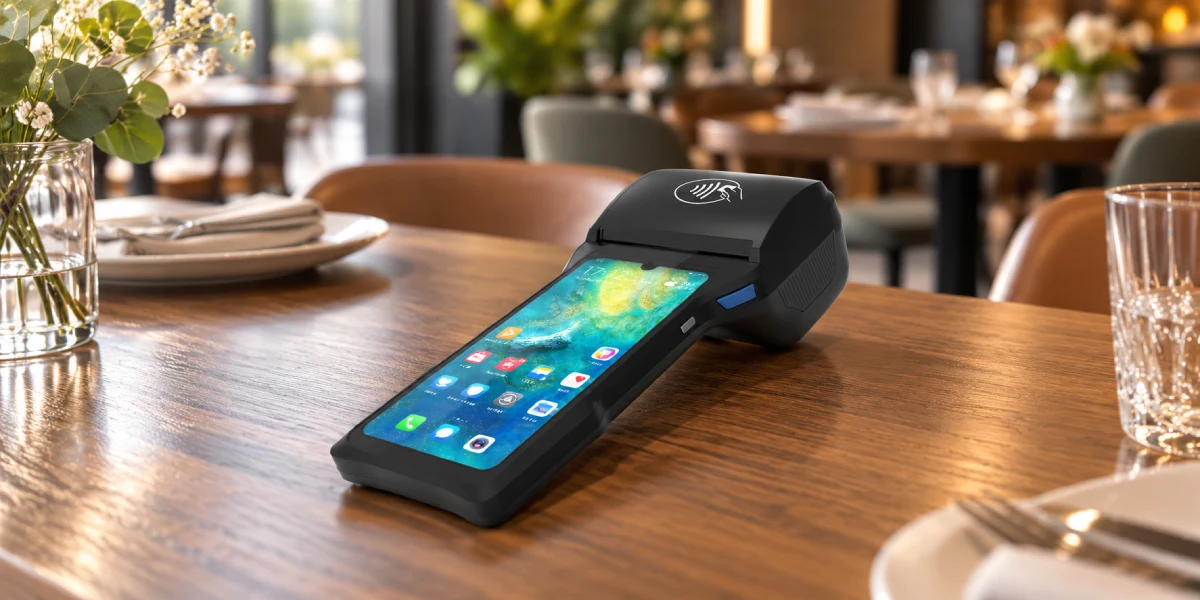
A merchant acquirer is the entity recognized by a payment network to acquire card transactions from merchants. The PCI SSC glossary defines an acquirer as an entity, typically a financial institution, that processes payment card transactions for merchants and operates under payment-brand rules concerning merchant compliance.
The acquirer sits on the merchant side of a card transaction. The issuing bank sits on the cardholder side. The card network connects the two sides and carries standardized transaction messages between them.
The merchant acquirer normally performs or controls these functions:
The acquirer may perform all of this work directly or contract processors and service providers to operate parts of the system. The acquirer still retains the responsibilities assigned to it by its licenses, network rules and merchant agreements.
The three core institutions perform different jobs.
| Participant | Represents | Primary role |
|---|---|---|
| Merchant acquirer | The merchant side | Connects merchants to card acceptance, submits transactions and settles merchant funds |
| Card issuer | The cardholder side | Issues the card or account and approves or declines transaction requests |
| Card network | The shared payment scheme | Defines network rules and routes messages between acquiring and issuing sides |
The issuer makes the authorization decision because it knows the customer’s account status, available balance or credit, authentication results and risk signals. The acquirer does not approve the customer’s credit line.
The acquirer decides whether to onboard the merchant and how to manage the merchant relationship. That work includes business verification, prohibited-activity checks, risk classification, expected transaction patterns and contractual settlement terms.
The network provides the common operating framework. It carries the acquirer’s authorization request toward the issuer and returns the issuer’s response to the merchant side.
Authorization is the rapid message exchange that produces an approval or decline at checkout. It checks whether the transaction can proceed, not whether final settlement has already occurred.
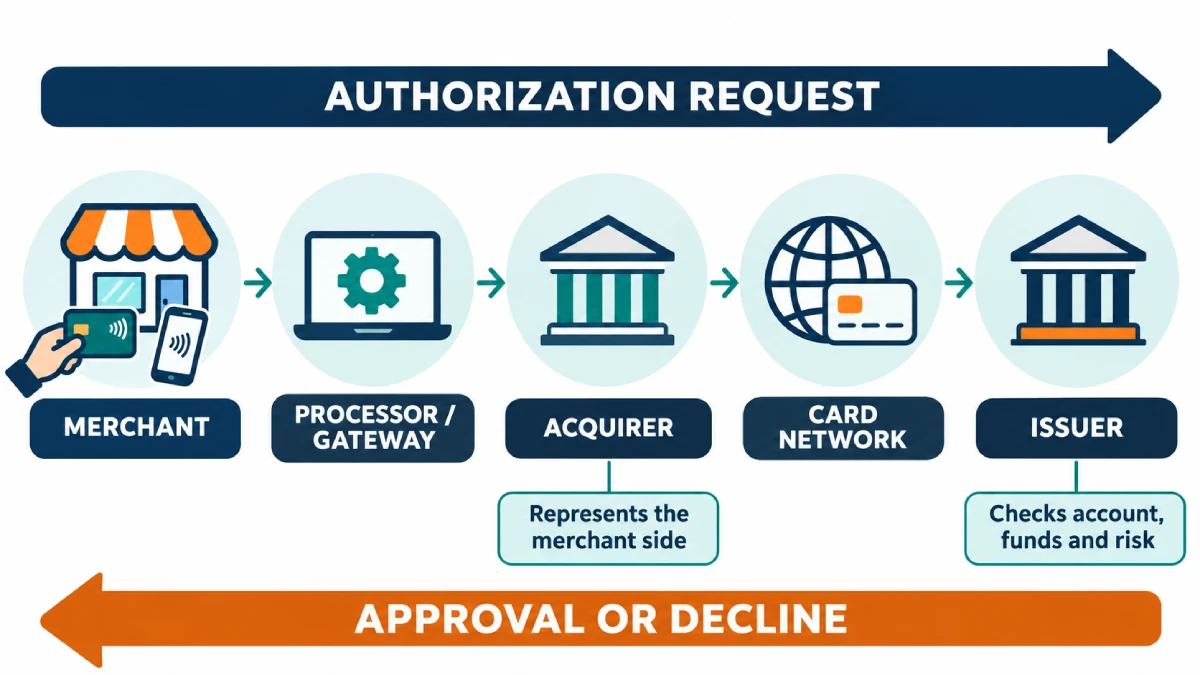
A customer taps, inserts or swipes a card at a terminal, or enters payment details in an online checkout. The merchant’s payment system creates a transaction message containing the amount, merchant information and payment credentials required for that channel.
The terminal or gateway sends the request to a processor or directly into the acquiring connection. Security controls protect the account data as it moves through the payment environment.
The acquirer or its processor validates the message format, identifies the merchant and routes the request into the appropriate card network. Risk controls can reject a malformed, duplicated or disallowed transaction before it reaches the issuer.
The acquiring side also supplies identifiers that let the network and issuer understand who is accepting the payment and how the transaction was initiated.
The card network identifies the issuer and forwards the authorization request. The issuer checks the account, available funds or credit, authentication information and fraud indicators.
The issuer returns an approval or decline with a response code. An approval can also include an authorization code used to link later clearing data to the original decision.
The response travels back through the network, acquirer and processor to the merchant’s checkout. The merchant then completes or declines the sale.
The full message path is part of card payment processing, but merchant acquiring focuses specifically on the infrastructure, contracts and risk responsibilities on the merchant side.
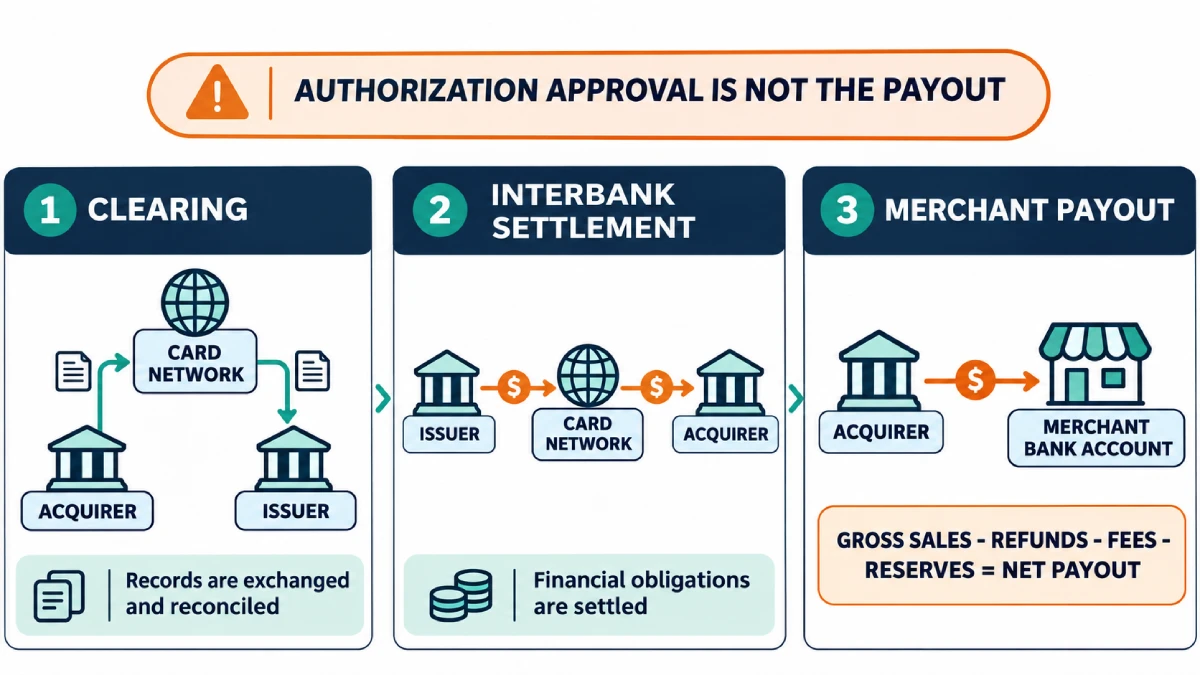
An approved authorization reserves or confirms the issuer’s willingness to honor the transaction under the applicable rules. The merchant has not yet received a bank payout.
The financial process continues through capture, clearing and settlement:
The Bank for International Settlements distinguishes these stages clearly: processing covers functions such as authorization and fraud checks, clearing transmits and reconciles transactions before settlement, and settlement transfers funds to discharge the resulting obligations. That BIS payment framework helps explain why a successful terminal response and a merchant bank deposit occur at different times.
A merchant payout can also be reduced by agreed fees, refunds, disputes, reserves or other adjustments. The merchant statement should show how the provider moved from gross processed sales to the net amount paid.
Payment companies often combine several roles under one brand. The legal and operational distinctions still matter when a merchant needs to resolve a payout, security or dispute issue.
A payment processor operates transaction technology on behalf of an acquirer, issuer or merchant service provider. The processor can format messages, connect systems, apply risk rules and maintain transaction records.
A processor does not automatically have a direct merchant-acquiring license. The contract should identify the actual acquirer responsible for the merchant relationship.
A payment gateway securely connects an ecommerce checkout or application to payment processing. The gateway captures or tokenizes payment data and passes transaction requests into the processing chain.
The gateway is a technical entry point. The acquirer supplies or sponsors the merchant’s access to the card network and settlement structure.
A payment service provider can bundle gateway, processing, fraud tools, reporting and merchant support. Some PSPs are acquirers. Others connect merchants to one or more acquiring partners.
Merchants should ask the PSP to name the acquirer for each country, payment method and merchant entity. That answer determines settlement structure, supported regions and escalation ownership.
A payment facilitator, often shortened to PayFac, onboards sub-merchants or sponsored merchants under a structure supported by an acquiring partner. This can simplify access for small businesses because the provider standardizes onboarding and service delivery.
The PayFac model does not remove the acquirer. BIS research on sub-acquirers and payment facilitators notes that sub-acquirers expand merchant access without connecting directly to the card network; they reach the network through an acquirer.
Merchant acquiring services begin before the first transaction and continue after the merchant receives a payout.
The acquirer or its service partner verifies the business, owners, expected volumes, products, sales channels and settlement account. Risk review determines whether the activity fits the provider’s markets and rules.
The review can also affect reserves, payout timing and transaction limits. Businesses selling future services, subscriptions or high-dispute products may receive different terms from a low-risk local retailer.
The provider assigns merchant and terminal identifiers within its processing environment. These identifiers connect transactions to the correct business, outlet, currency, settlement account and pricing plan.
A merchant ID is not the same as a terminal ID. One merchant may have several stores and terminals, and the reporting hierarchy must keep those levels separate.
An acquiring service can support card-present terminals, ecommerce, in-app payments, recurring billing, mail or telephone orders and unattended devices. Each channel has its own data, authentication and risk requirements.
The merchant agreement should list supported payment methods, currencies, countries and transaction types. A general statement that the provider “accepts cards” leaves too much undefined.
The acquirer receives clearing results and funds the merchant under the agreed schedule. Visa’s acquirer risk standards state that the merchant agreement establishes the acquirer’s responsibility to provide settlement funds, subject to contractual deductions and applicable holds.
Merchant reports should connect each payout to its sales, refunds, fees, chargebacks and reserves. This connection supports accounting and daily reconciliation.
The acquirer communicates dispute notices to the merchant and submits the merchant’s response through the relevant process. The issuer and network rules determine the dispute path and deadlines.
The merchant remains responsible for keeping order, delivery and customer-communication evidence. The acquirer administers the payment-system process rather than deciding whether the merchant’s underlying product was good.
Merchant acquiring revenue comes from agreed payment fees and related services. The pricing format varies by market, merchant size, channel and risk profile.
Common charges include:
The merchant discount rate may combine several economic components. Interchange can flow toward the issuer, network fees compensate the card network, and acquiring or processing markup pays the merchant-side providers.
Pricing comparisons should use the merchant’s real transaction mix. Average ticket size, card type, domestic versus international cards, ecommerce share, refunds and disputes can change the effective cost.
The acquirer carries risk because it promises network access and merchant settlement while remaining accountable under payment-brand rules. The merchant may fail, generate fraud, accumulate chargebacks or owe refunds after sales proceeds have already been paid out.
Acquirers manage that exposure through underwriting, monitoring, reserves, payout delays, transaction limits and contractual rights. Strong controls protect the payment system, but unclear controls can create cash-flow surprises for merchants.
Merchants should understand:
The merchant should disclose material business changes before processing patterns move outside the approved profile. Accurate onboarding information makes risk decisions more predictable on both sides.
POS hardware captures the customer’s payment action, but the terminal does not choose the merchant’s acquirer by itself. The installed payment application, cryptographic configuration, processor connection and merchant parameters determine where transactions go.
A terminal therefore needs more than a card reader. Deployment can require certified hardware, an approved payment application, injected keys, terminal identifiers, network configuration and remote management.
Changing the POS model does not automatically change the acquirer. Changing the acquirer does not guarantee that the current payment application and terminal configuration will remain usable. The migration plan must confirm processor support, application compatibility, certification scope and key-management responsibilities.
Merchants or integrators that need several acquiring routes should review a multi-acquirer POS guide before assuming that one terminal can switch providers through a simple settings change.
Merchant acquiring comparisons should start with market coverage and operational responsibility, then move to price.
Ask each provider:
The lowest headline rate is not always the lowest operating cost. Poor reporting, slow support or unpredictable reserves can consume more merchant time and cash than a small pricing difference.
A café accepts a $20 contactless card payment. The terminal sends an authorization request through its processor and acquirer, the network routes it to the issuer, and the issuer approves it.
The café can complete the sale immediately because authorization succeeded. The $20 has not yet appeared in the café’s bank account.
The café later submits the transaction for clearing. The network calculates the obligations between issuer and acquirer, settlement occurs between the participating institutions, and the acquirer funds the café according to the merchant agreement.
The final payout may combine many café transactions and subtract refunds, agreed fees or other adjustments. The deposit therefore may not equal one day’s gross terminal total.
That delay is explained in more detail in the guide to POS settlement timing.
Merchant acquiring is the merchant-side service that connects a business to card networks, routes card transactions and turns cleared activity into merchant settlement. The acquirer owns or sponsors the network relationship and manages the merchant’s payment-system risk.
Processors, gateways, PSPs and payment facilitators can operate much of the visible service, but they do not make the acquiring role disappear. Merchants should know the legal acquirer, payment route, settlement terms, fees, reserve rules and support responsibilities before accepting live transactions.

Merchant acquiring is the service that enables a business to accept card payments through an acquirer connected to the payment networks. It covers merchant onboarding, transaction routing, clearing support and settlement.
The terms are commonly used interchangeably. An acquirer can be a bank or another licensed financial institution recognized by the relevant payment network and regulatory structure.
Not always. A processor operates transaction technology. Some organizations perform both roles, while other processors work for a separate acquiring institution.
Some PSPs hold acquiring licenses. Other PSPs bundle merchant services while relying on acquiring partners in each market.
The issuing bank normally approves or declines the transaction after receiving the authorization request through the payment network. The acquirer carries the request from the merchant side.
No. Authorization approves the transaction request. Clearing, interbank settlement and merchant funding occur later.
A merchant account is part of the acquiring arrangement used to record and settle card-payment activity for a business. The exact account structure depends on the acquirer, PSP or payment-facilitator model.
The merchant agreement may permit reserves or settlement holds to manage fraud, refunds, chargebacks, regulatory reviews or unusual processing activity. The agreement should define the relevant conditions.






 Home
 How to Buy POS Terminals Wholesale: Quotes, MOQ, Certifications and Production Checks?

