
2026-06-16 Author : ZCS
If you've shopped at Whole Foods over the past few years, you may have noticed a small device at checkout that let you pay simply by hovering your hand above it — no card, phone, or PIN needed. That was Amazon One, and as of mid-2026, it's gone. Paying with your palm was, for a while, one of the most visible real-world tests of biometric payment technology in the United States. This article looks back at how the Whole Foods palm scanner worked, why Amazon pulled it, and what the end of Amazon One actually means for the future of palm-based payments.
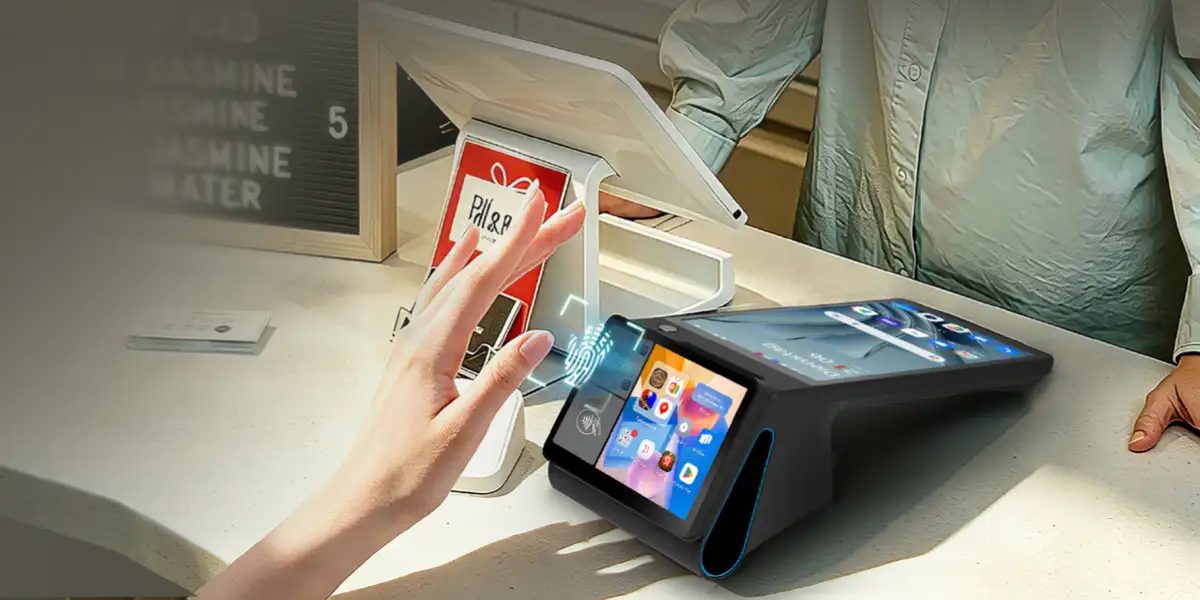
Amazon One launched in 2020 at Amazon's own Go convenience stores before expanding into Whole Foods Market, sports stadiums, and entertainment venues. By 2023, the Whole Foods palm scanner had been rolled out to more than 500 stores nationwide, making it one of the largest real-world deployments of palm-based biometric payment anywhere in the world.
The pitch was simple: enroll your palm once, link it to a payment card, and from then on you could skip pulling out a wallet entirely. Amazon positioned it as an optional convenience feature rather than a replacement for existing payment methods — shoppers could still use cash, cards, or their phones as usual.
The whole foods hand scan process was designed to be quick and contactless. First-time users enrolled at a kiosk, choosing to register one or both palms and linking the scan to a credit or debit card. The device used computer-vision technology to capture a unique "palm signature" — a combination of surface and structural details of the hand — and stored it as an encrypted identifier rather than a photo of the hand itself.
After enrollment, the actual checkout experience was almost instant. A shopper would simply hover their palm a few centimeters above the whole foods palm scanner at checkout, the device would match the live scan against the stored signature, and the linked payment method would be charged automatically — no swipe, tap, or PIN required. At its peak, Amazon reported that the system had processed millions of transactions across its retail and venue partners, including arenas, airports, and other Whole Foods-adjacent businesses.
In February 2026, Amazon announced it was discontinuing Amazon One entirely, citing limited customer adoption as the primary reason. By June 3, 2026, the company had completed removing whole foods palm payment terminals from all of its 500-plus Whole Foods locations nationwide, according to reporting on the shutdown of Amazon's palm-scanning checkout system. Amazon also said that all customer biometric data associated with the program would be securely deleted.
The decision wasn't purely about usage numbers. Amazon One had drawn sustained criticism from privacy advocates over the years — most notably when artists and venue operators at Red Rocks Amphitheatre pushed back against palm-scanning entry systems in 2022, and again more recently when advocacy groups raised concerns about biometric data being used for venue entry. Whether the bigger factor was shopper indifference, privacy hesitation, or simply the convenience of contactless cards and mobile wallets that already do the job well enough, Amazon hasn't broken down the reasons in detail — but the outcome is the same: as of this year, you can no longer pay with your palm at Whole Foods.
It's worth separating two different questions here: did "paying with your palm" fail as a concept, or did this specific implementation fail to find its audience?
Amazon One's palm signature relied primarily on computer-vision analysis of the hand's surface and structural features. A related but distinct category of technology — palm vein recognition — instead reads the pattern of blood vessels beneath the skin using near-infrared light. If you're curious about the mechanics, how palm vein scanning works breaks down the near-infrared imaging and template-matching process step by step. Palm vein systems are generally regarded as harder to spoof, since the data being read is internal and invisible to the naked eye.
The discontinuation of Amazon One at Whole Foods doesn't appear to reflect a technical failure of palm-based biometrics in general — accuracy and security were never the criticisms most commonly raised. Instead, it looks more like a market-fit problem: a single retail chain's optional checkout feature, competing against contactless cards and phone wallets that consumers were already comfortable with. That distinction matters for understanding where palm-based authentication is — and isn't — likely to keep growing.
Even as Amazon winds down its consumer retail experiment, palm-based biometrics haven't disappeared — they're showing up in different contexts. Through 2026, palm vein recognition in particular has continued expanding in healthcare and enterprise settings, where the use case is less about replacing a credit card swipe and more about secure identity verification. For example, testing organization Pearson has begun rolling out palm-based authentication across its global exam center network, and Tencent partnered with Bupa Hong Kong to launch palm-based patient check-in across a network of clinics, according to recent reporting on palm vein deployments in 2026.
The pattern behind that shift is consistent once you look past retail. Amazon One asked casual shoppers to opt into a new credential for a discretionary loyalty-style benefit — the kind of voluntary enrollment that struggled to gain traction. Banking, government, and enterprise settings don't share that problem, because enrollment in those environments is already mandatory: a bank customer opening an account, a traveler at a border checkpoint, an employee going through onboarding, are all going through required identity verification regardless of the technology used. Palm vein simply becomes the method at a checkpoint that was going to happen anyway — which is why Japanese banks have reached over 92% adoption of vein-pattern recognition at ATMs and teller counters, and why palm vein payment is proving out fastest in banking, government, and enterprise settings rather than open retail.
A parallel shift is happening on the hardware side. Rather than relying on a single company's standalone biometric kiosk, palm vein modules are increasingly being built directly into the point-of-sale and access-control hardware that businesses already use. Android POS manufacturers — including ZCS, whose palm vein recognition systems are designed for integration into existing checkout and access-control terminals — represent this next phase: palm-based identity verification offered as one option among several on hardware merchants already operate, rather than a separate, dedicated system that depends on building its own consumer adoption from scratch.

Amazon One's run at Whole Foods showed that paying with your palm is technically workable at scale — millions of transactions proved that out. What it didn't prove was that shoppers wanted a retailer-specific biometric wallet badly enough to choose it over the card already in their pocket. As Amazon exits this space, the underlying technology is migrating toward where it tends to make the most sense: integrated into the hardware businesses already run, for use cases like healthcare identification and secure access where biometric accuracy solves a real problem rather than just shaving a few seconds off checkout.
Q1: What happened to the Whole Foods palm scanner?
Amazon discontinued its Amazon One palm-scanning payment system in February 2026 and completed removing the devices from all Whole Foods stores by June 3, 2026, citing limited customer adoption.
Q2: Why did Amazon shut down Amazon One?
Amazon cited low usage as the main reason. The program had also faced years of privacy criticism over biometric data collection, though Amazon did not specify how much that factored into the final decision.
Q3: Is Amazon One still available anywhere?
As of mid-2026, Amazon has discontinued the service across its retail and venue partners, including Whole Foods, and is deleting associated customer biometric data. Amazon has not announced a replacement program.
Q4: What's the difference between Amazon One and palm vein scanning?
Amazon One used computer-vision analysis of the palm's surface and structural features. Palm vein scanning is a related but distinct technology that reads the pattern of veins beneath the skin using near-infrared light, and is more commonly used in healthcare, access control, and point-of-sale hardware.
Q5: Can I still pay with my palm anywhere?
While Amazon's consumer-facing program has ended, palm-based biometric verification continues to be deployed in healthcare check-in systems, enterprise access control, and point-of-sale terminals that integrate palm vein recognition hardware.
Related Posts
1. Palm Vein Security and Access Control: What Actually Makes a System Secure in 2026
2. Palm Vein vs Fingerprint vs Face: Which Biometric Is Right for Your Access Control System?
3. Time and Attendance Solutions in 2026: Comparing Modern Methods






 Home
Home  How Palm Vein Scanning Works: The Technology Behind Contactless Biometric Identity
