
2026-08-14 Author : ZCS
Palm vein payment succeeds in banking, government, and enterprise settings for one core reason: these are environments where enrollment is required, not optional. That's the opposite condition from the one Amazon One faced in US retail, where the company discontinued the service in 2026 after citing limited voluntary adoption. This guide covers where palm vein payment actually runs at scale today, with real cases from each sector, and why the adoption dynamics in these environments differ so sharply from retail.
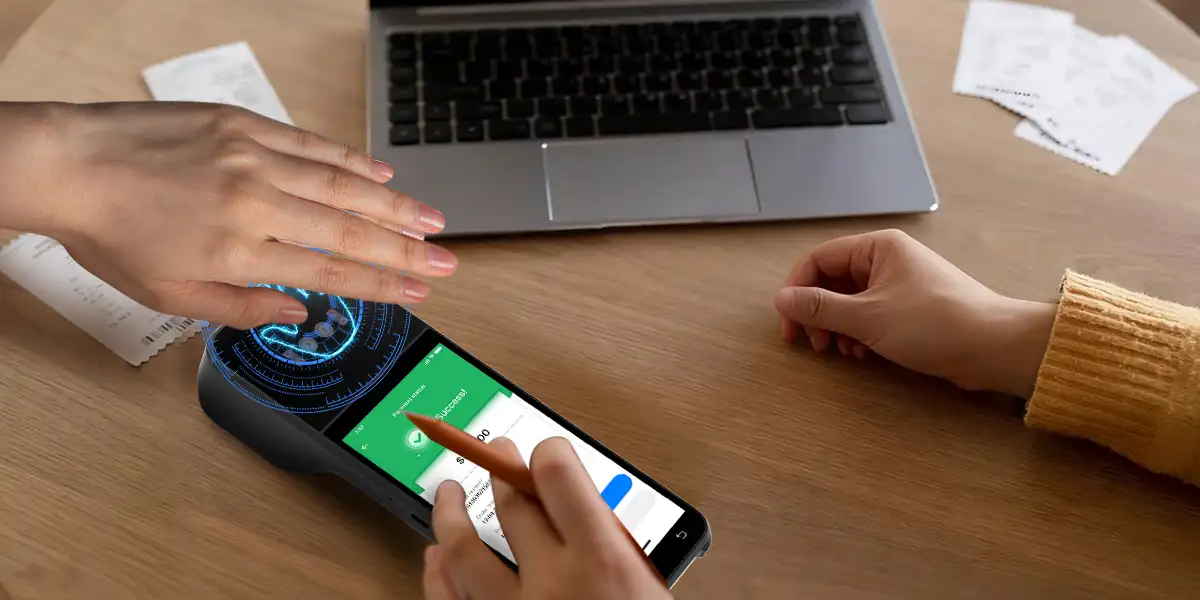
Palm vein achieves a lower false acceptance rate than fingerprint or face recognition. That matters directly in high-value transactions, where one wrongly approved payment can cost far more than a single retail purchase. Our comparison of palm vein, fingerprint, and face recognition covers the accuracy differences across all three modalities in more depth.
Liveness detection is built into palm vein's physics, not added as software. A vein pattern only appears when real blood is flowing beneath the skin. A photo, mold, or prosthetic can't reproduce it, which removes an entire category of spoofing attempt that fingerprint and face systems still have to defend against separately.
Vein patterns can't be copied from a surface. A fingerprint can be lifted from a glass. A face can be photographed from a distance. A vein pattern sits beneath the skin, invisible from the outside, which is why it holds up better in scenarios where the cost of a successful spoof is severe.
Japan operates the world's largest deployment of palm vein banking. More than 92% of Japanese banks use vein-pattern recognition at ATMs and teller counters, a scale reached after the technology proved effective at cutting card-related fraud.
The UAE Central Bank launched the Middle East's first central bank-led biometric payment proof of concept. This project positions palm vein and related biometric authentication as infrastructure for the region's broader payment ecosystem, not just a single bank's pilot program.
Dutch banks have evaluated palm vein for branch access and high-value transaction verification. According to a Dataintelo market report on palm vein biometric devices, both ING Bank and Rabobank in the Netherlands have assessed the technology for these specific use cases, reflecting European banking interest alongside Asia's more mature deployment.
The common thread across all three cases is mandatory context. A bank customer opening an account, visiting a branch, or authorizing a large transfer is already going through a required identity-verification step. Palm vein simply becomes the method used at a checkpoint that was going to happen regardless.
Border checkpoints are trialing palm vein for traveler verification. Frankfurt Airport, Paris Charles de Gaulle, and Amsterdam Schiphol are running trials of palm vein biometrics for immigration control, driven by the volume of cross-border travelers the Schengen Area's open-border system needs to verify reliably.
The verification problem in government settings is different from a retail purchase. A checkpoint needs to confirm a traveler is who their documents say they are — not process a payment — which makes the core value proposition identity confirmation rather than transaction convenience.
Government adoption follows the same mandatory-enrollment pattern seen in banking. A traveler crossing a border, or a citizen enrolling in a benefits program, is already required to prove their identity through some method. Palm vein competes with passports and fingerprints for that role, not with a voluntary loyalty sign-up.
Enterprise use of palm vein for internal financial controls is a smaller, earlier-stage category than banking or government deployment. Publicly documented large-scale enterprise case studies are limited compared to the banking and government examples above, which is worth stating plainly rather than overselling this category's maturity.
The logic driving enterprise interest is straightforward. A large payment approval, an executive-level system access, or a sensitive internal transaction benefits from confirming the actual person authorized it, rather than relying on a password or token that can be shared or stolen. This is the same access-control logic covered in our guide to what actually makes an access control system secure, applied specifically to financial approval workflows rather than physical entry points.
Enterprise deployment, like banking and government, works best where enrollment is already mandatory. An employee with system access has already gone through onboarding; adding palm vein as the authentication method for high-value actions doesn't introduce a new voluntary step; it changes the method used at a step that already existed.
Banking, government, and enterprise share one structural feature retail lacks: enrollment isn't optional. A bank customer, a traveler, and an employee all go through required identity verification regardless of the technology used. Palm vein simply becomes the method at that checkpoint.
Amazon One asked casual retail shoppers to opt into a new credential for a discretionary loyalty benefit. Our full breakdown of Amazon One's rise and 2026 shutdown covers why that specific model struggled with adoption even though the underlying technology worked as intended.
Closed membership and workplace environments follow the same mandatory-enrollment logic as banking and government. Our guide to palm vein recognition for membership and loyalty programs covers this pattern in more detail, including why gyms, clubs, and employer-run programs face a much smaller adoption barrier than open retail.

The deciding question isn't whether palm vein works. The banking and government cases above confirm it does, at national scale in some markets. The deciding question is whether your specific use case already involves mandatory enrollment or asks users to opt in voluntarily.
High-accuracy hardware matters more as transaction value rises. As an example of what this looks like at the device level, ZCS's Z108P performs server-side matching at 1:1,000,000 scale in under one second with built-in liveness detection — the kind of accuracy profile that high-value banking or enterprise approval scenarios are built around, where a lower false acceptance rate directly reduces financial risk.

Q1. Is palm vein payment only viable for large banks and governments?
No, but adoption is easiest wherever enrollment is already required. Enterprise settings with mandatory employee onboarding, or membership programs requiring signup, face similar adoption conditions to banking and government, even at smaller scale.
Q2. Why does Japan have such high palm vein adoption in banking specifically?
Japanese banks adopted the technology early and at scale after it demonstrated strong fraud-reduction results at ATMs and teller counters, reaching more than 92% adoption among Japanese banks.
Q3. Is palm vein payment in government settings the same as palm vein payment in banking?
The underlying technology is the same, but the purpose differs. Banking uses it primarily to authorize a transaction. Government checkpoint use, such as the airport immigration trials in Europe, focuses on confirming identity rather than processing a payment.
Q4. Does enterprise use of palm vein for financial approvals have as much real-world evidence as banking?
Not yet to the same degree. Enterprise deployment for internal financial controls is an earlier-stage category with fewer publicly documented large-scale cases than banking or government use.
Q5. What accuracy level should a business expect from palm vein hardware in a high-security use case?
Look for server-side matching performance and a documented false acceptance rate rather than accepting a general accuracy claim. High-security deployments generally require matching accuracy in the range of 1:1,000,000 or better, with built-in liveness detection to prevent spoofing.






 Home
Home  What Hardware Requirements Does Tap to Pay on Android Actually Need?
