
2026-05-14 Author : ZCS
In today's digital payment landscape, Android POS terminals with open SDKs have become a genuine competitive differentiator for software vendors and distributors alike. With the global Android POS market projected to reach USD 24.56 billion by 2031 (Valuates Reports, December 2024), the closed, proprietary hardware of the previous decade is giving way to programmable, customizable infrastructure that puts development control back in the hands of ISVs.
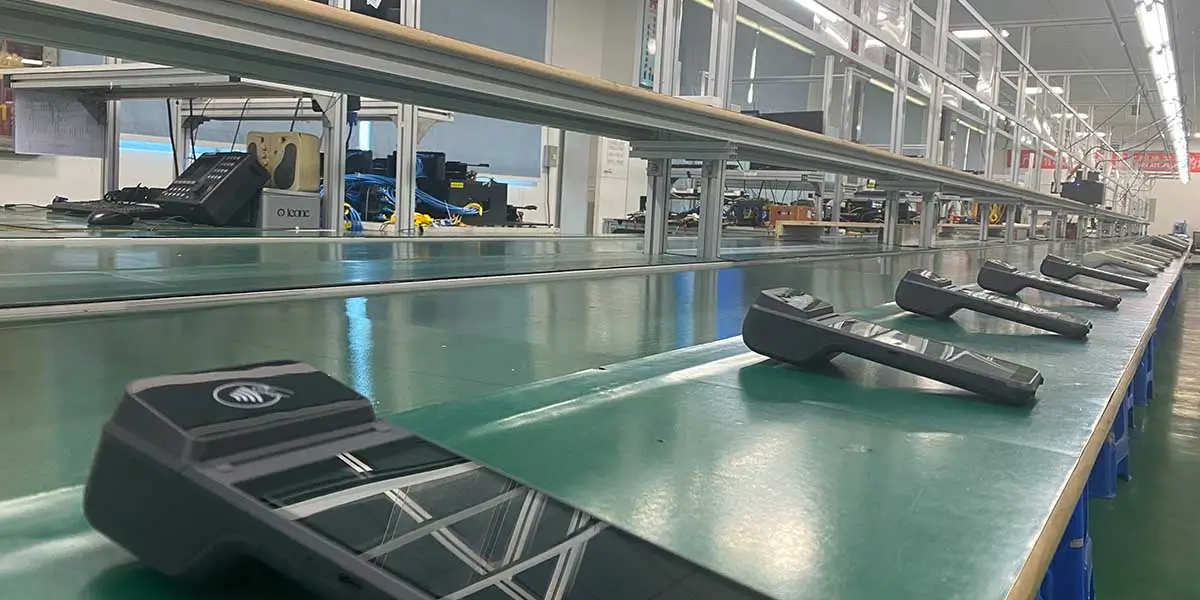
As a leading white label POS hardware ODM manufacturer based in China, ZCS has spent 17 years building payment technology for the real world — shipping solutions to 120 countries, accumulating over 100 million deployed devices, and evolving from a regional manufacturer into a full-stack hardware partner for global distributors and software companies.
This guide covers four dimensions of that value: the structural market forces driving demand for open hardware; how ZCS's Open SDK translates into practical API access across printing, card reading, and biometric modules; the white label ODM customization process and pricing framework available to distributors; and the partnership paths from SDK evaluation to hardware sampling.
Founded in 2009 and headquartered in Nanshan, Shenzhen — with manufacturing operations in Bao'an — ZCS has spent 17 years focused exclusively on the POS industry. The result is a deployed base of over 100 million devices across 120 countries, serving OEMs, VARs, distributors, and direct enterprise buyers.
"Full-stack" in ZCS's context is not a marketing claim — it describes a supply chain architecture where hardware R&D, manufacturing, SDK development, TMS infrastructure, and post-sale support are all managed within one organization. For a distributor or ISV, this structure has a practical consequence: there is a single certification contact, a unified warranty policy, one TMS platform, and one SDK roadmap. When a peripheral API issue surfaces months into a live deployment, the team responsible for the fix is the same team that wrote the code.
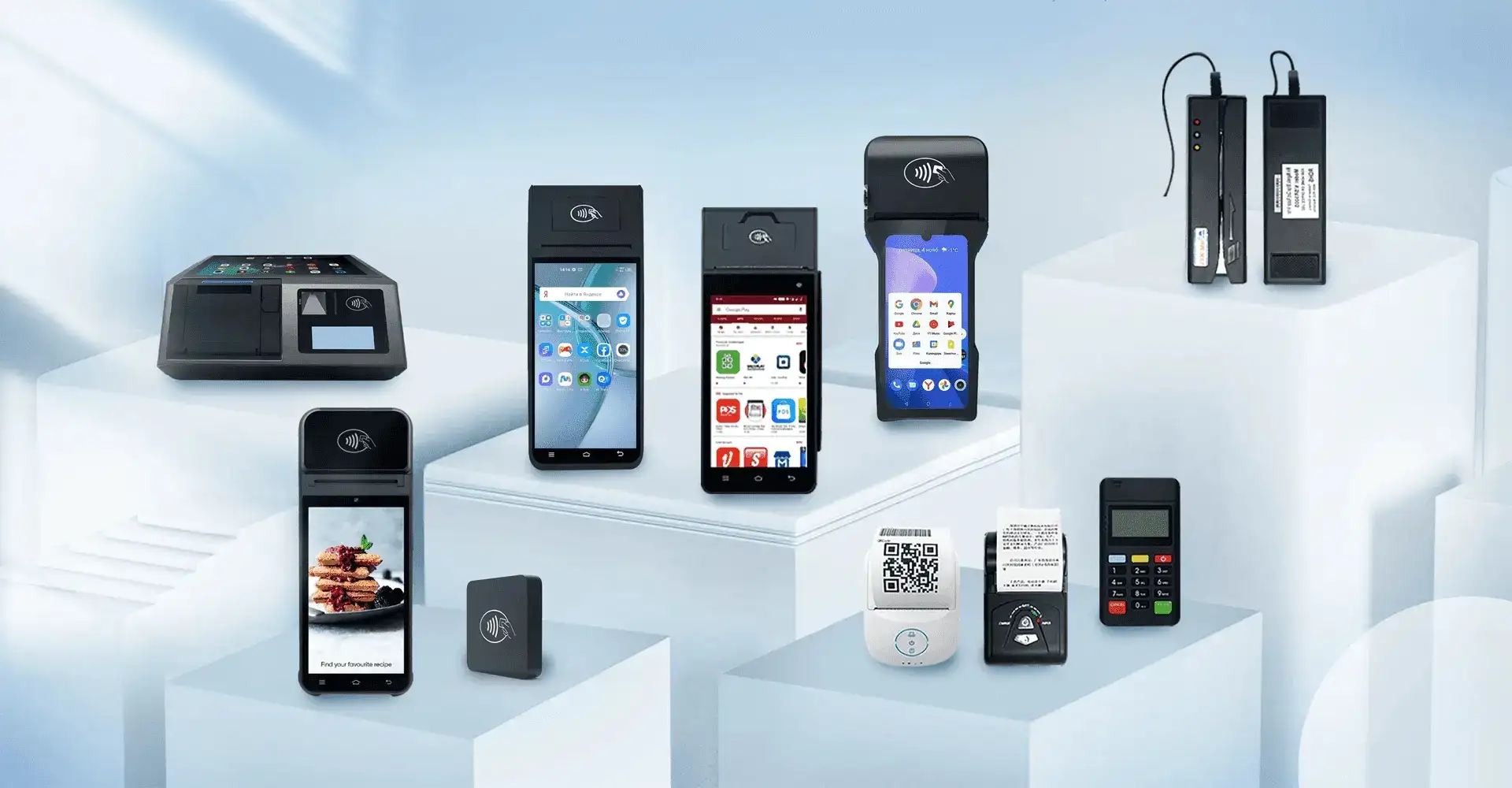
ZCS's current Android POS product line spans seven core form factors: the Z81 mini handheld, the Z90 and Z92 mobile terminals (the Z92 running Android 14 under ZCS's proprietary ZOS layer), the Z93 mobile terminal, the Z100 desktop POS, the Z101 10.1-inch wall-mounted/desktop unit, and the Z108 8-inch portable tablet — plus the Z92P and Z108P Palm Vein biometric terminals for identity-sensitive deployment scenarios.
ZCS holds ISO 9001 factory certification, as well as CE, FCC, CCC and other authoritative certifications. Relevant certifications can be configured on demand according to target market requirements.
The POS SDK market operates on a fundamental trust asymmetry. A manufacturer publishing an SDK declares technical capability; an ISV integrating that SDK discovers actual behavior. Documentation quality, API version stability, and peripheral coverage are rarely visible from a product page — they become apparent only during integration, often at the worst possible moment in a project timeline.
ZCS addresses this by structuring its SDK offering around device models rather than platform generations. POS hardware variants differ not just in physical form factor but in underlying peripheral chipsets, payment module firmware, and hardware abstraction layers. A generic cross-model SDK forces ISVs to write defensive code around undocumented hardware differences. Model-specific packages shift that engineering burden to the manufacturer — where it belongs.
The current SDK portfolio is organized across three tracks:
The development environment is standard Android toolchain — Java and Kotlin both supported — meaning ISVs with existing Android teams can onboard to ZCS hardware without retraining or additional hiring. The SDK exposes peripheral APIs across thermal printing, barcode and QR code scanning, NFC read/write, magnetic stripe reading, and optional fingerprint sensor access where the hardware module is present.
An open SDK solves half of the software-flexibility problem — it lets ISVs build directly against ZCS's peripheral APIs instead of working around undocumented hardware behavior. The other half is distribution: once an application is built, how does it actually get onto a merchant's device, and can that same device also run whatever third-party software the merchant already depends on? This is where GMS (Google Mobile Services) certification becomes relevant, and it's a dimension of hardware selection that gets far less scrutiny in procurement conversations than SDK documentation does, despite carrying similar downstream consequences.
GMS certification is Google's own licensing and compatibility process — a device has to pass a defined test suite before Google authorizes it to run the Play Store and the underlying Play Services APIs that many third-party apps depend on. A non-certified Android device can still run Android, but it can't install anything from Google Play without workarounds that most merchants and ISVs have no reason to attempt. ZCS's GMS-certified terminals — publicly demonstrated at events such as UAE Seamless with GMS Android 14.0-certified hardware — remove that constraint at the OS level: a merchant can install a delivery aggregator app, a POS platform, or an ERP tool the same way they would on a consumer Android phone, without the manufacturer needing to build custom support for each one individually.
The practical effect mirrors the same engineering-debt logic that shapes ZCS's model-specific SDK strategy. Just as a generic cross-model SDK forces ISVs to write defensive code around undocumented hardware differences, a non-certified terminal forces an ISV or distributor to either build a custom application-distribution mechanism or restrict the merchant to a single pre-installed software stack. GMS certification removes that burden the same way model-specific SDKs remove peripheral integration burden — by handling it once, at the hardware level, instead of leaving each integrator to solve it independently.
For merchants specifically, this shows up as the ability to run more than one piece of software on a single terminal without vendor lock-in. A food and beverage merchant running a core POS application built on ZCS's Open SDK can also install Grab Merchant directly from Google Play to manage delivery orders, and a merchant using Odoo as a back-office and inventory system can run that alongside the same POS software — all on one certified device, rather than needing separate hardware for each function. Neither scenario requires ZCS or the ISV to develop custom integration work for Grab or Odoo specifically; GMS certification is what makes that flexibility available by default rather than something that has to be engineered per app.
For distributors and ISVs evaluating hardware, this reframes GMS certification as a scoping question similar to SDK access: does the terminal expand what a merchant can run without additional engineering, or does every new software requirement become a new hardware conversation? A deeper breakdown of what GMS certification technically involves, how it applies across ZCS's Android version lineup, and what it does and doesn't guarantee for payment-compliance purposes is covered in our guide on why GMS-certified Android POS terminals give merchants more software freedom.
ZCS's Terminal Management System (TMS) enables remote firmware updates, application version pushes, device status monitoring, and fault diagnostics across deployed terminal fleets, with management interfaces available for both Android and iOS.
The operational case for TMS becomes clear at scale. A retail chain with 500 locations, each running one terminal, needs a firmware update after a security patch release. Without TMS, a conservative estimate of 30 minutes of on-site technician time per device represents 250 labor-hours — before factoring in travel costs, store scheduling constraints, and business-hours disruption. TMS compresses this to a scheduled fleet-wide push, executable overnight, with centralized completion reporting.
At the ISV level, TMS availability changes the category of service commitment an integrator can make to a merchant client. An SLA that promises critical security patches within 72 hours of release is commercially viable only when delivery doesn't require physical site access. TMS is therefore not a peripheral feature of the hardware selection — it is a prerequisite for certain classes of managed service contract.
ZCS includes TMS as a standard component of its support infrastructure, alongside 24/7 technical support via online ticketing, a 1-year hardware warranty, and a global repair and spare parts network.
Offline resilience is built into the same hardware layer that TMS manages. Every ZCS terminal in the current product line supports store-and-forward transaction processing — when network connectivity drops, the device caches completed transactions locally and queues them for automatic sync once the connection restores, with no manual intervention required from staff. This is handled at the firmware level rather than left to the integrating POS application to implement, which matters for ISVs deploying into markets with inconsistent connectivity: the local storage and retry logic ship with the device, not as something each software vendor has to build independently. Combined with TMS's remote monitoring, this means a fleet operator can confirm a terminal successfully synced its queued transactions after an outage without needing a technician on site.

OEM and ODM represent meaningfully different service scopes and risk profiles — a distinction that collapses too easily in sales conversations and costs distributors time when the difference surfaces mid-project.
In ZCS's framework, OEM engagements begin from an existing, validated hardware platform. Customization is applied at the brand layer: logo, color scheme, packaging design, and in some cases pre-installed application configuration. Because the underlying hardware has not changed, time-to-market is short — the production line is already validated.
ODM engagements begin from a distributor specification. ZCS's engineering team works with the distributor to define hardware modifications — form factor adjustments, component selection, peripheral configuration — before entering a design, prototyping, and production cycle. The resulting device is built to specification, enabling hardware-level differentiation that an OEM overlay cannot deliver. The trade-off is lead time and higher minimum order thresholds.
A concrete production example: the Z92 has been delivered to OEM customers with a customized red-tinted exterior panel, logo branding, and tailored SDK integration configurations — the full physical-brand-software customization stack, executed while retaining the device's ZOS system baseline and existing regional certifications. The Z81 mini handheld explicitly supports hardware modification, firmware branding, and multilingual system integration as ODM capabilities, positioned for global distributors seeking a purpose-built handheld POS.
For pricing context: the Z101 wall-mounted/desktop terminal carries a reference price range of USD 145–180, dependent on configuration and order volume — a useful baseline for ZCS's mid-tier hardware before customization costs are layered in.
ZCS's ODM customization matrix operates across three layers:
The compliance layer is consistently the most underweighted dimension in distributor procurement planning. A single hardware SKU can be initialized to meet the regulatory environment of multiple target markets through firmware-level configuration — CE and FCC compliance for European and North American deployments, CCC and UnionPay for China — without maintaining separate physical inventory per market. This is a cost reduction that never appears in a unit price comparison but is real and compounding across the life of a product line. For more on compliance requirements, see our guide to selecting a Secure EMV Android POS Terminal manufacturer.

ZCS's go-to-market structure supports three engagement paths: OEM brand customization for distributors requiring branded hardware; VAR (Value-Added Reseller) partnerships for integrators combining ZCS hardware with a proprietary software stack; and direct enterprise procurement for organizations deploying at scale.
The support infrastructure is consistent across all three paths: model-specific SDK documentation available at szzcs.com/Support-Service/SDK-Download; TMS access for remote fleet management; 24/7 technical support via online ticketing; a 1-year hardware warranty; and a global repair and spare parts program. Android POS and Card Reader product catalogs are available as downloadable PDFs through the ZCS support portal.
The more useful evaluation frame for ISVs and distributors is not unit price — it is total handover scope. A vendor delivering only hardware leaves an integration team to independently source SDK documentation, manage firmware update logistics, coordinate on certification questions, and establish post-sale support through separate channels. A vendor delivering hardware, SDK, TMS, and post-sale support under a single contract reduces the number of independent parties an integration team manages across an entire project lifecycle — and with it, the coordination overhead, accountability gaps, and schedule risk that typically follow. This consolidated workflow is especially critical for ensuring consistency during a complex multi-country Android POS deployment.

The shift toward open, customizable Android POS hardware is not a trend — it is a structural response to a market where software differentiation has outpaced what closed platforms can support. For ISVs, the decision to build on open-SDK hardware like ZCS's is fundamentally a project risk decision: it scopes integration work to the application layer, provides a consistent peripheral API surface across the device family, and delivers a TMS foundation for managed service commitments that would otherwise be operationally unviable.
For distributors, the OEM/ODM customization model solves a different problem — not integration speed, but brand positioning and customer retention. A purpose-built, firmware-branded terminal with market-specific compliance configuration is a stickier product than a white-box device loaded with third-party software. The compliance layer, in particular, enables a single hardware SKU to serve multiple markets without inventory fragmentation.
ZCS's 17-year track record, 100M+ device deployment base, and single-vendor full-stack structure make it a substantive option for both audiences. The logical next step is a hardware sample alongside the relevant SDK documentation package — allowing integration scoping and commercial evaluation to run in parallel.
Q1: What is the difference between ZCS "Open SDK" and standard Android development?
A: While standard Android development focuses on OS-level features, the ZCS Open SDK provides deep access to the Hardware Abstraction Layer (HAL). It allows developers to directly invoke low-level payment peripheral APIs using Java or Kotlin—covering thermal printers, EMV contact/contactless readers, magnetic stripe modules, and biometric sensors (fingerprint/palm vein). By providing model-specific SDK packages, ZCS ensures 100% compatibility between the API and device firmware, eliminating the common integration errors found in generic SDKs.
Q2: What are the practical differences between OEM and ODM services for brand customization?
A: The choice depends on your time-to-market and depth of customization:
OEM (Original Equipment Manufacturer): We apply your branding to an existing, validated ZCS platform (e.g., Z92 or Z100). This includes logo silkscreening, custom color schemes, branded packaging, and pre-installed applications. Best for: Fast delivery and low risk.
ODM (Original Design Manufacturer): We collaborate to define hardware modifications based on your specific requirements, such as form factor adjustments, peripheral changes (e.g., adding a label printer), or unique sensor integrations. Best for: High product differentiation and unique market niches.
Q3: How does the ZCS Terminal Management System (TMS) reduce long-term operational costs?
A: When managing hundreds or thousands of devices, on-site maintenance is cost-prohibitive. The ZCS TMS allows you to perform:
Remote Firmware Updates: Push critical security patches and OS updates over-the-air (OTA).
Silent App Installation: Batch update your POS software without merchant intervention.
Remote Diagnostics: Monitor device health, battery status, and peripheral connectivity in real-time. This infrastructure enables ISVs to honor high-tier Service Level Agreements (SLAs) by resolving most software issues remotely within 72 hours.
Q4: Why does ZCS provide model-specific SDKs instead of a single unified platform SDK?
A: This is a strategic choice to minimize "engineering debt" for ISVs. Different POS form factors (e.g., the handheld Z81 vs. the desktop Z101) utilize different printer chipsets, scanning modules, and encryption chips. A generic SDK often forces developers to write complex "defensive code" to detect hardware variations. By providing model-specific packages, ZCS handles the hardware abstraction internally, ensuring that every API call is perfectly tuned to the physical module, resulting in a faster and more stable integration.
Q5: How can an ISV or Distributor begin the evaluation process with ZCS?
A: We recommend a three-step engagement path:
Technical Review: Visit szzcs.com to download SDK documentation and product catalogs for a preliminary feasibility assessment.
Hardware Sampling: Contact our sales team (info@szzcs.com) to request a sample unit and begin live integration testing with our SDK.
Customization Consultation: Once the technical pilot is successful, we can finalize OEM/ODM specifications and volume pricing (e.g., our Z101 mid-tier terminal typically ranges from USD 145–180 depending on configuration)
Related Posts
3. Android POS Terminal Factory Solutions with Open SDK for New Retail
4. How to Choose a POS Manufacturer with Open API Support?
5. POS System with Touch Screen: What to Look for Before You Buy






 Home
Home  ZCS POS Devices with BVS: Scalable Palm Vein Payments
