
2026-07-10 Author : ZCS
Right now, while the 2026 World Cup is underway across North America, FIFA has issued more than 100,000 Right-to-Buy (RTB) tokens through a blockchain partnership with Avalanche, with secondary-market trading on those tokens already topping $25 million — a live, real-time case study in fighting ticket scalping at a scale most ticketing operations will never see. Few venues have FIFA's budget or blockchain infrastructure, but the underlying problem — proving a ticket and the person holding it actually belong together — is exactly the same one every ticket POS system faces, just several zeros smaller. This article breaks down what FIFA is actually doing, why the same fraud is now hitting box offices of every size, and which pieces of that defense a small or mid-size ticketing operation can realistically deploy.
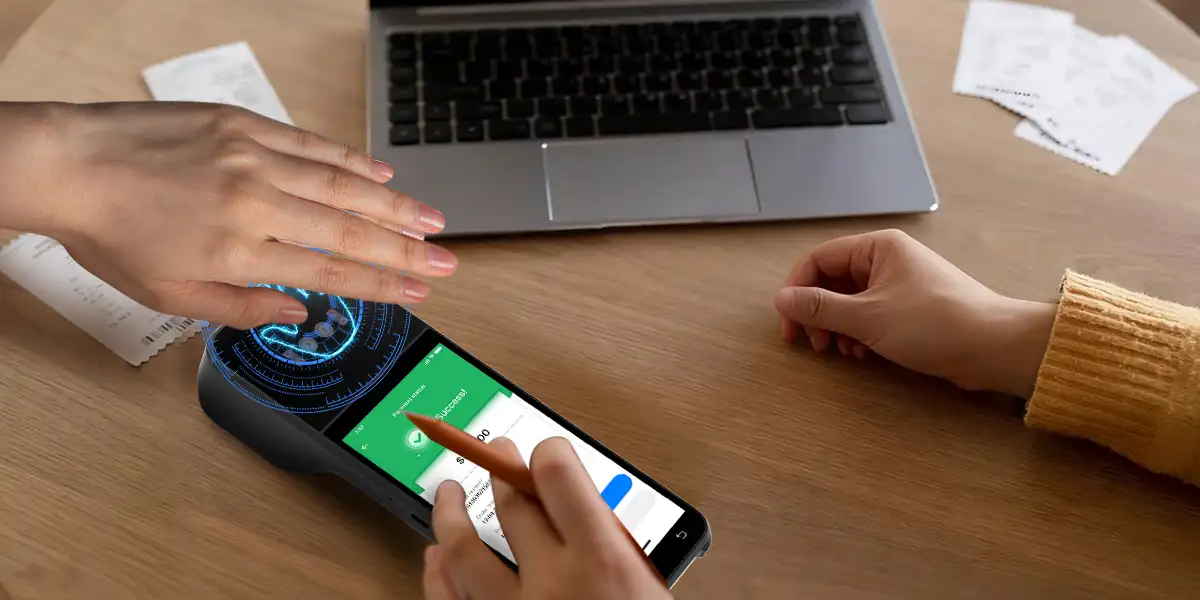
FIFA's approach centers on RTB tokens — a blockchain-based "right to buy" credential that's distinct from the ticket itself, designed to make resale transparent and traceable rather than trying to block resale outright. According to reporting on the partnership, FIFA has distributed more than 100,000 RTBs, with over 50,000 Club World Cup tickets already bundled with RTBs, and combined secondary-market trading volume across RTBs and tickets has surpassed $25 million. The mechanism doesn't eliminate resale — it makes every resale visible on-chain, which is a meaningfully different strategy from the static-barcode approach most ticketing systems still rely on, where a screenshot of a QR code is functionally identical to the original.
According to Softjourn's analysis of ticketing industry fraud trends, generative AI has enabled fraudsters to produce convincing synthetic identities and deepfakes, leaving traditional onboarding processes built around document review and limited data checks increasingly outmatched by this new generation of AI-driven fraud.What used to be individual scalpers running bots has evolved into organized operations exploiting ticketing systems at industrial scale — and the volume involved is larger than most operators assume: on some platforms, more than 80% of online ticket traffic during a high-demand release can be automated bot activity rather than genuine buyers. A regional theater or mid-size venue isn't facing FIFA-scale attacks, but the same tools — bots, synthetic identities, screenshot resale — are available to whoever targets them, and most small ticketing setups have far less fraud tooling in place than a platform selling World Cup tickets does.
None of this requires building blockchain infrastructure. The underlying principles FIFA is applying — make credentials hard to duplicate, verify at the point of use rather than just at the point of sale, and tie a ticket to something that can't be screenshotted — translate into three concrete upgrades most ticket POS systems can adopt.
A static barcode or QR code is the same image every time it's scanned, which means a screenshot works exactly as well as the original — this is the core weakness FIFA's on-chain resale tracking is designed around at a larger scale. Dynamic QR codes that refresh periodically or generate a new code per verification attempt close this gap without requiring blockchain infrastructure: a screenshotted code simply expires before or during resale, cutting off the simplest and most common form of duplication.
Device fingerprinting at the check-in terminal flags when the same ticket credential is presented from patterns inconsistent with a single legitimate holder — repeated scans from different devices, unusual geographic jumps between purchase and entry, or scan attempts that don't match the expected device profile. This is a lower-cost parallel to the on-chain traceability FIFA gets from RTBs: instead of tracking resale on a public ledger, the terminal itself flags suspicious verification patterns at the moment of entry.
The strongest layer — and the one that directly answers "is this ticket actually being used by the person who's supposed to have it" — is biometric verification at the door. It's worth being precise about what this solves versus what a door-access biometric system solves: an access control deployment is checking whether a person is on an authorized list, while a ticket check-in is confirming that a specific ticket is bound to the person presenting it, which is a narrower and more transactional kind of verification even though the underlying recognition technology is the same. For a technical breakdown of how that recognition actually works, our guide to palm vein recognition and secure biometric authentication covers the mechanics in depth, and for operators weighing which biometric modality fits a check-in workflow, our comparison of palm vein, fingerprint, and face recognition walks through the tradeoffs between the common options.
As an example of what this looks like in deployed ticket-scanning hardware, ZCS's Z92 Palm Vein Scanner POS combines palm vein and barcode/QR recognition in a single handheld unit — relevant here specifically because it can validate a ticket's QR code and the holder's biometric credential in the same device and the same motion, rather than requiring a separate identity check layered on top of a standard scanner.

Budget, not ambition, should drive the order here. Dynamic QR is close to a software-only change and the highest-leverage first step for most operators, since it closes the most common fraud vector (screenshot resale) at minimal hardware cost. Device fingerprinting is the next layer, since it requires check-in terminals capable of logging and flagging device-level patterns rather than just scanning a code. Biometric check-in is the strongest defense but also the highest investment, and makes the most sense for venues with recurring fraud problems, high-value events, or season-pass/membership models where the same credential is reused repeatedly — exactly the kind of repeated-use scenario where binding a ticket to a person, rather than just a code, pays off over a season rather than a single event.

Q1. Do small venues really face the same ticket fraud FIFA is dealing with?
The scale is different, but the tools are the same. Bots, synthetic identities, and screenshot resale don't require targeting a major tournament — they're available to anyone targeting any ticketing system, and smaller operators often have less fraud tooling in place to catch them.
Q2. Is blockchain ticketing something a small venue should consider?
Generally not as a first step. Blockchain-based systems like FIFA's RTB tokens require infrastructure and buyer education most small operators don't have the budget or audience for. Dynamic QR codes and device fingerprinting deliver much of the same anti-duplication benefit at a fraction of the cost.
Q3. What's the difference between device fingerprinting and biometric check-in?
Device fingerprinting flags suspicious patterns in how and where a ticket credential is being used — repeated scans, unusual device or location patterns. Biometric check-in goes a step further by verifying the actual person presenting the ticket, rather than just the pattern of use.
Q4. Can dynamic QR codes be defeated the same way static ones are?
Not in the same way. A static code's vulnerability is that a copy is indistinguishable from the original; a dynamic code that changes or expires removes that specific weakness, though it doesn't address every fraud vector — bots buying tickets at the point of sale still need to be handled separately.
Q5. Is biometric ticket verification the same as biometric access control?
No — they answer different questions even when the hardware overlaps. Access control confirms whether a person is authorized to be in a space; ticket check-in confirms whether the specific ticket being used belongs to the person presenting it. The distinction matters for how each system is configured and what data it needs to check against.






 Home
Home  Palm Vein Security and Access Control: What Actually Makes a System Secure in 2026
