
2026-08-10 Author : ZCS
A loyalty program fails on a POS terminal for one reason more than any other: the hardware was never built to let outside software in. Retailers buy a loyalty platform, sign the contract, budget the rollout — then discover the terminal's operating system, SDK, or payment certification blocks the integration entirely. This is not a software problem. It is a hardware architecture problem, and it shows up almost every time a merchant tries to bolt a pos system with loyalty program functionality onto a terminal that was designed as a closed payment appliance rather than an open computing device.
Before evaluating any platform, it helps to settle the baseline question of what a POS terminal can and can't do with rewards data — because the answer depends entirely on the hardware underneath it, not the loyalty software's feature list.
This article breaks down the specific technical reasons loyalty-integrated pos systems fail on locked-down hardware, what "locked-down" actually means at the OS and certification level, and what an evaluation checklist looks like for merchants who need a customer loyalty pos system that actually works in production.
Locked-down POS hardware is a terminal where the manufacturer restricts which applications can run, which system resources those applications can access, or both. This is a deliberate design choice, not a defect. Traditional card-present terminals — the countertop units built primarily for EMV and PIN transactions — are certified to PCI PTS POI standards that treat the entire device as a single trusted payment environment. Adding a loyalty app to that environment historically meant adding an unverified code path next to cardholder data, which payment brands and acquirers do not allow.
Three hardware traits define a locked-down terminal:
None of these traits are inherently wrong. Dedicated card-present terminals from legacy vendors are engineered this way specifically to minimize PCI DSS audit scope. The problem only appears when a merchant expects that same terminal to also run a pos with loyalty program module, a CRM sync, or a marketing app — capabilities the hardware was never certified or architected to support.
Loyalty integrations fail on closed architectures for three recurring technical reasons: sandboxing rules restrict data access, proprietary SDKs block installation, and firmware update cycles stall feature rollouts.
PCI PTS POI version 7.0, published by the PCI Security Standards Council, now permits third-party applications such as app-store apps to run on certified POI devices. But the standard requires those applications to be securely isolated from sensitive payment functions and authenticated using cryptographic controls. A newer requirement in the same version blocks third-party applications from reading cleartext PAN or PIN data even when the application is on an approved whitelist. For a loyalty engine, this matters directly: any integration pattern that assumes the loyalty app can read the transaction total, the card token, or the customer identifier straight out of the payment process is not compliant on a v7.0-certified device. The loyalty app has to receive that data through an approved, isolated channel — and on many locked terminals, no such channel exists.
A loyalty platform needs to enroll customers, look up point balances, apply redemptions, and print or display rewards at the point of sale. Each of those actions needs an SDK hook. Terminals with a closed, vendor-proprietary OS typically expose none of these hooks to outside developers — the loyalty vendor is left integrating through a payment gateway webhook after the transaction has already closed, which is too late to apply a real-time discount or trigger an in-session reward. This is the single most common failure pattern reported by merchants moving from legacy countertop terminals to pos loyalty program deployments: the integration technically "works" as a post-transaction sync, but cannot do anything at the point of interaction itself.
Even where a locked terminal does expose a limited SDK, firmware on single-purpose payment devices is typically updated on a slow, certification-driven schedule, since every firmware change can trigger PCI re-certification. A loyalty vendor that wants to ship a new redemption rule, a new enrollment flow, or a new rewards tier has to wait for the hardware vendor's release cycle — not their own. On an open Android POS terminal, the loyalty app updates independently through its own app package, with no dependency on the terminal firmware at all.
The direct cost of a failed integration is a stalled or reversed rollout, but the larger cost is strategic: retailers keep buying loyalty software at a growing rate while hardware compatibility stays an afterthought. The global loyalty management market reached an estimated $17.38 billion in 2026, and is projected to grow at a compound annual rate above 14% through 2034. Every dollar spent on a loyalty platform that cannot actually run on the checkout hardware is a dollar spent twice — once on the software, once again on a hardware refresh that should have happened first.
There is a compliance cost as well. Loyalty programs collect and process personal customer data — names, phone numbers, purchase history, sometimes biometric enrollment data for tap-to-identify programs. Under EU Regulation 2016/679 (GDPR), that processing requires a documented lawful basis and a compliant consent flow at enrollment. A loyalty integration forced through an unofficial workaround — a jailbroken terminal, an unsupported sideloaded APK, a screen-scraping bridge — makes that compliance documentation far harder to produce during an audit, because the data path itself was never designed to be reviewed.
An architecture that supports loyalty reliably shares three traits: an open SDK, app-store-level software distribution, and hardware identity features that go beyond a card swipe.
Android-based POS terminals with a published SDK let a loyalty vendor build directly against documented APIs for the printer, scanner, customer-facing display, and payment kernel — without waiting on the hardware manufacturer for each new feature. This is the same open-platform model that Square's Terminal API introduced for its own hardware, and it is now standard practice across most Android POS manufacturers that sell into multi-vendor retail environments rather than closed single-app kiosks. Merchants sourcing hardware directly from the supply base — including the B2B landscape of Chinese POS terminal manufacturers — should treat SDK openness as a procurement filter, not an afterthought discussed only after the contract is signed.
Google Mobile Services (GMS) certification allows a terminal to run standard Android app packages through the Play Store or an equivalent managed app store, instead of restricting the device to firmware-bundled software. A GMS-certified terminal can install a loyalty app the same way a phone installs any other app: independently, on the vendor's own release schedule, without a firmware-level re-certification cycle.
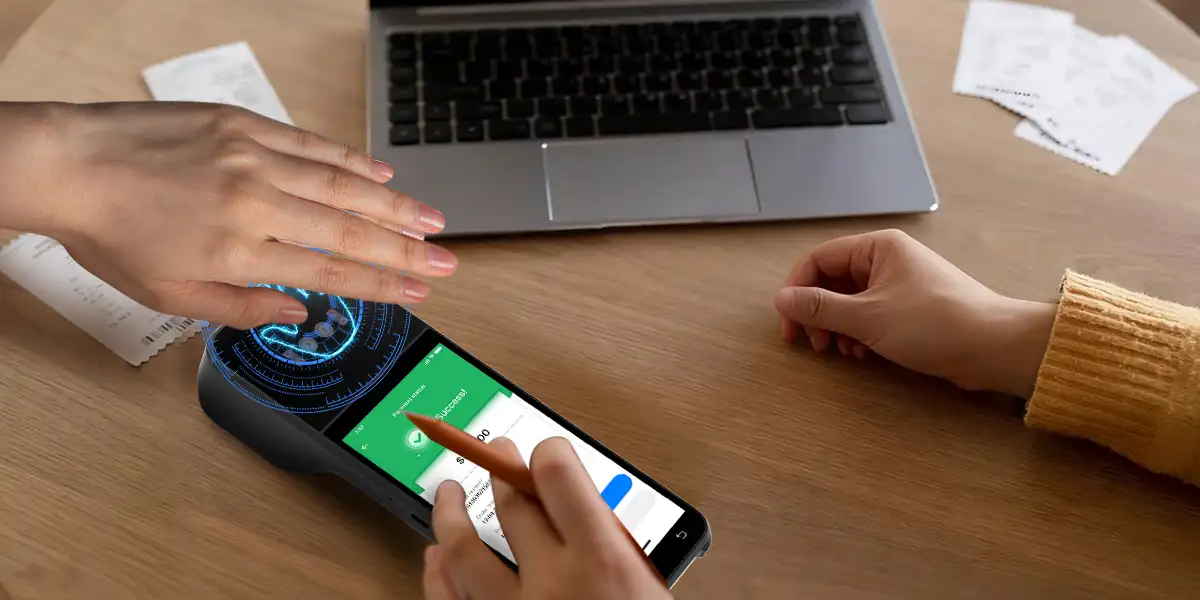
A smaller but growing set of terminals extend loyalty identification past cards and phone numbers into biometric enrollment. Palm vein recognition is one example already in commercial deployment — ZCS is among the Android POS manufacturers currently shipping palm-vein-enabled terminals with an open SDK, allowing a loyalty platform to enroll a customer's palm vein pattern as an alternate identifier at checkout rather than requiring a card, app, or phone number lookup. This kind of hardware-level identity feature is only usable by a loyalty platform when the terminal's SDK exposes it as a documented API — which is exactly the open-architecture requirement described above, not a feature unique to any one brand.
Before signing a loyalty software contract, confirm the following on the terminal side:
Terminal selection criteria — OS openness, certification scope, SDK depth — are covered in more detail in our full framework for choosing an Android POS platform, which walks through the same evaluation logic beyond loyalty use cases alone.

Q1: Can any POS terminal run a loyalty program?
No. A terminal needs an open SDK, app-store-level software distribution, and PCI PTS-compliant sandboxing for third-party applications. Closed, single-application terminals restrict or block loyalty software entirely, regardless of what the loyalty vendor's platform supports on paper.
Q2: What makes a POS terminal "locked-down"?
A locked-down terminal restricts installable applications, exposes no public SDK, and runs firmware built around a single payment application. These traits reduce PCI audit scope but also block loyalty apps, CRM syncs, and other third-party integrations by design.
Q3: Does PCI compliance prevent loyalty apps from running on POS hardware?
Not by default. PCI PTS POI v7.0 permits third-party applications, including loyalty apps, provided they are sandboxed away from cleartext payment card and PIN data. Compliance requires isolation, not exclusion, and the terminal's architecture determines whether that isolation is technically possible.
Q4: What is the difference between a post-transaction loyalty sync and a real-time integration?
A post-transaction sync applies rewards after the sale closes, through a payment gateway webhook. A real-time integration applies rewards during checkout, through an SDK hook. Locked terminals typically only support the former, which prevents in-session discounts and redemptions.
Q5: Can biometric identification, such as palm vein, be used for loyalty enrollment?
Yes, on terminals where the manufacturer exposes biometric capture through a documented SDK. Palm vein and similar biometric identifiers let a loyalty platform recognize a returning customer without a card, phone number, or app lookup, provided the hardware architecture supports third-party access to that data.






 Home
Home  How Does Palm Vein Recognition Work for Membership and Loyalty Programs?
