
2026-11-26 Author : ZCS
NIBSS Instant Payment is one route within the wider payment processing workflow, but it does not follow the same authorization path as a card transaction. A customer instructs a participating financial institution to transfer money from one account to another, and the beneficiary receives usable value through the connected service.
The operating boundary is precise.
NIBSS Instant Payment, commonly called NIP, is an account-number-based electronic funds transfer platform operated by Nigeria Inter-Bank Settlement System Plc. NIP carries real-time transaction messages between licensed participating institutions, supports immediate beneficiary credit, and later settles the institutions' net obligations through scheduled settlement sessions.
That definition explains why a shop can receive money immediately even though the banks complete their own settlement process separately.
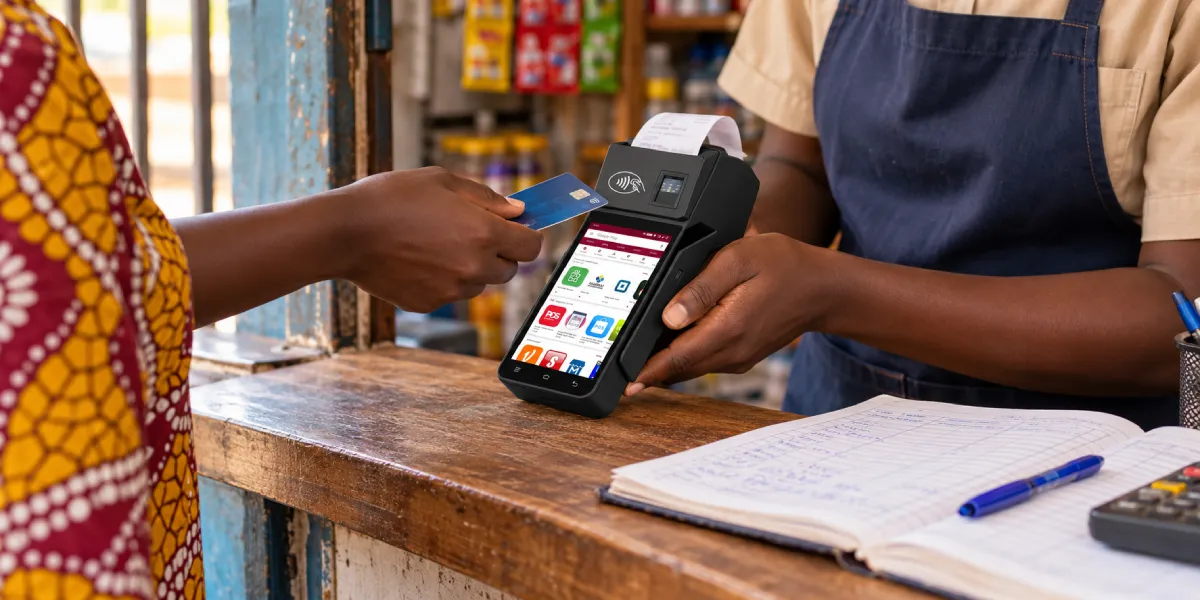
NIBSS Instant Payments are inter-institution account transfers processed through the NIP platform. NIBSS describes NIP as a real-time electronic funds transfer service for person-to-person, person-to-business and business-to-business payments.
The official NIP service page lists mobile banking, internet banking, POS, ATM, USSD, web platforms, agents and third-party channels as access points. These channels initiate or present the payment, while the participating financial institutions and NIP infrastructure process the account transfer.
NIP is not a consumer banking app. NIBSS supplies the shared payment infrastructure and services used by banks, other financial institutions, fintechs, mobile money operators and payment service providers. The customer normally interacts with a bank, wallet, agent or merchant interface rather than with NIBSS directly.
NIP is also not a card network. A card payment normally routes an authorization request through an acquirer, card network and issuer. An NIP transaction sends an electronic transfer instruction between participating account providers.
An NIP transfer connects several parties that perform different jobs.
| Participant | Role in the payment |
|---|---|
| Customer or sending business | Starts the transfer and authorizes the debit |
| Sending institution | Validates the sender, checks the account and submits the transfer instruction |
| NIBSS | Switches the NIP message, supports status services and calculates settlement obligations |
| Receiving institution | Receives the instruction and credits the beneficiary account |
| Merchant or beneficiary | Receives value and confirms that the payment matches the sale |
| Settlement bank | Settles for an institution that does not hold its own clearing-house account |
The merchant can be the direct beneficiary or can receive funds through a payment provider's collection structure. The account name, transaction reference and reporting fields available to the merchant depend on the chosen service.
The sending institution remains responsible for authenticating its customer. The receiving institution remains responsible for applying the incoming credit correctly. NIBSS provides the inter-institution infrastructure rather than replacing either institution's customer relationship.
The customer enters or selects the beneficiary's financial institution and account number. A merchant checkout can present these details directly, generate a payment request or use a provider integration that links the transfer to an order.
NIP includes a Name Enquiry service that lets the source institution validate beneficiary details from the account number. The customer should check the displayed beneficiary name before authorizing the transfer because a successful transfer to the wrong valid account creates a recovery problem rather than a normal checkout cancellation.
The sending institution checks the account, available funds, transfer limit and required authentication. The exact interface can use a banking app, internet banking, USSD, an agent device or another supported channel.
The channel does not change the underlying need for authorization. A cashier, agent or POS screen can help initiate the transaction, but the customer's financial institution controls the debit and authentication rules.
The sending institution submits the transfer to the NIP platform. NIBSS switches the message toward the receiving institution and returns the transaction response through the connected route.
The Central Bank of Nigeria's Instant EFT regulation defines an instant inter-bank payment as one delivered from the sending entity to the receiving entity within 60 seconds. The same regulation treats delivery beyond one minute as an ACH payment rather than an instant payment.
The receiving institution applies the credit to the merchant or beneficiary account after accepting the instruction. NIP is designed to make that value available online in real time.
A successful sender-side screen does not replace beneficiary-side confirmation. The merchant should verify that the expected amount reached the correct receiving account and can be matched to the current order.
NIP uses deferred net settlement. Beneficiary funds can be available in real time, while NIBSS calculates the participating institutions' net positions and completes settlement through scheduled sessions.
This distinction is central to NIP.
Real-time NIP credit means the receiving institution makes funds available to the beneficiary after processing the incoming transfer message. Deferred net settlement means participating institutions settle aggregated obligations in later sessions rather than moving central settlement funds separately for every retail transfer.
The merchant sees an account credit, while financial institutions manage the settlement layer behind it.
Merchants can receive NIP transfers through several operating models. The correct model depends on transaction volume, checkout software and the quality of payment references.
A small shop can show its bank name and account number, then ask the customer to make an NIP transfer. The cashier checks the merchant's bank app or alert before releasing the goods.
Direct transfer is simple but creates manual work. Repeated amounts, delayed notifications and missing order references make it difficult to identify which customer paid which bill.
A payment provider can assign an account or reference to a merchant, outlet, cashier or order. The provider receives the bank transfer status and maps it to the correct sale.
Dedicated identifiers reduce the need to search a general bank statement. The merchant still needs clear rules for pending, duplicate, failed and refunded transactions.
Collection services can build biller identification, transaction inquiry and merchant reporting on NIP infrastructure. NIBSS states that e-BillsPay uses NIP and provides billers with a Transaction Query System where transactions appear in real time.
This model turns an account transfer into a more structured merchant workflow. The checkout can connect the payer, bill, amount and merchant report instead of relying only on a credit alert.
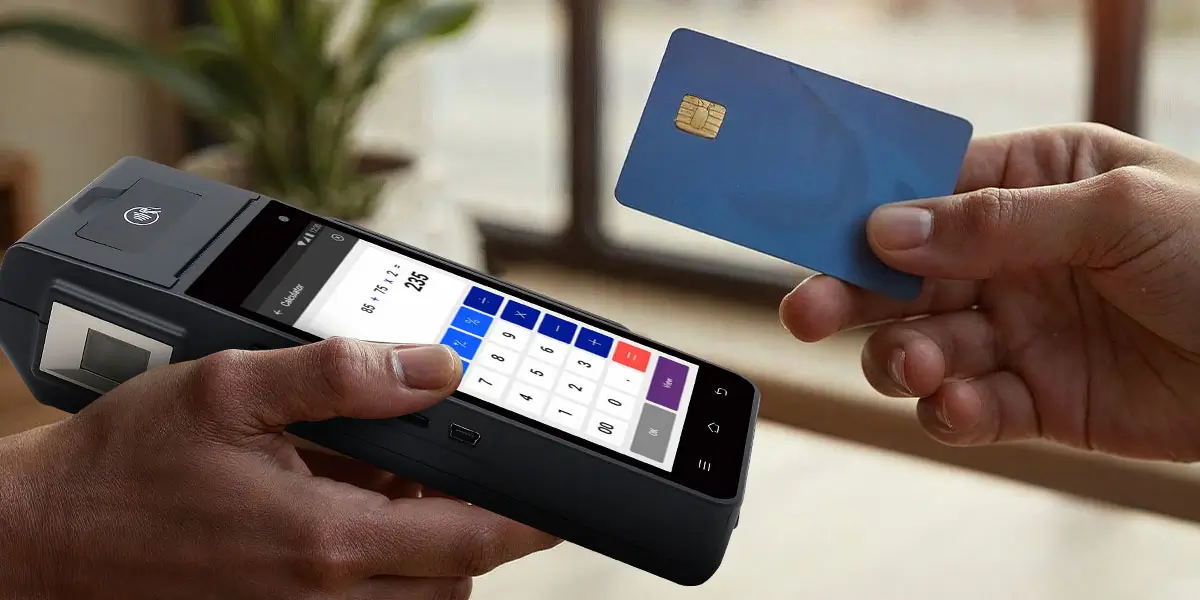
NIP lists POS as one available touch point, but a POS device does not become an NIP payment service merely because it has Android, a SIM card or a network connection. The installed bank or provider application, merchant onboarding and system integration determine whether the terminal can initiate or confirm NIP payments.
The POS software should create an order reference, present the payment instruction, receive a trusted status and update the order only once. Hardware supports the user interface and connectivity; the financial institution or payment provider supplies the live payment route.
Merchant-controlled confirmation is the decisive step at checkout. The merchant should use its receiving bank, payment provider or integrated sales system as the source of truth.
Reliable confirmation can come from:
NIBSS provides Transaction Status Query as part of NIP, allowing an institution to query an earlier transaction. NIBSS also provides an NIP Transaction Tracker for sender-side status checks through `*565*5#`, subject to its stated account, time and service conditions.
A customer's debit alert or screenshot is not independent merchant evidence. The sender may see a debit while the merchant cannot yet find a matching successful credit. A screenshot can also be old, altered or associated with another beneficiary.
The merchant's rule should be simple: close the order only when a merchant-controlled channel shows a successful transaction with the correct amount and reference. A pending or unknown status should keep the sale open until staff perform a status inquiry or follow the provider's support process.
This control also appears in other account-based systems. The guide to VietQR merchant payments explains the same separation between customer authorization, beneficiary credit and merchant order confirmation.
A timeout does not prove that the transfer failed. The payment can succeed at one stage while the response is delayed or lost before reaching the customer or merchant interface.
The correct response is a status query, not an immediate second transfer. Staff should preserve the session ID, bank reference, amount, sender institution, beneficiary account and transaction time. Those fields help the bank or provider locate the event.
The CBN Instant EFT regulation sets responsibilities for failed and delayed transactions. It includes sanctions for a failed NIP transaction not reversed to the customer within 24 hours and for delayed application of an inward NIP credit beyond four minutes. These rules govern participating institutions; they do not give a merchant enough information to promise a customer an exact resolution time before the provider investigates the specific transaction.
A merchant should separate four common cases:
| Merchant-side status | Merchant action |
|---|---|
| Successful credit with matching amount and reference | Complete the sale |
| Customer debited but merchant has no matching credit | Keep the order unresolved and request a status inquiry |
| Transfer marked failed | Offer a controlled retry or another payment method |
| Two successful credits for one order | Record the duplicate and use the approved refund process |
The merchant should not issue a cash refund solely because the customer's app shows a debit. The first task is to determine whether the transfer failed, remains pending or completed after the checkout timed out.
The guide to POS transaction reversals covers the recordkeeping needed when a transaction response and the customer's balance appear to disagree.
NIP separates the customer's payment experience from settlement between financial institutions. This design allows the beneficiary to receive value without waiting for every institution's bilateral obligations to settle individually.
The NIBSS service description states that NIP operates as a deferred net settlement system and currently uses multiple settlement sessions. Institutions without clearing-house accounts use settlement banks to receive settlement after NIBSS processes the relevant window.
Merchant accounting should therefore keep three records distinct:
The merchant may see an individual account credit immediately, but finance still needs to match the day's successful orders to transaction reports and bank records. The POS reconciliation process should investigate paid orders without matching credits, credits without orders, duplicates and refunds.
NIP serves a different role from several payment methods used in Nigeria.
| Payment method | Core payment route | Merchant confirmation |
|---|---|---|
| NIP transfer | Account-to-account transfer between participating institutions | Bank credit, provider status or integrated transaction response |
| Card payment | Card authorization through merchant acquiring and card-network infrastructure | Terminal or processor response followed by settlement records |
| NEFT | Electronic bank transfer with non-instant value timing | Receiving-bank record after processing |
| NQR | QR payment experience built around the Nigeria Quick Response scheme | Merchant app, provider portal or integrated status |
NIP can support services behind several customer interfaces. A QR, account number, bank app or POS screen can initiate a payment that ultimately relies on NIP, but the visible interface is not the payment network itself.
Card disputes also follow different rules from account-transfer recovery. A merchant should not describe an NIP transfer error as a card chargeback. Wrong transfers, fraud reports, recalls and refunds follow the participating institution's transfer procedures and CBN rules.
Instant payments require strong controls because funds can reach a beneficiary before a victim recognizes an error or fraud. Name Enquiry, authentication, transaction monitoring, limits and rapid reporting all reduce that risk.
The CBN announced updated instant-payment security guidance in March 2026, with key requirements effective July 1, 2026. The guidance allows customers to disable instant transfers, requires protected opt-in and opt-out processes, supports lower customer-set limits and requires real-time enterprise fraud monitoring by financial institutions.
The 2026 guidance also limits a mobile banking app to one linked device at a time and applies a temporary ₦20,000 transaction limit for the first 24 hours after activation on a new device. These controls belong to financial institutions and customer accounts, not to a general POS hardware feature.
Merchants should add their own controls:
Daily NIP reconciliation should explain every completed order and every incoming merchant credit.
A reliable integration uses one order ID and one payment-attempt ID throughout the process. Repeated callbacks or status responses must not close the same order twice.
NIBSS Instant Payments provide Nigeria's shared infrastructure for real-time, account-based transfers between participating financial institutions. NIP can move money from a customer to a merchant through mobile banking, internet banking, USSD, POS, agent and other connected channels.
The merchant workflow requires more than an instant customer debit. A complete checkout connects the order to the NIP transaction, confirms the beneficiary credit through a merchant-controlled channel and preserves the reference for reconciliation. NIP gives the beneficiary real-time value, while the participating institutions settle their net positions separately through scheduled settlement sessions.

NIP means NIBSS Instant Payment. It is an account-based electronic funds transfer platform that connects participating Nigerian financial institutions and supports real-time beneficiary credit.
No. NIP is shared payment infrastructure. Customers use bank, wallet, USSD, agent, POS or other provider channels that connect to participating institutions.
The beneficiary receives real-time value, but participating institutions use deferred net settlement. Customer credit and institutional settlement are separate stages.
Yes, when a bank or payment provider supplies a supported POS application or integration. The device alone does not provide NIP connectivity or merchant onboarding.
The merchant checks its own bank account, merchant portal, provider response or integrated POS status for a successful transaction matching the order amount and reference.
No. The merchant needs beneficiary-side confirmation. A sender debit can appear before the merchant finds the matching credit or final transaction status.
The merchant should keep the order unresolved, preserve all transaction references and request a status query before asking the customer to pay again.
No. Cancelling the sale record does not move money back. The merchant must use the bank or provider's approved refund or return-transfer process.






 Home
 How VietQR Payments Connect Bank Transfers, Merchant QR Codes and Payment Confirmation?

