
2026-11-05 Author : ZCS
The safest choice among Ingenico Move 5000 alternatives is the terminal configuration already supported by the project’s acquirer and POS integration. Android changes the application platform, but it does not automatically transfer the payment application, cryptographic keys, merchant account or cash-register interface. The full-stack Android POS guide explains how hardware, SDK and deployment responsibilities divide in an Android project.
The replacement boundary therefore extends beyond the device in the merchant’s hand.
An Ingenico Move/5000 replacement is a complete payment configuration that can assume the required transaction, merchant, security and POS-integration roles. The configuration includes terminal hardware, operating system, payment application, EMV components, keys, acquirer connection, merchant identifiers, estate management, receipts and support—not merely a card reader with Android.
That definition explains why a terminal with stronger specifications can still be the wrong replacement.
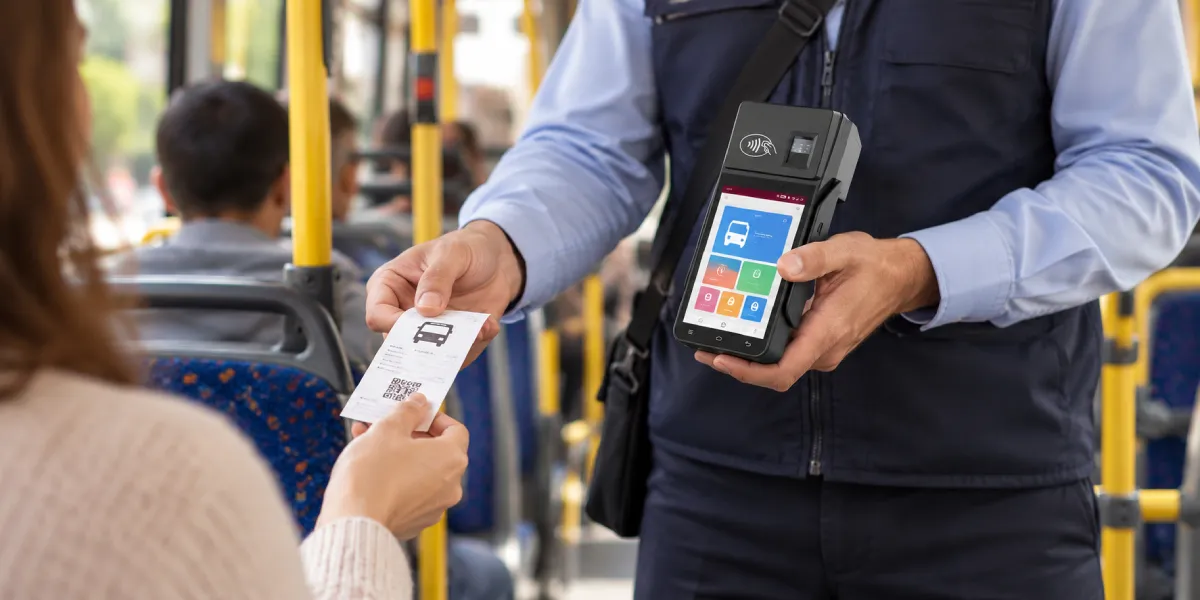
A specific Ingenico lifecycle notice places affected Move/5000 references into an EOL process. The September 2024 document applies to part numbers whose index revision ends in V at minimum. The notice does not support a claim that every Move/5000 version in every market has already lost support.
The affected references follow several different lifecycle dates. Ingenico lists September 30, 2024 as the EOL date, September 30, 2025 as the last-buy date, December 31, 2025 as the last-time-ship date and December 31, 2030 as the end-of-support date. Existing warranties and service agreements can affect the maintenance available during the transition.
| Lifecycle milestone | Date in the notice | Practical meaning |
|---|---|---|
| EOL announcement and EOL date | September 30, 2024 | Regions should plan migration; no new references are created after EOL |
| Last buy order | September 30, 2025 | Final order forecasts were due for affected references |
| Last time ship | December 31, 2025 | Last requested shipment date for the affected references |
| End of support | December 31, 2030 | Full support ends, subject to the stated service and warranty conditions |
The device label and part number should be checked before a project uses these dates. Move/5000 hardware has appeared in multiple PCI, contactless and regional configurations. An older CL1 or CL2 notice, a V-index notice and a local processor policy can create different deadlines for devices that share the same front-panel name.
Ingenico recommends the AXIUM DX8000 Portable series for the affected V-index references. The notice identifies DX8000-2 and DX8000-5 options based on Android 10, with PCI PTS 6.x and EMV Contactless Level 1 v3.1 in the comparison. That is the manufacturer’s migration route, but the merchant still needs its acquirer or processor to support the exact configuration.
A useful migration inventory separates what the merchant wants to keep from what must change. The following map prevents “same acquirer” from hiding a new application, terminal identity or integration contract.
| Dependency | Current Move/5000 evidence | Replacement decision |
|---|---|---|
| Acquirer or processor | Contract, supported terminal list and host route | Retain the provider or start a second commercial migration |
| Payment application | Name, version, parameters and supported features | Confirm an Android build for the candidate terminal |
| Merchant identity | MID, outlet, currency and acceptance profile | Decide what remains and what must be reprovisioned |
| Terminal identity | TID or provider-specific endpoint assignment | Confirm reuse, replacement or remapping rules |
| Cryptographic keys | Key owner, injection route and replacement process | Use the provider’s approved provisioning process |
| POS integration | Standalone, semi-integrated, ECR protocol or local connector | Preserve or redesign the amount-and-result exchange |
| Network | Ethernet, Wi-Fi, cellular, APN and firewall requirements | Validate the candidate at representative stores |
| Estate management | TMS enrollment, updates, diagnostics and remote actions | Assign tenant ownership and recovery responsibilities |
| Receipts and reports | Merchant/customer receipts, tips, refunds and totals | Compare layout, data and reconciliation behavior |
The migration team should record the current system before asking vendors for a replacement. The record needs the exact Move/5000 part number, hardware revision, firmware, payment-application version, acquirer, POS connector, TID/MID arrangement, network profile, receipt format and management platform.
A missing current-state record increases the chance of changing two systems unintentionally. A merchant can believe it is replacing hardware while the provider also changes the payment application, acquiring route or settlement reporting. Those extra changes may be valid, but they need separate testing and commercial approval.
The existing acquirer can remain only when it supports the replacement terminal and payment application. A merchant account is not a universal credential that activates any PCI-listed Android device.
The provider’s support matrix is the starting point for this decision.
Retaining an acquirer requires an approved terminal model, supported payment application, valid key-provisioning route, merchant configuration and processor connection for the target country. PCI PTS and EMV approvals establish important device capabilities, but the acquirer or processor determines whether the complete production configuration is available for the merchant.
That is why purchasing hardware before provider confirmation creates stranded inventory.
The correct question names the complete candidate configuration. Ask whether the provider supports the exact AXIUM DX8000, PAX, Verifone, Newland or other model; the required firmware and payment-application version; the intended card brands; and the merchant’s operating country and transaction types.
A provider should also confirm feature parity. Tips, pre-authorizations, completion, cashback, offline authorization, debit routing, surcharging, dynamic currency conversion, refunds and receipt data can vary between applications. A successful purchase transaction does not prove that the replacement preserves the full merchant workflow.
Changing terminals does not create a second acquiring route by itself. Multi-acquirer operation needs compatible payment applications, routing rules, keys, reporting and recovery behavior. The multi-acquirer POS guide explains why an open Android platform cannot establish those commercial and technical connections alone.
A merchant switching acquirers should name that change explicitly. Combining the hardware, processor and commercial migration may reduce duplicated work, but it also makes failures harder to isolate. The rollout plan should distinguish terminal defects from host configuration, settlement and merchant-account problems.
Moving from Telium TETRA to Android normally changes the payment-software environment. Business applications may use familiar Android development tools, but the protected payment application remains controlled through approved SDKs, signatures, secure services and deployment channels.
A business APK cannot simply read card data or import the Move/5000’s keys. Secure payment functions are separated from ordinary Android applications. A supported Android payment application communicates with protected terminal services under the rules of the manufacturer, payment provider and applicable security program.
Ingenico’s AXIUM architecture illustrates this separation. Business applications can run on the Android platform, while payment functions and secure memory remain controlled. An ISV should request the authorized payment API, application-signing process, test environment and deployment route instead of assuming public Android APIs can replace the TETRA payment layer.
PCI PTS approval should be verified against the exact hardware and firmware listing. The PCI approved-device database records approved PTS devices and their expiry status. PCI SSC also advises merchants to ask acquirers or payment brands about their device requirements.
EMV Level 3 addresses the connection between the terminal and acceptance infrastructure. The framework supports integration testing, while participating payment systems define the applicable policies and test cases. A terminal’s Level 1, Level 2 or PCI evidence cannot substitute for that end-to-end deployment decision.
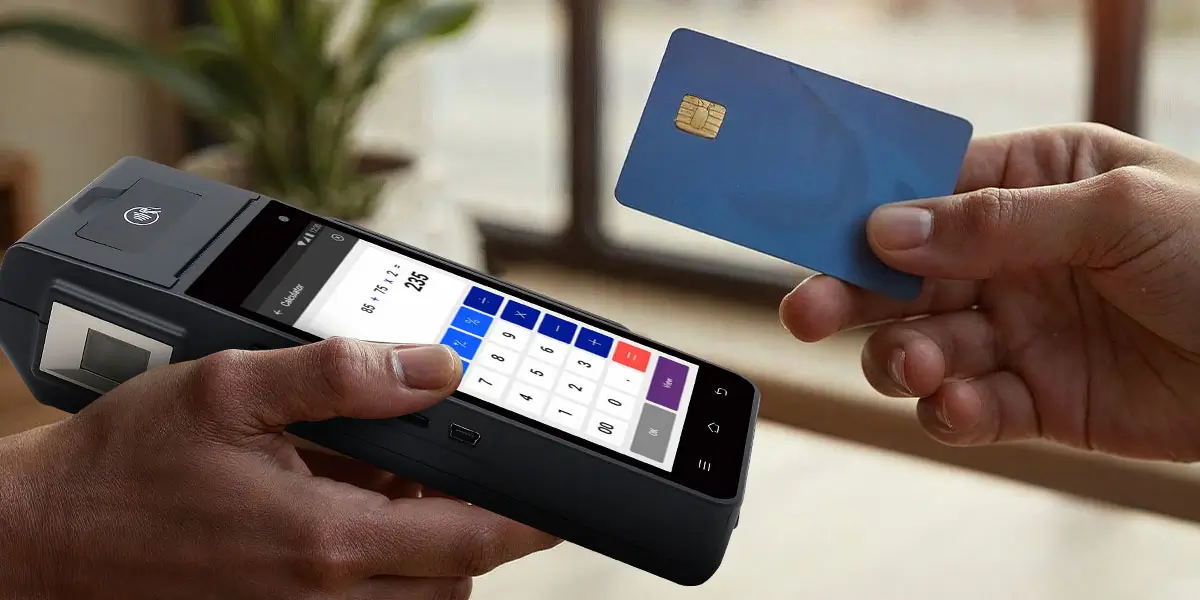
Second-hand payment terminals may retain processor software, keys, ownership records or management settings. A December 2024 discussion asked whether boxed units from a closed restaurant could be reused. Responses discussed processor encryption keys, operating-system and application combinations, reprogramming and POS pairing.
The Reddit thread is useful as a question source, not a universal technical finding. It records uncertainty about whether unused restaurant terminals could be reassigned and which processor or software controlled them. The linked Move/5000 resale discussion should therefore inform procurement questions rather than establish a reuse rule. The terminal owner, reseller, processor and key-injection facility determine whether a specific unit can be legitimately reprovisioned.
A production project should buy through an authorized route and obtain written support. Unlocking, factory resets or informal reinjection assumptions cannot replace proof that the payment provider accepts the device and can provision it under the new merchant arrangement.
The existing POS integration can remain only when the replacement supports the same transaction contract or a compatible adapter. USB, serial, Ethernet and Wi-Fi describe transports; they do not define the messages exchanged between the cash register and payment application.
The integration contract should be documented before choosing a cable or terminal.
A semi-integrated POS sends an amount and transaction command to the payment terminal, then receives a structured result without handling raw card data. Replacement compatibility depends on message format, transport, pairing, timeouts, status recovery, identifiers, receipts and the provider’s certified connector—not on a physically matching USB or network port.
That contract determines whether the POS needs configuration, middleware or code changes.
Move/5000 deployments commonly fall into three operating patterns. A standalone terminal receives amounts from staff, a semi-integrated terminal exchanges requests and results with a POS, and a tightly managed service can combine payment with provider-specific business functions.
Each pattern creates a different replacement scope. Standalone migration may focus on provider provisioning and staff workflow. Semi-integrated migration must preserve transaction messaging and unknown-status recovery. An Android app-on-terminal design may consolidate business and payment functions but creates new application-signing and lifecycle responsibilities.
The POS connector must distinguish approved, declined, cancelled, timed-out and unknown transactions. An Android replacement that reports only success or failure can cause duplicate payments when the terminal approved a transaction but the POS lost the response.
The acceptance test should include refunds, reversals and reconciliation identifiers. The POS, terminal journal and provider portal need enough shared references to investigate mismatches. The EMV Level 3 framework clarifies the role of end-to-end terminal integration testing, while the responsible payment system defines the applicable policy and test cases.
Receipt output should preserve the required merchant, card and transaction fields under the provider’s rules. A replacement also needs consistent references across the POS, terminal journal and processor portal so support staff can resolve a missing response without asking the customer to pay again.
A processor-specific compatibility list is stronger evidence than a generic device brochure. The list should name supported transaction modes, terminal versions, connectivity, vertical features and application releases. It should also identify whether the POS sends requests directly, through middleware or through a service running on the Android terminal.
One current processor portal documents AXIUM DX8000 in standalone, semi-integrated and service modes for its own payment application. That evidence applies to the named provider configuration, not every acquirer worldwide. The processor terminal documentation demonstrates the level of specificity a buyer should request.
Four replacement paths cover most Move/5000 projects. The correct shortlist begins with the retained payment relationship and operating model.
| Candidate or architecture | Why evaluate it | What may be preserved | What must be reconfirmed |
|---|---|---|---|
| Ingenico AXIUM DX8000 | Ingenico recommends the portable series for affected V-index Move/5000 references | Manufacturer relationship and a defined migration route | Acquirer support, payment application, POS connector, keys and regional configuration |
| Processor-approved Android SmartPOS | Current PAX, Verifone, Newland or other Android devices may exist in the provider’s portfolio | Existing processor and merchant relationship when supported | Exact model, app, certification, features, integration and lifecycle |
| Separate business POS plus supported payment terminal | Keeps protected payment acceptance independent from ordering or inventory hardware | POS business application can evolve separately | Amount/result interface, pairing, receipts and support ownership |
| Integrator-led payment-hardware project | Gives an ISV or payment company more control over hardware and business apps | Buyer-defined application and branding scope | Payment application, approvals, keys, acquirer integration and field support |
AXIUM DX8000 should be the first candidate when the provider supports Ingenico’s recommended migration. The official notice identifies DX8000-2 and DX8000-5 options and compares Android, larger touch displays, PCI PTS 6.x, EMV Contactless Level 1 v3.1 and higher memory with the affected Move/5000 references.
The AXIUM path still changes the software platform. TETRA applications and integrations should not be assumed to run unchanged on Android. The provider must confirm the payment application, business-app route, estate migration and ECR connector for the proposed DX8000 configuration.
A non-Ingenico Android SmartPOS can be viable when the existing or new processor supports it. The comparison should start from the provider’s deployed application rather than a global brand list. PAX, Verifone, Newland and other manufacturers can appear in different provider portfolios, countries and vertical packages.
A previous model-level comparison provides a useful example of this boundary. The PAX A920 alternatives guide shows why payment-provider confirmation, software migration and approval evidence matter more than matching Android specifications. The same rule applies in reverse when PAX or another brand is proposed as a Move/5000 replacement.
A separate business device can reduce the need to place ordering or inventory software inside the protected terminal environment. The merchant can use a larger Android POS for products, staff and receipts while a provider-supported payment terminal handles card acceptance through a semi-integrated link.
The two-device design can simplify future hardware changes but adds an interface to manage. Pairing, network discovery, transaction identifiers and timeout recovery become operational dependencies. The design works best when the provider offers a maintained connector and the merchant tests failure behavior.
ZCS Z90 represents integrator-led Android payment hardware rather than a preapproved Move/5000 merchant replacement. Manufacturer documentation lists magnetic-stripe, contact, contactless and 58mm printing capabilities with historical PCI and EMV certifications. The buyer must verify current approval records, delivered firmware and processor support for the exact project.
ZCS Z90 should not be presented as an automatic route for retaining an existing acquirer. Its value depends on a payment company or integrator that can supply the supported application, key provisioning, acquiring connection, terminal management and field support. A merchant without those partners should select from its provider’s approved terminal list.
The supply model determines who owns the missing work between certified hardware and a live merchant transaction. Three categories help procurement teams assign that responsibility.
| Supply model | What the buyer receives | Migration implication |
|---|---|---|
| Integrated Payment POS | Terminal, payment application, acquiring or processing support and coordinated service | Strongest fit for merchants seeking one accountable provider; customization follows the provider’s supported scope |
| Uncertified White-Label POS | Branded hardware without adequate evidence for the intended payment deployment | A card slot or NFC reader cannot justify production card acceptance; exclude until evidence is complete |
| Pure-Hardware ODM/OEM POS | Configurable hardware for a buyer-controlled solution | Fits qualified ISVs, processors and distributors that own application integration, certification, provisioning and support |
Integrated Payment POS usually minimizes merchant-level integration ownership. The provider decides which terminals, applications and connectors it supports. The tradeoff is that hardware choice and application freedom remain inside the provider’s commercial and technical boundaries.
Uncertified White-Label POS creates unacceptable ambiguity for protected payment functions. Private branding is not itself the problem; missing current approval and deployment evidence is. Buyers should require exact device, firmware and application records before treating any white-label terminal as a payment candidate.
Pure-Hardware ODM/OEM POS provides the most control and the most responsibility. ZCS can participate in this category for buyer-defined projects, but the buyer must assemble and validate the payment stack. Customization-first hardware is appropriate only when the project has qualified payment, security and support owners.
A representative pilot should prove the new payment configuration before a fleet order or storewide cutover. The pilot needs the intended acquirer, production payment app, POS connector, network, receipts, management tenant and support process.
The first store should exercise normal payment volume and the required transaction mix. An easy showroom with perfect Wi-Fi may not reveal cellular handover, restaurant tips, refunds, shift changes or busy-period timeouts. The store also needs an approved fallback payment route.
The pilot record should identify every component that passed. Record terminal model, hardware revision, Android or secure-OS build, payment application, EMV components, POS connector, TMS agent, merchant profile and network configuration. Production shipments should be checked against this baseline.
Interrupted transactions deserve more attention than clean approvals. Disconnect the POS link after card presentation, interrupt the network, restart the payment app and confirm how staff retrieve authoritative transaction status. The test should prevent both an unpaid order and a duplicate charge.
The existing Move/5000 should remain controlled until the new configuration reconciles successfully. Do not leave two live terminals with unclear merchant assignments at the same lane. Record which device is active, which is fallback and how staff switch without repeating an uncertain transaction.
A successful pilot should produce a repeatable store package. The payment terminal rollout checklist covers configuration records, wave gates, store handover, first-period reconciliation and rollback after the replacement decision has been made.
The following checklist converts the replacement decision into evidence a project team can approve.
No single notice should be applied to every Move/5000 without checking the part number and region. The September 2024 notice discussed here covers references with index revision V at minimum and lists December 31, 2030 as end of support.
Ingenico’s notice recommends AXIUM DX8000 Portable versions DX8000-2 or DX8000-5 for the affected V-index references. The merchant still needs provider confirmation for the exact payment application, acquiring route and POS integration.
Yes, when the acquirer supports the replacement terminal, payment application and deployment. Written confirmation should cover model, firmware, country, features, key provisioning and integration rather than only the merchant account.
A TETRA payment application should not be assumed to run unchanged on Android. The Android replacement needs a supported payment application and authorized interfaces. Business logic may be reusable, but secure payment functions remain controlled.
Reassignment depends on legitimate ownership, processor support, application compatibility, key provisioning and terminal condition. A boxed or factory-reset device is not automatically ready for another merchant. The processor or authorized service partner should confirm the approved procedure.
No. A physical port carries data, while the POS connector defines commands, results, timeouts, pairing and recovery. The replacement must support the required integration contract or use a compatible adapter.
No universal direct-replacement claim is justified. ZCS Z90 is payment-oriented hardware for qualified integrator-led projects. Current approvals, payment software, keys, acquirer support and field service must be established for the exact deployment.
The pilot should test every payment method, refund, receipt, POS message, interrupted transaction, TMS action and replacement procedure on the production configuration. Finance should also reconcile the first trading period before the next wave begins.
Ingenico Move 5000 alternatives should be selected around the payment relationship that must survive. Android provides a newer application platform, but a successful migration still requires provider-supported payment software, key provisioning, merchant configuration and a compatible POS interface.
AXIUM DX8000 is the manufacturer-recommended path for the specified V-index references, not a universal answer for every Move/5000. Other Android SmartPOS devices can be valid when the acquirer supports them. A separate business POS can also preserve a provider-supported payment terminal rather than combining every function in one device.
ZCS hardware belongs only in projects that can own the missing payment-integration work. ZCS Z90 cannot be described as a seamless acquiring replacement without exact approval, application and provider evidence.
A version-frozen pilot provides the final decision. The chosen terminal should process the complete transaction set, recover unknown outcomes, exchange reliable POS messages, reconcile correctly and remain supportable through the planned service life.







 Home
 Which SUNMI V2 Alternatives Can Keep Your Android App and Receipt Printing Working?

