
2026-05-29 Author : ZCS
Walk into a well-run establishment and the complexity is invisible, but behind the counter, alcohol retail follows a completely unique operational logic. Spirits move simultaneously in both bottles and cases with distinct pricing tiers, while premium wines require strict vintage-level tracking because different years from the same producer carry entirely separate cost bases and market values. High-velocity craft beer rotations compound this friction, as generic checkout software lacks a native concept for seasonal, intentionally temporary SKUs, ultimately causing off-the-shelf retail platforms to fail and trigger unexplained inventory shrinkage.
Overcoming these systemic failures requires deploying the best POS System for Liquor Stores to run a tighter, more profitable shop. As detailed throughout this guide, a purpose-built system untangles your inventory headaches—such as tracking distributor minimums and stockouts—while enforcing ironclad compliance through automated ID scanning to safeguard your retail license from costly fines. Beyond back-office security, the right platform seamlessly translates transaction data into powerful loyalty programs and personalized recommendations, turning one-time foot traffic into high-spend regulars who fuel long-term business growth.
The liquor store inventory problem isn't exotic — every owner knows it. You run out of your best-selling bourbon on a Friday night because the reorder didn't fire in time. You're sitting on twelve cases of a rosé that moved well last summer but hasn't turned since October. You notice a $60 single malt has been disappearing faster than sales can account for, but you can't tell whether it's a receiving discrepancy, a pricing error, or something worse.
These aren't edge cases. The alcohol industry is projected to reach $79.9 billion in US beer, wine, and liquor store revenue, operating in an environment where margin pressure is relentless and every inventory mistake hits directly at the bottom line. The underlying challenges fall into a few distinct categories:
Stockouts and reorder timing. A POS that tracks only unit sales without factoring in bottle-to-case conversion logic will either over-trigger reorders (treating a case sale as twelve individual units depleted) or miss them entirely. Either way, the shelf tells the real story before the system does.
Overstock and slow movers. Capital tied up in product that isn't turning is an invisible cost. A POS with sales velocity reporting by SKU surfaces the slow movers before they become a markdown problem — and identifies which products are driving the most turnover per square foot of shelf space.
High-value single-item loss tracking. Premium spirits represent a disproportionate share of both revenue and theft risk. A $150 bottle of scotch that goes missing is not the same event as a $12 six-pack. Inventory systems that don't flag high-value variance separately bury the signal in aggregate shrinkage numbers.
Supplier minimums and order logic. Many distributors impose minimum order quantities by brand or category, which means the reorder logic in a grocery-focused POS simply doesn't apply. A liquor-aware system needs to accumulate reorder triggers across the relevant supplier's catalog and generate a combined purchase order that meets minimums — not fire individual SKU-level alerts that can't be acted on separately.
Compliance is not an operational inconvenience in liquor retail. It is the condition under which the business exists at all. Selling alcohol to a minor exposes a store to fines of up to $10,000 per violation, license suspension, permanent revocation, and civil liability under Dram Shop Laws — and in serious cases, criminal charges against the owner or cashier. Regulatory enforcement is active: state liquor control agencies conduct regular undercover compliance checks using individuals under 21, and the results are public record—as tracked in real-time by the Illinois Liquor Control Commission’s underage compliance enforcement logs. A single failure can cost more than an entire year of POS software fees. Multiple failures, and the license is gone.
The compliance requirements don't stop at age verification. Liquor retail is governed at the state level, and no two states are identical. Hours of sale, permitted discounting structures, delivery rules, and record-keeping requirements vary significantly across jurisdictions — and change. A store operating in a state that allows Sunday sales, for example, still needs a system that can enforce blackout windows if local ordinances apply. A store near a state line may be selling to customers from a neighboring state with different purchase limits.
What a POS system needs to do here is concrete:
Automated ID scanning at the point of sale. Modern driver's licenses use a PDF417 barcode that encodes name, date of birth, expiration date, and issuing state. A POS integrated with a compliant ID scanner reads this data automatically, calculates age against the transaction date, and prompts the cashier only when a sale should not proceed — rather than relying on mental math or visual estimation under checkout pressure. Automated scanning is the most legally defensible method available.
Transaction-level audit records. Regulators don't just want to know if a sale was made — they want to know when, by whom, and under what conditions. A POS that logs cashier ID, timestamp, and ID-scan confirmation for every age-restricted sale creates the audit trail that demonstrates due diligence if a compliance check ever goes wrong.
State-specific configuration. No POS software vendor can make compliance decisions for you, but the system should be configurable to flag restricted transaction types, enforce operating hours, and generate the records your state requires. Verify that the platform your software vendor provides can be adapted to your jurisdiction before you commit.
The operational case for a better POS is clear. But there's a second argument that's easier to make to an owner who's skeptical of switching: the growth case.
Liquor retail is a repeat-purchase business. Customers don't buy a bottle of their favorite whiskey once — they buy it monthly, or weekly, or whenever it runs out. The economics of retention are lopsided in your favor: acquiring a new customer costs roughly five times more than keeping an existing one, and repeat customers tend to spend significantly more per transaction than first-time buyers. A 5% increase in customer retention can increase profits by 25% or more.
The right POS doesn't just process those repeat purchases — it makes them visible, trackable, and actionable:
Loyalty and points programs. Nearly 75% of consumers report being more loyal to a business when they have a positive experience with its loyalty program. For a liquor store, this doesn't have to be complex — a straightforward points-per-dollar system, tracked automatically at the POS, gives regulars a reason to choose you over the store two blocks away. The POS should handle enrollment, point accumulation, and redemption without requiring a separate system.
Purchase history and personalized recommendations. A customer who consistently buys single malt Scotch and has never bought a blended whisky is not the same customer as someone who rotates through categories. Purchase history captured at the POS gives staff the context to make a relevant recommendation — and gives the store the data to send a targeted promotion when a new Islay release comes in. The 68% of consumers aged 25–34 who report higher satisfaction with personalized product recommendations aren't just in e-commerce; they're in your store.
Tasting event and release management. Craft beer release days and whisky tasting events are genuine traffic drivers, but they create operational complexity — pre-registration, per-customer purchase limits, inventory reservation. A POS that can handle allocation-based selling and attach customer purchase records to specific events turns a chaotic release into a repeatable, manageable process.
When margin pressure is rising and basket sizes are trending down — as industry data from late 2025 showed — the stores that hold their ground are the ones with a loyal customer base that comes back by preference, not just convenience.
Here's the honest answer: there is no single platform that is universally the best. The right choice depends on your store's scale, your state's compliance requirements, your mix of spirits, wine, and beer, and whether you're running one location or several. But the decision framework is consistent.
The software layer is where the category-specific work happens. Bottle-and-case dual-unit tracking, vintage batch management, craft rotation logic, ID scan integration, state compliance configuration, loyalty programs — these are software functions. When evaluating vendors, push them on specifics: how does the system handle bottle-to-case inventory conversion? Can it track wine by vintage as a separate SKU? How does it log ID scan confirmations for audit purposes? Vague answers to concrete questions are a signal.
The hardware layer should be open, reliable, and matched to your environment. A liquor store checkout needs a stable terminal with a clear customer-facing display — customers buying a $90 bottle of bourbon want to see exactly what they're being charged. The terminal needs to handle a connected ID scanner, a receipt printer, and whatever payment peripherals your software vendor and payment service provider require.
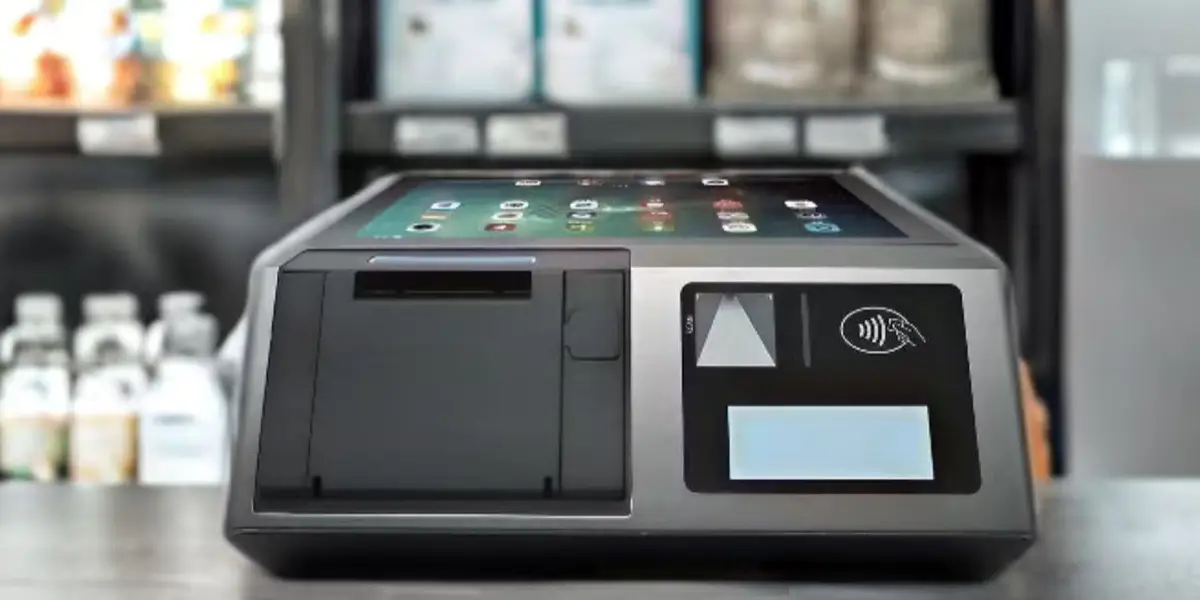
This is where hardware like the ZCS Z100 makes sense as a foundation. It's a purpose-built Android POS terminal — 10.1-inch operator display, 3.95-inch customer-facing screen, integrated 58mm or 80mm thermal printer, running Android 14.0 — designed as an open platform rather than a locked ecosystem. ZCS provides the hardware infrastructure and an open SDK for integration; payment certification and POS software are handled by your chosen vendors, which means you're not forced into a single provider's stack. For a liquor store operator who needs a specific compliance-certified POS software and a separate payment processor, that flexibility matters. The Z100 supports wall-mount and desktop installation and connects via Wi-Fi, Bluetooth, and USB — it fits the fixed checkout counter configuration without requiring a proprietary bundle.
The questions that actually matter at the point of decision:
A system that answers yes to all of those isn't a luxury — it's the operational baseline for a liquor store that plans to stay open, stay compliant, and grow.

Q1: Why do standard retail checkout terminals fail to handle liquor inventory accurately?
A: Standard retail platforms are built for static SKUs. They fall short in alcohol retail because they cannot natively link bottle-and-case dual units (often treating a case sale as a major inventory error). Furthermore, they fail to separate different vintages of the same wine, collapsing distinct cost bases and market values into a single SKU, which quietly erodes your shelf margins.
Q2: How does automated ID scanning safeguard a liquor store’s operating license?
A: Selling to a minor can result in instant fines up to $10,000 per violation, license suspension, or permanent revocation. A dedicated liquor POS bypasses human error by requiring a physical scan of the driver's license PDF417 barcode. The system calculates the legal age automatically against the live transaction date and logs a permanent, transaction-level audit trail to prove legal due diligence to state regulators.
Q3: How do specialized inventory controls stop revenue leaks on premium spirits?
A: Premium spirits represent a massive portion of a store's revenue but carry the highest theft risk. General retail POS systems bury high-value single-item losses in aggregate shrinkage numbers. A liquor-aware POS flags high-value variances separately and automatically groups reorder triggers across a single distributor’s catalog to easily meet complex supplier minimum order quantities (MOQs).
Q4: How does a liquor store loyalty program turn casual foot traffic into high-spend regulars?
A: Alcohol retail relies heavily on repeat purchases—retaining an existing customer costs 5x less than acquiring a new one. A native loyalty engine captures localized purchase histories. If data shows a regular exclusively buys single malt Islay Scotches, the POS empowers floor staff to make personalized recommendations or trigger targeted SMS promotions when a rare, allocated bottle drops.
Q5: What is the benefit of an open-platform Android terminal over a proprietary POS bundle?
A: Proprietary hardware locks you into their exclusive credit card processing rates and rigid, unmodifiable software. An open Android terminal providing a robust developer SDK gives procurement teams total flexibility. You can select the precise compliance-certified software your state requires, while routing your payment processing through any local provider to negotiate the lowest possible swipe fees.
Related Posts
1. Best Pos Cash Registers for Small Business Owners in 2026?
2. Android POS: The Complete System Selection Guide
3. How to Choose a Credit Card Terminal Machine for Your Small Business?






 Home
Home  Best Point of Sale Systems for Small Business in 2026: Complete Buyer's Guide
