2026-11-23 Author : ZCS
The best Tencent PalmAI alternative depends on which part of PalmAI a buyer wants to replace. A merchant seeking a managed checkout service needs a different supplier from an integrator building its own biometric POS application. The palm biometric identity guide explains the enrollment, template and matching layer behind these choices.
Tencent PalmAI is not just a scanner. It combines biometric capture, identity enrollment, template matching and connections to business or payment accounts. A complete alternative must cover all four layers, or clearly leave selected layers to the buyer.
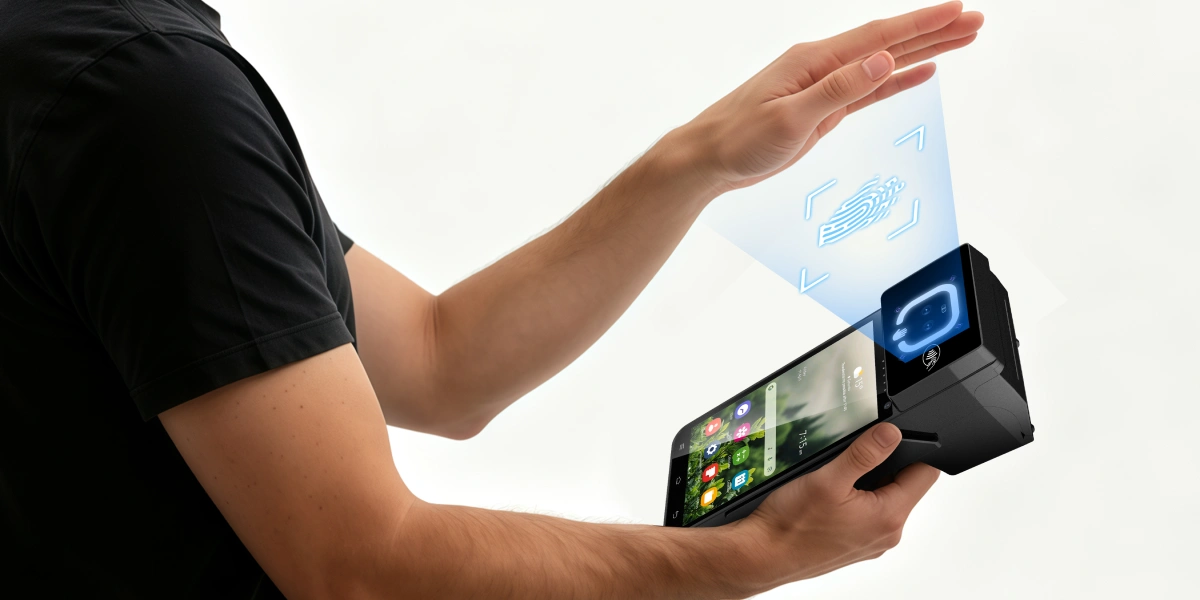
A useful alternative must replace a workflow, not merely recognize a hand or face. Tencent's international payment model shows the full chain. A participating user enrolls at a merchant point of sale, taps a Visa card, scans a palm and completes a one-time authentication. A Visa payment token is then linked to the biometric template.
That workflow contains four separate functions:
The palm does not store money and the biometric match does not approve the card transaction. PalmAI identifies the enrolled user and retrieves the linked payment credential. The conventional payment system still handles authorization, clearing, settlement, refunds and disputes.
The Tencent and Visa announcement, published in November 2024, documents the Singapore enrollment and funding flow. Buyers comparing alternatives should map every candidate against the same four-layer chain.
Five current routes cover distinct buyer needs, and Amazon One belongs in a separate historical category. The table compares service scope rather than claiming that different biometric methods are interchangeable.
| Alternative | Biometric method | What the buyer receives | Payment connection | Best fit |
|---|---|---|---|---|
| ZCS Z90NP, Z92P and Z108P | Palm vein, with model-specific palm-print or face options | Configurable Android terminals, biometric hardware and integration tools | Buyer or project partner connects the required payment application and acquiring service | ISVs, acquirers, distributors and enterprise integrators |
| PopID with J.P. Morgan | Face recognition; PopID also presents palm as a platform option | Managed biometric identity and payment experience | J.P. Morgan processes participating merchant payments | U.S.-focused merchants seeking a managed checkout service |
| NEC PayCAS | Face recognition | NEC biometric SaaS connected to PayCAS terminals and services | SB Payment Service supports the payment platform | Japanese merchants already considering PayCAS |
| SAKULaLa | Finger-vein recognition | Enrollment, identity and participating payment ecosystem | JET-S payment-terminal connection in the planned model | Japanese closed networks and planned participating stores |
| Conventional tokenized checkout | Card, phone or wearable authentication | Broad payment acceptance without merchant-specific palm enrollment | Existing card or mobile-wallet rails | Merchants prioritizing immediate consumer reach |
| Amazon One | Palm surface and palm vein | Discontinued retail identity and payment service | Historical saved-payment connection | Research and adoption lessons only |
No single row wins every project. Tencent PalmAI offers a branded palm platform and a demonstrated Visa-token model. ZCS gives integrators more control over hardware and application design. PopID and NEC provide more managed service layers. SAKULaLa uses a different body feature and a more locally defined ecosystem.
ZCS is the clearest Tencent PalmAI alternative for companies that want to own the application and payment integration. ZCS supplies Android palm-vein terminals rather than imposing one consumer wallet, one biometric cloud or one acquiring relationship. That boundary gives software companies and payment partners room to build enrollment, account binding, loyalty and transaction flows around their own service.
Z90NP is the payment-focused model in the ZCS palm-vein range. The terminal combines a 5.5-inch Android 15 device, palm-vein and palm-print recognition, a 58 mm printer and card interfaces in one handheld form. Its certifications include PCI PTS 5.x, EMV Contact Terminal Level 1 and Level 2, EMV Contactless Terminal Level 1, payWave and PayPass.
The Z90NP palm payment terminal supports server-side matching for galleries of up to 1,000,000 templates with a specified matching time below one second. The payment-capable hardware supports a project application, but the finished service still uses the integrator's enrollment design, account-binding logic, biometric server and acquiring connection.
This model suits an acquirer, wallet provider or enterprise platform that already owns the payment relationship. The organization can add palm presentation without placing the entire customer journey inside another brand's consumer ecosystem.
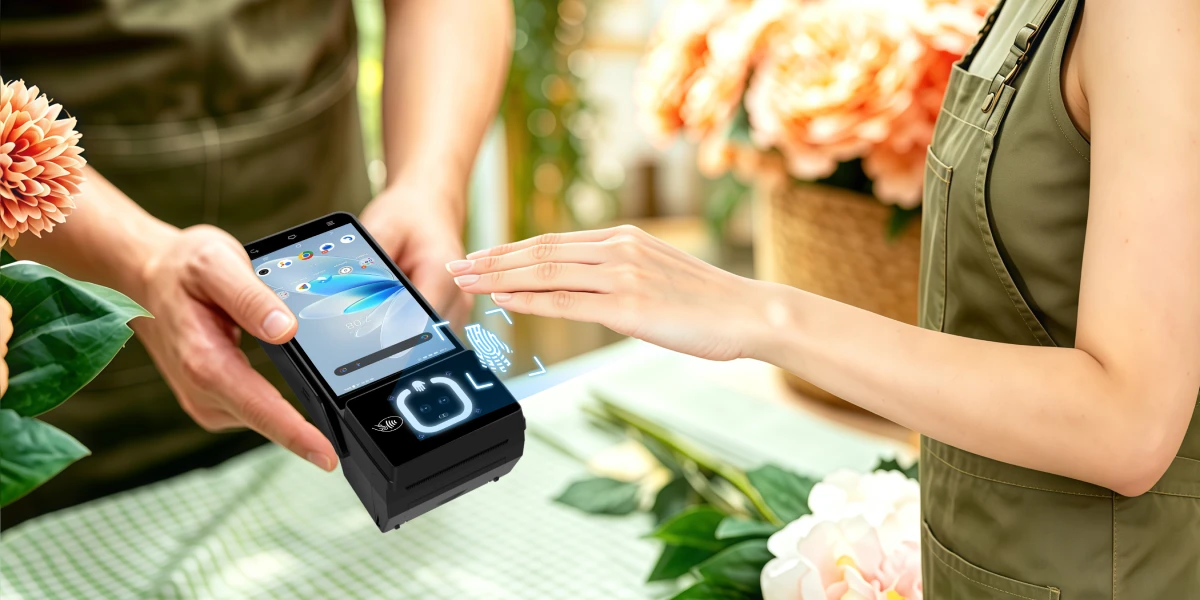
Z92P fits mobile identity and verification tasks better than a fixed cashier counter. The portable terminal combines palm-vein and face recognition, supports 1:N matching in under one second and stores up to 10,000 palm templates. A 5–20 cm palm-reading distance supports guided capture without requiring the hand to touch the device.
Z92P works well for enrollment teams, member verification, attendance, access checkpoints and field services. A payment project can use Z92P as an identity component, but it should not be presented as a drop-in replacement for a certified acquiring terminal unless the complete payment configuration supports that role.
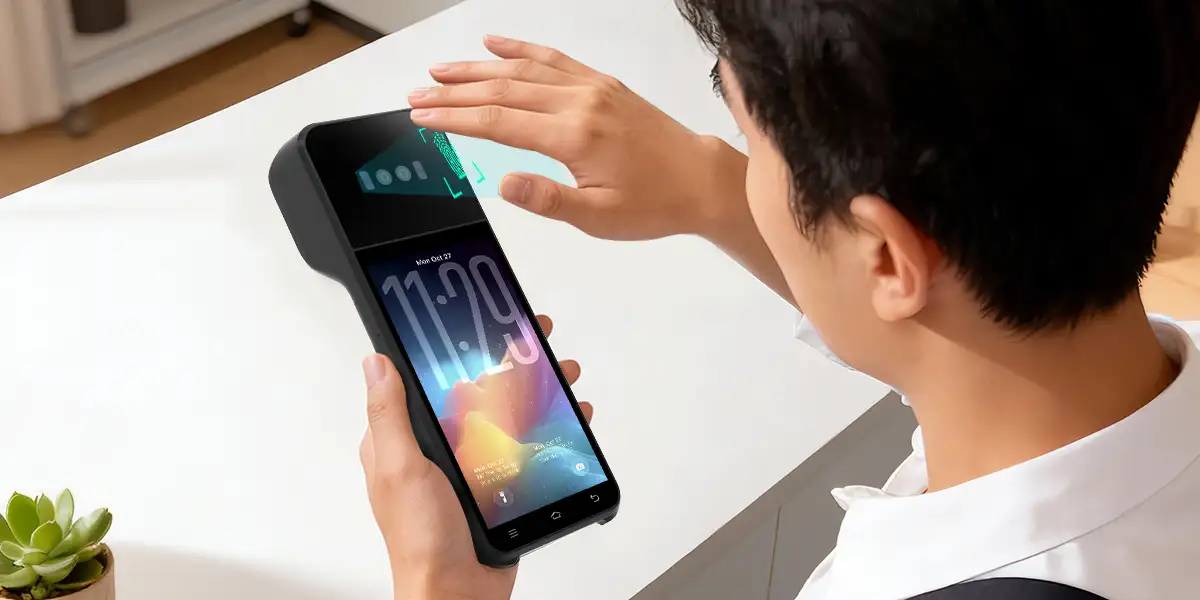
Z108P fits fixed counters where the user needs clear visual guidance. Its 8-inch display and dual-screen format give operators and customers separate views of enrollment, order details, consent prompts and match results. Optional face, QR and NFC functions support multi-method identity and fallback workflows within one station design.
Z108P is a practical choice for canteens, campuses, membership counters and self-service projects. The larger interface also makes it easier to explain why a scan failed and offer a card, QR code or staff-assisted fallback.
The broader palm terminal supplier checklist helps buyers compare SDK access, matching architecture, device management and production support before selecting a model.
PopID and J.P. Morgan replace more of the payment-service layer than a hardware supplier does. PopID enrolls the customer, connects the biometric identity to a payment method and matches the user at checkout. J.P. Morgan provides payment processing for participating merchants.
The approach uses face recognition rather than palm recognition, so it changes both the sensor and the user action. A customer looks at a camera instead of presenting a hand above a dedicated palm reader. J.P. Morgan described U.S. pilot expansion with PopID in August 2024.
PopID fits merchants that want a provider-led biometric checkout service with loyalty and payment connections. The tradeoff is less control over the identity platform, enrollment experience and geographic availability than a custom hardware-and-software project provides. The J.P. Morgan biometric payment program also makes the processing boundary clear: a checkout camera alone cannot deliver pay-by-face.
NEC PayCAS is the strongest alternative for Japanese merchants that want face recognition inside a multi-payment service. NEC connects its Bio-IDiom Services for SaaS face-recognition platform to PayCAS, while SB Payment Service supports payment processing and settlement relationships.
Users register face information and a credit card before checkout. At the counter, recognition retrieves the enrolled payment relationship so the user can pay without presenting the physical card or phone. NEC also described a SoftBank employee-cafeteria test scheduled from September 1 through November 30, 2026.
NEC PayCAS fits organizations already evaluating the PayCAS ecosystem and Japanese deployment support. It is less suitable for buyers specifically committed to palm presentation, or for global integrators that want to control the Android terminal and biometric backend independently. The NEC PayCAS announcement, published on September 4, 2026, explains the roles of NEC, SB Payment Service, the terminal and the merchant.
SAKULaLa substitutes finger-vein recognition for Tencent's palm-based approach. Users enroll a finger-vein template and connect that identity to participating services. A dedicated finger-vein reader is required because an ordinary POS camera cannot capture the vascular pattern used by the system.
The model is relevant to rail-linked retail, membership environments and Japanese closed networks. Tobu documents describe plans to introduce the service at about 100 FamilyMart stores during fiscal 2026, so the store count represents a planned rollout rather than a confirmed completed deployment.
SAKULaLa fits buyers that value an existing Japanese identity ecosystem and accept finger presentation. It does not fit projects that require touch-free palm scanning, open Android hardware selection or deployment outside the supported service network.
SAKULaLa's proposed connection to JET-S payment terminals also shows why enrollment and transaction authorization must remain separate steps.
Amazon One should not appear on a 2026 procurement shortlist. Amazon ended the service at participating retail businesses on June 3, 2026, and stopped new enrollment earlier. The current Amazon One service terms record the shutdown dates.
Amazon One still provides valuable lessons. The service showed that technically fast palm recognition does not remove the need for enrollment, visible privacy controls, merchant coverage and a compelling reason to change a familiar payment habit. Cards and phones already work across far more locations without joining a merchant-specific biometric service.
For alternatives research, Amazon One now belongs in the evidence column, not the candidate column.
The selection process should begin with service ownership, not biometric accuracy claims. Six questions expose most differences before a buyer requests a pilot.
Palm, face and finger-vein systems create different checkout behavior. Palm scanning requires a dedicated near-infrared reader but gives the customer a deliberate presentation action. Face recognition can use a camera-based interaction but raises stronger concerns about accidental capture. Finger-vein systems require a dedicated sensor and a closer presentation.
Enrollment determines who owns the customer relationship. A managed service may host identity records and connect saved payment methods. A custom ZCS deployment lets the integrator design enrollment, consent, identity recovery and account binding around its own application.
Biometric recognition and payment acceptance are separate contracts. Tencent's Singapore model uses a Visa payment token. PopID works with J.P. Morgan in the cited merchant program. NEC connects Bio-IDiom to the PayCAS and SB Payment Service structure. ZCS supplies payment-capable hardware for the buyer's selected application and acquiring arrangement.
A successful pilot in one country does not create global acceptance. Buyers should confirm current merchant availability, supported banks or processors, data-hosting arrangements, installation support and service continuity in every intended market.
Managed services reduce system assembly, while configurable terminals preserve design control. A restaurant chain seeking one supported checkout service may prefer PopID or PayCAS where available. An ISV, acquirer or national distributor building its own product is better served by ZCS hardware and SDK access.
The PalmAI and Amazon One comparison shows how service ownership changes enrollment, payment linking and long-term availability even when two systems use similar palm inputs.
Every biometric checkout needs a visible fallback. Card, contactless phone, QR code, PIN or staff-assisted identification should keep the queue moving. The POS must also prevent a failed palm or face match from being confused with a declined payment.
Buyer type produces a clearer answer than a universal ranking. The following shortlist keeps the recommendation tied to deployment control and market scope.
| Buyer | Best starting point | Reason |
|---|---|---|
| Payment ISV or acquirer building a branded palm service | ZCS Z90NP | Certified payment hardware, palm recognition and control over the application and acquiring connection |
| Enterprise building portable identity workflows | ZCS Z92P | Compact palm-vein and face identification with a local template capacity suited to mobile operations |
| Campus, canteen or fixed membership counter | ZCS Z108P | Larger dual-screen interface for enrollment, prompts and fallback choices |
| U.S. merchant seeking managed biometric checkout | PopID with J.P. Morgan | Provider-led face identity and payment processing path |
| Japanese merchant centered on multi-payment acceptance | NEC PayCAS | Face recognition connected to the PayCAS service structure |
| Japanese network evaluating finger-vein identity | SAKULaLa | Finger-vein enrollment tied to a planned local ecosystem |
| Merchant seeking the broadest immediate consumer acceptance | Contactless cards and mobile wallets | No merchant-specific biometric enrollment requirement |
ZCS is the most flexible Tencent PalmAI alternative for custom palm-payment hardware projects. PopID and NEC are stronger when the merchant wants a managed biometric service. SAKULaLa is a specialized finger-vein route. Tencent PalmAI remains the reference choice when the buyer wants Tencent's palm platform and supported account connections rather than building the stack independently.

ZCS is the closest hardware route for a custom palm-payment project, while no listed provider duplicates Tencent's entire service. Z90NP combines palm recognition, Android, payment interfaces and printing, but the buyer supplies the application, biometric service design and acquiring connection.
PopID is a biometric-payment alternative, but its best-known checkout deployments use face recognition. PopID can replace the identity and account-linking experience without preserving the same palm presentation used by Tencent PalmAI.
A normal visible-light camera is not a palm-vein reader. Palm-vein systems use near-infrared capture to record vascular patterns beneath the skin, so they require a purpose-built biometric module.
ZCS supplies configurable biometric POS hardware and integration tools rather than one mandatory consumer wallet. The project owner connects its own identity application, account-binding logic and payment service.
No. Amazon One ended service at participating retail businesses on June 3, 2026. It remains useful for studying adoption, enrollment and service-continuity risks.
Face payments can reduce the need for a palm reader, but they still require enrollment, matching, payment-account binding and privacy controls. The right method depends on the desired user action, capture environment and service provider.
No. Biometric recognition identifies an enrolled user; the payment processor and financial institutions still authorize and settle the transaction. A successful match can retrieve a credential, but it cannot guarantee payment approval.
A ZCS terminal deployment gives integrators the most direct control among these options. The integrator can select the terminal format, build the Android workflow, connect its biometric backend and retain its own payment and merchant relationships.






 Home
 How a Z100 or Z92 RFID POS Terminal Supports Retail and Inventory Management?

