2026-10-29 Author : ZCS
Tencent PalmAI is the better option of the two for organizations evaluating an active palm-payment deployment today. Amazon One remains the stronger historical example of a large U.S. retail rollout, but its retail service ended in June 2026. The broader palm biometric identity guide explains the recognition layer shared by both approaches.
Palm payment identifies an enrolled person and retrieves a linked way to pay. The palm does not contain money, and a successful identity match is not the same as an approved transaction. A merchant still needs a payment network, an account connection and another payment method for anyone who does not use the biometric service.
The useful comparison is therefore not which scanner looks more advanced. It is which complete service fits the user, merchant and market.
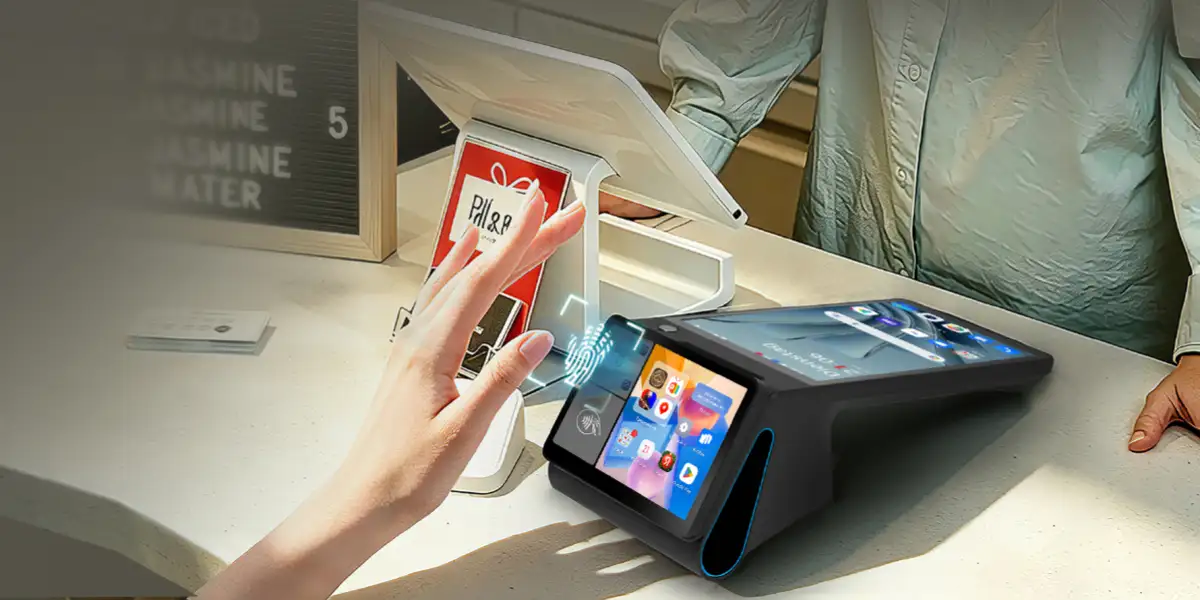
Tencent PalmAI wins on current availability, but Amazon One still matters as a retail case study. Tencent continues to market PalmAI PayMax for payment projects and has connected its palm-recognition service to Visa cards in Singapore. Amazon discontinued Amazon One at retail businesses on June 3, 2026 after citing limited customer adoption.
| Comparison question | Better answer | Why |
|---|---|---|
| Which can support a new payment project in 2026? | Tencent PalmAI | PalmAI PayMax remains an active commercial offering; Amazon One retail payment has ended. |
| Which had the larger visible U.S. retail footprint? | Amazon One | Amazon deployed the service across Whole Foods and third-party venues before the shutdown. |
| Which is easier for an occasional shopper? | Neither clearly wins | A contactless card or phone avoids merchant-specific biometric enrollment. |
| Which has the stronger international card-network path? | Tencent PalmAI | The Singapore model links an eligible Visa card to a palm enrollment. |
| Which is proven more secure? | No defensible winner | The vendors publish different claims, methods and operating details; no current independent test compares both complete systems. |
| Which fits campuses or member networks? | Tencent PalmAI has the current advantage | PalmAI remains available for integration, but suitability depends on enrollment, consent, support and fallback design. |
“Better” changes with the task. Tencent PalmAI is the practical candidate for a buyer, while Amazon One provides evidence about what can go wrong when a technically capable service asks mainstream shoppers to form a new biometric habit.
Tencent PalmAI is a palm-recognition platform, and PayMax is its payment-focused product. The platform combines visible palm features with vein patterns beneath the skin. PayMax is designed to connect that identity result to a payment account used in retail, banking, transport or other supported environments.
The Singapore deployment gives the clearest international example. Tencent and Visa announced the pilot on November 6, 2024. Participants enrolled at a merchant terminal by tapping a Visa card, scanning a palm and completing a one-time authentication. Tencent said a Visa payment token was then bound to the palm template.
The original Tencent and Visa announcement identifies participating-bank examples including DBS, OCBC and UOB and names Alchemist café as the first merchant example. Those details describe a pilot, not acceptance at every Visa merchant.
The result is a card-linked service. PalmAI recognizes the enrolled person, the linked Visa credential identifies the card relationship, and the card issuer still approves or declines the transaction.
Amazon One was a palm-based identity service that supported payment, entry, loyalty and age verification. The retail payment experience allowed enrolled users to present a palm instead of a card or phone at participating locations.
Amazon One also used more than surface palm lines. Amazon said its readers captured the lines and ridges of the palm together with the vein network beneath the skin. The service created a numerical “palm signature” and connected it to a payment method or Amazon account.
Amazon expanded the system through Whole Foods and selected stadiums, airports, convenience stores and other venues. That footprint made Amazon One a serious test of consumer palm payment rather than a laboratory demonstration.
The existing Tencent palm payment guide explains the Visa enrollment and funding flow in more detail. The comparison here focuses on how that active model differs from Amazon One as a complete service.
Tencent’s Singapore enrollment starts with an eligible Visa card, while Amazon One enrollment started inside Amazon’s own service. Both approaches required users to create a new biometric relationship before receiving the convenience of paying without a card or phone.
Tencent described three visible steps for the Singapore pilot:
After enrollment, the customer can present the same palm at a participating terminal. The linked card remains the funding source.
Amazon One connected a palm signature to a credit card or Amazon account. Amazon later introduced mobile enrollment, but the core requirement remained the same: the user had to join Amazon One before the palm could replace a physical credential.
Amazon’s technical explanation of the Amazon One recognition system states that the reader used infrared light to capture both surface and vein information. Amazon described the resulting palm signature as a numerical representation used for matching.
Enrollment creates the first major difference from contactless cards. A shopper can usually tap a card at a new store without registering with that merchant’s biometric provider. Tencent PalmAI and Amazon One both ask the user to complete setup before the first palm payment.
Neither Tencent PalmAI nor Amazon One stored money in the palm. Each system used a palm match to find a payment relationship created during enrollment.
Tencent’s Singapore flow uses a Visa payment token. A payment token is a protected digital reference that stands in for the underlying card number. When PalmAI finds the enrolled user, the merchant can submit a payment request using the linked credential. Visa and the issuing bank then handle the normal approval decision.
Amazon One linked the palm signature to a saved payment instrument. A successful match allowed the participating checkout or entry system to retrieve that relationship and request payment. The user’s card account, not the biometric record, supplied the funds.
| Payment step | Tencent PalmAI in Singapore | Amazon One retail service |
|---|---|---|
| Identity presented | Enrolled palm | Enrolled palm |
| Palm information used | Palm print and palm vein features | Palm surface and vein features |
| Payment link | Visa token representing an enrolled card | Saved payment method connected to Amazon One |
| Approval | Card issuer approves or declines | Payment provider and card issuer approve or decline |
| Where it worked | Participating PalmAI merchants | Participating Amazon One locations before shutdown |
| Fallback | Card, phone or another merchant-supported method | Card, phone, cash or another location-supported method |
This funding similarity matters because neither company created value stored inside a hand. The main difference lies in the surrounding account and merchant network.
Amazon One had the larger documented U.S. retail footprint, but that advantage no longer represents current payment availability. Amazon said in 2023 that the system was rolling out to more than 500 Whole Foods stores and dozens of third-party locations. The scale was meaningful, even though device placement did not guarantee frequent customer use.
Tencent PalmAI has a smaller documented international payment footprint but remains active. The Singapore pilot began with a named café and participating Visa issuers. Tencent later reported operating locations at Adventure Cove and Singapore Institute of Technology campuses, but public sources do not provide a complete current merchant list or transaction total.
Amazon ended the retail service on June 3, 2026. An Amazon spokesperson cited limited customer adoption in contemporaneous shutdown reporting. Amazon’s wider physical-store changes occurred at the same time, so the public evidence does not isolate one reason for the outcome.
The coverage comparison therefore has two answers. Amazon One achieved more visible U.S. retail distribution at its peak. Tencent PalmAI has the stronger current position because it remains available for new payment integrations.
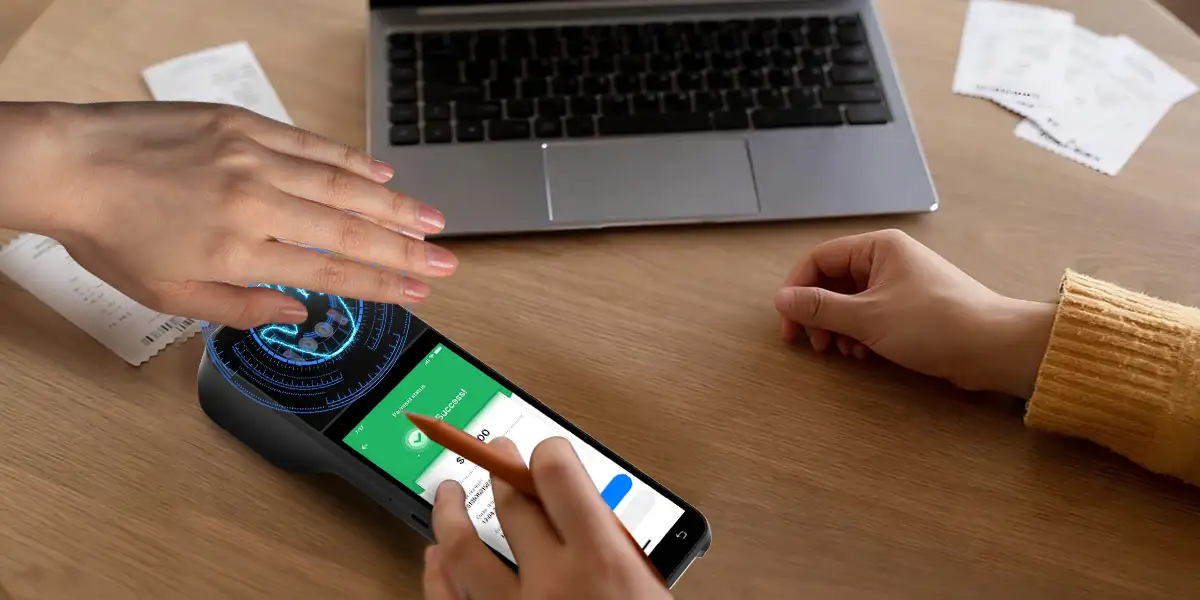
Public information does not support a simple privacy winner. Both companies described encryption and protected numerical templates, but those are vendor statements about different systems. They do not form an independent, side-by-side privacy audit.
Tencent said its Singapore service combines palm-print and palm-vein matching and encrypts stored user data in an irreversible form. The company also said its Singapore subsidiary would provide technical support and comply with data-localization requirements.
Amazon said Amazon One encrypted palm images and created a palm signature for matching. Amazon also provided an unenrollment process and said data associated with the retail service would be deleted after the service ended. A public promise about deletion should not be presented as independent verification that every record was removed.
The user-facing questions are the same for both systems:
A buyer should compare the contractual and operational answers to those questions, not only an accuracy percentage on a product page.
Neither system was a plug-in replacement for an ordinary card terminal. Both required a palm reader, enrollment, identity matching, account linking, POS integration, payment processing, support and a fallback method.
Amazon controlled much of the Amazon One service. That offered a more unified experience for participating U.S. locations, but it also made the merchant dependent on Amazon’s continued operation of the network. When Amazon ended the retail service, merchants could not keep using Amazon One as an independently operated payment scheme.
Tencent PalmAI is positioned as an integration platform. Its current PalmAI PayMax product includes palm devices, registration tools, user management, payment-gateway functions and device management. That structure can support different projects, but it does not remove the need for local payment partners, compatible hardware, merchant software and privacy controls.
Tencent’s Visa model provides a useful payment-network path outside China. Visa participation does not make every Visa terminal palm-enabled. Merchants still need PalmAI-compatible equipment and enrollment support.
The clearest benefit is paying without carrying a card or charged phone. Both Tencent PalmAI and Amazon One can remove the need to present a separate object after enrollment.
That benefit is strongest when users visit often or when the palm performs more than one job. A campus can connect identity, meal entitlement and payment. A gym can connect membership entry and purchases. A workplace can connect an employee account with cafeteria payment.
User feedback collected by ZCS repeatedly returned to the same threshold: replacing a one-second card tap with a palm wave is not enough on its own. Interest increased when the scan could also identify the person, open the correct account or confirm an entitlement.
The wider palm payment adoption analysis explains why enrollment and trust can outweigh a small checkout improvement. The lesson applies to both brands even though their payment networks differ.
Neither solution clearly beats contactless cards for occasional retail visits. Tencent PalmAI remains deployable, but a shopper still needs to enroll before using it. Amazon One’s retail exit shows that wide hardware placement does not automatically create regular use.
Tencent PalmAI is the stronger current candidate for a controlled cafeteria project. Students or employees already have accounts and return frequently, so enrollment can support identity, meal access and payment across many visits.
The operator must still separate those functions. Confirming that someone is an enrolled employee is not the same as confirming meal eligibility, and neither result guarantees payment approval.
Tencent PalmAI has the practical advantage because it remains available for integration. A membership venue can potentially use one palm interaction for entry, account lookup and a purchase. The exact combination depends on the membership software and payment service.
Amazon One previously demonstrated similar multi-purpose value through entry, loyalty and payment. That historical experience is useful, but the retail payment service cannot be selected for a new deployment.
Amazon One is the better case study for large-scale U.S. retail adoption. Its expansion and later shutdown provide more evidence about merchant coverage, enrollment friction and service continuity than a limited international pilot.
Amazon One should be studied as evidence, not purchased as an active retail payment option.
Tencent PalmAI is better positioned for international card-linked projects. The Singapore model shows how an existing Visa card can remain the funding source while PalmAI supplies the identity step.
The model still depends on participating issuers, merchants, processors and local biometric rules. A successful Singapore pilot does not prove automatic availability in another country.
Tencent PalmAI still needs broader independent evidence about sustained consumer use outside China. Public case studies describe deployments and vendor results, but they do not provide a complete picture of enrollment abandonment, repeat use, support incidents or the total cost per active user.
Amazon One showed that technical capability does not guarantee a durable retail service. Amazon reported millions of uses and wide deployment before ending the retail product. The missing link was not simply recognition accuracy; enough customers and merchants had to keep finding the service worthwhile.
Future palm-payment projects should report measures that matter after installation:
Those measures would make the next comparison more useful than competing vendor accuracy claims.
ZCS can supply the terminal layer for palm-identity and payment projects, but it is not a replacement for Tencent PalmAI or Amazon One. A complete service still needs enrollment software, user accounts, a recognition platform, payment integration, data rules and a non-biometric fallback.
The Z90NP is the more direct hardware fit when a project needs a handheld palm reader together with conventional card acceptance and receipt printing. The Z90NP palm payment terminal combines palm-vein and palm-print capture with magnetic-stripe, contact-chip and contactless card readers in a 5.5-inch Android device.
The Z108P provides a larger 8-inch, dual-screen form factor for fixed enrollment desks, cafeterias or membership counters. Product documents describe both devices as using back-end palm recognition, so a project must plan network connectivity and the matching service rather than assuming the terminal completes biometric identification alone.
ZCS has not been identified as the hardware provider for Tencent PalmAI or Amazon One. Buyers should treat the ZCS devices as integration hardware that must be tested with the selected recognition and payment platforms.
Tencent PalmAI is the better palm-payment solution for a new project in 2026 because it remains active and supports card-linked international deployments. Amazon One is no longer an available retail payment choice, despite having achieved the larger visible U.S. store rollout.
That verdict does not mean Tencent PalmAI is automatically better for every shopper or merchant. Contactless cards remain easier for occasional purchases, and no public independent test establishes a complete security winner between the two systems.
The best use case is a place where people already have accounts, return often and gain more than a different payment gesture. Campuses, employee cafeterias, gyms and membership venues meet that test more often than general retail.

Tencent PalmAI is the broader palm-recognition platform. PayMax is its payment-focused product, while Tencent Palm Pay describes payment experiences built with the technology, including the Visa-linked Singapore deployment.
Amazon One’s retail service ended on June 3, 2026. Historical Amazon One deployments remain useful for comparison, but the retail payment service is not a current option for a new merchant project.
Yes. Amazon said Amazon One used both palm-surface features and the vein network beneath the skin. It is inaccurate to describe Amazon One as a surface-only palm-print system.
Tencent’s Singapore model charges the card linked during enrollment. PalmAI identifies the enrolled user, while Visa and the issuing bank handle the payment request and approval.
Public evidence does not establish a complete security winner. Both vendors published security and accuracy claims, but the systems were measured under different conditions and have not been compared in a current independent test.
Palm payment fits repeat-use environments where identity already matters. Campuses, employee cafeterias, gyms and membership venues can spread enrollment effort across many visits and combine identity with account access or payment.






 Home
 World ID for Banking and Finance: What Proof of Human Verifies and Where Its Limits Remain

