2026-11-19 Author : ZCS
The right palm biometric terminal supplier is the company that can turn a biometric sensor into a supported deployment. Buyers need matching software, enrollment tools, device interfaces, privacy controls, stable production configurations and a measurable acceptance test. A supplier that only demonstrates a fast scan has not yet proved that the system can run at a cashier counter, factory gate or attendance station.
Buyers new to the technology should first understand how palm biometrics for identity verification connects enrollment, template creation and later matching. Supplier evaluation begins after that basic workflow is clear.
The commercial model determines what the buyer must integrate.
Palm biometric terminal suppliers fall into three commercial models: sensor-module vendors, closed-platform providers and OEM/ODM terminal manufacturers. Module vendors supply capture hardware, closed providers control hardware and identity services, and OEM/ODM suppliers combine configurable Android terminals, SDKs, peripherals and branding for integrators.
No supplier model fits every project. The correct choice depends on who owns the application, biometric service, payment connection and long-term device support.
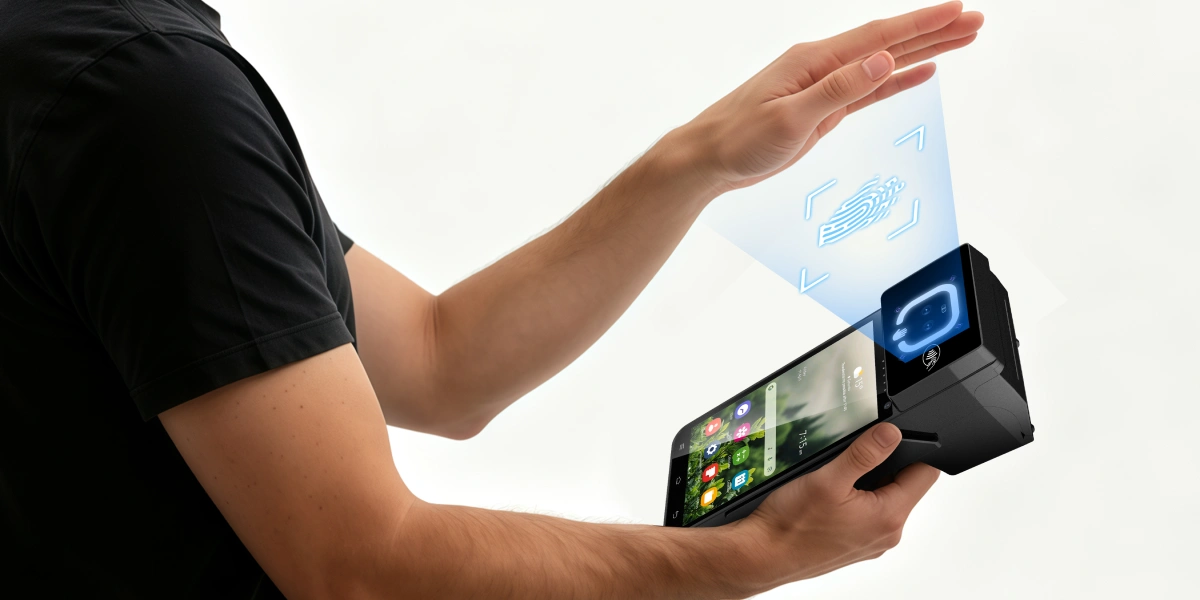
A palm biometric terminal supplier provides more than a palm reader. A complete project may require the imaging module, Android terminal, enrollment application, matching engine, SDK, device-management service, payment peripherals, installation accessories and after-sales process.
The first procurement question is therefore not “How accurate is the scanner?” It is “Which parts of the finished system does the supplier own and support?”
| Supplier model | What the buyer receives | Buyer responsibility | Best fit |
|---|---|---|---|
| Sensor-module vendor | Optical module, driver and basic SDK | Enclosure, host device, application, matching service and certification | Hardware manufacturers building a new device |
| Closed-platform provider | Reader, enrollment, matching and managed identity platform | Business integration and operational rollout | Organizations accepting one vendor’s full ecosystem |
| OEM/ODM terminal manufacturer | Configurable terminal, biometric hardware, Android integration and peripheral options | Business application, project-specific back end and service design | ISVs, distributors and solution integrators |
The supplier boundary affects cost and switching risk. A module offers maximum design freedom but creates the most engineering work. A closed platform reduces initial integration but ties the project to one identity service. An OEM/ODM terminal shortens hardware development while leaving the integrator responsible for the application and operating model.
A supplier cannot recommend the correct terminal until the buyer defines the transaction and identity workflow. Payment, access and attendance use the same palm presentation but require different outputs after a match.
| Project | Required result | Common hardware needs | Essential fallback |
|---|---|---|---|
| Payment | Identify an enrolled user and initiate an authorized payment flow | Certified card interfaces, NFC, receipt printer, secure keys and payment application support | Card, QR code, PIN or staffed checkout |
| Access control | Return an identity or access decision to a door or gate system | Fixed mounting, relay or controller interface, network resilience and local policy | Badge, PIN, guard release or mechanical process |
| Attendance | Record employee identity, timestamp, location and shift context | Queue-friendly presentation, export or API, offline records and supervisor tools | Badge, PIN or approved missed-punch workflow |
| Enrollment | Capture a usable palm sample and bind it to an identity record | Guided display, operator workflow, duplicate checks and consent record | Manual review and re-enrollment |
The same palm match can trigger very different business consequences. A payment project must separate identity confirmation from transaction authorization. An attendance project must preserve shift records and corrections. An access project must define what happens during a network or power failure.
The technical capture sequence remains consistent across these uses. The detailed explanation of how palm vein scanning works shows why hand position, near-infrared capture, template quality and matching architecture affect every later workflow.
The term “palm biometric” does not identify one technical design. A terminal may use palm vein, palm print, or a fused result that combines internal vascular patterns with visible palm features. The supplier must state which traits are captured and which trait makes the final decision.
Ask the supplier to document:
Server-side and local matching create different deployment risks. Server-side matching can support a large shared population across many terminals, but the project depends on network latency, service capacity and central data controls. Local matching reduces network dependency but limits database size and requires secure template synchronization across devices.
The test method matters as much as the published number.
Biometric performance evidence should identify false-match rate, false-non-match rate, enrollment failure, transaction time, gallery size, test population and operating conditions. A single “accuracy” percentage cannot show whether errors came from enrollment, hand presentation, matching thresholds, network delay or the operator workflow.
The ISO/IEC 19795 performance framework distinguishes technology, scenario and operational evaluations. Buyers should request scenario or pilot evidence that resembles the intended counter, gate or factory environment instead of accepting a laboratory comparison alone.
Low false-match rates do not prove resistance to spoofing or injected biometric data. Recognition accuracy measures ordinary comparisons. Presentation attack detection evaluates whether the capture system detects an artifact or manipulated presentation intended to interfere with the biometric decision.
Require the supplier to explain the anti-spoofing mechanism, test scope and failure response. A useful report identifies the attack instruments, sample count, sensor configuration, software version and acceptance threshold. Marketing phrases such as “live detection” or “cannot be copied” are not test methods.
The applicable benchmark is specific.
ISO/IEC 30107-3:2023 defines principles, test methods and reporting for presentation attack detection at the biometric capture device. The standard does not certify an entire identity system, protect back-end APIs or evaluate attacks introduced after the sensor, so system security requires additional controls.
The official ISO/IEC 30107-3 scope makes that boundary explicit. Buyers should test sensor attacks and also review API authentication, template integrity, administrator permissions and device software integrity.
Biometric templates need a defined owner, storage location, retention period and deletion process. A supplier should show where raw images and derived templates exist during enrollment, matching, backup, support and device replacement.
The data-flow diagram should answer six questions:
A fallback method is part of system reliability, not an admission that biometrics are weak. Injuries, inaccessible presentation positions, poor enrollment and service outages can prevent a legitimate user from matching. Payment, access and attendance systems need an approved non-biometric route with clear audit records.
NIST’s current SP 800-63B-4 biometric guidance, published in July 2025 with an implementation resource hub announced in October 2026, treats biometric data as sensitive personal information and requires an alternative non-biometric option within its federal digital-identity scope. Private deployments can use the same control as a practical design benchmark.
The broader palm-vein data security workflow covers template storage, encryption, deletion and privacy-law questions that belong in the supplier contract.
A working demonstration application does not prove that an integrator can build and maintain its own product. The supplier must provide the interfaces needed for enrollment, capture, matching requests, result handling, device health and software updates.
Ask for the SDK package before approving a sample order. The package should include:
The buyer should compile and run one real workflow before discussing volume pricing. A successful pilot should enroll a user, repeat the match, reject an unknown user, process a fallback, delete the template and confirm that the deleted identity no longer matches.
The general Android terminal manufacturer checklist adds factory proof, operating-system support, SDK maintenance, quality controls and after-sales evidence that apply equally to biometric hardware suppliers.
Payment certification and biometric performance prove different things. PCI PTS evaluates the payment device’s protection of PINs, keys and sensitive payment functions. EMV approvals cover card and terminal interoperability. Neither approval validates palm-vein matching accuracy or the supplier’s biometric privacy controls.
A payment project should request the exact approval record for the quoted model, hardware revision, firmware and payment configuration. A certificate logo in a brochure is not enough. Confirm the approval number, approval class, version and expiry, then confirm that the acquiring bank accepts that configuration in the target market.
The PCI SSC approved PTS device listing lets buyers search by company, model and approval number. PCI SSC also distinguishes current and expired approvals, which is why a supplier must identify the precise configuration rather than promise generic “PCI compliance.”
PCI PTS certification should be verified before a payment pilot, not after the buyer has committed to a production order.

A supplier becomes valuable when it can repeat the approved configuration across production batches. Procurement teams should inspect change control, component traceability, quality records, spare-parts policy and software maintenance alongside the product specification.
Request this evidence before the RFQ becomes a purchase order:
| Evidence | What it should prove |
|---|---|
| Factory and legal identity | The quoted company controls or formally manages production and support |
| Configuration sheet | Hardware, sensor, OS, memory, radios and accessories are fixed for the quoted SKU |
| Change-notification process | The buyer receives notice before sensor, CPU, firmware or enclosure changes |
| Quality plan | Incoming inspection, assembly checks, biometric functional tests and burn-in are defined |
| Software lifecycle | SDK, security patch, firmware, rollback and end-of-support responsibilities are assigned |
| Pilot support | Named engineers can investigate logs and reproduce field failures |
| Production acceptance | Sample criteria become measurable batch-inspection criteria |
Supplier evaluation should also cover business continuity. The buyer needs a process for replacement units, warranty returns, failed sensors, discontinued components and source-code or service continuity where the matching platform is critical.
A palm biometric terminal supplier should offer configurations that reflect the deployment rather than forcing every buyer onto one enclosure. Handheld payment, compact verification and guided counter enrollment place different demands on the screen, printer, battery, connectivity and mounting.
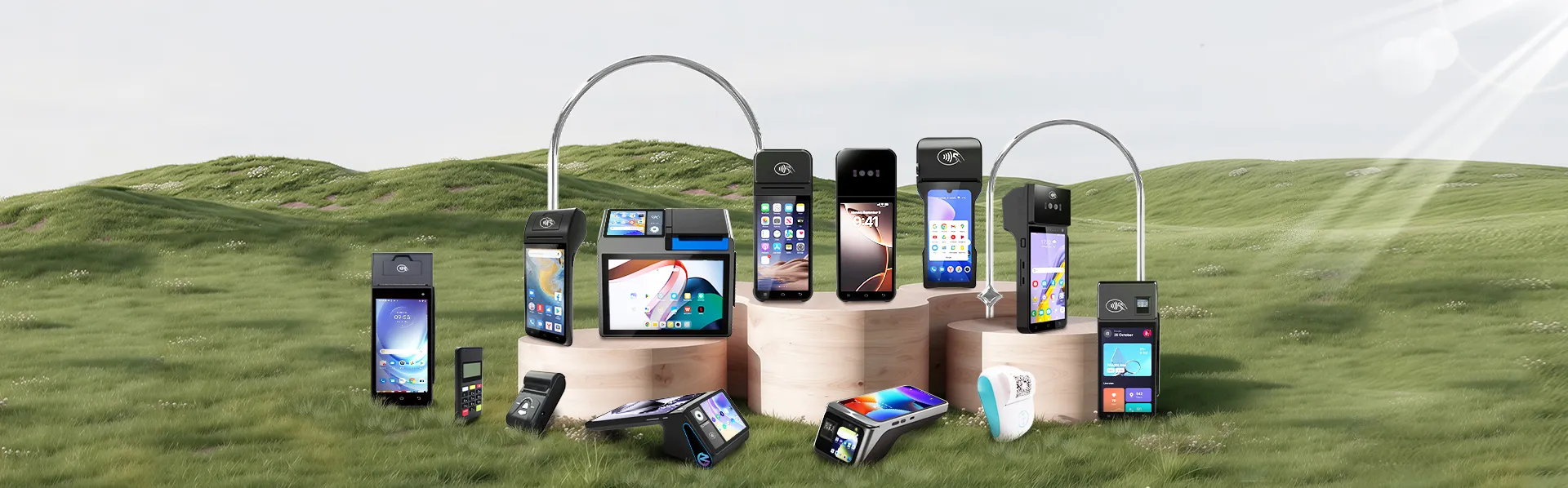
ZCS is a pure-hardware OEM/ODM terminal supplier that gives integrators control over their application and service architecture. Its palm-vein terminal range covers handheld and larger-screen models for payment, attendance and identity projects.
| Model | Configuration highlights | Best-aligned project |
|---|---|---|
| Z90NP | 5.5-inch display, Android 15, 4GB RAM, 32GB storage, 58mm printer, payment interfaces and server-side palm matching | Handheld biometric payment, cashier verification and mobile enrollment |
| Z92P | 5.5-inch display, Android 13 Go, 2GB or 3GB RAM, 16GB or 32GB storage, face and palm support, 10,000-template stated capacity | Compact attendance, inspection and identity verification |
| Z108P | 8-inch display, Android 14 Go, 3GB or 4GB RAM, up to 64GB storage, dual-screen option and server-side matching | Guided counter, attendance station and fixed verification workflows |
The handheld path fits projects that need palm capture and payment peripherals in one device. The Z90NP palm-vein payment terminal combines a 5.5-inch Android 15 device, 4GB RAM, 32GB storage, a 58mm printer, contact and contactless card interfaces, magnetic-stripe reading and palm capture.
Z90NP supports server-side matching at 1:1,000,000 in under one second, a palm presentation distance of 6–20 cm, FRR of 0.1% or lower and FAR of 0.00001% or lower.
The Z90NP specification also lists PCI PTS 5.x, EMV Contact L1 and L2, EMV Contactless L1, PayWave and PayPass. The procurement team must still match the exact approval record and acquiring requirements to the delivered configuration.

The compact path fits identity workflows that do not require the full payment stack. Z92P combines a 5.5-inch Android 13 Go terminal with face and palm recognition, dual-band Wi-Fi, Bluetooth 5.0 and a stated 10,000-template palm-vein capacity.
The Z92P specification lists 1:N matching below one second and a palm distance of 5–20 cm. The device belongs in attendance, field inspection or controlled identity projects only after the buyer verifies template storage, matching location, export format and fallback workflow.
No payment certification should be inferred from a biometric model name. The quoted Z92P configuration must list every required card interface and approval separately when payment is part of the project.
The larger-screen path fits deployments that need positioning guidance, customer prompts or a fixed counter workflow. The Z108P palm-vein recognition terminal uses an 8-inch 800 × 1280 display, Android 14 Go, an octa-core processor and configurable memory up to 4GB RAM and 64GB storage.
Z108P supports dual-screen operation with mirrored or different content, server-side matching at 1:1,000,000 in under one second, optional face recognition, optional QR scanning and optional NFC.
The larger display can guide hand position or show transaction status, but the project application must control what each screen presents. Buyers should test the final dual-screen build, not assume that attaching a second display automatically creates a customer-facing workflow.
A pilot converts supplier claims into project evidence. The pilot should use the intended environment, population, network and application rather than a supplier’s office demonstration.
Set acceptance criteria before receiving samples:
| Test | Measure |
|---|---|
| Enrollment | Completion rate, retries, operator time and duplicate handling |
| Genuine-user matching | False non-match rate by location, shift and hand condition |
| Impostor attempts | False matches and presentation-attack response |
| Throughput | People or transactions completed per minute, including retries |
| Server path | Median and worst-case response time at realistic gallery size |
| Network failure | Local behavior, queued records, user message and recovery |
| Fallback | Card, PIN, QR or manual workflow with complete audit records |
| Data lifecycle | Enrollment, export, retention, deletion and device replacement |
| Software update | Signed package, staged rollout, logs and rollback |
| Peripheral workflow | Printer, NFC, barcode, secondary screen or controller interface |
The pilot report should preserve both successful and failed attempts. A supplier cannot diagnose queue delays, high rejection rates or intermittent sensor faults from a success percentage alone. Logs need timestamps, terminal identifiers, software versions, image-quality results and matching outcomes without exposing unnecessary biometric data.
Weak suppliers avoid test conditions and configuration details. Stop the evaluation when the vendor cannot provide evidence for the quoted system.
Common red flags include:
The lowest unit price cannot compensate for an untestable biometric system. Integration delays, re-enrollment, privacy remediation and field replacement cost more than the difference between two terminal quotations.
A useful RFQ asks for evidence and deliverables rather than yes-or-no promises. Include these requests:
The strongest supplier response makes every claim traceable to a specification, report, approval record, software package or acceptance test.

A terminal supplier provides a finished host device, operating system, interfaces and integration support around the biometric module. A sensor supplier provides the optical capture component and driver, leaving the buyer to design the enclosure, host hardware, application and certification path.
Local matching reduces network dependency, while server-side matching supports a shared population across many terminals. The right architecture depends on gallery size, latency, privacy rules, offline operation and the buyer’s ability to secure central services.
No. PCI PTS covers payment-device security, not biometric accuracy or spoof resistance. Buyers must verify payment approvals, biometric performance, PAD, template protection and application security as separate evidence sets.
The pilot should include enough terminals to reproduce every installation type, network path and peripheral configuration. A single sample can validate an SDK, but it cannot reveal batch consistency, multi-site latency or deployment-specific hardware differences.
The sample should match the proposed production configuration. It should include the biometric module, final Android build, required radios and peripherals, SDK, test application, documentation, version identifiers, accessories and a written list of any differences from production.






 Home
 Why Is My Apple Pay Not Working? A Step-by-Step Check of Your iPhone, Card and Store Terminal

