
2026-10-16 Author : ZCS
iMin and ZCS are candidates for software-led checkout projects; PAX, NEXGO and Newland NPT are candidates for supported payment-terminal deployments. The right SUNMI alternative depends on the application, peripherals and payment route, not the company name alone. The full-stack Android POS guide explains the hardware, SDK and manufacturing responsibilities behind that choice.
Android POS procurement starts with the distinction between business hardware and the payment service running around the device.
Android POS hardware combines an Android computing platform with business peripherals such as receipt printers, scanners and customer displays. Deployment paths include integrated payment packages, white-label devices with unverified payment approvals, and Pure-Hardware ODM/OEM POS platforms. ZCS represents the latter category for configurable hardware projects.
The Android POS supplier shortlist should follow the intended workflow. A restaurant ordering device, a branded distributor terminal and a secure payment terminal can share an operating-system family while requiring different integration work, commercial agreements and acceptance tests.
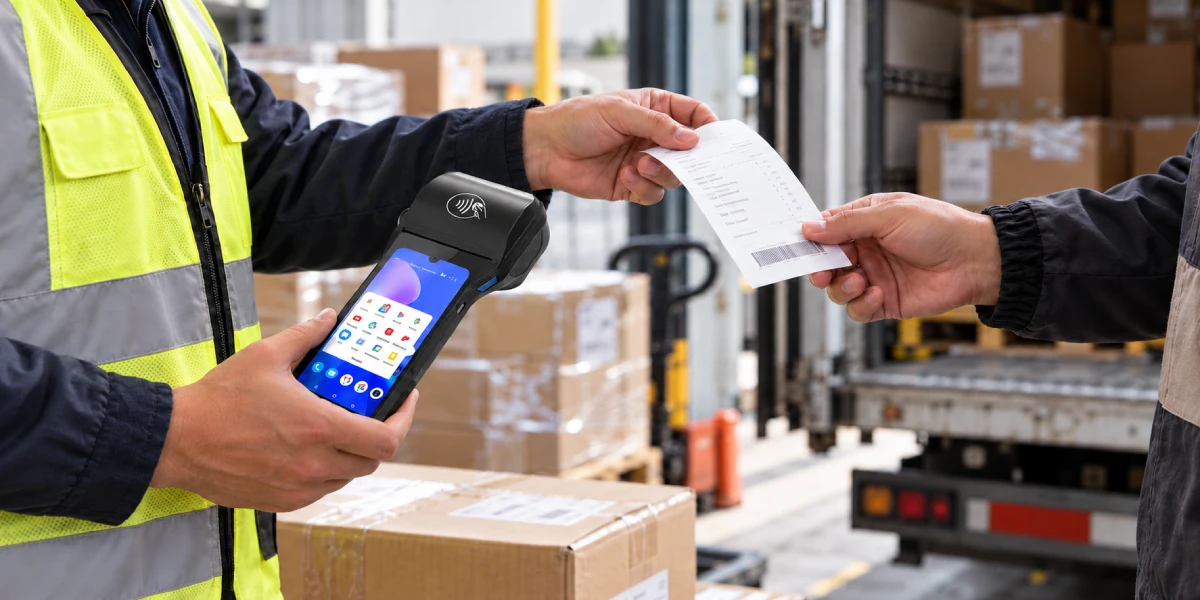
SUNMI competitors should be compared by the deployment they can support. The following shortlist identifies starting points for evaluation, rather than declaring one supplier the winner across every form factor, country and payment relationship.
| Supplier | Project worth evaluating | Documented capability | Main validation question |
|---|---|---|---|
| iMin | Retail and hospitality checkout applications | Developer documentation covers printers, customer displays and cash drawers on supported models | Does the exact model support the application and every required peripheral? |
| ZCS | Buyer-branded or configurable hardware running the buyer's application | Handheld, dual-screen and palm-vein product families; OEM/ODM services | Which options are available on the exact model, and who owns integration and support? |
| PAX | Android SmartPOS and payment-terminal deployments | SmartPOS product portfolio and application-management ecosystem | Is the required payment application and processor integration supported? |
| NEXGO | Payment-terminal application development and deployment | NEXGO Dev supplies development resources, SDKs and sample code | What development, signing and deployment arrangements apply? |
| Newland NPT | SmartPOS projects for payment providers and integrators | SmartPOS hardware and the TOMS management ecosystem | How will application provisioning, payment integration and terminal ownership work? |
iMin is relevant when the primary requirement is running a POS application with commercial peripherals. Its developer documentation separates supported devices and functions, including receipt printing, customer-display handling and cash-drawer control. That gives an integration team concrete interfaces to examine before committing to a replacement.
An iMin migration still requires model-specific testing. The buyer should confirm the Android build, GMS requirement, installed peripheral options, SDK package and local service arrangements. An application that already prints through SUNMI services will need its printing path adapted and validated on the selected iMin device.
ZCS is relevant when an ISV or distributor needs hardware for its own application and brand. Its range includes handheld POS, dual-screen terminals and palm-vein devices. OEM/ODM services provide a route to discuss branding and configuration, with availability confirmed for the selected model.
ZCS hardware does not, by itself, replace an existing payment or managed-service agreement. The buyer must establish SDK compatibility, payment-provider support, update responsibilities and field service. Projects requiring a ready-to-run merchant solution should compare the complete service package, not customization options alone.
PAX belongs on the shortlist when supported payment acceptance is central to the project. Its Android SmartPOS portfolio and application ecosystem provide a platform for payment providers and software partners. The relevant comparison is the supported payment configuration and operating model, rather than whether a device has an Android touchscreen.
A PAX replacement should be checked with the intended processor or payment provider before hardware is ordered. Application availability, estate setup, key management and commercial permissions can depend on the deployment partner. PAX should not be treated as universally tied to one processor, or as interchangeable with a general-purpose ordering terminal.
NEXGO offers a development ecosystem for third-party terminal applications. NEXGO Dev describes an Application Development Suite containing manuals, SDKs, sample code and download tools. That makes developer access and the applicable platform documentation part of a meaningful supplier comparison.
A NEXGO evaluation should establish which resources accompany the proposed terminal, who authorizes application installation and how production updates are delivered. The existence of an SDK is a starting point. The buyer must still validate peripheral behavior, payment integration and support responsibilities on the actual production configuration.
Newland NPT offers SmartPOS hardware with a supporting terminal-management ecosystem. TOMS includes application provisioning and device-management functions, while Newland's support resources describe SDK tooling and application-development assistance. Those capabilities matter for payment providers managing a deployed estate.
A Newland evaluation should distinguish factory capabilities from the policies of a particular bank, processor or reseller. Device ownership, application permissions and reuse after a service relationship ends need explicit confirmation. Restrictions in one deployment should not be assumed to describe every Newland terminal or sales channel.
A SUNMI replacement should solve a documented requirement. Useful reasons include a missing hardware configuration, a need for a second supplier, a different customization scope, an unsuitable delivery arrangement or a deployment-control requirement. The requirement should be specific enough to test on a candidate device.
SUNMI already provides hardware interfaces, application distribution, remote assistance, OTA functions and branding features through its software ecosystem. Its SoftPOS materials also describe GMS-capable devices, DMP management and multiple payment partners. A comparison based on claims that SUNMI has no SDK, no Google ecosystem support or no third-party software route would be misleading.
Keeping SUNMI can be the lower-risk decision when the existing integration works. A different SUNMI model, firmware configuration, accessory or channel agreement may address the original complaint. Replacement becomes more persuasive when a candidate meets a requirement that cannot be resolved economically within the current deployment.
A SUNMI shortlist should follow the buyer's role. An ISV should first test application portability and peripheral APIs. A distributor should prioritize configuration consistency, repair arrangements and product-change notices. A payment provider should start with the supported acceptance configuration and deployment permissions. These priorities determine which suppliers deserve a sample evaluation.
A replacement requirement should produce a measurable acceptance test. A customer-display complaint becomes a test of basket updates, disconnects and refunds. A deployment-control complaint becomes a test of enrollment, application signing and administrator access. A delivery complaint requires a written supply proposal; a hardware demonstration cannot resolve it.
The POS supply model determines which responsibilities move to the buyer. Three purchasing paths help separate those responsibilities, although a manufacturer can participate in more than one path.
| Purchasing path | What the buyer receives | What requires attention |
|---|---|---|
| Integrated Payment POS | Hardware supplied within a supported software and payment package | Supported applications, processing arrangements, service scope and exit terms |
| Uncertified White-Label POS | Rebranded hardware without verified approvals for the intended payment use | Evidence of fitness for the application; payment use cannot be inferred from appearance or NFC |
| Pure-Hardware ODM/OEM POS | A standard or customized platform for a buyer-controlled solution | Application integration, payment-provider support, firmware scope, configuration ownership, deployment and lifecycle service |
Pure-Hardware ODM/OEM POS can fit software companies and distributors that already own the application or customer relationship. Integrated payment packages can fit merchants seeking coordinated support. White-label branding alone establishes neither payment certification nor its absence; the second path describes a missing evidence package, not every private-label product.
An Android APK can install successfully while the checkout workflow remains incomplete. SUNMI-specific printer calls, scanner events, customer-display code and device-management dependencies need to be identified before a migration estimate is credible. Payment components should be assessed separately from ordinary peripheral access.
A hardware dependency list should record each function, current interface, replacement interface, supported configuration and acceptance test. An application-owned printer or scanner adapter can limit the amount of business code that changes. The practical steps are covered in the Android POS SDK integration guide.
POS application portability depends on the interfaces used by the application. Standard Android functions may transfer between devices, but proprietary printer services, scanner events, customer-display controls and payment integrations require compatible implementations. Successful APK installation confirms package execution, not complete checkout functionality on replacement hardware.
The POS integration plan should therefore estimate work by function. Printing a receipt, reading a barcode and showing a customer total are separate acceptance items. A single successful login or completed sale cannot establish that refunds, offline recovery, reprinting and display reconnection will also work.
Printer tests must establish what happens when a job fails partway through. Remove paper, open the cover, submit overlapping jobs and restart the service. The application needs to distinguish a rejected job from a receipt that printed before a timeout, otherwise automatic retries can produce duplicates.
Customer-display integration needs similar testing across application restarts, orientation changes and reconnects. Android's secondary-display Presentation API provides one framework for presenting content on a secondary display; the selected device must expose a compatible display and support the intended application behavior.
GMS should be verified on the production configuration, not inferred from the Android logo. SUNMI offers GMS-capable products, and alternative suppliers may offer different builds or regional configurations. The supplier should identify the exact device and software build that will be delivered.
Android application distribution also depends on operating policy. A public store, private application store and managed APK deployment can serve different projects. A managed business device may deliberately restrict user installation even when Google services are present. That restriction is a deployment choice that needs to match the customer's operating model.
GMS testing should use the customer's actual application. Authentication, notifications, maps, licensing and other Google-dependent functions should be exercised alongside peripheral access. The relevant question is whether the selected build supports the required workflow and update route throughout the intended deployment.
Google describes Google Mobile Services capabilities as a collection of applications and APIs. GMS access does not prove that every store application supports the device, that the POS printer works with a particular app or that a payment provider accepts the hardware.
A SUNMI hardware replacement should reproduce the working station, not just the screen size. Mobile ordering needs a usable grip, readable receipts and a practical charging routine. Counter checkout needs suitable customer-display behavior, cable access and peripheral connections. Identity-dependent workflows introduce a separate biometric integration requirement.
| Workflow | What to compare | Evidence to request |
|---|---|---|
| Mobile ordering or delivery | Receipt format, scanner access, grip and charging | Sample-device trial with the production application and accessories |
| Fixed checkout | Customer-display behavior, printer configuration and connected peripherals | Port documentation, wiring details and end-to-end checkout tests |
| Identity or membership | Enrollment, recognition integration and failure handling | SDK documentation, data-handling responsibilities and application tests |
ZCS provides a configuration example, not a category-wide benchmark. The Z108 dual-screen POS hardware offers customer-display and printer configuration choices in its manufacturer specifications. Evaluate the proposed configuration against the actual SUNMI installation; options listed for one model do not establish compatibility or availability across an entire range.
The hardware trial should reproduce the whole working station. Confirm receipt layout and consumables, scanner positioning, cash-drawer wiring, power requirements, cable access and mounting. A connector that fits physically does not establish matching voltage, pin assignment or protocol. A paper-width option also does not prove print speed or sustained duty-cycle performance.
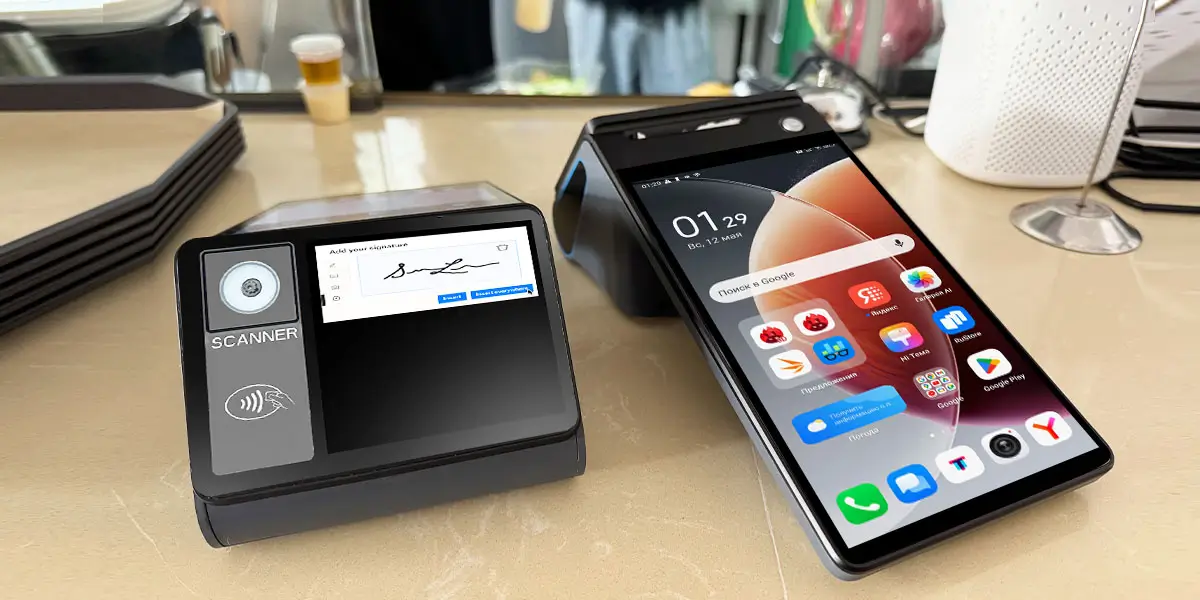
NFC hardware does not establish permission to accept bank-card payments. A loyalty-card reader, a protected payment interface and a SoftPOS application can use related hardware while relying on different software and approval paths. The existing payment provider should identify the supported replacement configuration before migration proceeds.
An external payment terminal may allow a POS computer to change without replacing the complete payment environment. An application running directly on a payment terminal can create a different migration scope. EMVCo's EMV Level 3 testing framework addresses terminal integration testing, with requirements defined by participating payment systems.
Payment-terminal replacement depends on the complete acceptance configuration: device, payment application, security components, processor connection and deployment permissions. NFC capability, GMS availability and a hardware approval cover different requirements. None independently establishes that a replacement terminal can process the same payments under the existing merchant arrangement.
The payment migration plan should identify who approves each change. That includes the application provider, acquirer or processor, terminal-management operator and any relevant testing party. A supplier's general certification list cannot answer whether one exact hardware and software combination is accepted for a particular merchant deployment. The test scope should include refunds, reversals and interrupted transactions.
SoftPOS procurement also needs current program information. According to the PCI SSC bulletin published in May 2026, the SPoC and CPoC sunset period ends on October 31, 2026, after which new submissions will no longer be accepted. The PCI mobile-payment sunset bulletin preserves the normal lifecycle of existing listings; it does not cancel all deployed solutions on that date.
SUNMI DMP is part of the capability baseline a replacement must address. An alternative should be tested for enrollment, application deployment, remote diagnostics and updates in the buyer's intended management architecture. A demonstration in a supplier-owned account does not establish the customer's administrator rights or tenant arrangements.
The fleet-management evaluation should include a failed release. Confirm whether devices retain a working application, how an interrupted update is recovered and which party can inspect logs. Establish the process for returned units, repaired devices, replacement boards and terminals moving between customer accounts.
Support scope should also cover the production lifecycle. Ask who supplies security patches, how hardware substitutions are announced, how spare parts are ordered and which repair location serves the target country. These obligations affect operating cost even when the first hardware shipment is inexpensive.
Fleet-management claims need a demonstration on the proposed configuration. Ask every supplier to show administrator access, application rollout, recovery and device reassignment in the intended account structure. Confirm third-party management compatibility rather than assuming it. The Android POS fleet management guide provides a framework for evaluating enrollment, updates and recovery.
POS customization should separate brand presentation from engineering changes. Logo artwork, packaging and startup presentation serve different purposes from a new interface, altered mechanics or revised electronics. A buyer should identify which changes customers will notice and which changes the workflow actually requires.
A supplier's configuration list is not an approved project specification. The quotation should identify included options, excluded changes, firmware responsibilities, validation work and deliverables. Availability must be confirmed by model; a module listed for one terminal should not be assumed available across the range.
Customization changes should follow application validation. Test the base platform and essential integrations before approving changes that could alter the validated configuration. A revised enclosure, peripheral or firmware build may require additional acceptance testing even when the commercial description sounds minor.
The POS OEM and ODM tradeoffs guide explains how design ownership, tooling, firmware work and validation change project scope. The quotation should describe deliverables and change authority, because OEM and ODM labels alone do not establish what the customer will own.
The total cost of a SUNMI alternative includes the cost of changing the existing integration. Hardware price, accessories, development, testing, customization, management licensing, freight, spares and repair all belong in the comparison. Remaining with SUNMI should be priced as another valid scenario.
A useful comparison is: total project cost = devices and accessories + engineering and validation + customization and tooling + deployment and management + service, spares and logistics. No supplier can be declared cheaper without comparable configurations and commercial terms. An attractive unit price can lose its advantage when the replacement requires extensive peripheral or payment redevelopment.
A production-equivalent sample should pass the customer's application tests before purchasing expands. The sample record should identify model, hardware revision, Android build, firmware, SDK and peripheral configuration. Otherwise, a successful evaluation may not describe the devices later shipped.
The replacement project should progress through explicit acceptance gates:
The production agreement should preserve what passed the pilot. Record the approved hardware revision, software build, peripheral configuration and acceptance tests. Assign responsibility for substitutions, update failures and repaired devices before the rollout begins.
The SUNMI replacement decision should follow the evidence. Shortlist iMin and ZCS for relevant software-led hardware requirements, and PAX, NEXGO or Newland NPT where supported payment-terminal deployments fit. Retain SUNMI when an alternative cannot demonstrate enough operational value to justify migration, validation and service changes.

iMin, ZCS, PAX, NEXGO and Newland NPT are suppliers to evaluate. iMin and ZCS provide commercial hardware options for software-led deployments, while PAX, NEXGO and Newland NPT also offer payment-terminal ecosystems. The exact application, form factor, payment route and region determine the shortlist.
A SUNMI application's standard Android components may be portable, but SUNMI-specific printer, scanner, display and payment integrations need compatible replacements. Installation alone does not validate the complete workflow. Test both normal operation and failure recovery on the selected production configuration.
SUNMI offers GMS-capable products and third-party application interfaces. Google Play availability and application permissions should be confirmed for the exact model, regional firmware and management policy. A particular restricted deployment does not establish that the whole SUNMI portfolio is closed.
An ISV should start with suppliers whose exact devices support its application and peripherals. iMin and ZCS are candidates for software-led commercial hardware projects. PAX, NEXGO and Newland NPT belong in evaluations requiring supported payment-terminal integrations. A working application trial is more useful than a company-level competitor ranking.
SUNMI alternatives can only be compared fairly using equivalent configurations and commercial scope. Integration, payment validation, customization, management and service costs can outweigh the difference in device price. Request a complete project quotation instead of comparing a bare terminal with a supported deployment.
The payment provider must confirm support for the proposed device and application configuration. NFC, GMS and general hardware certifications do not establish that support. Retaining an external payment terminal may create a different migration scope from changing an integrated payment device.






 Home
Home  How to Choose a PAX Alternative for Your Payment Project?
