
2026-08-18 Author : ZCS
A SoftPOS product is only as reliable as the hardware fleet running it. Software teams building a SoftPOS or Tap to Pay product often treat the underlying device as a solved problem — pick any GMS-certified phone, ship the app, move on. That assumption is where most ISV and PayFac hardware timelines actually break down. This guide covers what "hardware platform" needs to mean for a SoftPOS product beyond a single certified device: certification maintenance, fleet-wide remote management, and the compliance overhead that scales with every merchant added.

GMS certification is a starting requirement, not the finish line. A device also needs to maintain PCI MPoC compliance, hold the relevant EMV certifications for the payment networks it processes, and keep its security patch level current — all of which our breakdown of Tap to Pay's hardware requirements covers device-by-device, but which becomes an entirely different problem at fleet scale.
A single certified device is easy to verify once. A fleet of a thousand merchant devices is not — each one needs the same certification status maintained over its entire operating life, not just confirmed at initial purchase.
Certification requirements change over time, and devices can fall out of compliance without any hardware failure occurring. A device that stops receiving security patches, for instance, can lose its qualified status for merchant-facing Tap to Pay use even though nothing about the physical hardware changed.
Sourcing devices piecemeal — different retailers, different regions, inconsistent firmware versions — multiplies this problem instead of solving it. An ISV verifying compliance across a fleet of mismatched consumer devices is doing certification work a purpose-built commercial platform is designed to handle centrally.
Regional certification adds another layer most ISVs underestimate at the planning stage. A device certified for one country's payment networks isn't automatically certified everywhere else — EMV certification, local payment scheme approval, and import compliance all vary by market, and a hardware platform built for multi-country deployment handles this through firmware-level configuration rather than maintaining separate physical inventory per region. An ISV expanding into a second or third country without this in place ends up re-solving the same certification problem from scratch each time.
Warranty and replacement logistics are the part of this equation that rarely shows up in early planning. Consumer-grade devices sourced individually typically carry consumer warranty terms, not the commercial-grade repair and replacement support a merchant-facing payment product actually needs when a device fails in the field. A merchant whose payment terminal stops working mid-shift needs a fast replacement path, not a standard consumer RMA process built around individual retail returns.
A SoftPOS product needs a way to push updates to every deployed device without a technician visiting each one. This is what a Terminal Management System (TMS) actually solves, and it stops being optional the moment a fleet grows past what a support team can manually track.
Security patches are the clearest case. Since merchant-facing Tap to Pay compliance depends on maintaining a current security patch level, an ISV without fleet-wide push capability has no reliable way to keep every deployed device compliant as patches age — leaving compliance to depend on individual merchants updating their own devices, which isn't a dependable compliance strategy at any real scale.
Configuration changes need the same distribution mechanism. A pricing update, a new payment network requirement, or a firmware-level bug fix all need to reach every device in the field — remote fleet management via TMS is what turns that into a scheduled, centrally executed push instead of a support ticket queue that grows with every new merchant onboarded.
Fault diagnosis also depends on this infrastructure. Without remote device status monitoring, an ISV's support team is troubleshooting blind — relying on a merchant's own description of a problem rather than actual device telemetry, which slows resolution and increases support cost per incident.
An ISV integrating payment hardware needs documented, model-specific API access — not a generic SDK that forces defensive coding around undocumented hardware behavior. This is a real engineering-time cost, and it shows up during integration, often at the worst point in a project timeline to discover it.
The distinction between a documented peripheral API and a black-box hardware interface determines how much engineering time a project actually needs. A manufacturer publishing model-specific SDK packages — rather than one generic package spanning every device it sells — has already absorbed the hardware-abstraction work that would otherwise fall on the ISV's own engineering team.
Before committing to a hardware partner, vetting a manufacturer's open API support should happen before contract signature, not during integration. This includes checking documentation quality, confirming which peripherals (printer, NFC reader, barcode scanner) are actually exposed through the API, and understanding what happens when a peripheral issue surfaces after deployment — is the team that wrote the SDK the same team that fixes it, or does a support request disappear into a third-party queue.
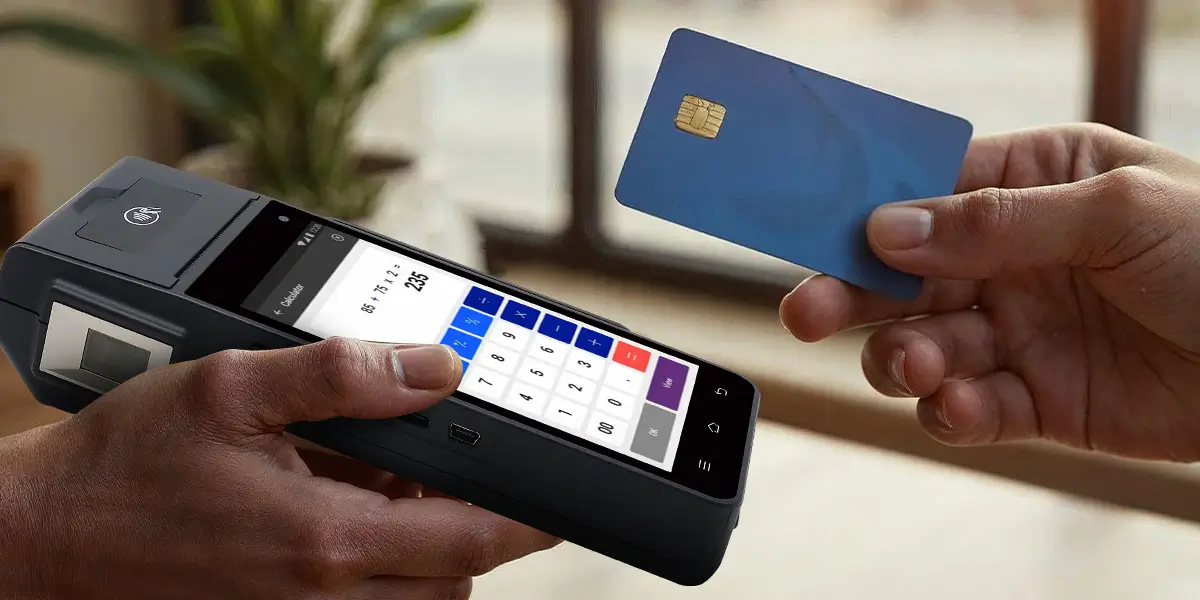
Building an independent hardware program means owning certification renewal, supply chain management, regional compliance, and warranty support — none of which is core to what a payments ISV or PayFac is actually trying to build. This is a realistic tradeoff worth stating plainly rather than assuming every team should default to building in-house.
Certification renewal alone is a recurring cost most software teams underestimate. EMV, PCI, and regional certifications aren't one-time achievements — they require maintenance as standards update, and a team without dedicated hardware compliance staff either falls behind or diverts engineering resources away from the software product itself.
Supply chain and warranty support compound this further. A hardware issue in the field — a defective batch, a component shortage, a warranty claim — is a different skill set than software development, and building that capability from scratch takes time most ISVs would rather spend on their core product.
For startups and smaller ISVs specifically, launching payment infrastructure without building hardware in-house is usually the faster and lower-risk path to market, since it converts a multi-year hardware buildout into a vendor evaluation and integration project instead.
Time to market is the practical difference that matters most for an early-stage ISV or PayFac. Building certified hardware from scratch — design, prototyping, certification testing, supply chain setup — realistically runs into years before a first commercial unit ships. Partnering with an already-certified manufacturer compresses that same timeline to a vendor evaluation and integration cycle, often measured in months. For a startup racing toward a funding milestone or a competitive launch window, that difference in timeline is frequently the deciding factor, independent of any cost comparison.
The more useful evaluation frame for an ISV isn't unit price — it's total handover scope. A vendor delivering only hardware leaves the ISV to independently manage SDK documentation, firmware update logistics, certification questions, and post-sale support through separate channels, each with its own point of failure.
A vendor delivering hardware, SDK, TMS, and compliance support under a single relationship reduces the number of independent parties an ISV has to coordinate across a project's entire lifecycle. This isn't a marginal convenience — it's the difference between one accountable point of contact and a coordination problem that grows with every additional vendor in the stack.
ZCS's approach to this is covered in full in our full-stack Android POS hardware and SDK guide, which walks through how hardware R&D, SDK development, TMS infrastructure, and post-sale support operate under one organization rather than being assembled from separate suppliers.
The accountability difference is easiest to see when something actually breaks. In a multi-vendor stack, a peripheral bug discovered in production can bounce between a hardware supplier who points to the SDK vendor, an SDK vendor who points to the firmware team, and a firmware team that was never told about the specific deployment configuration in question. In a single-vendor platform, the team that wrote the firmware, the team that built the SDK, and the team fielding the support ticket are the same organization — which doesn't guarantee a faster fix, but it removes the finger-pointing that often delays one.

Q1. Is GMS certification enough to build a SoftPOS product on a device?
It's a starting requirement, not a complete answer. A production SoftPOS deployment also needs ongoing PCI MPoC compliance, current security patches, and — at fleet scale — remote management infrastructure that a single certified device doesn't provide on its own.
Q2. Why does TMS matter for a SoftPOS product specifically, more than for a single device?
Tap to Pay-style compliance depends partly on maintaining current security patches across every deployed device. Without fleet-wide remote push capability, keeping hundreds or thousands of devices compliant depends on individual merchants updating their own hardware, which isn't a reliable compliance strategy.
Q3. Should a startup ISV build its own hardware program or partner with a manufacturer?
For most startups and smaller ISVs, partnering is the faster, lower-risk path. Building an independent hardware program means owning certification renewal, supply chain, and warranty support — real, ongoing costs separate from the core software product.
Q4. What's the risk of sourcing hardware from multiple vendors instead of one full-stack manufacturer?
Multiple vendors mean multiple points of failure — separate SDK documentation, separate firmware update processes, separate support channels. A single vendor delivering hardware, SDK, TMS, and support reduces coordination overhead and shortens the chain of accountability when something breaks.
Q5. How should an ISV evaluate a manufacturer's API documentation before committing?
Ask for actual documentation before signing anything, not a sales summary. Confirm which specific peripherals are exposed through the API, whether SDK packages are model-specific or generic, and who resolves integration issues once a product is in production.






 Home
Home  Fujitsu PalmSecure: How It Works, Accuracy & Where It Fits in 2026
