
2026-06-29 Author : ZCS
Most food truck operators who have lost sales mid-service blame the signal, the weather, or bad luck. In the majority of cases, the actual cause is the hardware sitting on the service counter — a terminal that was never built for outdoor mobile operation, running in conditions it was not designed to handle.
The five problems below are not edge cases. They show up consistently across food truck operations at markets, festivals, and street pitches. Each one is preventable. Each one starts with a hardware decision made — or not made — before the truck opened for service.
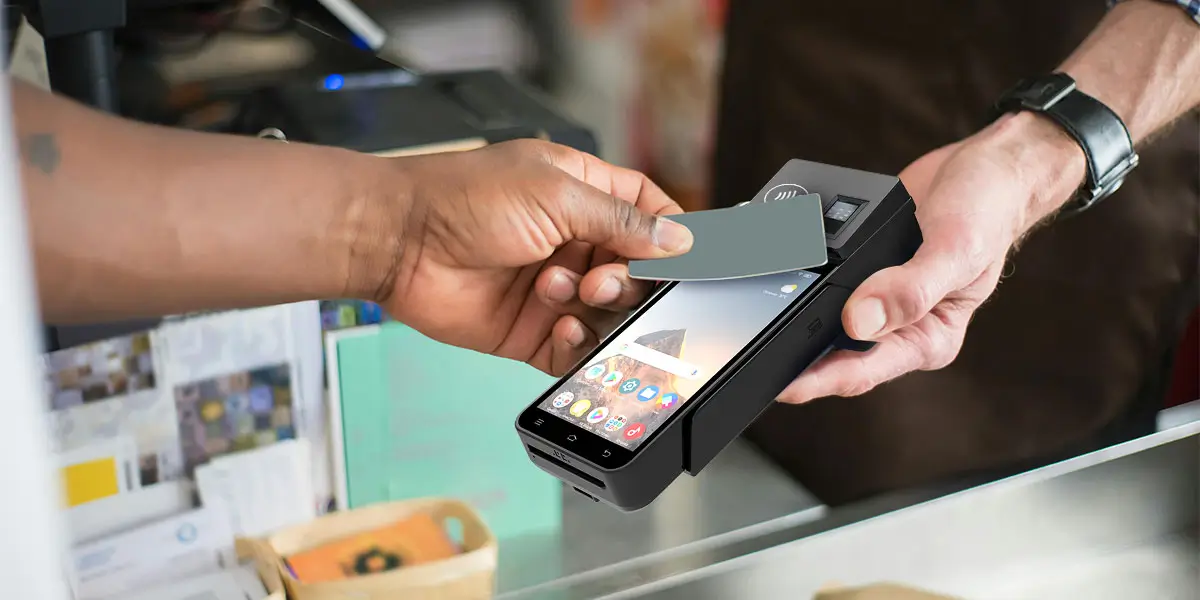
A food truck service window in direct summer sun can reach surface temperatures of 50–60°C. Consumer-grade tablets and entry-level POS terminals are typically rated for operating temperatures up to 40–45°C. Once the ambient temperature exceeds that threshold, the device triggers thermal throttling — the processor deliberately slows down to reduce heat — and in severe cases, shuts down entirely to prevent component damage.
This does not happen during the quiet periods. It happens at peak service, when the sun is highest and the transaction rate is at its maximum. A terminal freeze during a Saturday lunch rush is not a minor inconvenience; it is the loss of every transaction that cannot be processed while the device cools down.
Look for a terminal with a documented operating temperature range that covers your actual deployment conditions. Industrial-grade Android POS terminals are typically rated to 50°C operating temperature — a meaningful difference from the 40–45°C ceiling on consumer devices. Beyond the temperature rating, processor architecture matters. A terminal engineered for sustained outdoor load accumulates heat more slowly and is less likely to throttle even when ambient temperatures are high. Confirm both the operating temperature specification and the processor's thermal management design before purchasing.
Outdoor event locations, weekend markets, and street pitches frequently have poor or inconsistent cellular coverage. A food truck POS terminal that depends entirely on a live internet connection to process payments will fail the moment that connection drops. In a busy market with dozens of traders sharing the same cell tower, network congestion during peak hours can effectively reproduce the same failure even where signal nominally exists.
The cost is direct: every contactless payment attempted while the terminal is offline is a declined transaction. Some customers carry cash as a backup. Many do not — particularly at the younger demographic that food trucks typically serve at events and festivals. According to the Nilson Report's global payment trends analysis, cashless transactions now account for the majority of consumer spending in most developed markets, making offline payment failure increasingly costly for operators who cannot accept cards.
Two hardware capabilities address this problem independently and together.
First, genuine offline transaction mode. The terminal should be able to accept and store payment transactions locally when connectivity is lost, then sync when the connection restores. This is not a software toggle — it requires sufficient onboard storage and processing capability to run the transaction logic locally. When evaluating a terminal, ask for the specific offline transaction cache limit: how many transactions can be stored before the terminal requires a sync? A limit of 20 is meaningfully different from a limit of 200.
Second, built-in 4G LTE with dual SIM. A terminal with cellular connectivity built in — rather than relying on a mobile hotspot from a separate device — eliminates one failure point from the setup. Two SIM slots allow a primary and backup SIM from different carriers, so that in areas where one network has poor coverage, the backup maintains connectivity automatically. Combining built-in 4G with offline caching means a connectivity drop results in a brief sync delay — not a payment failure.
A food truck running a lunch and dinner service, or a full-day market event, may operate 8–12 hours without reliable access to a charging point. The POS terminal is active for the entire duration: processing payments, maintaining a cellular connection, driving the printer, and handling order management. Under this continuous load, a terminal's real-world battery life is typically 20–30% shorter than the manufacturer's published figure, which reflects controlled testing conditions rather than sustained operational use.
A terminal that dies at 3 PM on an 8-hour service day is not a hardware malfunction — it is a foreseeable outcome of deploying a device with insufficient battery capacity or no recovery option.
The single most effective solution is a removable battery. A terminal with a sealed, non-removable battery requires the entire device to be taken offline for charging. A terminal with a removable battery can be back in service in under a minute with a pre-charged spare — no downtime, no interrupted service.
For a food truck operator running a full-day pitch, carrying two or three spare batteries costs less than a single lost hour of sales and completely removes battery life as a service-day constraint. When evaluating terminals, confirm explicitly whether the battery is user-removable, and whether spare batteries are available to purchase separately from the vendor.
A food truck service window is typically 60–90 cm wide, shared between one or two operators and whatever preparation surface the layout allows. Traditional countertop POS terminals — tower-base units with a separate display, external printer, and cash drawer — were designed for a fixed retail counter with unlimited surface area. In a food truck context, the same hardware configuration leaves almost no room to work.
The operational result is a cluttered service window where the operator is constantly reaching around equipment, the terminal cannot be handed to a customer for PIN entry without risk of dropping it, and the physical setup slows down every transaction.
A compact handheld terminal that handles the full transaction flow — order entry, payment processing, and receipt printing — in a single device eliminates the multi-component clutter entirely. At around 360–400g and the dimensions of a large smartphone, a purpose-built handheld POS fits in one hand, can be passed to a customer for contactless payment, and requires no dedicated counter space when not in active use.
For food trucks that also need a fixed display for order management, a wall-mounted compact terminal paired with a handheld for payment creates a two-component setup that occupies a fraction of the footprint of a traditional countertop POS configuration.
Food trucks operate in all weather. A sudden rain shower at an outdoor market, steam and moisture from the cooking environment, and the regular cleaning of the service window with liquid products all expose the POS terminal to moisture levels that most consumer-grade devices are not rated to handle.
Water ingress typically does not cause immediate, visible failure. It causes gradual degradation: touchscreen sensitivity loss, port corrosion that makes charging unreliable, and eventually internal short-circuit damage that may not become apparent until weeks after the exposure event. The terminal appears to function normally — until it does not.
The relevant specification is the IP (Ingress Protection) rating, defined by the IEC 60529 standard that certifies protection against solids and liquids. For food truck use:
The important distinction: a vendor's marketing claim about "water resistance" or "splash-proof design" is not equivalent to a certified IP rating. Request the actual certification documentation. An uncertified terminal exposed to a food truck environment will typically show moisture damage within 12–18 months of continuous service — after the return window has closed and the warranty claim is complicated.
Each of these failures follows the same logic: a hardware purchase decision made on price, convenience, or software compatibility — without accounting for the specific physical environment of a food truck operation.
The fixes are not complicated. An operating temperature rating above 50°C. A removable battery with spares. Built-in 4G LTE with dual SIM and offline transaction caching. A compact handheld form factor. A certified IP54 or IP65 enclosure. These are specifications that can be confirmed before purchase and that eliminate the five most common sources of mid-service failure.
For a detailed breakdown of every hardware decision in a food truck POS setup — from screen brightness to payment connectivity — see our complete guide to best POS hardware for food trucks in 2026.
Q1: My current POS vendor claims their device is "splash-proof." Isn't that enough to handle a bit of rain?
A: "Splash-proof" or "water-resistant" are marketing buzzwords with no legal or engineering accountability. If rain gets into the charging port and fries the motherboard, a "splash-proof" claim won't cover your warranty. You need to look for a certified IP (Ingress Protection) rating. An IP54 rating guarantees the device can handle splashes from any angle, while IP65 means it can survive direct water jets. Never buy outdoor hardware without an official IP certification.
Q2: Does running a POS in "Offline Mode" expose my business to high risk of fraud or declined payments?
A: There is always a baseline risk with offline transactions because the device cannot ping the customer's bank to verify funds in real-time. However, enterprise-grade mobile hardware mitigates this through local risk logic. When evaluating a terminal, check if you can set custom offline floor limits (e.g., maximum $20 per offline transaction) and strict total transaction limits before a sync is forced. This keeps your line moving during a network drop while capping your financial exposure.
Q3: Why should I pay for a dual-SIM terminal when I can just tether the POS to my smartphone's hotspot?
A: Smartphone tethering introduces two critical single points of failure. First, a phone broadcasting a 4G/5G hotspot under a hot metal truck roof will overheat and throttle even faster than a tablet. Second, Wi-Fi connections in crowded festival environments are plagued by heavy radio interference. A terminal with built-in dual SIMs connects directly to cellular towers, cuts out the middleman, and switches carrier networks in seconds if one tower gets congested.
Q4: I found a terminal with a massive internal battery. Is that better than carrying spare removable batteries?
A: No, and here is why: lithium-ion batteries naturally degrade over time. A sealed, non-removable battery might last 10 hours on day one, but twelve months of heavy summer service will degrade that lifespan by 20–30%. When a sealed battery degrades, your entire $500+ terminal is compromised. With a user-removable battery, you aren't just protecting yourself against a single long day of service; you are future-proofing your investment because you can swap out a dead or degraded battery for $30 instead of buying a whole new POS.
Q5: Beyond the 5 problems listed, what is one easily overlooked hardware spec for 2026 outdoor operations?
A: Screen brightness, specifically measured in Nits. Standard consumer tablets run at around 350 to 400 nits of brightness. Under direct midday sunlight, these screens turn into literal mirrors, forcing your operators to squint, slow down, or make ordering errors. For consistent outdoor visibility, look for a commercial mobile terminal rated at 500 nits or higher, ideally paired with an anti-glare display coating. If your staff can't see the screen, your service speed plummets.
Related Posts
1. Mobile POS for Food Trucks, Street Vendors and Outdoor Stalls: A Complete Guide
2. Choosing the Right Mobile mPOS Card Reader Device for Your Small Business
3. Smart POS Systems for Food Trucks: The Future of Mobile Restaurants






 Home
Home  How to Deploy Android POS Terminals Across Multiple Countries: A TMS Configuration Guide
