
2026-09-16 Author : ZCS
A biometric POS terminal for agent banking captures a physical characteristic and sends or processes the data through an approved identity workflow. Banks may use biometrics to identify customers during onboarding, authenticate an existing account holder, confirm an agent's identity or add assurance to a higher-risk transaction.
Fingerprint and palm vein systems can both support these goals, but they behave differently in the field. Fingerprint recognition is mature, compact and widely connected to national identity programs. Palm vein recognition is contactless and analyzes vascular patterns beneath the skin, which can reduce problems caused by dirty, worn or superficially damaged fingertips.
Biometric hardware is one part of the deployment described in the complete agent banking POS terminal guide. The bank still needs enrollment policy, biometric templates, a matching service, consent and privacy controls, fallback authentication and a secure link between identity confirmation and the financial transaction.
A fingerprint sensor captures ridge and valley detail from a finger. Software extracts distinguishing features and creates a template rather than relying on the raw image alone. During verification, the new sample is compared with an enrolled template for the claimed customer, known as one-to-one matching. Identification against a larger gallery is one-to-many matching.
Fingerprint has a large installed base in banking and government identity programs. Sensors are available in compact modules, and many integration teams already understand capture quality, templates and matching APIs. This makes fingerprint a practical choice when the national ID or bank enrollment system already uses a supported fingerprint standard.
Field performance depends on the user population and environment. Manual labor, age, cuts, dryness, moisture and dust can reduce image quality. Pressing too lightly or positioning the finger poorly also creates retries. An agent application should guide placement, display quality feedback and provide another authorized method when repeated capture fails.
Palm vein recognition uses near-infrared imaging to capture the pattern of veins beneath the skin. Deoxygenated hemoglobin absorbs near-infrared light, allowing the sensor and algorithm to derive a vascular template. The customer normally presents a hand above or near the sensor rather than pressing a fingertip onto a surface.
For a technical explanation of capture and matching, see how palm vein scanning works. Because the pattern is internal and the workflow can include liveness controls, palm vein can make presentation attacks more difficult than copying a visible surface pattern. Actual anti-spoofing strength still depends on the sensor, algorithm and implementation.
Contactless capture is useful at busy agents where many customers share a device. Palm vein may also help users whose fingerprints are difficult to capture. The trade-offs are a less common enrollment ecosystem, a larger or more specialized sensor and the need to confirm that the bank or national registry accepts the vendor's template and matching architecture.
|
Decision factor |
Fingerprint |
Palm vein |
|
Capture |
Finger contacts or closely approaches sensor |
Palm presented above or near NIR sensor |
|
Ecosystem |
Widely deployed in national ID and banking |
Growing, but less universally integrated |
|
Field issue |
Worn, wet, dry or dirty fingertips |
Hand position, ambient conditions and sensor guidance |
|
Shared-device hygiene |
Contact surface often needs cleaning |
Contactless capture is possible |
|
Spoof resistance |
Depends on sensor and liveness detection |
Internal vein pattern plus implementation-specific liveness |
|
Best fit |
Existing fingerprint registry and mature APIs |
Contactless identity or difficult fingerprint populations |
|
Fallback need |
Required for failed capture or no usable print |
Required for failed capture or enrollment mismatch |
One-to-one verification asks whether the sample matches the person who claims a particular account or identity. One-to-many identification searches a gallery to determine who the person may be. One-to-many matching is more computationally demanding and creates a greater false-match management challenge as the enrolled population grows.
Vendors may publish recognition speed and false-acceptance metrics, but banks should request the test conditions, population size, threshold and whether matching occurs on the terminal or server. A sub-second claim from a controlled dataset does not predict performance with poor enrollment, weak connectivity or a different population. The institution should benchmark its intended enrollment and transaction volumes.
A strong matcher cannot repair an unusable enrollment. Agents need clear capture guidance, quality thresholds and duplicate-enrollment controls. The system should record which device and operator performed enrollment, while preventing agents from accessing biometric templates outside approved functions.
Customer consent and lawful purpose must be explicit. Retain only the biometric data required for the approved use, encrypt templates and define deletion rules. Raw images should not remain in a general photo gallery or application cache. Access, matching and administrative changes need auditable records.
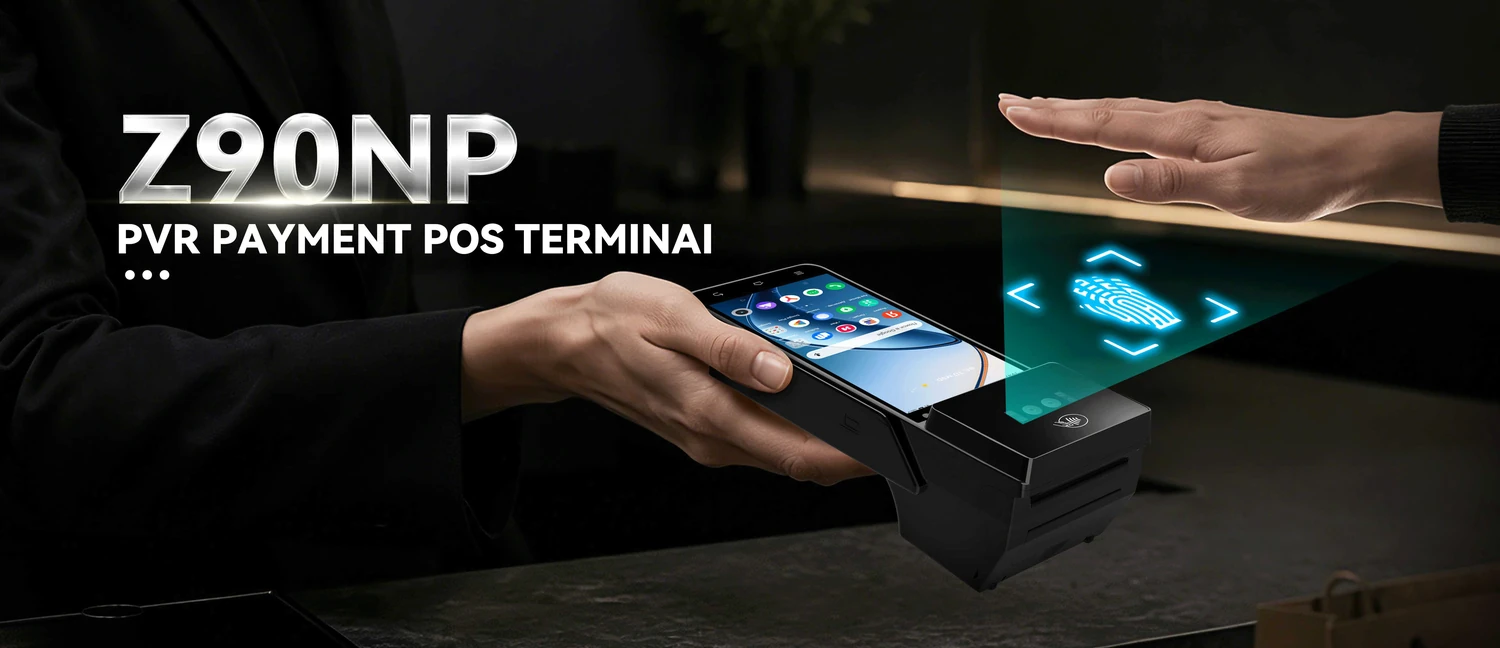
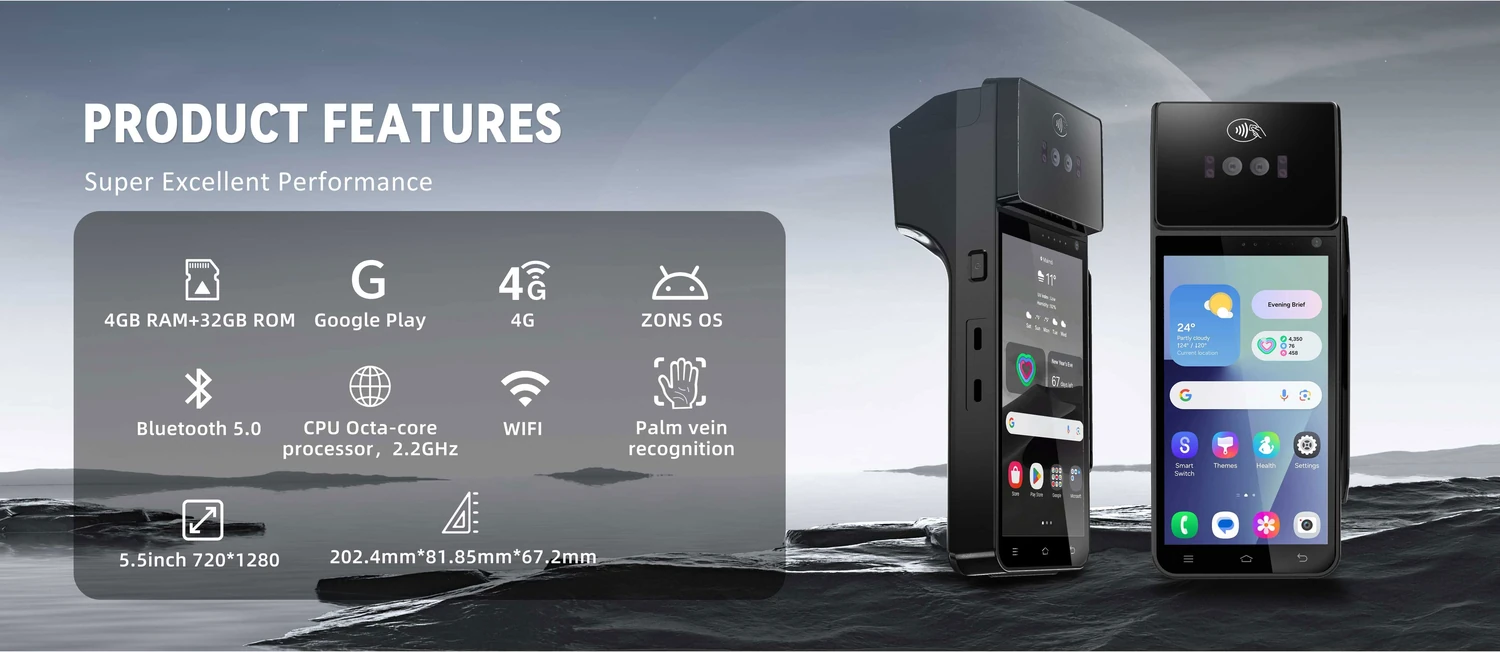
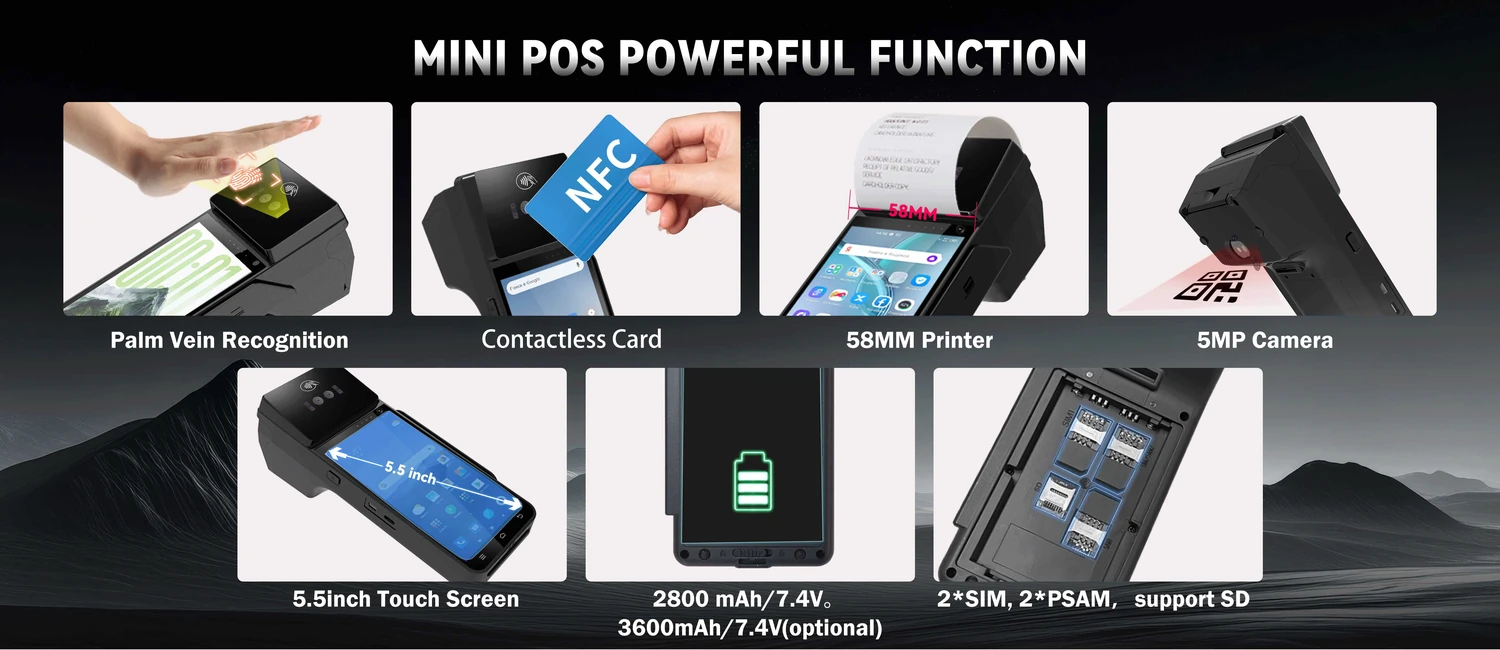
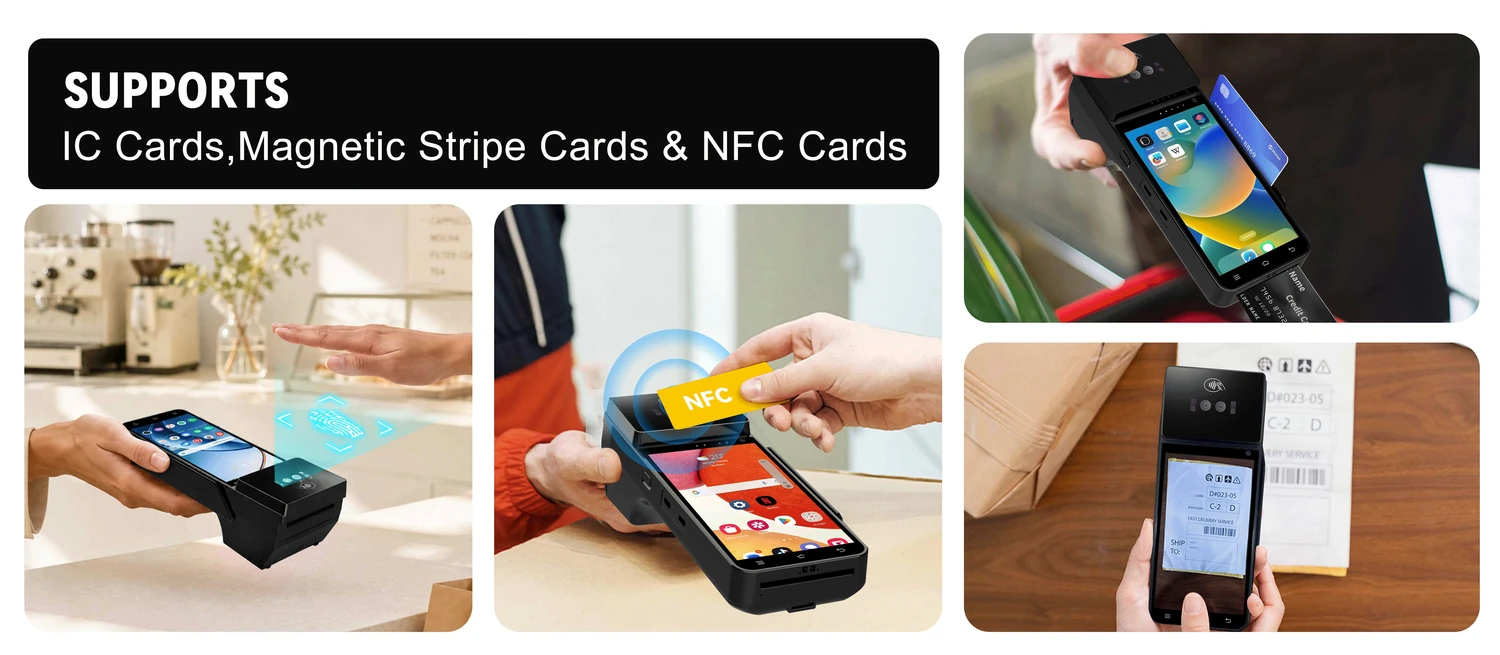
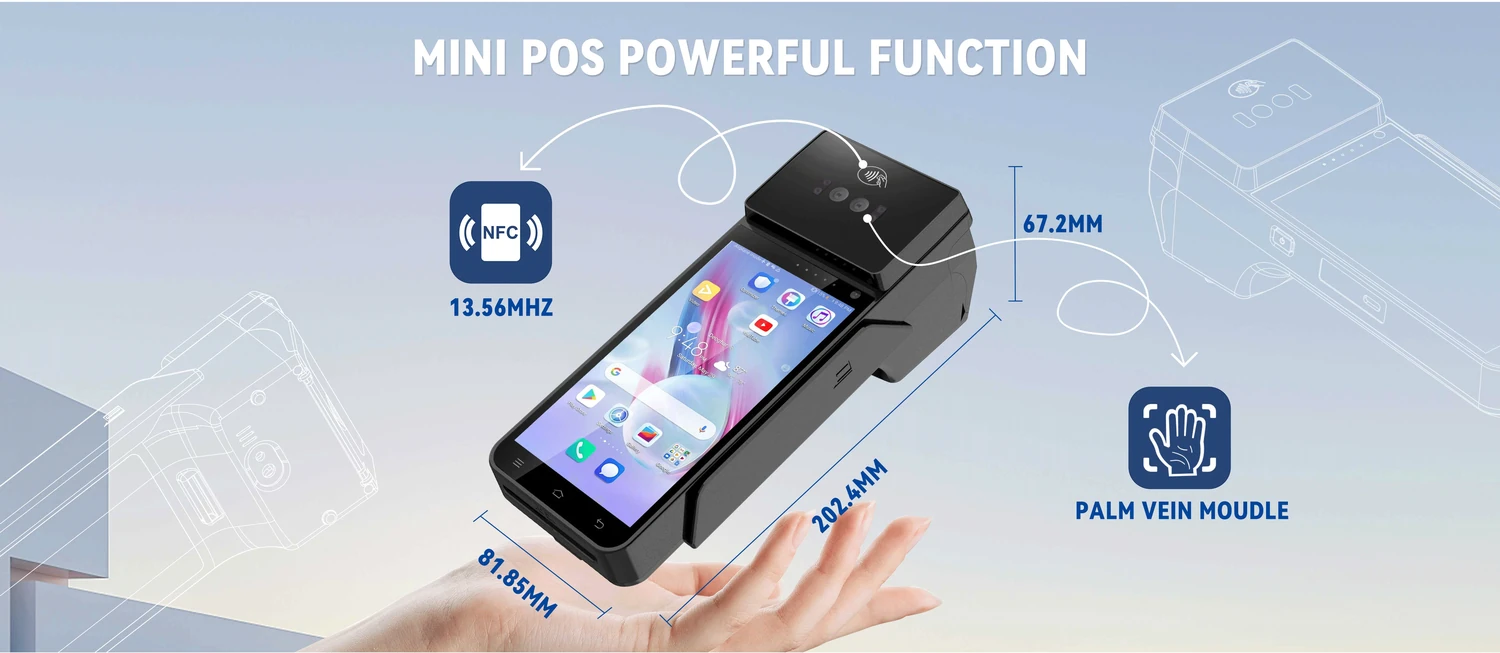
The Z90NP palm vein payment POS combines Android 15, a 5.5-inch handheld form factor, near-infrared palm vein and palm-print recognition, a built-in 58mm printer, cellular and Wi-Fi connectivity, and payment interfaces in one portable device. An optional fingerprint module allows an OEM project to support palm vein and fingerprint workflows on the same hardware platform.
According to the published product specification, the Z90NP carries PCI PTS 5.x, EMV Contact Terminal Level 1 and Level 2, EMV Contactless Terminal Level 1, PayWave, PayPass and related approvals. Its listed configuration includes 4GB RAM, 32GB storage, dual SIM and SAM slots, NFC, contact and magnetic-stripe reading, and barcode or QR scanning. Certificate numbers, hardware and firmware scope and current listing status should be verified for the exact configuration before procurement.
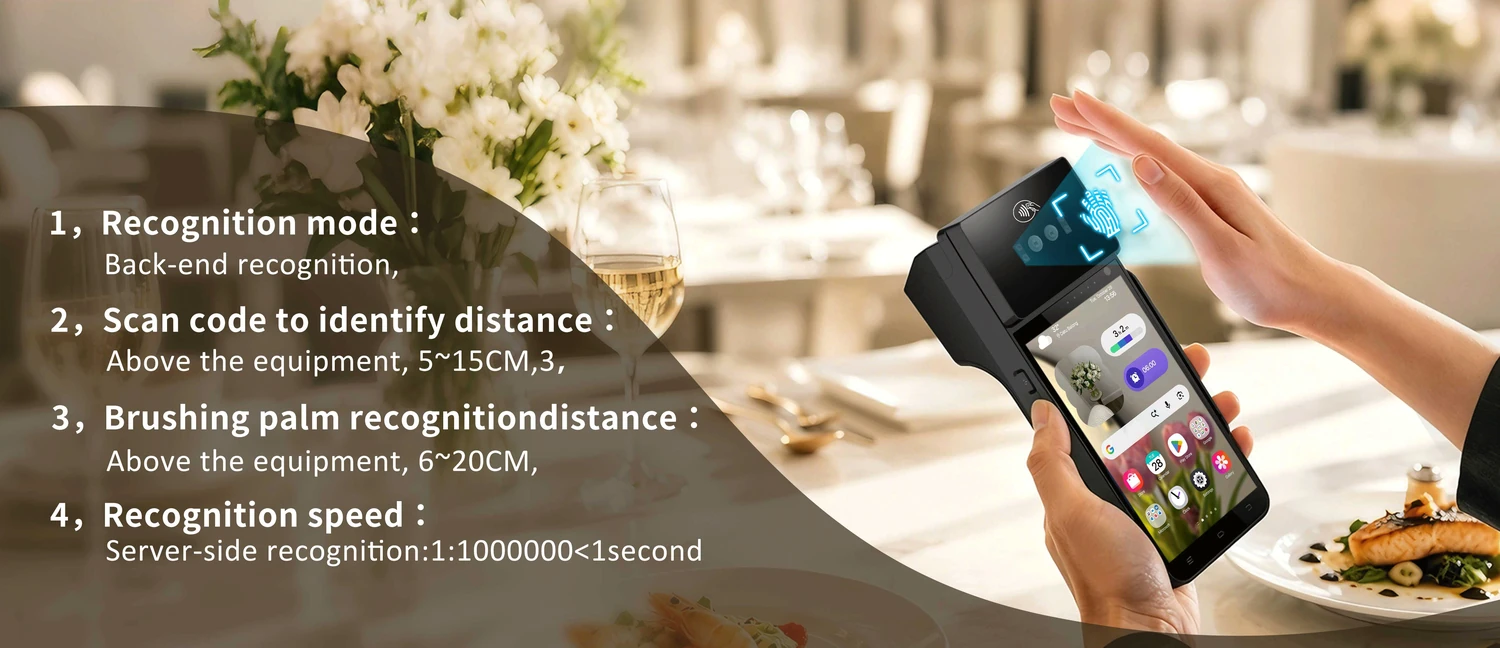
The product page states server-side palm vein matching at a scale of 1:1,000,000 in under one second. A bank should reproduce this with its own enrollment quality, server architecture, network latency and decision thresholds. It should also confirm whether the project's matching database, identity authority and local regulator accept the selected biometric implementation.
The terminal’s biometric security model can be explored further in the palm vein anti-spoofing and liveness guide. Liveness detection reduces risk, but it should be evaluated as part of the complete sensor, algorithm, application and operational workflow rather than treated as a universal guarantee.
A successful biometric match should not automatically authorize every transaction. The application must confirm which customer, service, amount, agent and risk rules are involved. Low-risk balance enquiry may use a different authentication policy from a large withdrawal. Transaction limits and step-up factors should be controlled by the bank.
Biometric verification and card payment also have different security domains. PCI and EMV approvals address defined aspects of payment acceptance, while the biometric system confirms identity under its own architecture. The application must bind the approved identity result to the correct transaction without exposing templates or card data to unnecessary components.
Rural locations may introduce heat, dust, bright light, unstable power and weak networks. Fingerprint sensors need cleaning and realistic testing with the local customer population. Palm vein sensors need consistent hand placement and evaluation under the lighting and distance conditions expected at agents. Both methods should be tested by older users and customers engaged in manual work.
Hardware decisions should be combined with guidance on choosing a terminal for rural agent banking. That process tests network recovery, battery life, printing and support alongside biometric performance, preventing the identity sensor from being evaluated in isolation.
Fallback is not a security weakness when it is designed and monitored. The bank may use a card and PIN, OTP, identity document, secondary biometric or supervisor process. Fallback events should have appropriate limits and monitoring because fraud may move toward the least controlled path.
Biometric accuracy cannot be reduced to a single percentage. False acceptance rate describes how often the system incorrectly accepts a non-matching person. False rejection rate describes how often it rejects the correct enrolled person. Tightening a decision threshold usually reduces false acceptance while increasing false rejection, so the bank must choose a balance appropriate to the transaction risk.
Failure to acquire is different: the sensor cannot obtain a sample of sufficient quality. Failure to enroll means a customer cannot create a usable reference template. These operational failures can be more visible to agents than headline matching accuracy. A pilot should record capture attempts, retries, fallback use and completion time by user group and environment.
Published tests should disclose sensor model, algorithm version, dataset, threshold and matching mode. One-to-many identification over a million records is not comparable with one-to-one verification against a claimed account. The bank should establish its own acceptance criteria and repeat tests after material firmware or algorithm changes.
A biometric template should be treated as sensitive identity data. The architecture must state whether templates are held on the device, in the bank, by a national identity authority or by a biometric service provider. The terminal should receive only the information needed to complete the authorized workflow, and local caches should be encrypted and cleared under defined rules.
Banks should control encryption keys, administrator roles, API credentials and audit access according to their security model. Vendor SDKs provide capture and device interfaces, but they should not silently grant broad access to the biometric database. Contracts should address incident response, template portability, deletion, system exit and responsibilities when a matching service is unavailable.
Fingerprint is usually the practical option when the national ID system already exposes compatible fingerprint verification, the bank has a mature enrollment base and agents are familiar with capture. It also suits projects where cost and compact integration outweigh the benefits of contactless presentation.
Palm vein is attractive when contactless capture, shared-device hygiene and resistance to visible-surface copying are important. It may also improve service for populations with difficult fingerprints. It is strongest when the institution controls enrollment or has confirmed interoperability with an accepted identity service.
Supporting both modalities can increase coverage, but it should not create arbitrary choice. The application should specify a primary method, when the alternative is allowed and whether two factors are required for selected transactions. Multi-modal hardware also increases integration, testing and support scope, so the operational benefit should be measured during a pilot.
Is palm vein more secure than fingerprint?
Palm vein captures an internal vascular pattern and can support contactless liveness controls, but real security depends on the complete sensor, algorithm and system implementation.
Can biometrics replace a PIN?
Only when the bank, payment architecture and applicable rules permit it. Many systems use biometrics as one factor within a wider policy.
Can the Z90NP support fingerprint too?
The product is centered on palm vein and palm-print recognition, with a fingerprint module available as an optional project configuration.
Does PCI certification cover biometric matching?
No. PCI PTS and EMV approvals have defined payment-security scopes. Biometric matching requires separate evaluation and integration.
Which biometric is better for rural agents?
Fingerprint fits established registries; palm vein may help with contactless use and difficult fingerprints. Field testing and registry compatibility should decide.
Fingerprint and palm vein are tools for identity assurance, not complete agent banking solutions. Choose according to registry compatibility, customer population, field conditions, transaction risk and fallback design.
Banks and integrators considering an integrated palm vein and payment platform can review the Z90NP biometric payment terminal and request certificate documents, SDK materials and a sample with the required fingerprint option. Final approval should follow biometric, payment and field testing with the institution’s own systems.






 Home
Home  Bus Validator vs Handheld Ticketing Machine: Which One Fits Your Fare System?
