
2026-09-15 Author : ZCS
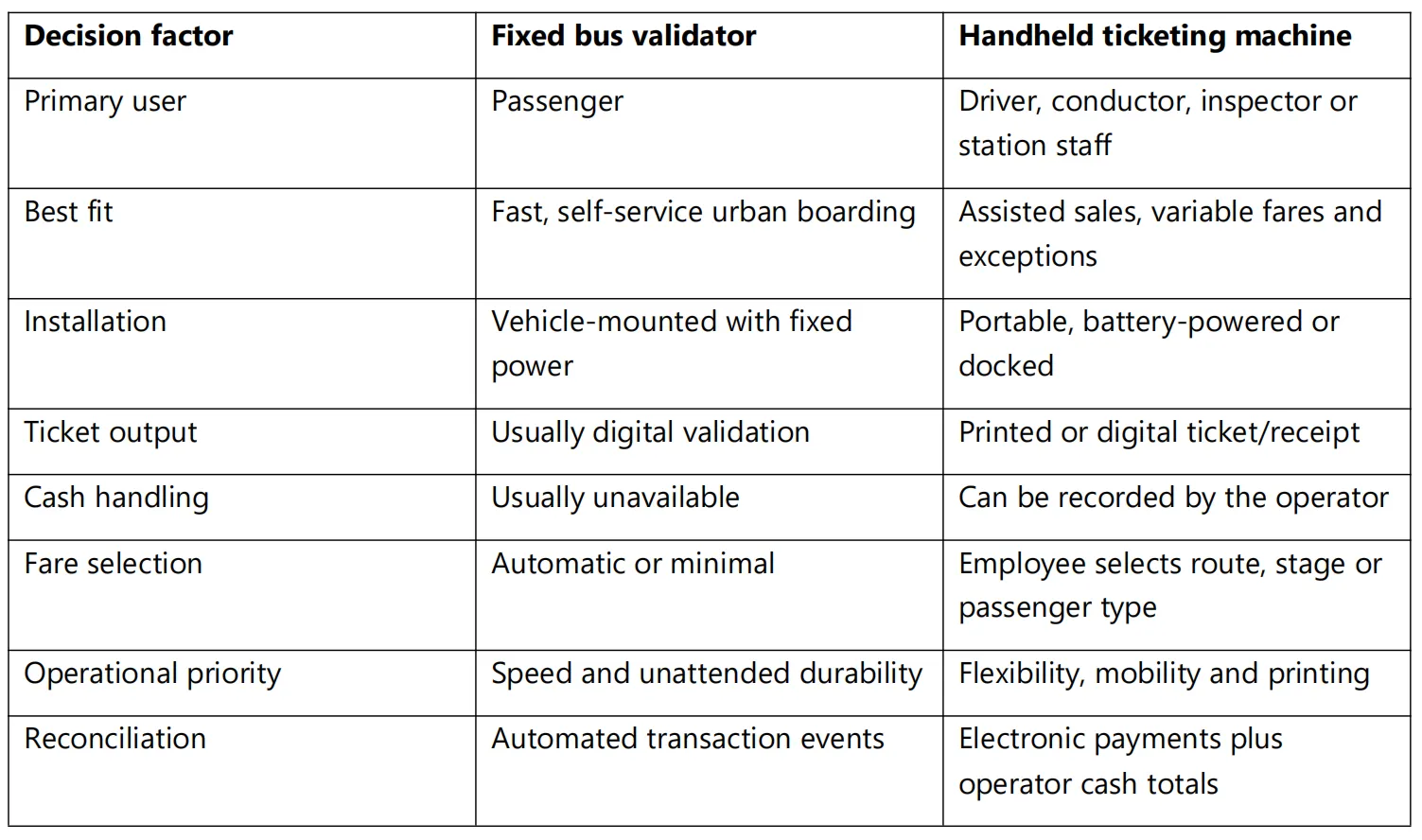
A bus validator and a handheld ticketing machine can both read fare credentials, but they are built for different operating models. A validator is normally fixed near a vehicle door and used directly by passengers. A handheld machine is carried by a driver, conductor, inspector or station employee who selects fares, accepts payment and may print a ticket.
High-volume urban routes with all-door boarding generally benefit from self-service validation because passengers can tap or scan without waiting for an employee. Regional, intercity and lower-volume services often need a handheld bus ticketing machine because fares vary by destination, cash remains important, and an employee must issue or inspect tickets. Some networks use both: validators handle routine boarding while handheld units cover cash, exceptions, sales and inspections.
The National Center for Applied Transit Technology’s fare-system guide emphasizes that open-loop and closed-loop systems create different hardware and infrastructure requirements. The right terminal therefore follows the fare architecture rather than determining it.
A bus validator is a passenger-operated terminal mounted inside a vehicle or at a controlled boarding point. The rider presents a closed-loop transit card, contactless bank card, mobile wallet, QR ticket or another credential. The validator reads the credential, checks the applicable rules, records the event and gives an immediate visual and audible result.
The main objective is throughput. The interaction should take only long enough for the passenger to present the credential and understand whether boarding is accepted. The validator does not normally require the passenger to navigate a fare menu or wait for a paper ticket. Its enclosure, power supply and mounting must tolerate vibration, repeated use and the vehicle environment.
A fixed validator usually connects to an onboard controller or fare backend. Depending on the system, it may send transactions in real time, work against locally stored rules or queue records until connectivity returns. The validator must never turn a temporary network problem into uncontrolled free travel or duplicate charges; offline limits and risk decisions belong to the fare and payment architecture.
A handheld electronic ticketing machine is an employee-operated device used to sell, issue, inspect or validate tickets. The operator can select a route, stage, zone, passenger category or destination, then accept cash or an integrated electronic payment and print a ticket or receipt. A scanner or NFC reader may also verify a mobile ticket, pass or stored-value card.
This human-assisted design handles complexity better than a simple validator. It supports concession checks, cash change, group tickets, destination-based fares, refunds and situations in which the passenger does not already hold valid fare media. The trade-off is slower boarding and greater dependence on employee training, battery management and reconciliation.
A handheld unit can also support inspection away from the vehicle. Staff may check whether a smart card or QR credential is valid, review ticket history permitted by the system and issue an adjustment or penalty through approved software. These functions require application and backend integration; a scanner alone does not establish validity.
A closed-loop card is issued and controlled by the transit scheme. The system may store value or a product on the card, or use the card as an identifier for an account in the backend. The reader, secure access modules, keys and application must support the selected card technology. The presence of NFC does not mean every MIFARE, FeliCa or other credential will work without integration.
Open-loop acceptance lets passengers present a contactless bank card or compatible mobile wallet. The fare system may aggregate journeys, apply capping and submit payment under transit-specific risk rules. This needs EMV-capable acceptance hardware, approved kernels and the relevant processor, acquirer and payment-scheme integration. Mastercard’s explanation of open- and closed-loop transit payments notes that open-loop systems can reduce the need for passengers to obtain dedicated fare media.
QR codes suit tickets bought in an app, online or at another sales point. Dynamic or signed codes are harder to copy than an unchanged screenshot, but the backend and validation logic determine security. Cash is different: a validator is rarely designed to accept and protect notes or coins, while a handheld machine lets the employee record cash and print evidence. Cash-heavy networks must include shift reconciliation and safe-remittance procedures in the design.
A fixed validator needs a bright passenger-facing display, clear sound and lights, rapid reading, vehicle-grade mounting and a power design compatible with the bus. It should recover predictably after ignition cycles and network interruptions. The project should test vibration, temperature, glare, repeated tapping and the time required to confirm each passenger.
A handheld ticketing machine needs a usable operator screen, a printer, physical ergonomics and a battery that survives the full shift under scanning, cellular communication and repeated printing. A hand strap, protective case and charging cradle can be essential. The printer should be tested with the actual ticket layout and local character set, including route, fare, tax and inspection data.
Both device types may need GPS, cellular connectivity and local storage, but they use those capabilities differently. GPS may associate a validation with a stop or fare stage; it does not calculate the fare without route logic. Cellular hardware transports data, while the application controls retries, duplicate prevention and synchronization.
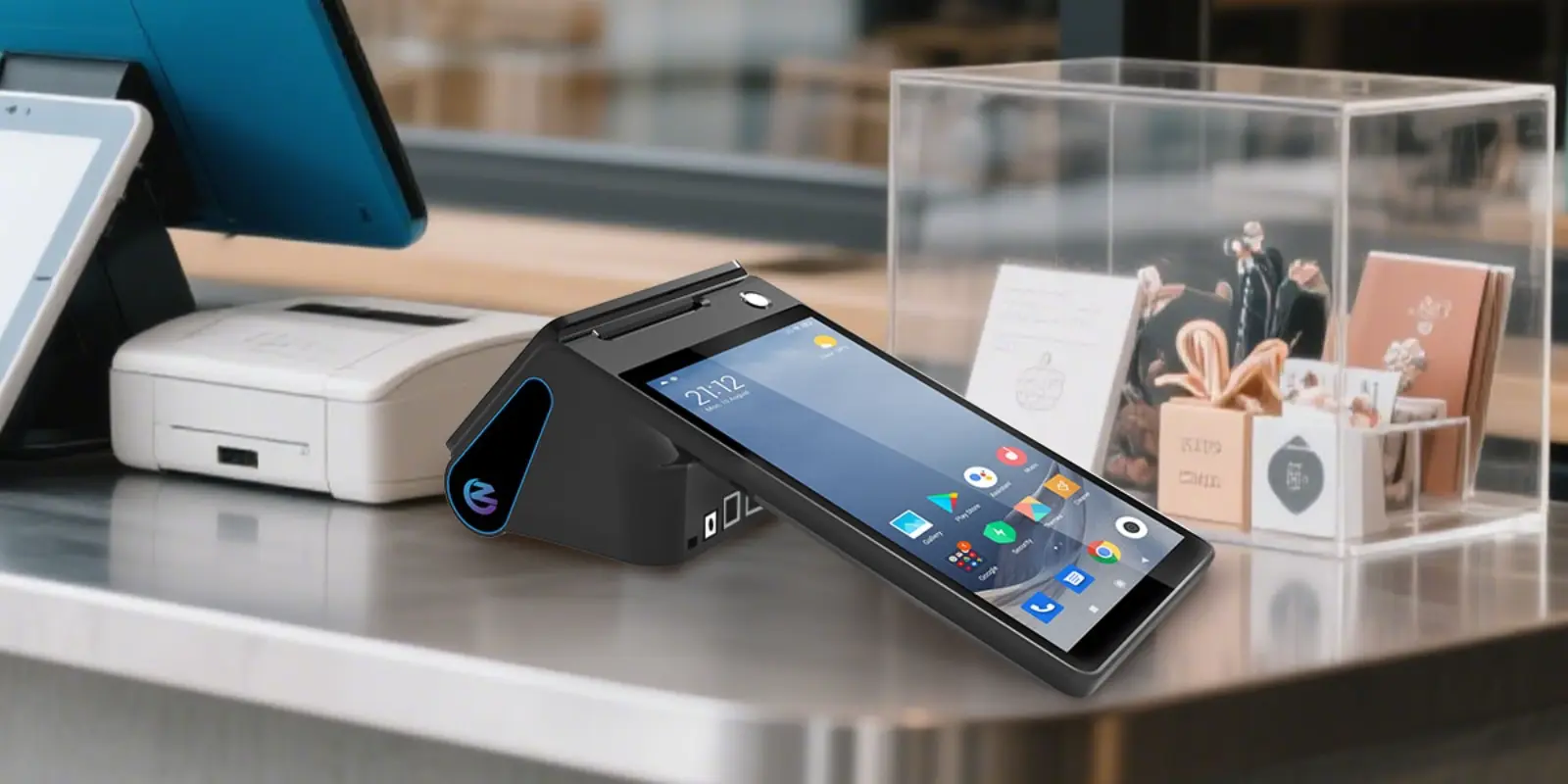
The ZCS Z108 dual-screen Android POS is better aligned with an employee-operated ticketing or station-sales role than with a compact unattended validator mounted at a bus door. It runs Android 14 and combines an 8-inch operator screen with a 3.95-inch secondary display, 4G and Ethernet connectivity, GPS, a 3600mAh battery, 58mm/80mm printing and optional NFC and barcode scanning.
The two displays can let an employee operate the fare application while the passenger reviews the destination, fare or payment prompt. Printing supports paper tickets and receipts, and the mix of cellular, Wi-Fi and Ethernet allows portable or docked operation at a terminal, ticket office or staffed boarding point. The larger form factor is less suitable for continuous one-handed conductor use than a compact handheld, so operators should test weight, grip and mounting in the intended workflow.
Z108 hardware does not supply an automatic fare collection backend. Route tables, concessions, ticket security, card keys, payment acceptance and settlement must come from the operator or system integrator. Optional NFC or scanning should be specified at quotation stage, and any bank-card acceptance configuration must be verified with the payment partners and approvals required for the deployment.
Choose fixed validators when boarding speed is the dominant requirement, passengers usually arrive with valid media and the network can support unattended equipment across a controlled fleet. This is common in dense urban services, all-door boarding and account-based ticketing.
Choose handheld machines when employees need to sell tickets, calculate destination fares, collect cash, print receipts or manage exceptions. They suit intercity buses, regional routes, conductor-based operations, temporary services and networks transitioning gradually from cash to electronic payment.
Choose a mixed architecture when the majority of riders can tap or scan but a meaningful minority still needs assistance. A fixed validator keeps routine boarding fast, while a handheld or counter terminal serves visitors, concession passengers, cash users, failed credentials and inspections.
Account-Based Ticketing Changes the Hardware Role
In a traditional card-based system, fare value or a travel product may be written to the passenger's card. In account-based ticketing, the credential mainly identifies an account, while the backend applies fare rules and calculates what the passenger owes. Validators and handheld devices still capture taps or scans, but more of the intelligence moves into the central platform.
This does not make edge hardware unimportant. The device still has to read credentials quickly, timestamp and locate each event, protect transaction data and continue operating when the vehicle loses connectivity. It also needs enough local logic to reject clearly invalid credentials and manage risk until the backend is reachable. Procurement teams should ask which decisions occur on the device, onboard controller and central system.
Account-based designs can support daily or weekly fare capping and let several types of media point to the same customer account. They also increase the importance of consistent clocks, device identity and transaction ordering. A missing or duplicated tap can change the calculated journey, so network recovery and reconciliation should be tested as fare functions rather than treated as general IT maintenance.

A transit operator needs to know which device is assigned to each bus, route, driver or station. Central management should report application and configuration versions, connectivity, last contact and update status. A lost handheld should be disabled, while a failed fixed validator should create a maintenance alert before the next service period.
Revenue control differs by device type. Validator records are usually reconciled through the automatic fare collection backend. Handheld machines add employee cash and printed-ticket totals, so shift opening, closing and remittance must be included. Inspectors also need a reliable way to distinguish a valid offline credential from a copied or expired one without exposing unnecessary passenger data.
A validator project includes mounting, vehicle wiring, installation labor, depot maintenance and possible onboard controllers. A handheld project includes batteries, chargers, paper, cases, loss risk and employee handling time. Both require application integration, secure modules, communications, backend services and support throughout the fleet lifecycle.
Lower unit cost can be outweighed by slow boarding, frequent printer failure or site visits for updates. Operators should model cost per vehicle and per passenger journey over the intended contract period, including spare devices, software maintenance and certification renewals. A phased pilot provides better evidence than comparing datasheets alone.

Q1.Can a handheld ticketing machine replace a bus validator?
It can on staff-operated routes, but employee interaction usually makes it slower than self-service validation at a busy door.
Q2.Can a validator accept cash?
Most modern validators read electronic credentials. Cash generally requires a farebox, vending device or employee-operated ticketing machine.
Q3.Does NFC support mean bank cards will work?
No. Open-loop acceptance also needs approved payment software, kernels, processor and acquirer integration.
Q4.Can the Z108 be mounted as a bus validator?
Its published design is a desktop/portable dual-screen POS. A vehicle-mounted project would require engineering validation for mounting, power, vibration and unattended use.
Q5.Which option is better for intercity buses?
A handheld machine is often more practical where destinations, fares, cash and printed tickets require employee input.
There is no universal winner. A validator optimizes passenger throughput; a handheld ticketing machine optimizes operational flexibility. Transit agencies should choose after defining fare media, boarding control, cash policy, connectivity and reconciliation.
Operators that need a larger portable or docked sales terminal can evaluate the ZCS Z108 Android POS with their own fare application, printer layout, scanner and NFC configuration. A sample should be tested in the real vehicle or station environment before production purchase.






 Home
Home  Mobile Check-In POS Terminal for Hotels: ID Scanning, Deposits and Room Assignment
