
2026-10-09 Author : ZCS
Palm biometrics often scale faster in welfare systems because one organization controls enrollment, eligibility, devices, and repeat verification. Retail payment systems operate under different conditions: consumers already have cards and mobile wallets, participation is voluntary, and every biometric service must justify its privacy and compliance costs.
The underlying mechanics of palm biometric identity verification explain how a captured palm pattern becomes a reference for later matching. This article addresses the policy question that follows: what decision does that match authorize, and what happens when it fails?
Faster deployment is mainly a product of system design. Government agencies can establish one enrollment process, one eligibility rule, and one audit trail across a closed network. Retailers must persuade each consumer that a new biometric credential is more useful than the card or phone already in that consumer’s hand.
The distinction begins with the technology’s role. A biometric match can authorize a benefit, a payment, an entry event, or an account action. Each decision creates a different operational value and a different consequence when the system rejects the correct person.
Biometric payment systems use a biological trait to verify identity before authorizing a transaction or benefit. Palm vein systems capture subcutaneous vascular patterns with near-infrared light. In welfare programs, the biometric step often verifies eligibility or receipt; in retail, it usually replaces a card, phone, or account credential.
That difference changes the value calculation. A school-meal system may need to establish that the correct student received one allocated meal. A supermarket only needs to complete a purchase that could already be paid for with cash, a contactless card, a QR code, or a mobile wallet.
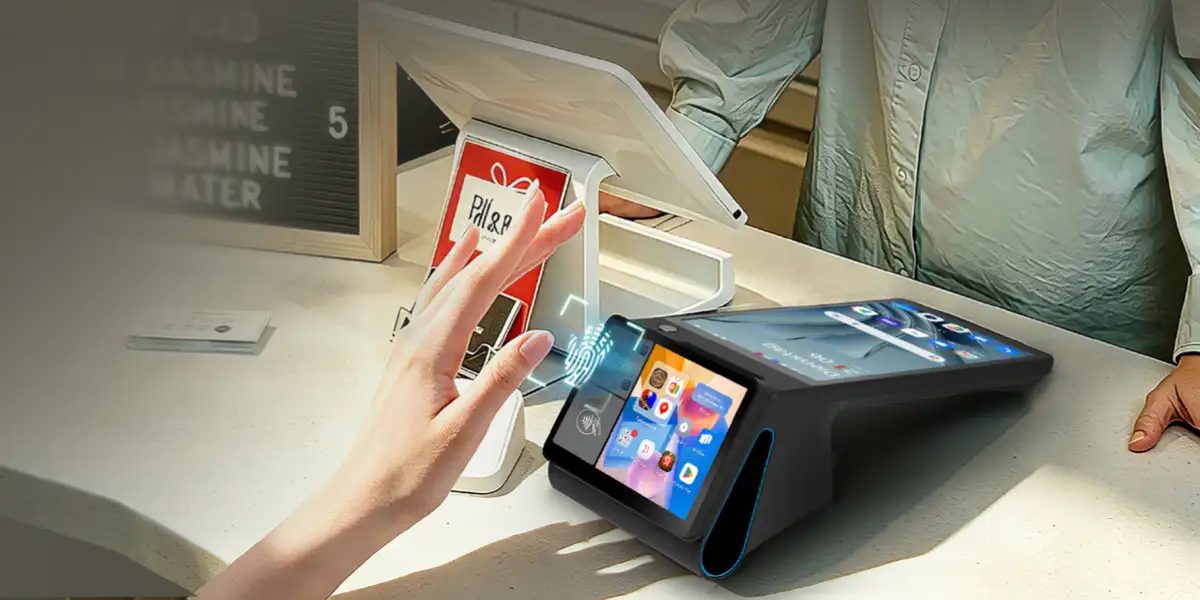
Closed welfare systems use biometrics to enforce a program rule. The operator defines the eligible population, enrolls beneficiaries, installs terminals at designated locations, and records each verification against a centrally defined entitlement. Identity is part of the transaction because the benefit is restricted to a specific person.
Open consumer markets use biometrics to compete for preference. A retailer normally cannot require every shopper to enroll a palm, face, or fingerprint before buying groceries. The biometric system must remain optional, which means its speed and convenience must be strong enough to change behavior without removing familiar alternatives.
The same scanner therefore carries different economic value in each environment. A welfare operator may compare biometric verification with paper registers, shared cards, manual name checks, or duplicate claims. A retailer compares it with mature payment credentials that already authenticate billions of low-friction transactions.
Biometric adoption is not confined to low-income countries. The World Bank biometrics primer states that biometric deduplication is used in official identification systems across more than 130 developed and developing countries. Passports, border control, banking, device access, and national identity programs all demonstrate adoption in wealthier markets.
Institutional control explains more than national income. A ministry, bank, employer, or airport can define a controlled population and require identity checks at recurring checkpoints. The operating model resembles a closed welfare program even when the surrounding economy is affluent.
Weak alternatives also matter more than poverty. A biometric credential becomes valuable when cards are easily shared, documents are incomplete, phone ownership is inconsistent, or a program needs to prevent duplicate enrollment. A low-income population with reliable cards may need biometrics less than a wealthy organization protecting a high-security facility.
A single program sponsor can reduce four coordination costs at once. The sponsor can select the hardware, specify the matching architecture, define enrollment requirements, and require each delivery point to produce the same audit record. Thousands of sites do not need to make separate purchasing decisions.
Central procurement also converts a speculative feature into required infrastructure. A retailer buys a biometric terminal only after estimating voluntary customer use. A welfare agency can procure terminals because identity verification is part of the program design, even before beneficiaries have experience with the technology.
Repeat use improves the economics of enrollment. Registering a palm for one transaction would be difficult to justify. Registering once for a meal collected five days a week, a recurring subsidy, or repeated clinic visits spreads the enrollment cost across hundreds of future verifications.
Welfare delivery combines identity, eligibility, and proof of receipt. A successful match can confirm that an enrolled person is present, that the person qualifies for the benefit, and that the benefit was recorded as delivered. One verification event can therefore support operations, fraud control, and reporting.
Palm biometrics can be attractive where credentials are transferable. A card, PIN, or QR code can be handed to another person. A palm pattern is tied to the enrolled individual, which makes casual credential sharing harder. That advantage is operational rather than ideological: the system is designed to answer who received the benefit.
Biometric matching does not establish eligibility by itself. The database still needs accurate enrollment data, current program rules, and a process for correcting records. A precise match against an incorrect beneficiary record produces a precisely authenticated administrative error.
ZCS project records describe an approximately 40,000-terminal deployment for student identity verification in a government-backed school-meal program in Southeast Asia. Students present a palm before collecting food, allowing the system to match each collection event with an enrolled beneficiary record. The reported terminal count comes from project-side information and has not been independently confirmed through a public procurement audit.
The project demonstrates ZCS’s ability to support a large, distributed biometric terminal fleet. ZCS combines Android palm-biometric hardware with server-side recognition, open SDK integration, and TMS remote management. Applicable configurations are rated for 1:1,000,000 server-side matching in under one second, although this remains a manufacturer specification rather than an independent field result. A September 2026 program update independently confirms the scale of the wider school-meal network, but not the ZCS-specific device count.
Closed welfare systems can scale biometrics quickly because one sponsor controls enrollment, eligibility rules, devices, and audit records. Scale comes from centralized coordination and repeated verification, especially where cards, phones, or formal IDs are unreliable. The same structure also increases the duty to prevent exclusion and coercion.
That final duty is easy to miss. A system can expand quickly because beneficiaries have little practical ability to choose a different channel. Rapid adoption may describe administrative reach rather than voluntary public acceptance.
Retail biometric systems compete against cheap, familiar, and interoperable substitutes. Contactless cards require no biometric enrollment. Mobile wallets reuse a phone that the customer already carries. QR payments can operate with inexpensive merchant hardware and established consumer applications.
A palm payment must therefore deliver more than a novel gesture. The system may reduce the need to carry a wallet, connect payment with loyalty, verify age, or support access to a venue. A few seconds of checkout speed rarely justify a new biometric database on their own.
Payment hardware also sits inside a larger acceptance chain. The terminal must work with merchant software, acquirers, card networks, identity services, and local data-protection rules. The existing overview of contactless and biometric payments shows how many payment methods already share the modern checkout environment.
Enrollment creates a cost before the first biometric transaction. The customer must understand the service, accept the data terms, present a usable sample, and link the new credential to an account or payment method. A failed or confusing first attempt can send the customer back to a card immediately.
Retail frequency determines whether that cost is recovered. A commuter using the same gate twice a day may accumulate value quickly. A traveler visiting one airport shop or a casual shopper entering one supermarket chain may never use the credential often enough to make enrollment worthwhile.
Merchant fragmentation compounds the problem. A biometric credential limited to one retailer has less utility than a card accepted across millions of locations. Broad interoperability could improve the value proposition, but it also adds processors, governance agreements, liability questions, and data-sharing risk.
Optional use produces a direct test of consumer value. Customers can ignore the scanner and keep using existing payment methods. Low repeat use becomes visible because the operator cannot manufacture engagement simply by installing more terminals.
Closed systems can hide the same demand problem. A high verification count may reflect mandatory participation rather than satisfaction. Adoption metrics must therefore distinguish enrolled people, active users, successful matches, failed matches, manual overrides, and people who chose an alternative channel.
Amazon One showed that palm-based payment could operate across a large consumer network. Amazon reported more than 3 million uses and announced deployment to more than 500 Whole Foods stores in 2023. The rollout showed that enrollment, cloud matching, payment linking, and checkout hardware could function beyond a small pilot.
The deployment also combined more than payment. Amazon One linked a palm credential with Prime membership benefits, loyalty identification, venue entry, and age verification in selected settings. That combined-value model addressed more needs than a standalone replacement for tapping a card.
The 2026 shutdown changed the interpretation of that scale. American Express notified cardholders that Amazon One would be discontinued at participating businesses effective June 3, 2026. A retrospective on the Amazon One palm-payment experiment provides the broader chronology and separates the technical capability from the market-fit question.
A terminal count measures availability rather than preference. Five hundred installed locations can create national reach, but the more useful measures are enrollment conversion, repeat usage, transactions per active enrollee, and the cost of maintaining the identity platform.
The Amazon One shutdown does not mean that developed markets reject every biometric service. The public record confirms the expansion and discontinuation, but it does not isolate privacy concern, low usage, operating cost, strategic restructuring, or substitute payments as a single cause. The available evidence does not support assigning the exit to one factor.
The Amazon One lifecycle highlights the importance of continued use after installation. A government entitlement system can continue because the verification step remains embedded in the program, whereas an optional checkout method can disappear when its marginal value no longer supports its operating model.
Consent is difficult to treat as freely given when food or financial assistance depends on enrollment. A beneficiary may accept biometric processing because refusal appears to threaten access to an essential service. The power imbalance is greater than the one between a shopper and a supermarket.
Government authority can therefore increase both adoption speed and governance responsibility. A public agency may have a lawful public-task basis for processing data, but legal authority does not remove the need to establish necessity, proportionality, data minimization, and effective remedies.
A non-biometric path must work in practice. A paper exception that requires hours of travel, repeated explanations, or public disclosure of a medical condition is not an equivalent alternative. The fallback needs comparable access, reasonable processing time, and trained staff.
School deployments combine sensitive biometric data with a population that cannot negotiate on equal terms. Children may not understand retention periods, secondary uses, or the consequences of linking identity records with attendance and meal history. Parents may also feel pressure to accept the system when it becomes the normal school process.
Current school guidance shows how a mature regulatory system raises the deployment threshold. According to the June 2026 school biometric guidance from the UK Department for Education, schools need written parental consent, must respect a pupil’s objection, and must provide a reasonable alternative when biometric participation is refused.
Those safeguards address a structural risk rather than a regional preference. A Southeast Asian meal program and an English school cafeteria may use similar scanners, but the surrounding rules can distribute risk very differently. The sensor does not determine whether refusal is safe or whether an appeal is possible.
Biometric data requires stricter governance because it is persistent and uniquely identifying. A responsible system needs a lawful basis, necessity and proportionality tests, purpose limits, retention controls, security safeguards, independent accuracy testing, and a usable non-biometric alternative for anyone who cannot or will not enroll.
That governance list should be treated as an operating specification. Procurement documents that describe sensor accuracy but omit deletion, access control, incident response, and fallback procedures leave the most consequential parts of the system undefined.
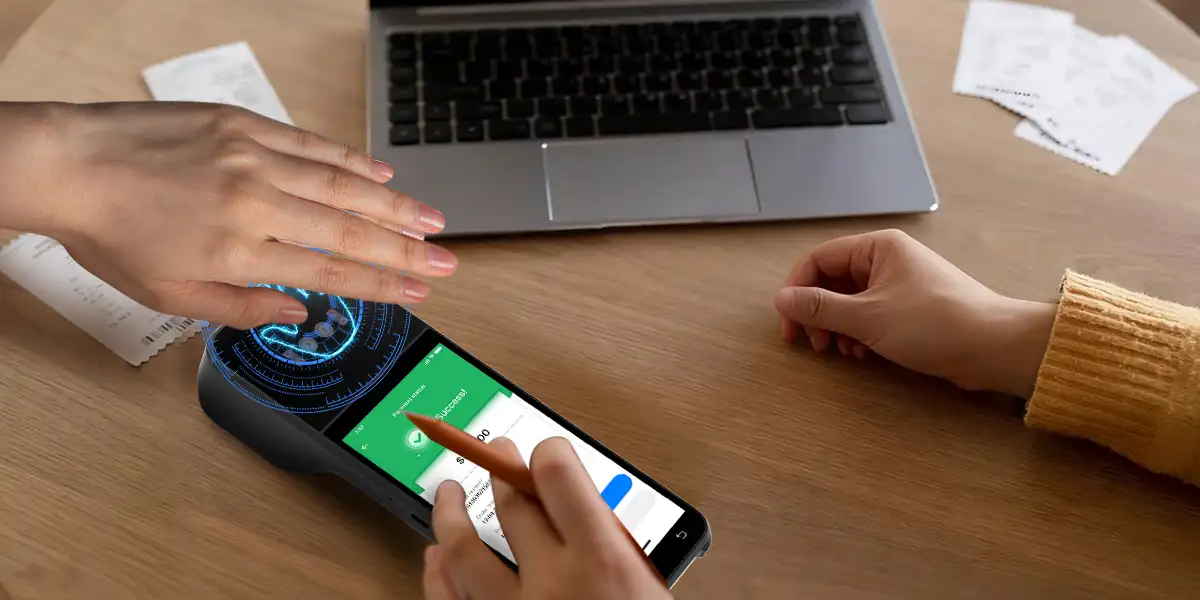
A false rejection has different consequences in retail and welfare. A shopper can usually present a card after a failed palm match. A student or beneficiary may lose access to a meal or payment unless staff can resolve the failure immediately.
Population-level testing matters more than a headline accuracy rate. Children, older adults, people with disabilities, workers with damaged hands, and users in difficult environmental conditions may experience different capture quality. Procurement teams need error rates for the intended population and workflow, not only laboratory results supplied by a sensor vendor.
Human review must remain inside the service process. Staff need authority to approve an alternative check, record the reason for an override, and correct enrollment data. An appeal process that starts after the benefit window closes cannot repair a missed meal.
Five operational questions predict adoption better than a country’s income classification. The questions measure who controls the system, how serious the identity problem is, how well alternatives work, how often enrollment is reused, and who bears the cost of an error.
| Test | Closed welfare system | Open retail market |
|---|---|---|
| Control | One sponsor can standardize enrollment, devices, and rules | Merchants, processors, banks, and consumers decide separately |
| Identity problem | Duplicate claims and incorrect delivery can undermine the program | Most purchases already complete with an accepted payment credential |
| Alternative quality | Cards, phones, documents, or manual lists may be unreliable | Contactless cards, wallets, QR codes, and cash are established |
| Reuse frequency | Daily, weekly, or monthly verification can amortize enrollment | Value depends on repeat visits and cross-merchant acceptance |
| Failure burden | A false rejection can block an essential benefit | A customer can usually switch payment methods immediately |
The framework also explains why banking, enterprise access, and transportation can sit between the two extremes. Those environments often have repeated use and controlled enrollment, but users may retain more choice than welfare beneficiaries. The article on palm-vein deployment environments examines those sector-specific differences.
No score guarantees a legitimate deployment. Strong identity need and centralized control can predict rapid scale while also increasing surveillance, exclusion, or function-creep risk. The five tests explain adoption pressure; they do not replace a rights assessment.
A biometric template is still sensitive even when the raw image is discarded. The template exists so a person can be recognized later. Encryption and one-way transformations reduce exposure, but the underlying physical characteristic cannot be reissued like a password after compromise.
Data architecture should follow the narrowest workable purpose. A program should determine whether matching can occur against a local credential, on a terminal, or through a central service. Central databases simplify administration but create larger breach and misuse consequences.
Transaction records also need limits. A meal-verification log can reveal attendance, location, and routine even when it contains no raw palm image. Retention rules should cover both biometric references and the behavioral records produced around each verification.
Fallback capacity must be sized for real operating conditions. The program needs enough trained staff and alternative credentials to handle sensor failure, network loss, enrollment errors, injuries, and people who decline biometric processing.
Appeal records should separate fraud controls from service continuity. Staff can deliver an essential benefit through an approved exception while a disputed identity record is reviewed. Treating every mismatch as suspected fraud creates avoidable harm and distorts performance data.
Security review must cover the full system rather than the scanner alone. Authentication strength, database access, key custody, software updates, terminal tamper resistance, audit logging, and administrator privileges all affect the result. The guide to palm-vein system security addresses those layers in more technical detail.
Procurement contracts should state what happens when a supplier or program leaves. The operator needs export formats, deletion evidence, key-transfer rules, maintenance obligations, and a timetable for removing data from inactive terminals and backup systems.
Independent testing should continue after deployment. Matching accuracy can change with population mix, sensor condition, enrollment practice, software updates, and network architecture. Monitoring should report false rejects, overrides, unavailable terminals, duplicate alerts, and unresolved complaints.
Public reporting should distinguish scale from quality. Device counts and enrollment totals show reach. Successful service delivery, low exclusion, limited data retention, and functioning alternatives show whether the system deserves to remain at scale.
Palm biometrics scale fastest when a controlled institution has a recurring identity problem and weak existing credentials. Government welfare programs often meet those conditions because one sponsor controls enrollment, eligibility, hardware, and reporting across a defined beneficiary population.
Open retail markets apply a harsher marginal-value test. Cards, phones, and QR payments already complete the transaction, so biometric payment systems must add enough convenience, loyalty integration, security, or cross-service utility to justify enrollment and long-term data governance.
Privacy caution is not proof of technological backwardness or progress. Strong consent and alternative-access rules can slow deployment because they force the operator to expose the real value of the system. Weak safeguards can accelerate installation while transferring errors, breach risk, and loss of choice to the people with the least bargaining power.
Palm biometric adoption depends on how identity verification fits the surrounding service. Closed, sponsor-controlled infrastructure creates a direct route to scale. Open markets with mature payment tools require voluntary enrollment, repeat use, and enough added value to keep the biometric option operating over time.

Biometric systems scale faster in welfare programs because one sponsor can standardize enrollment, eligibility rules, hardware, and audit records. The biometric check also solves a central program problem: confirming that the correct person received a restricted benefit.
Faster adoption does not establish lower public concern. Central procurement, limited alternatives, weaker bargaining power, and mandatory program rules can produce high enrollment without measuring voluntary acceptance. Privacy and exclusion risks may be greater when essential benefits depend on the system.
Palm vein recognition has useful physical properties because it captures an internal vascular pattern with near-infrared light. System safety still depends on template protection, matching architecture, access controls, retention, incident response, fallback procedures, and independent testing.
Biometric payments can succeed where enrollment produces recurring value that cards or phones do not provide. High-frequency transport, membership, age verification, secure access, and combined loyalty-payment workflows offer stronger cases than a retailer-specific replacement for contactless checkout.
A non-biometric alternative should provide comparable access without unreasonable delay, cost, stigma, or repeated justification. Suitable methods may include a protected card, PIN plus human verification, or an assisted service desk, depending on the risk and population.






 Home
Home  What Is Least-Cost Routing (LCR) and Why Does Your EFTPOS Terminal Need to Support It?
