
2026-08-07 Author : ZCS
For years, a sale in Turkey generated two separate trails: a fiscal receipt printed at the register, and — for businesses required to issue one — an e-Fatura or e-Arşiv invoice processed through an entirely separate electronic system. A rule change published on 8 May 2026 starts collapsing those two trails into one, at the device level. This article covers what a YN ÖKC actually is, what the new rule requires, what it means for POS hardware and card-payment integration specifically, and where the certification process for this stands today — including an honest answer to a question worth asking upfront: which manufacturers currently hold this authorization.
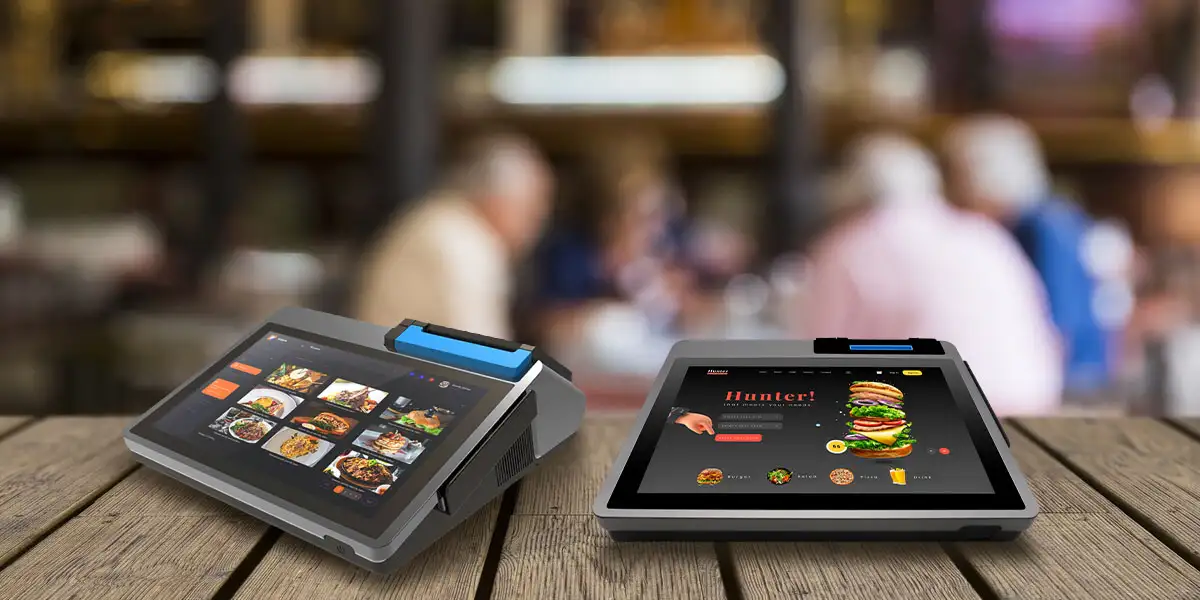
YN ÖKC stands for Yeni Nesil Ödeme Kaydedici Cihaz — New Generation Payment Recording Device — Turkey's mandated category of fiscal cash register, which replaced older-generation devices for most retailers starting in 2024. Unlike a generic receipt printer, a YN ÖKC is built to report transaction data to Turkey's Revenue Administration (GİB) in something close to real time, and its fiscal functions are certified as a unit rather than bolted on as an afterthought. For POS hardware specifically, this has meant that card-payment terminals (EFT-POS) and cash registers in Turkey have needed to work as an integrated, certified system rather than as separate devices sitting side by side at the counter.
General Communiqué No. 593, published in Turkey's Official Gazette on 8 May 2026, allows YN ÖKC devices to issue certain e-Documents (e-Belge — including e-Fatura and e-Arşiv Fatura) directly from the point-of-sale device itself, rather than through a separate invoicing channel. According to a summary of the change from VATupdate, the reform integrates payment and invoicing processes at the point of sale, with electronic documents issued this way signed using the device's own fiscal certificate rather than a separate manual or corporate signature process. This is a meaningful architectural shift for anyone tracking Turkey's broader payment compliance environment — it sits alongside the contactless payment limit change that took effect earlier in 2026 as part of the same regulator's ongoing effort to tighten the link between point-of-sale hardware and national tax reporting.
Two technical details matter more than the headline summary suggests. First, the e-Document is electronically signed using the device's own fiscal certificate — a cryptographic credential embedded in the hardware itself, which legally substitutes for the business owner's or an authorized signatory's physical signature. Second, this isn't a blanket capability unlocked by a software update: eligible devices undergo joint technical review by GİB and TÜBİTAK, Turkey's national scientific and technical research institution, and only specific approved brand-and-model combinations will be published as authorized to issue e-Documents, listed on GİB's official YN ÖKC and e-Belge portals. According to one Turkish tax advisory summary of the rollout, the transition is expected to run over roughly a three-year phased period, with GİB set to publish detailed technical guidance covering hardware and software standards before full implementation — meaning the framework is set, but the granular technical specification is still being finalized rather than already complete.
This reform builds on an existing requirement rather than introducing a new category from scratch: card-payment integration with fiscal devices has been a compliance point in Turkey for a while, particularly in food service, where external POS software and third-party bank EFT-POS hardware have needed to operate in an integrated, compatible configuration with the fiscal device rather than as a disconnected bolt-on. What changes under the new rule is the scope of what that integrated system now needs to produce — not just a compliant fiscal receipt and a processed card payment, but potentially a legally valid e-Document generated and signed at the same point in the transaction. For manufacturers and ISVs, this raises the same question that governs EMV and payment certification generally: is the underlying hardware and firmware built to a standard that can absorb this kind of requirement, or does it require a different device architecture entirely? Our guide to choosing a secure EMV Android POS terminal manufacturer covers the certification-verification questions worth asking on the payment side of that equation, which now sits closer to the fiscal-document side than it used to.
It's worth being direct about where the market actually is on this, rather than implying the capability is already widely available. Manufacturers wanting to offer e-Document issuance through their YN ÖKC devices must apply to GİB directly and demonstrate the technical competence the Communiqué requires; once authorized, they take on duties equivalent to those of a licensed Private Integrator (Özel Entegratör) under the earlier Communiqué No. 509 — meaning real, ongoing responsibility for how e-Documents are created, signed, transmitted, and stored, not just a one-time hardware certification. As of this writing, this is a newly established authorization track rather than a mature one: GİB's technical guidance is still being finalized, the three-year transition period has barely begun, and there is no indication that any manufacturer based outside Turkey — including ZCS — currently holds this specific e-Belge authorization. This is an industry-wide reality at this early stage of the rollout, not a gap unique to any one company.
What this does raise, for manufacturers evaluating whether to pursue this authorization down the line, is a familiar set of underlying capabilities: hardware secure enough to store and use a device-level fiscal certificate, and the kind of remote fleet-management infrastructure that can push updated compliance firmware across a deployed terminal base once GİB's technical guides are finalized — the same remote configuration capability covered in our guide to deploying Android POS terminals across multiple countries matters here for essentially the same reason it matters for any regulatory change that rolls out to hardware already in the field.


Q1. Do all retailers in Turkey need to issue e-Documents directly through their POS terminal now?
No — this is a newly enabled capability being rolled out over a multi-year transition period, not an immediate universal mandate. Existing e-Fatura and e-Arşiv processes through separate systems remain valid.
Q2. What is a YN ÖKC's "fiscal certificate," and why does it matter for e-Documents?
It's a cryptographic credential embedded in the device that's used to electronically sign e-Documents issued from that terminal, giving those documents the same legal standing as a document signed by the business owner or an authorized signatory.
Q3. Does any current Android POS manufacturer already support e-Belge issuance?
As of this writing, this is a very new authorization track — GİB's detailed technical guidance is still being finalized, and there's no public indication that manufacturers outside Turkey, broadly, have yet obtained this specific authorization. This is worth confirming directly and specifically with any manufacturer rather than assuming from general compliance marketing.
Q4. Is this the same regulator behind Turkey's 2026 contactless payment limit change?
Yes — both fall under Turkey's broader fiscal and payment regulatory framework overseen by GİB (for fiscal devices and e-Documents) working alongside BDDK (for banking and payment card rules), reflecting a period of active regulatory activity around point-of-sale hardware in Turkey generally.
Q5. What should a business do if their current POS hardware can't support future e-Document requirements?
Given the multi-year transition window, there's no immediate need to replace compliant hardware. It's more useful to ask a manufacturer or reseller about remote update and firmware-upgrade capability, so that when GİB's technical guidance is finalized, existing terminals have a realistic path to compliance rather than requiring a full hardware swap.






 Home
Home  Why Loyalty Program Software Fails on Locked-Down POS Hardware?
