
2026-06-30 Author : ZCS
Deploying a single Android POS terminal is a hardware and software integration task. Deploying the same terminal across five countries is an infrastructure governance problem — and the gap between those two descriptions is where most multi-country POS rollouts encounter their first serious operational failure.
The failure mode is predictable. A terminal fleet that works cleanly in market one gets extended to market two with the same firmware, the same language configuration, the same payment application build, and the same network assumptions. Market two has different regulatory requirements, a different dominant payment protocol, a different carrier landscape, and a different script system. The terminals ship. The problems surface at scale — after hundreds of units are in the field, after the ISV integration has gone live, after the merchant contracts are signed.
Terminal Management System (TMS) architecture is the operational layer that prevents this failure mode. This guide covers what TMS configuration for a multi-country Android POS deployment actually requires: how firmware profiles are structured, how compliance variants are managed, how language and payment configurations are partitioned by market, and how fleet health monitoring works across a geographically distributed deployment. ZCS's TMS platform is used throughout as the reference implementation — it is one of the few Android POS hardware platforms that supports the full configuration scope described here natively, without requiring a third-party MDM layer.
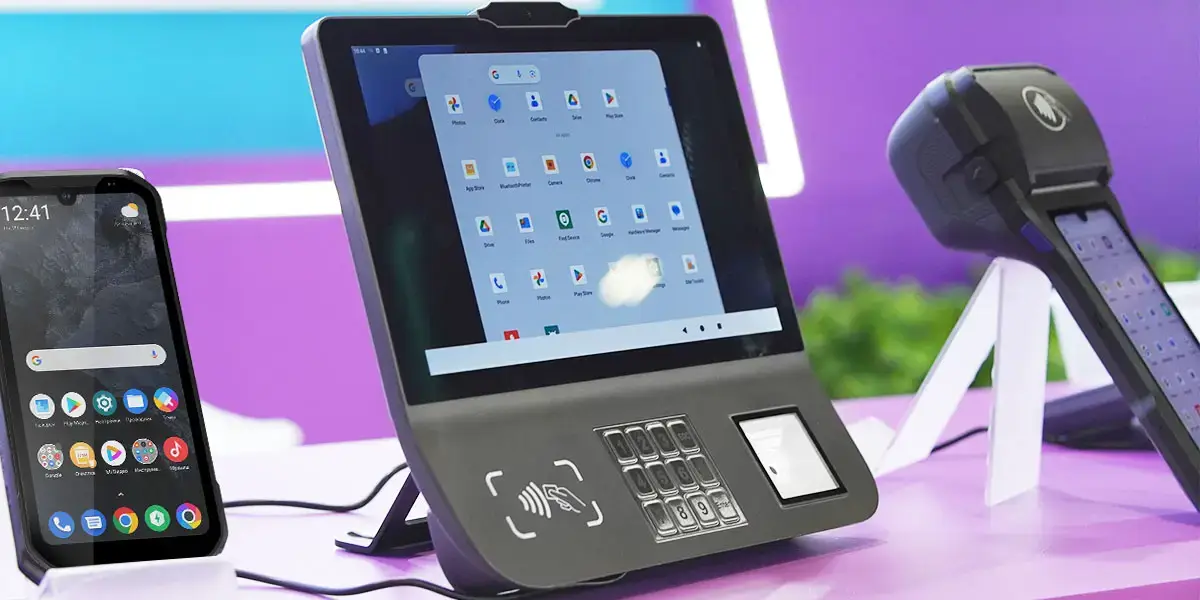
A Terminal Management System is the software infrastructure that enables centralised remote management of a fleet of deployed POS terminals. In a single-market deployment, TMS provides three core functions: remote firmware updates (pushing new OS or application versions to terminals without physical access), configuration management (setting application parameters, payment routing, and UI settings across the fleet), and device health monitoring (tracking connectivity status, battery state, error logs, and transaction performance).
In a multi-country deployment, each of those functions acquires a layer of complexity that a single-market TMS architecture is not designed to handle:
According to the PCI Security Standards Council's guidelines on remote terminal management, TMS architectures handling payment-capable terminals must implement authenticated communication channels, integrity verification for firmware packages, and audit logging for all remote configuration changes. These requirements apply at the terminal level regardless of which country the terminal is deployed in — but implementing them consistently across a multi-country fleet requires the TMS to manage compliance logging per terminal, per market, and per firmware version simultaneously.
A common shortcut in multi-country POS deployment is to layer a generic Mobile Device Management (MDM) platform — Microsoft Intune, VMware Workspace ONE, or similar — over Android POS terminals to achieve centralised management. MDM platforms provide device inventory, application distribution, and remote wipe capability. They do not provide POS-specific functions: payment application parameter management, fiscal receipt configuration by jurisdiction, terminal key injection scheduling, or payment network certification status tracking.
A purpose-built POS TMS handles the functions that matter for a payment terminal fleet. The distinction is not academic; it determines whether the operations team managing a 500-terminal fleet across five countries can push a payment routing update to Thailand terminals only without touching Vietnam terminals, or whether they must push the same configuration to all devices and accept that Vietnam terminals will receive incorrect payment routing parameters.
ZCS terminals are designed to operate with ZCS's TMS platform, which provides this partitioned configuration management natively. The TMS supports country-profile-based firmware targeting, meaning a firmware update package can be scoped to a defined terminal group — Japan terminals, Indonesia terminals, EU terminals — without requiring manual device selection or risking cross-market configuration contamination.
The foundation of a multi-country TMS architecture is the country profile — a defined configuration package that specifies everything a terminal needs to operate correctly in a given market. A well-structured country profile contains:
The ZCS TMS implements country profiles as versioned configuration objects. When a terminal is provisioned for a specific market, the appropriate country profile is assigned. All subsequent firmware updates, application updates, and configuration changes pushed to that terminal are validated against the country profile before deployment — preventing a Japan-market firmware package from being pushed to an Indonesia-market terminal and vice versa.
In a multi-country fleet, the ability to roll back a firmware update is as important as the ability to push one. A firmware update that introduces a payment application incompatibility in one market may not be discovered until after the update has propagated across that market's terminal population. Without rollback capability, the remediation path is either a corrective firmware push (which takes time to develop and validate) or manual intervention at each affected terminal (which is operationally impossible at scale).
TMS rollback requires that previous firmware versions be retained in the management platform's version library and that terminals maintain a recovery partition capable of reverting to the prior version without a factory reset. Confirm both capabilities — server-side version retention and terminal-side recovery partition — when evaluating TMS architecture for a multi-country deployment.
ZCS terminals ship with a recovery partition that supports remote rollback via TMS command. The TMS retains the three most recent firmware versions per country profile, allowing a rollback to either of the two preceding versions without requiring a new firmware package to be built.
Every market in a multi-country POS deployment has its own certification requirements: EMV acquirer approval in Japan, Giteki wireless certification for radio module operation, PCI-DSS compliance documentation for payment data handling, QRIS acquirer certification in Indonesia, local fiscal receipt format requirements in markets with electronic invoice mandates.
Markets operating under more complex regulatory frameworks — such as those subject to EU payment modernisation mandates — add SCA compliance requirements and additional hardware certification obligations to this matrix.
Tracking certification status manually across a distributed fleet is not scalable. A terminal that has been updated to a new firmware version may require re-certification in certain markets — the new firmware changes the payment application behaviour that the acquirer certified against. Without TMS-managed certification tracking, an operations team managing 1,000 terminals across ten markets has no reliable mechanism for knowing which terminals are operating on certified firmware and which have received updates that voided their certification.
A TMS architecture for multi-country compliance management should maintain, per terminal:
This is the compliance logging requirement referenced in the PCI SSC guidelines: every remote configuration change must be logged, attributable, and auditable. In a multi-country deployment, the audit log must also carry market attribution — knowing that a configuration change was pushed to terminal group "TH-Bangkok-Retail" versus "ID-Bali-Tourism" is essential for compliance reporting.
PCI-DSS (Payment Card Industry Data Security Standard) applies wherever card payment data is processed — which in a multi-country deployment means every market where the terminal fleet accepts card transactions. The PCI Security Standards Council's PCI-DSS v4.0 documentation defines the requirements for remote administration of payment terminals under requirement 9.9 (physical security) and requirement 12.9 (remote access management).
For TMS-managed terminal fleets, the relevant PCI-DSS requirements include:
ZCS's TMS implements these requirements through certificate-based mutual authentication between the TMS server and each terminal, AES-256 encryption for all configuration packages, and immutable audit logging with per-operator attribution. These are not optional features in a payment-compliant TMS; they are the baseline for operating a PCI-scoped terminal fleet under remote management.

One of the operational advantages of a well-structured TMS architecture is the ability to deploy a single hardware model across multiple markets with market-specific configuration applied remotely — rather than maintaining separate hardware SKUs for each market. This is only possible if the TMS can apply independent configuration profiles without requiring physical access to the terminal.
For language configuration in a Southeast Asian and Northeast Asian multi-country fleet, the TMS must be able to set:
ZCS's TMS implements language configuration as a per-output parameter set within the country profile. A Japan country profile, for instance, specifies: system language = Japanese (ja-JP), IME = Japanese (Mozc or equivalent), customer display = configurable per terminal group, receipt = Japanese with dual-tax-rate template active, font package = CJK full stack enabled. Pushing this profile to a terminal configures all four output channels simultaneously without requiring on-device setup.
Payment routing — the configuration that determines which payment network a transaction is directed to for processing — is the most commercially sensitive component of a multi-country TMS configuration. Incorrect payment routing pushes transactions to the wrong acquirer, potentially causing transaction failures, settlement errors, or scheme compliance violations.
Payment routing configuration must be scoped at the country-profile level, with change control that prevents accidental cross-market propagation. A configuration update that modifies PromptPay routing for Thailand terminals must not be deployable to Vietnam or Indonesia terminals, even if those terminals run the same base firmware. The TMS must enforce this partition at the configuration push stage — not rely on operator discipline to select the correct terminal group.
The payment routing configuration within a country profile typically includes:
Standard device health monitoring assumes that a device going offline is an anomaly requiring investigation. In a multi-country POS fleet with deployments in rural Indonesia, provincial Vietnam, and Tokyo's Shinjuku district simultaneously, "offline" means different things in different contexts.
An effective multi-country TMS monitoring architecture must be context-aware. A terminal in a Jakarta shopping mall going offline during business hours is an incident. A terminal in a Lombok beach resort going offline for two hours during a storm is within expected operating parameters. Treating both with the same alert threshold generates alert fatigue that causes real incidents to be missed.
ZCS's TMS supports connectivity profile configuration per terminal group, allowing operations teams to define market-specific alert thresholds. Indonesian island deployments can be assigned an extended offline tolerance window; Japanese urban deployments can be set to alert immediately on connectivity loss. The monitoring dashboard aggregates fleet status by country group, making it possible to see at a glance whether an offline cluster is geographically localised (likely a carrier or regional network issue) or distributed across a market (potentially a firmware or payment application issue).
A TMS monitoring dashboard for a multi-country fleet should surface the following metrics per terminal and per country group:
Connectivity and uptime:
Firmware and compliance:
Transaction performance:
Hardware health:

The sequence below reflects the operational steps for deploying a ZCS Android POS fleet across multiple markets using TMS-managed configuration. The sequence is applicable to any TMS-capable Android POS deployment with appropriate vendor-specific adjustments.
For each target market, develop and validate the country profile before any terminals ship:
Deploy a pilot batch (typically 20–50 terminals) to each market before full rollout:
With country profiles validated and monitoring calibrated, proceed to full deployment:
The TMS operational cadence for a live multi-country fleet:
Multi-country Android POS deployment is a solvable infrastructure problem — but it requires treating TMS architecture as a first-order design decision, not an afterthought. The country profile model, firmware versioning and rollback capability, compliance tracking, partitioned payment routing, and context-aware fleet monitoring described in this guide represent the operational baseline for a fleet that scales across markets without generating the configuration failures and compliance gaps that characterise underprepared rollouts.
ZCS terminals support this full TMS configuration scope natively, including country-profile-based firmware targeting, per-output language configuration, PCI-compliant authenticated communication, and context-aware connectivity monitoring. For procurement teams evaluating hardware for multi-country deployment, confirming TMS capability at this level of specificity — not just "TMS supported" as a checkbox — is the evaluation criterion that determines whether the fleet is manageable at scale.

Q1. What is a country profile in a TMS multi-country deployment?
A country profile is a versioned configuration package assigned to each terminal at provisioning. It defines the base firmware version, payment application build, language settings, network parameters, and compliance configuration for a specific market. TMS platforms use country profiles to enforce market-specific firmware targeting and prevent cross-market configuration contamination.
Q2. How does a TMS prevent incorrect payment routing from propagating across markets?
Payment routing configuration is scoped at the country-profile level within a POS TMS. Change control mechanisms restrict configuration updates to the terminal groups assigned to a specific market profile, preventing a routing update intended for Thailand's PromptPay infrastructure from being deployed to Vietnam or Indonesia terminals running different acquirer endpoints.
Q3. What PCI-DSS requirements apply to TMS-managed terminal fleets in multi-country deployments?
PCI-DSS v4.0 requires that TMS-to-terminal communication use mutual authentication, that firmware and configuration packages be encrypted end-to-end with integrity verification before installation, and that all remote configuration sessions be logged with operator identity, terminal identifier, timestamp, and action taken. These requirements apply per terminal regardless of deployment geography.
Q4. How should offline alert thresholds be configured differently across markets in a multi-country fleet?
Alert thresholds should reflect each market's connectivity environment. Urban deployments in high-infrastructure markets such as Japan warrant immediate offline alerts. Terminals in lower-connectivity environments — rural Indonesian islands or provincial locations in Vietnam — require extended offline tolerance windows to avoid alert fatigue that causes genuine incidents to go uninvestigated.
Q5. What is the recommended deployment sequence for rolling out Android POS terminals across multiple countries?
A structured multi-country rollout follows four phases: country profile development and laboratory validation per market; pilot deployment of 20–50 terminals per market with 2–4 weeks of monitoring to calibrate connectivity thresholds; fleet-scale provisioning via TMS bulk enrollment; and an ongoing operational cadence covering daily connectivity review, weekly firmware compliance checks, and quarterly country profile updates for regulatory or payment network changes.






 Home
Home  Southeast Asia Payments 2026: What Hardware Buyers in Thailand, Vietnam and Indonesia Need to Know
