
2026-07-31 Author : ZCS
As of 15 January 2026, contactless payments in Turkey no longer require a PIN below 2,500 lira, up from the previous 1,500 lira threshold — the first adjustment to the limit in about a year and a half. Most coverage of this change has focused on what it means for shoppers: faster checkout, fewer PIN prompts, more purchases completed with a single tap. What gets less attention is that this kind of change isn't self-executing at the hardware level. A POS terminal doesn't "know" the limit changed just because a regulator announced it — someone has to actually update the terminal's configuration, and until that happens, the old limit is still what the device enforces. This article covers what changed, why it isn't automatic, and what terminal operators and ISVs running hardware in Turkey should check.
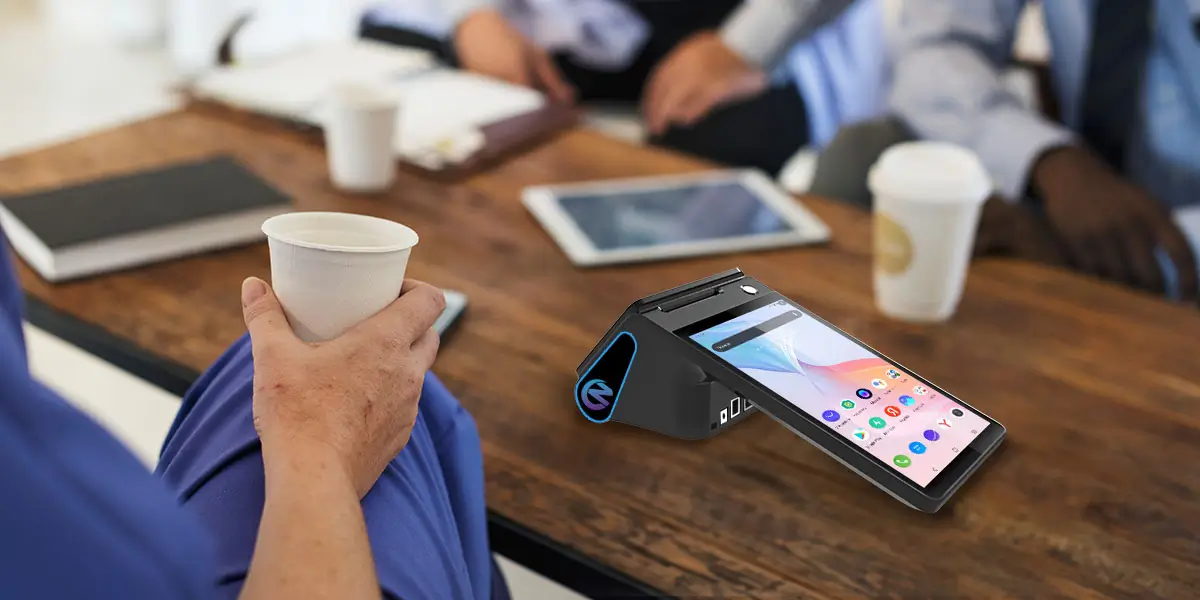
Turkey's Banking Regulation and Supervision Agency, known by its Turkish acronym BDDK, notified banks that the PIN-free contactless payment threshold would rise from 1,500 lira (roughly $34.75) to 2,500 lira (roughly $57.90), effective 15 January 2026. The rule applies to contactless transactions made with both physical cards and mobile devices, and it doesn't touch anything above the new ceiling — transactions over 2,500 lira still require PIN or biometric verification, exactly as before. The previous limit had been set on 1 July 2024, meaning this is the first revision in roughly a year and a half, a cadence that suggests these adjustments happen periodically rather than on a fixed annual schedule.
The "no PIN below this amount" rule isn't a setting inside a POS app — it's part of the EMV kernel configuration on the terminal itself, specifically the Cardholder Verification Method (CVM) parameters that determine when a transaction can skip PIN entry. Raising the national threshold means every terminal's CVM table needs to reflect the new ceiling, and that update has to come from somewhere — typically pushed by the acquiring bank or payment processor down to the terminal fleet, rather than something a terminal does on its own.
This is exactly the scenario where fleet-wide remote configuration capability stops being a nice-to-have and becomes the difference between a same-day rollout and a slow, inconsistent one. A terminal fleet that supports remote CVM and parameter configuration across every device from a central console can have the new limit live everywhere within hours of the acquirer pushing the update. A fleet without that capability is looking at either a delayed rollout or, in the worst case, a technician visiting individual sites to apply the change manually — an approach that doesn't scale past a handful of locations.
To be clear about the actual risk here: an un-updated terminal isn't a security problem, it's a friction problem. A device still running the old 1,500 lira threshold will keep prompting for PIN entry on transactions between 1,500 and 2,500 lira — transactions that, under the new rule, shouldn't require it. That's an inconvenience, not a vulnerability; the terminal is simply being more cautious than the current regulation requires. But at a busy retail counter or a quick-service restaurant during a lunch rush, unnecessary PIN prompts add real friction, and merchants who assumed "the bank changed the rule, so my terminal follows automatically" are the ones most likely to be caught off guard by unhappy customers rather than compliance risk.
Contactless PIN-free limits vary considerably by country, and there's no single global standard to benchmark against. The United Kingdom's limit, for comparison, sits at £100 — notably higher in relative terms than Turkey's new 2,500 lira (roughly $58) ceiling. Limits across the EU generally sit lower still, often in the €50 range depending on the country and issuer. Turkey's own stated rationale for the increase — reflecting inflation and rising everyday transaction values — echoes a pattern regulators in several markets have followed: these thresholds tend to move with the cost of living and payment habits rather than shifting in response to any change in the underlying security assessment of contactless technology itself.
This kind of country-by-country divergence isn't unique to Turkey, either. Businesses deploying POS hardware across borders run into the same pattern of shifting, non-uniform local requirements in other regions too — our guide to hardware buyers navigating Thailand, Vietnam, and Indonesia's payment landscape covers a similar dynamic across Southeast Asia, where connectivity standards, certification requirements, and local payment rules vary by country even when the underlying hardware stays largely the same.
A few concrete questions are worth confirming rather than assuming, in light of this change. First: does the terminal's EMV kernel and certification actually support remote CVM parameter updates, or does a limit change require a firmware reflash at each device? This is a certification and manufacturer-capability question as much as a software one — our guide to choosing a secure EMV Android POS terminal manufacturer covers what to verify on that front before assuming any given device can absorb a regulatory change like this one without a site visit.
Second: for businesses working with a single hardware and software vendor rather than juggling separate suppliers for terminals, SDK, and fleet management, a change like this is a useful stress test of that vendor relationship. A manufacturer offering hardware, SDK, and TMS under one roof — the kind of full-stack structure covered in our Open SDK and Custom ODM guide — reduces the number of parties that need to coordinate when an update like this needs to roll out across a live fleet, compared to managing hardware, firmware, and remote configuration through separate, disconnected vendors.

Q1. Does the new 2,500 lira contactless limit apply to all card types?
The BDDK's notification applies to contactless transactions made with physical cards and mobile devices generally. Specific card products or issuer-level restrictions can still vary, so confirming with a specific bank or processor is worthwhile for edge cases.
Q2. What happens to transactions above 2,500 lira?
They're unaffected by this change — transactions above the new threshold still require PIN entry or biometric verification, exactly as they did under the previous 1,500 lira limit.
Q3. Is this change a security risk if a terminal hasn't been updated yet?
No — an un-updated terminal simply continues requiring PIN entry at the old, lower threshold, which is more cautious than the new rule requires. It creates unnecessary friction for customers rather than any security gap.
Q4. How often does Turkey change its contactless payment limit?
Based on the last two adjustments, roughly every year and a half, though there's no fixed schedule — the increases appear to track inflation and payment habits rather than following an annual review cycle.
Q5. Do merchants need to do anything themselves to apply the new limit?
Generally no direct action is required from merchants — the update is typically pushed by the acquiring bank or payment processor to terminals in the field. Merchants relying on older hardware without remote configuration support may need to check with their provider about timing.






 Home
Home  Top POS Terminal Manufacturers in China: A B2B Buyer's Guide (2026)
