
2026-03-09 Author : ZCS
In the digital age, the quest for the perfect key—one that is uniquely ours, impossible to lose, and supremely difficult to steal—has led us to biometrics. While fingerprints, faces, and irises have entered the mainstream, a quieter, more powerful contender is redefining the security landscape: Palm Vein Recognition (PVR). Increasingly hailed by security experts as the most secure biometric modality available today, PVR’s strength lies not in what it sees on the surface, but in what it captures from within. This technology is not just an incremental improvement; it is pioneering a new blue ocean in secure identity verification, particularly for sensitive applications like PVR POS systems and high-security access control.
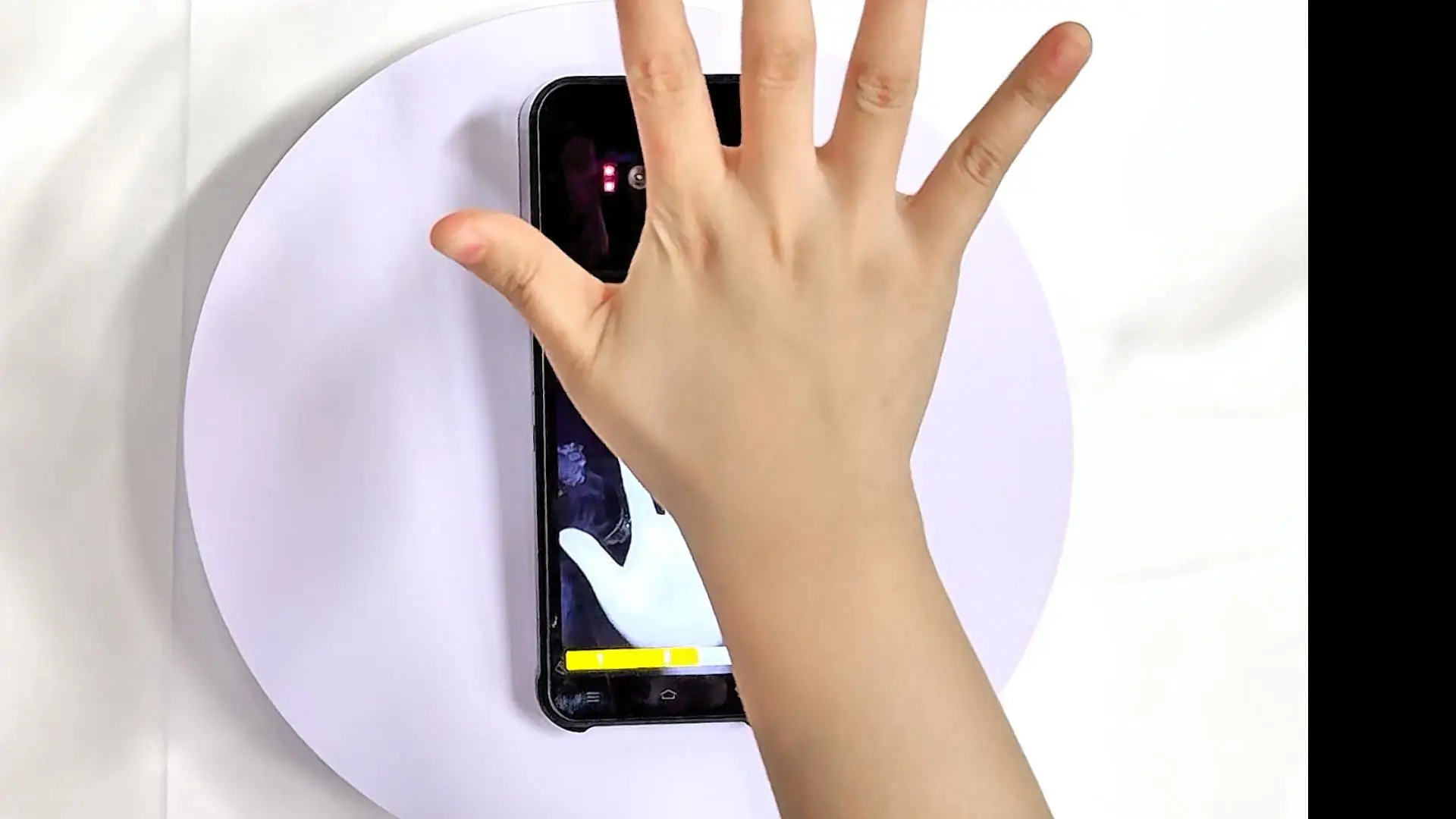
The core differentiator of PVR is its focus on internal physiological characteristics. It uses near-infrared light to image the intricate vascular network beneath the skin's surface.
Inherently Spoof-Resistant: Unlike a fingerprint left on a glass or a high-resolution photo of a face, your vein pattern is concealed and cannot be inadvertently copied or captured in daily life. Creating a forgery requires not just a map of the veins but also simulating the properties of live tissue beneath the skin, a barrier so high it effectively deters common spoofing attacks.
Stability & Uniqueness: The venous pattern is complex and highly distinctive, even between identical twins. It forms in utero and remains remarkably stable throughout adult life, largely unaffected by superficial skin conditions, minor injuries, or aging, unlike fingerprints which can wear or faces which change.
This is PVR's knockout feature. The technology inherently requires a live, blood-flowing hand to work. The hemoglobin in deoxygenated blood within the veins absorbs the near-infrared light, creating the contrast needed for the image. A photograph, a prosthetic, or a dismembered finger is utterly useless.
"While other biometrics require additional software layers or challenge-response tests to determine liveness, palm vein authentication has it baked into the core hardware physics. It's a passive, continuous liveness check that is very difficult to fool," notes Dr. James Wayman, a leading authority on biometric system standards and co-editor of the seminal book "Biometric Systems". This intrinsic property makes it ideal for unattended, high-value transactions and access points.
Security is often measured in error rates. The False Acceptance Rate (FAR)—how often the system incorrectly accepts an imposter—is a critical benchmark. Research and real-world deployments consistently show PVR operating at exceptionally low FAR levels.
A seminal white paper by the International Biometrics + Identity Association (IBIA) on vascular pattern recognition highlights that commercial PVR systems reliably achieve a FAR of 0.0001% or lower alongside a low False Rejection Rate (FRR). This statistical superiority places it ahead of many other single-factor biometric modalities in raw accuracy and resistance to impersonation.
A secure biometric system must protect the integrity of the stored data. PVR excels here through its template design. The capture device does not store or transmit a photograph of your veins. Instead, it processes the image in a secure environment to extract millions of data points, creating a unique mathematical template (often called a "vein code").
This template is irreversible. It is a one-way cryptographic hash. Even if this digital template were intercepted, it cannot be reverse-engineered to recreate the original vein image, much like a hashed password cannot reveal the plaintext. This "privacy-by-design" approach, championed by hardware providers like ZCS Technology, who develop secure Palm Vein Recognition Modules, minimizes the risk of biometric data theft.
The theoretical security of PVR is proven in demanding real-world applications:
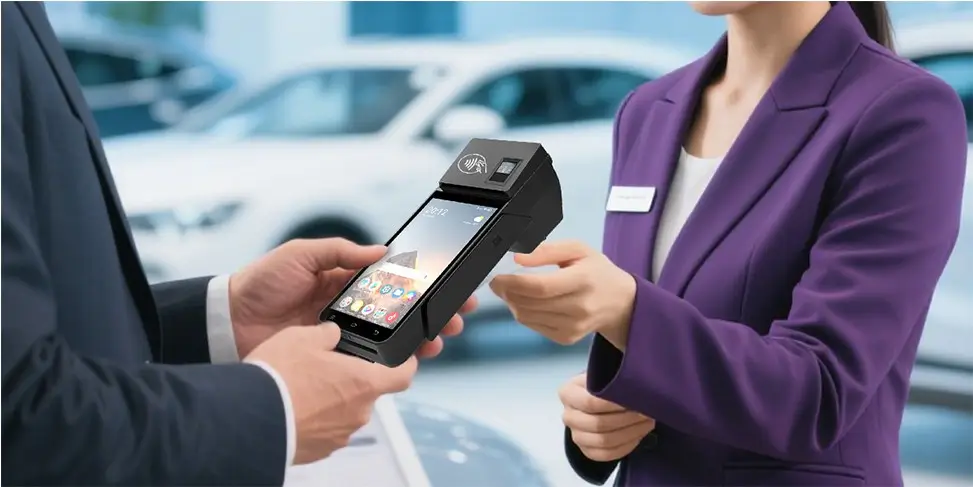
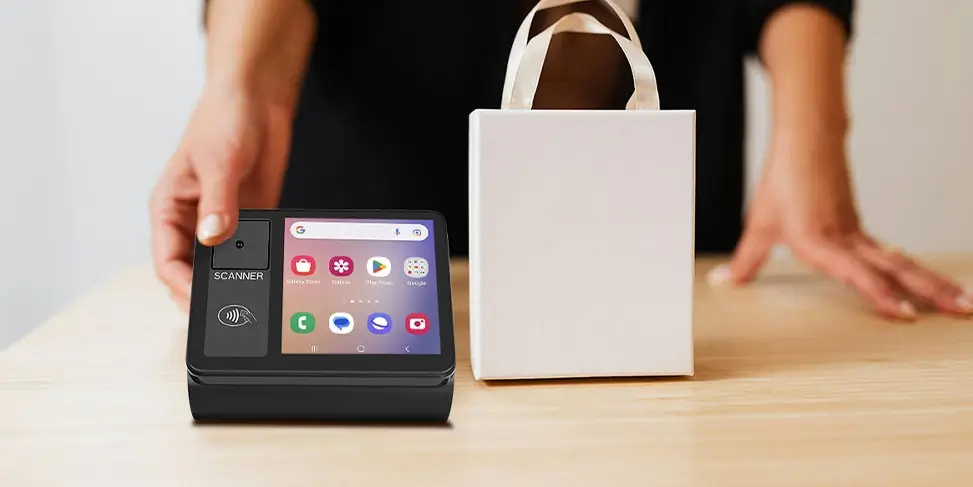
Financial & PVR POS Systems: This is where its strengths converge. A PVR POS terminal authenticates a user via their internal vein pattern for payment. It combines extreme security (deterring fraud) with supreme hygiene (contactless) and convenience (no device needed). It creates an irrefutable link between the transaction and a verified living individual, making it a cornerstone for the future of embedded financial security.
Logical & Physical Access: In data centers, research labs, and corporate server rooms, PVR secures access to both doors and sensitive digital networks, ensuring only authorized personnel can enter and log in.
Healthcare & Identity Management: Hospitals use PVR for accurate patient identification, ensuring the right treatment for the right person and protecting sensitive health records.
While no security system can claim to be 100% invulnerable, Palm Vein Recognition presents a formidable array of defenses that collectively make it the most secure practical biometric technology available today. Its combination of an internal, hidden trait, passive liveness detection, statistically superior accuracy, and a privacy-centric template design creates a multi-layered security fortress.
As we move towards a future where digital and physical identities merge, the demand for robust, user-centric authentication will surge. PVR is uniquely positioned to secure this future, offering a compelling solution that protects both assets and personal identity. For industries and innovators ready to explore this secure frontier—from PVR POS developers to enterprise security architects—the technology represents not just a tool, but a strategic blue ocean opportunity to build trust in an interconnected world.
FAQ: Palm Vein Recognition Security
Q1: Can't someone use a high-resolution infrared photo or video of my hand to spoof the system?
A: No. Simple photos or videos are ineffective because they lack the specific subsurface scattering properties of live tissue. Advanced presentation attack detection (PAD) algorithms in modern PVR sensors can also distinguish the subtle light absorption and reflection patterns of real skin versus materials like latex or gelatin used in sophisticated masks.
Q2: What if I have cold hands or poor circulation? Will it still work?
A: Yes. While extreme conditions like severe cold can temporarily constrict surface capillaries, the deeper venous structure remains largely unaffected and detectable. Modern PVR systems are calibrated to handle normal physiological variations and may simply prompt the user to reposition their hand for a clearer read if needed.
Q3: Is my vein pattern really permanent? What about surgery or major injury?
A: The core venous structure is stable from childhood. While major trauma or specific hand surgeries could potentially alter local vein pathways, such significant events are rare. In these exceptional cases, the system can enroll a new template, similar to re-issuing a credential after losing a physical key.
Q4: How does PVR security compare to multi-factor authentication (MFA)?
A: PVR is a supremely strong single factor (something you are). For the highest security tiers, it can and should be combined with another factor (like a PIN—something you know) to form MFA. This creates a nearly impenetrable barrier. In many applications, PVR alone offers a stronger first factor than alternatives like passwords or cards.
Q5: Is this technology too expensive for widespread use, like in retail POS?
A: The cost has decreased significantly with advancements in sensor technology and manufacturing scale. Leaders in the space, such as ZCS, are making robust PVR modules accessible for integration into commercial PVR POS terminals and other systems. The total cost of ownership is increasingly justified by the reduction in fraud, improved user experience, and operational efficiency.

1.Z90 EMV PCI Credit Card Payment POS
2.Z90N Fingerprint Touch Sreen Pos With Printer
3.Z93 80mm mini pos Smart mobilepos
4.Z92 Android 13.0 Mobile Handheld POS
5.Z108 8inch 2.6'' Tablet Smart Android POS
6.Z101 Wall Mounted Desktop Handheld Tablet POS Terminal
7.Z81 Mini POS Terminal& Handheld POS System






 Home
Home  Top Android POS System Hardware Manufacturer: How ZCS is Redefining Checkout Experiences
