
2026-02-25 Author : ZCS
Forget cards, phones, or even your face. The next frontier in secure, seamless transactions lies in the unique map of blood vessels hidden inside your palm. Palm vein recognition, often hailed as the pinnacle of biometric authentication, is moving beyond high-security facilities and into the daily rhythm of our financial lives. This isn't just an incremental upgrade; it represents a fundamental shift towards a frictionless and hyper-secure transactional ecosystem, creating a significant blue ocean in the fintech and retail technology space.
Unlike fingerprints (which can be lifted) or facial features (which can be captured or altered), your palm vein pattern is an internal biological characteristic. It is virtually impossible to forge, steal, or replicate. Specialized near-infrared light penetrates the skin to capture the unique vascular pattern, which is then converted into encrypted digital data. This "internal password" offers unparalleled security because it requires a live, flowing blood supply to authenticate—a built-in liveness detection that thwarts spoofing attempts. A study by Fujitsu, a pioneer in the technology, emphasizes that the false acceptance rate for palm vein authentication is a staggering 0.00008%, far superior to other modalities
Revolutionizing the Point of Sale: Beyond the Traditional POS
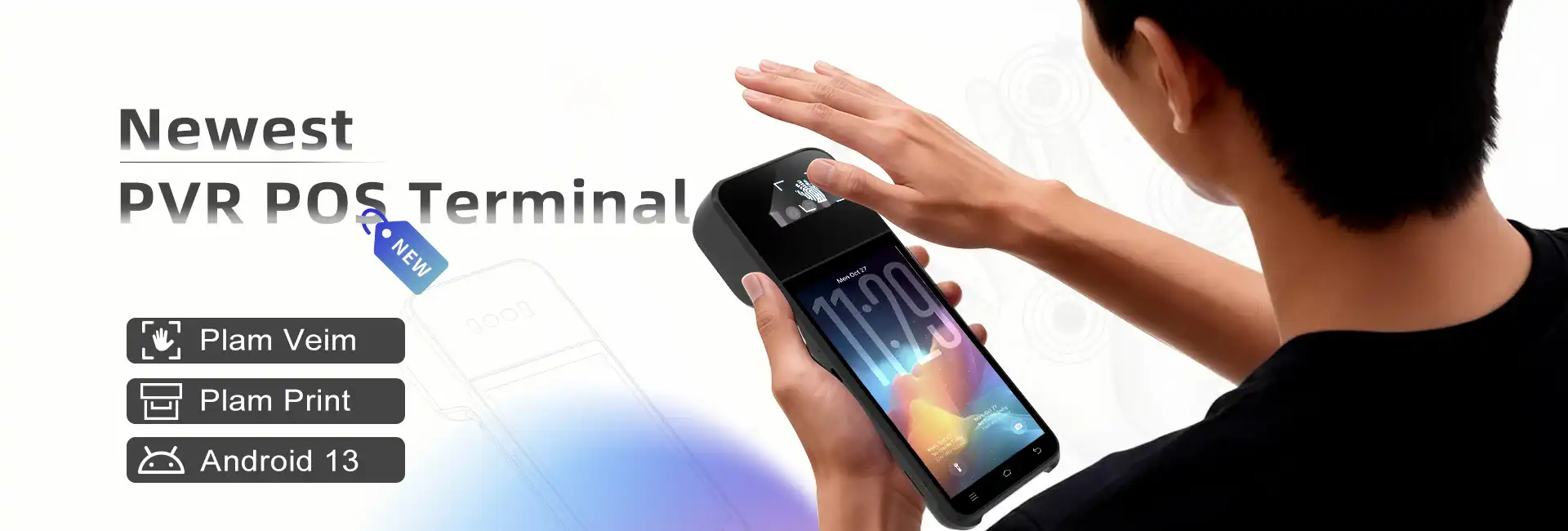
The most tangible impact for consumers is at the point of sale (POS). Imagine walking into a convenience store, grabbing your items, and simply hovering your hand over a scanner to pay—no wallet, no phone, no PIN needed. Next-generation biometric POS terminals, integrating palm vein sensors, are turning this into reality. This "just-walk-out" or "hover-and-go" experience drastically reduces transaction time and eliminates physical contact, a feature whose value was permanently underscored by the global pandemic.
This technology is not just for mega-corporations. With solutions from innovators like ZCS, which offers integrated palm vein recognition modules for secure payment and access control, the barrier to entry is lowering. Businesses of all sizes can now offer this cutting-edge, hygienic, and secure checkout experience.
For businesses, the integration goes beyond customer experience. In many markets, fiscal compliance is non-negotiable. A Fiscal Electronic Device (Dispositif Électronique Fiscal - DFE) is a government-certified piece of hardware or software that securely records transactions for tax purposes. The true power of palm vein technology unfolds when it is seamlessly embedded into a DFE-compliant POS system.
This fusion creates an irrefutable audit trail: a specific, biometric-secured transaction is permanently and tamper-proof logged in the fiscal memory. It links the transaction irrevocably to a verified individual, reducing fraud risk at both the consumer and merchant level. This creates a powerful tool for embedded financial security and transparent commerce, opening a new high-growth vertical for solution providers who can navigate both biometric and regulatory landscapes.
Adoption hinges on trust. Consumers are rightfully concerned about biometric data privacy. The industry standard, which responsible companies like ZCS adhere to, is to store not the actual vein image but a unique, encrypted mathematical template. This template cannot be reverse-engineered to recreate the original biometric image. As Frances Zelazny, a renowned biometrics and digital identity strategist, notes: "The shift towards contactless and biometric solutions is irreversible. The key to mass adoption lies in transparent communication about where the data resides, who controls it, and how it is protected". This transparency is crucial for palm vein payment to cross the chasm from novel tech to mainstream utility.
We are standing at the inflection point. The convergence of consumer demand for convenience, merchant need for security and efficiency, and regulatory frameworks for digital identity is creating the perfect storm for palm vein payment. From retail and hospitality to healthcare and public transportation, the applications are vast.
The journey involves continued collaboration between biometric hardware specialists like ZCS, payment processors, POS manufacturers, and regulatory bodies. As costs decrease and interoperability increases, we will witness this disruptive biometric authentication method redefine not just how we pay, but how we verify our identity in an increasingly digital world. It’s more than payment; it’s your key to a seamless and secure digital life.
Q1: Is palm vein payment safer than fingerprint or facial recognition payment?
A: Yes, from a spoofing resistance standpoint, it is considered superior. Because it reads the vascular pattern beneath the skin, it is extremely difficult to forge. It inherently requires a live blood flow, making it highly resistant to the types of attacks (e.g., using photos, masks, or fake fingerprints) that can sometimes challenge other biometrics.
Q2: What happens to my biometric data? Is my "vein map" stored somewhere?
A: Reputable systems do not store the actual image of your palm vein. Instead, they capture and convert the pattern into a unique, encrypted numerical template. This template is essentially a secure, one-way mathematical representation. It cannot be reverse-engineered to reveal your original vein image, much like a password hash cannot reveal the original password.
Q3: Can factors like cold hands, cuts, or aging affect the scan?
A: The technology is generally robust. While severe dehydration or extreme cold might temporarily alter blood flow and require a re-scan, the core vascular pattern remains stable throughout adulthood. Minor cuts or superficial abrasions typically do not interfere, as the scanner reads the deeper vein structure.
Q4: Where is this technology currently being used?
A: Beyond pilot payment programs in retail stores and campuses, palm vein technology has been widely used for years in high-security areas like data centers and banking vaults, for logical access to sensitive computers, and in patient identification systems within hospitals (e.g., preventing newborn mix-ups).
Q5: How fast is a palm vein payment compared to tapping a card or using a phone?
A: The transaction authorization time is comparable to or faster than contactless card taps. The real speed gain comes from the "form factor"—you don't need to retrieve anything from your pocket or bag. The "hover-and-go" motion can make the overall process feel instantaneous and more fluid.
Q: Our chain of gyms wants to implement palm vein for member access and locker payment. Can ZCS provide a tailored solution?
A: Absolutely. ZCS specializes in scalable palm vein modules that can be integrated into turnstiles, locker management systems, and POS terminals, creating a seamless member experience.Q: We manufacture DFE-compliant POS terminals. Are ZCS modules compatible for integration?
A: Yes. ZCS provides SDKs (Software Development Kits) and API support for seamless integration into existing POS hardware and software stacks, ensuring compliance with both biometric and fiscal regulations.Q: What is the typical lead time and cost structure for deploying palm vein payment in a pilot store?
A: Deployment timelines and costs vary based on scale and integration complexity. We recommend contacting our sales team for a detailed project assessment and pilot program outline.Q: How does ZCS ensure the privacy and security of the biometric template data?
A: ZCS systems adhere to the highest standards, storing only encrypted mathematical templates locally on secure chips within the device, with optional secure element storage. We follow privacy-by-design principles.Q: Do you offer solutions for linking palm vein authentication to existing customer loyalty programs?
A: Yes. Our systems can be configured to tokenize the biometric authentication event, allowing it to securely trigger a customer lookup in your CRM or loyalty database, enabling personalized offers and points accrual automatically.Ready to explore the future of secure transactions? Contact ZCS today to discuss how palm vein biometrics can unlock new levels of security and convenience for your business and customers






 Home
Home  Why Palm Vein Recognition Reigns Supreme in Biometric Security
