
2026-09-21 Author : ZCS
Google announced in August 2026 that Google Pay tap-to-pay is coming to Walmart and Sam’s Club locations in the United States. The rollout begins with selected stores, is planned to reach all U.S. stores and clubs by the end of 2026, and is expected to extend to fuel stations by mid-2027.
The news is notable because Walmart has long encouraged customers to use Walmart Pay, a QR-based payment experience inside its own app, instead of supporting the standard NFC wallets common at other retailers. Adding tap to pay signals that even a retailer with enormous scale and a successful proprietary app sees value in giving customers an open, familiar contactless option.
For the wider POS market, the lesson is not simply that every store needs Google Pay. It is that payment choice, terminal readiness and checkout consistency are becoming part of the customer experience. A retailer may still promote its own wallet and loyalty program while accepting cards, phones and watches through the same contactless interface.
2.Why Walmart’s Decision Matters
Large retailers do not change payment infrastructure casually. A rollout can affect thousands of lanes, self-checkouts, fuel pumps, store applications, payment processors and support teams. Hardware capability is only the beginning. Each terminal needs the correct contactless kernel, payment software, keys, certification scope and acquirer connection, followed by controlled testing and phased deployment.
The scale of Walmart’s plan also gives smaller merchants a useful signal. Customers increasingly expect the payment method they use elsewhere to work without explanation. When an employee has to direct a shopper to a proprietary app or a printed QR code, the checkout experience becomes a brand decision rather than a background payment function.
3.Tap to Pay Does Not Mean One Technology
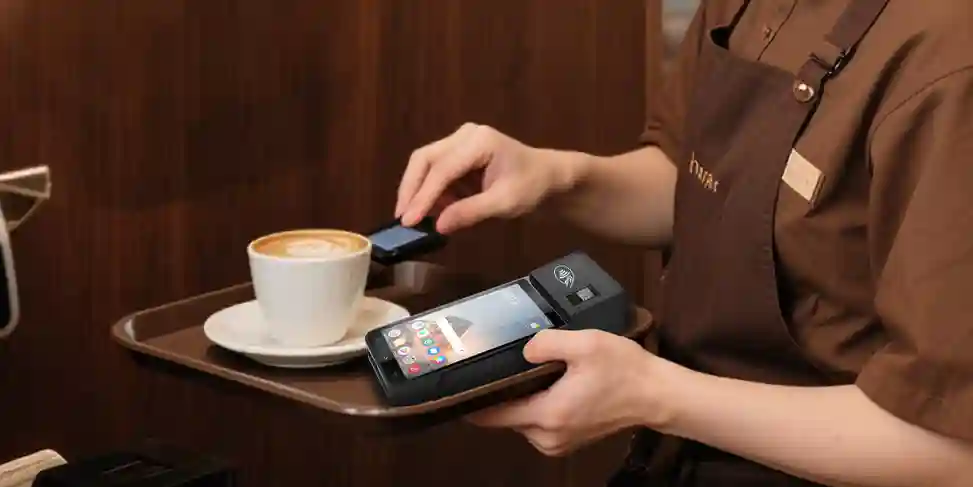
At a store, “tap to pay” normally refers to EMV contactless communication over NFC. The customer may present a contactless card, a phone wallet or a compatible wearable. The terminal reads a payment credential and the payment application sends the transaction through the merchant’s acquiring path.
A mobile wallet does not simply transmit the printed card number. Tokenization and device security help protect the credential, while customer verification may happen through the phone. The POS still needs to handle the amount, merchant data, authorization response, receipt and reversal. Accepting a new wallet therefore relies on the complete payment stack, not an NFC antenna alone.
4.Why Proprietary QR Payments Still Have Value
Walmart Pay can connect payment to a customer account, digital receipt, loyalty relationship and retailer app. QR-based wallets are also accessible to devices and markets where contactless card acceptance is less common. Adding NFC does not remove those advantages; it gives customers a faster route when they prefer a card or mobile wallet already stored on their device.
Retailers should avoid framing the decision as QR versus NFC. The stronger design lets the customer choose while the merchant keeps a consistent order and settlement record. A QR wallet, contactless card and cash payment should all resolve to the same basket, store, cashier and reconciliation process.
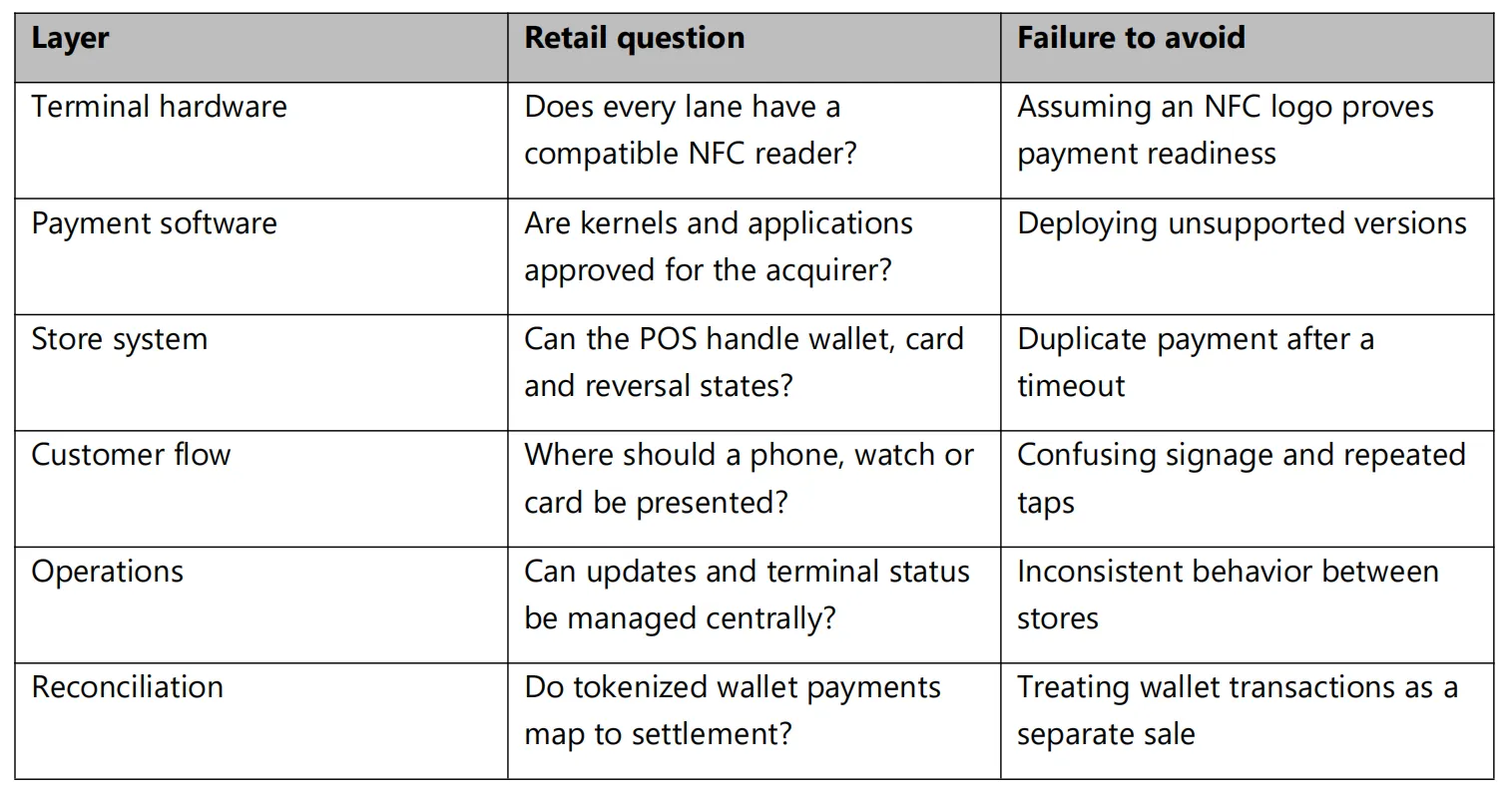
Retailers should inventory every checkout form factor: staffed lanes, self-checkout, service desks, garden centers, curbside devices and fuel pumps. Older equipment may support contactless in hardware but lack an approved software configuration. Others may need replacement. The rollout plan should identify each combination rather than assume every terminal bearing the same brand is identical.
Testing must cover more than successful payments. Include declined cards, phone authentication, high-value verification, network interruption, cancelled baskets, partial approval where relevant, refunds and duplicate-tap behavior. Staff need a simple message for each state so they do not ask customers to tap repeatedly while the original transaction is still pending.
6.Z90 for Mobile Checkout and Queue Busting
The ZCS Z90 Smart Payment Terminal is suited to retailers that want contactless acceptance beyond a fixed checkout lane. Staff can carry it into an aisle, seasonal area or temporary queue, accept contactless or chip-card payments and print a 58mm receipt without sending the customer back to the main register. Its 4G and Wi-Fi connectivity also supports pop-up counters and locations where cabling is inconvenient.
For a Tap to Pay project, the relevant Z90 capabilities are its NFC payment interface and payment certifications, including PCI PTS 5.x, EMV Contact and Contactless, PayWave and PayPass. The retailer still needs an approved payment application, processor integration and verified certificate scope for the selected configuration. This combination of certified hardware and merchant software is what turns contactless capability into a deployable service.
A handheld terminal also gives larger retailers a practical migration path. It can add line-busting capacity while fixed lanes are upgraded, support returns at a service desk or create a payment point during store events. The goal is not to copy Walmart’s architecture; it is to give shoppers the same familiar tap experience wherever the transaction occurs.
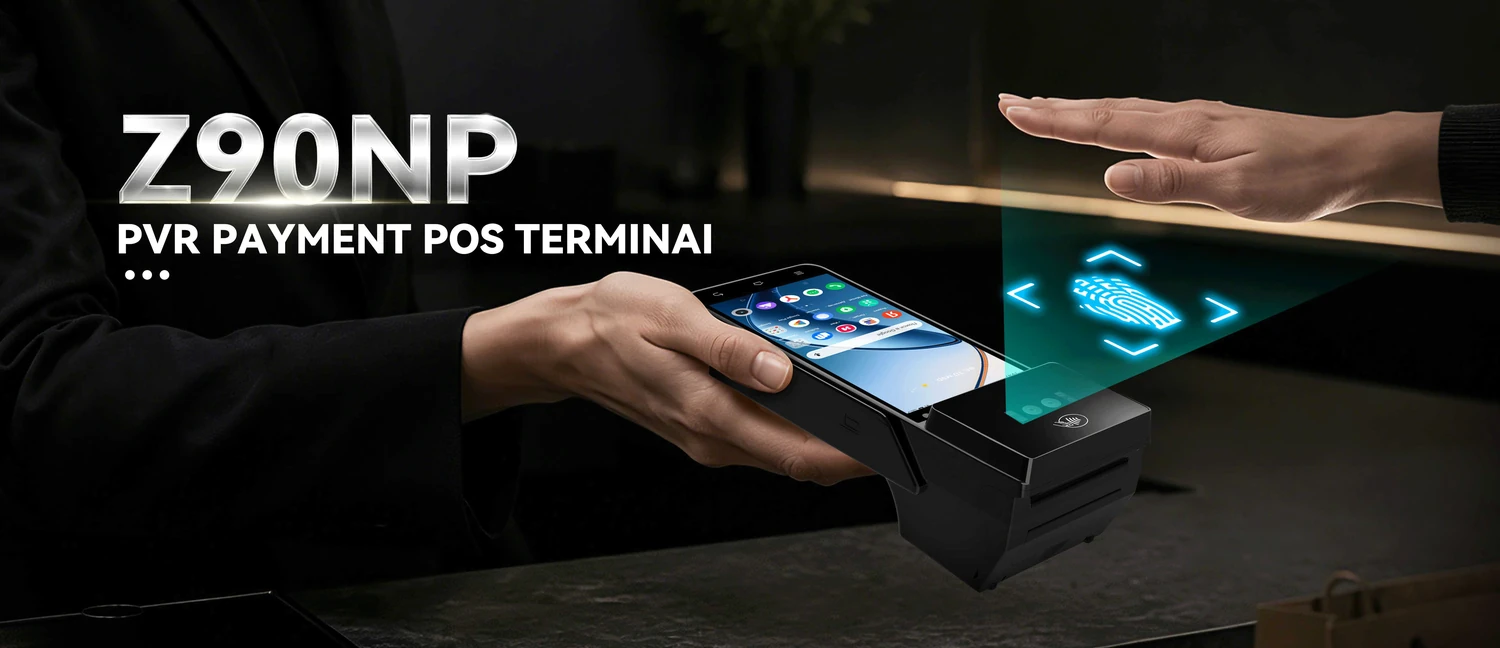
Google’s announcement places fuel stations on a later timeline than stores and clubs. That difference illustrates why one contactless project may contain several hardware programs. Fuel dispensers, vending units, parking machines and kiosks face different environmental, certification, vandal-resistance and customer-verification requirements from a staffed checkout lane.
An unattended device must guide the customer without a cashier, recover from an interrupted session and avoid leaving the previous transaction visible. Remote monitoring should identify a failed reader or offline terminal before customers repeatedly attempt payment. Retailers should separate these requirements from the handheld and countertop POS plan even when all devices connect to the same acquirer.
8.Cost Is More Than Replacing the Reader
The visible terminal is only one part of migration cost. Retailers may need payment-software updates, certification, laboratory testing, store visits, signage, staff training, spare units and support for several generations of hardware during the rollout. A phased plan should prioritize high-volume stores and equipment approaching end of life while preserving a consistent customer message.
Central management reduces the cost of that mixed estate. Operations teams need to see model, software version, contactless configuration and last connection, then target updates to the correct group. Financial reports should track adoption and failure by tender type without exposing sensitive wallet information to ordinary device-support staff.

Contactless payment feels immediate, so unclear feedback causes uncertainty quickly. The terminal should show when it is ready, when the customer should remove the card or device, and whether authorization succeeded. Sound, lights and screen messages should agree. Accessible alternatives are needed for customers who cannot see or hear one type of signal.
The amount must be visible before the tap. If a phone asks for biometric or PIN confirmation, the cashier should understand that the customer is completing verification rather than starting a second payment. Good training focuses on these moments instead of explaining the underlying network technology.
10.A Multi-Method POS Is Becoming the Default
Walmart’s move shows that a proprietary wallet and open contactless acceptance can coexist. Retailers can preserve their loyalty and app strategies while removing friction for customers who arrive with a contactless card, Google Wallet or another supported wallet. The POS becomes the point where those methods converge into one basket and one settlement process.
That convergence will continue as retailers add richer product data and new checkout interfaces. Payment readiness should be planned alongside scanning, software updates and device management rather than treated as an isolated reader upgrade.
The next major retail POS deadline is not only about payment. See how GS1 Sunrise 2027 will affect scanners and checkout software as retailers prepare to process QR Codes powered by GS1 and GS1 DataMatrix at the point of sale.

Q1.When will Google Pay be available at Walmart?
Google announced a phased U.S. rollout beginning in August 2026, with all Walmart stores and Sam’s Club locations planned by the end of 2026 and fuel stations by mid-2027.
Q2.Is Walmart Pay being replaced?
The announcement adds tap-to-pay acceptance. A retailer can continue offering its proprietary wallet alongside NFC cards and mobile wallets.
Q3.Does every NFC-enabled POS accept Google Pay?
No. The terminal, payment application, contactless kernels and acquirer configuration must support and approve the transaction flow.
Q4.Can Z90 support mobile-wallet payments?
Z90 provides NFC and certified contactless payment hardware. Deployment depends on the approved payment application, processor and exact configuration.
Q5.Why use a handheld POS in a large store?
It can support queue busting, aisle checkout, service desks, temporary counters and events without adding a permanent lane.






 Home
Home  Postal and Parcel Collection POS: Scanning, Payments and Receipts
