
2026-10-14 Author : ZCS
The right unattended payment terminal is the one that still completes, records and recovers a transaction after it has been installed inside the real machine. The earlier guide to unattended terminals versus POS systems explains the category boundary; this buyer’s guide turns that distinction into a specification, RFQ and acceptance process.
The working definition sets the scope for every decision that follows.
An unattended payment terminal is a secure point-of-interaction device that lets a customer initiate and complete a card or digital payment without staff assistance. It can be a complete UPT or a certified payment component integrated into a kiosk, vending machine, parking station or EV charger.
That definition excludes ordinary NFC readers that identify membership cards but do not run an approved payment application. It also excludes a complete self-service kiosk from being treated as one payment device: the kiosk may control products, prices and dispensing while a separate terminal protects payment credentials.
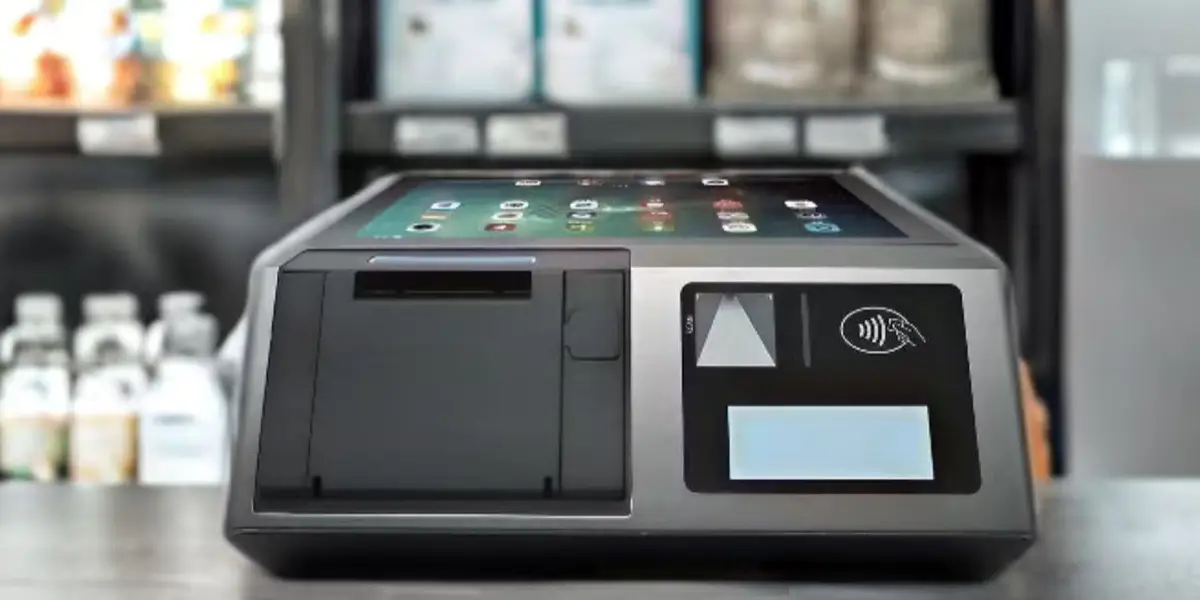
Payment architecture determines certification responsibility, software ownership and failure recovery before any hardware dimension is discussed. A buyer should first decide whether the project needs a complete unattended terminal, embedded secure payment components or an external payment terminal attached to the host machine.
A complete UPT packages the payment interface, secure processor, card-reading functions and customer prompts into one deployable device. The host machine normally sends an amount and transaction reference, then receives a status such as approved, declined, cancelled or unknown.
Complete UPTs reduce the amount of secure payment hardware the machine builder must design. They suit parking pay stations, outdoor kiosks, EV chargers and retrofit projects where a finished front-facing payment unit can be installed without developing separate PIN, chip and contactless modules.
The trade-off is a more constrained mechanical and software envelope. The terminal vendor controls its security boundary, firmware and payment application, so the machine builder may have limited freedom to change the display flow, reader geometry or low-level interfaces.
Embedded components give an OEM more control over the machine’s industrial design. A project may combine an encrypting PIN pad, secure card reader, contactless reader and host controller rather than mounting one finished UPT on the front panel.
Component architecture increases integration responsibility. The OEM must preserve evaluated mounting conditions, route interfaces securely, prevent access to sensitive components and confirm which party owns the combined approval path. A certified component does not automatically certify the finished machine or every way it can be installed.
An external terminal on a bracket can shorten a self-ordering kiosk project when the acquirer already supports that terminal. The kiosk sends the transaction amount through an SDK or terminal API while the separate payment device handles the cardholder interaction.
Bracket-mounted terminals remain exposed to physical and operational weaknesses. Visible cables, reachable power connectors, a consumer-grade stand or an indoor-only enclosure can make an otherwise approved payment device unsuitable for an unsupervised location. The bracket, cable path and removal method therefore belong in the security review.
Mechanical integration should be specified with controlled drawings rather than product photos. The RFQ package should define the panel cutout, mounting holes, device depth, connector space, cable bend radius, gasket surface, bezel overlap and every area that must remain free of metal.
The installed geometry can change the result even when the payment electronics stay identical.
An unattended payment terminal fits only when its cutout, mounting depth, cable path, antenna clearance and maintenance direction remain valid inside the finished machine. A front-panel dimension alone cannot prove fit because connectors, fasteners, gaskets and service access occupy space behind the visible bezel.
The practical consequence is simple: approve the terminal and the installation drawing as one configuration.
A usable mechanical drawing needs more than width, height and depth. It should show cutout tolerances, mounting torque, gasket compression, fastener type, grounding points, connector orientation, minimum cable clearance and the keep-out zone around the contactless antenna.
NFC clearance deserves explicit review around metal panels. Steel, aluminum, display frames and internal brackets can detune the antenna or change the tap area. The final mounted unit should therefore be tested with the production bezel, paint, glass and fasteners rather than an open device on a laboratory bench.
Service access determines how long a failed terminal keeps a machine offline. Front-service designs let a technician remove the payment device without opening the main cabinet, while rear-service designs can better protect fasteners but may require access to a locked machine interior.
The maintenance method must preserve tamper controls. A technician should not have to disconnect unrelated safety systems, expose payment components to uncontrolled access or destroy a single-use seal during routine replacement unless the service procedure explicitly accounts for those steps.
The customer interface must remain usable after installation. The design review should check viewing angle, glare, reach distance, contactless target visibility, card insertion clearance, PIN privacy and whether wheelchair users can reach every required control.
A terminal can be mechanically secure yet operationally inaccessible. A recessed reader may protect the device from impact but prevent a user from inserting a card or tapping a watch. A tilted screen may reduce glare at one height while becoming unreadable from another.
Environmental requirements should describe exposure conditions and test evidence rather than use the word “rugged.” An indoor restaurant kiosk, a covered parking machine and an unsheltered coastal EV charger create different combinations of water, dust, impact, sunlight, condensation, vibration and temperature.
IP and IK ratings measure different properties. An IP rating addresses protection against solid objects and water under defined test conditions, while an IK rating addresses resistance to mechanical impact. Neither rating explains sunlight readability, UV stability, corrosion resistance or thermal performance.
The report scope matters more than the number printed on a web page. Buyers should request the tested model, enclosure, connector covers, gasket configuration, test standard, laboratory and report date. A front face may carry one rating while the complete assembly, exposed cable entry or service door has a different level of protection.
A wide operating-temperature claim does not prove outdoor reliability. Direct sun can heat a dark enclosure above ambient temperature, while rapid cooling can create internal condensation even when rainfall never reaches the electronics.
The machine designer should model both heat sources and cold-start behavior. The terminal, display backlight, modem, charger electronics and power supply contribute heat. At the other extreme, batteries, displays and adhesives can behave differently during a cold start than after the cabinet has warmed.
Cleaning procedures can create ingress paths that ordinary rain testing does not represent. High-pressure spray, solvents, repeated disinfectant use and liquid pooling around a recessed bezel should be included when the deployment site uses those methods.
Public access also changes the physical threat model. The specification should consider prying, impact, card-slot obstruction, adhesive overlays, camera placement and unauthorized replacement of visible labels or QR codes. A strong housing does not prevent a social-engineering attack placed on top of it.
Payment approval should be traced from the exact device to the intended acquirer and market. The phrase “PCI and EMV compliant” is too broad for procurement because it does not identify the approval class, hardware version, firmware, payment kernel or production acceptance path.
PCI PTS addresses security at the point of interaction. The PCI SSC PTS POI program identifies Unattended Payment Terminals as a supported device category alongside PEDs, EPPs and secure card-reader components. PCI SSC also directs buyers toward its approved-device listings rather than unsupported marketing claims.
A complete UPT and an embedded EPP are not interchangeable approval claims. The complete terminal is evaluated as an unattended payment device, while an EPP or secure reader is intended to be integrated into a larger system under defined conditions.
The certificate package should identify the precise approval tuple. Record the commercial model, hardware version, firmware version, approval number, approval class, expiry status and any deployment conditions. A family-level certificate or a logo without a listing reference is not adequate evidence.
The security distinction can be stated without marketing language.
Unattended payment approval depends on the evaluated device class and version. A PCI PTS listing for an EPP, secure reader or attended PED does not automatically approve a complete outdoor UPT, because each category has a different integration boundary and physical attack model.
The buyer should therefore compare the proposed architecture with the approval scope line by line.
EMV testing covers several layers that should not be collapsed into one badge. Level 1 addresses the physical and communication interface, Level 2 addresses payment-kernel behavior, and later integration or network processes connect the terminal to a live acceptance environment.
The approval reference should name the interface and kernel actually used. A terminal may support contact and contactless acceptance through different components, versions and payment kernels. Buyers should also check approval validity and confirm whether the acquirer supports those exact components.
EMVCo distinguishes terminal approval from end-to-end deployment testing. The EMVCo Level 3 testing guidance explains that Level 1 and Level 2 address acceptance-device functions, while Level 3 validates integration with merchant and payment-network infrastructure under participating systems’ policies.
CE, FCC and radio approvals answer market-access or electromagnetic questions rather than card-payment authorization. A device can legally transmit on local radio bands and still lack the payment approvals or acquiring support required to process a transaction.
The final certification matrix should assign one owner to every layer. The terminal vendor may own PCI and hardware evidence, a kernel provider may own an EMV approval, the payment application provider may own software certifications, and the acquirer may own production activation.
The host interface should express the complete transaction state, not merely send an amount. A robust integration needs a unique transaction reference, initiation command, progress states, final result, cancellation behavior, timeout rule, status query and reconciliation path.
A vending payment terminal must coordinate credit, product selection, dispensing and refund behavior with the vending machine controller. MDB/ICP is common in vending, but support claims should identify the protocol version, cashless levels, electrical interface and implemented command set.
EVA EPS adds a relevant interoperability framework for unattended vending payments. The European Vending Association payment specification defines minimum hardware, software and communication requirements intended to support compatibility between vending machines and electronic payment systems.
Protocol support still needs a machine-specific test. An older vending controller may implement only part of MDB, use a nonstandard harness or handle a failed vend differently from a newer controller. The pilot should verify price selection, credit display, vend approval, vend denial, refund, cancellation and recovery after power loss.
A kiosk integration must keep the order identifier and payment identifier connected from checkout through settlement. The kiosk application should create one order, send the correct amount, receive an unambiguous result and store enough information to reconcile the payment without exposing card data.
Duplicate prevention belongs in the API design. The host should be able to ask for the status of the original transaction after a timeout instead of automatically creating a second payment request. The payment terminal should reject or safely handle repeated commands carrying the same idempotency key.
A parking payment is incomplete until the parking system recognizes the customer’s right to exit or remain parked. The transaction may need to reference a ticket, license plate, bay, tariff period or entry event before the barrier or enforcement backend can act.
Parking recovery should distinguish payment failure from entitlement failure. An approved card transaction followed by a closed barrier requires a different workflow from a declined transaction. The operator needs a support record that links the terminal transaction, parking session and barrier command.
An EV charger must associate authorization with the correct station, connector and charging session. The payment device may be installed on each charger or shared across a charging pool, but the user interface must prevent a customer from funding the wrong connector.
Charging protocol and payment protocol remain separate systems. A charger can be online to its management backend while its payment processor is unavailable, or the payment terminal can authorize a card while the charging connector fails to start. Acceptance testing must inject both conditions.
Failure recovery should be designed before the successful transaction path. Unattended equipment has no cashier to interpret an ambiguous screen, retry a cable or reassure the customer that a pending payment will be reversed.
The state model should separate payment authorization from delivery of the purchased service. A vending machine can receive approval and fail to dispense, a parking system can collect payment and leave the barrier closed, and an EV charger can reserve funds without starting energy delivery.
Every state needs an owner and recovery action. The acceptance specification should cover initiated, awaiting card, processing, approved, declined, cancelled, timed out, unknown, reversed, refunded and reconciled states. Host applications should not convert “unknown” into “declined” merely to simplify the interface.
Offline machine operation does not automatically permit offline payment authorization. The terminal, payment application, card network, processor, acquirer and risk policy must all support the intended offline behavior. A cached vending catalog or locally controlled charger cannot grant the terminal authority to approve cards.
Offline acceptance should be documented as a controlled risk function where it exists. The specification should define transaction limits, eligible cards, cryptographic controls, storage protection, upload timing, duplicate prevention and the party that bears losses when deferred authorization fails.
Idempotency prevents a network retry from becoming a second charge. The host should generate a unique transaction identifier and reuse it when asking the payment service to continue or report the state of the original operation.
Status queries should survive terminal and host restarts. A durable journal can record the last known state, service-delivery result and reconciliation action. Logs should expose references and timestamps without storing sensitive authentication data that the machine does not need.
Remote monitoring should tell an operator whether the terminal can accept a payment now and why it failed when it cannot. An online/offline dot is inadequate for a fleet spread across vending sites, car parks or charging locations.
Useful telemetry includes the last heartbeat, network path, signal quality, application version, firmware, security state, card-interface health, storage, temperature alarms and tamper events. The platform should distinguish a disconnected terminal from an application crash, host-interface failure or payment-service outage.
Monitoring should avoid unnecessary payment data. Fleet tools need operational identifiers and error codes, not full card details or authentication secrets. Access to diagnostic logs should be role-based and recorded.
Remote commands require authentication, authorization and an audit trail. Reboot, configuration, application update, firmware update, log collection and key-management actions should identify the operator, target, time, command and result.
Updates should move through laboratory, pilot and production cohorts. A new build can affect NFC behavior, host communication or certificate compatibility even when the user interface appears unchanged. The release plan needs success thresholds, stop conditions and a documented recovery method.
Remote terminals need a defined path for carrier failure and SIM replacement. A removable SIM is easy for a technician to swap, while an eSIM can reduce site visits when remote profile management and alternate carrier coverage are already in place.
The eSIM payment terminal deployment guide compares those service models in detail. The unattended RFQ should record who owns the subscription, how profiles are changed and what happens when the terminal loses the connection needed to receive a new profile.

One generic specification cannot serve vending, parking, self-ordering and EV charging without creating unnecessary cost or missing critical controls. The payment fundamentals remain related, but the machine interface, environment, customer flow and definition of a completed service differ.
The scenario distinction can be summarized in one reusable decision block.
Vending prioritizes controller compatibility and vend recovery; parking prioritizes entitlement delivery and outdoor serviceability; self-order kiosks prioritize order-payment synchronization; EV charging prioritizes connector-session mapping and regional ad hoc payment rules. The same card reader therefore needs different host logic and acceptance tests in each deployment.
The table converts those differences into procurement priorities.
EV charging creates the broadest intersection of those requirements. The dedicated EV charging payment terminal guide covers shared-terminal architecture, charger-session mapping and the detailed outdoor test plan, while this section keeps the comparison aligned across all four use cases.
| Deployment | Mechanical priority | Typical host connection | Critical failure state | First acceptance test |
|---|---|---|---|---|
| Vending machine | Standard cutout, shallow depth and protected reader | MDB/ICP, EVA EPS, serial or Ethernet | Payment approved but product not dispensed | Force a failed vend and verify automatic reversal or support workflow |
| Parking station | Outdoor sealing, impact resistance and service access | Serial, Ethernet or API | Payment approved but exit entitlement missing | Interrupt the barrier or parking backend after approval |
| Self-order kiosk | Accessible bracket, hidden cables and maintainable layout | SDK or terminal API | Paid order absent from POS | Repeat a timed-out request with the same order identifier |
| EV charging station | Outdoor visibility, weather protection and connector selection | Payment API plus charger backend | Authorization succeeds but charging session does not start | Break session mapping after pre-authorization |
Vending projects should begin with the controller and vend-state behavior. A visually suitable terminal adds little value when it cannot communicate with the installed machine population or distinguish a successful vend from a jammed mechanism.
Retrofits need an inventory of machine generations. The operator should record controller models, MDB versions, harnesses, power capacity, door cutouts and existing cashless devices before selecting one terminal for the fleet.
Parking terminals should prioritize continuous outdoor use and entitlement recovery. The operator needs a way to prove payment and release the customer when the barrier, license-plate system or central parking server fails after authorization.
Receipt requirements should be decided at system level. A printer adds paper monitoring, replenishment, cutters, moisture risks and jam recovery. Digital receipts can remove those parts but may introduce phone-number, email or QR-flow requirements that change privacy and connectivity design.
Self-order kiosks should prioritize a clear handoff between the ordering application and payment terminal. The user should see one consistent amount, one instruction path and one final status even when the payment device has its own display.
The kiosk must return to a safe state after abandonment. Timeouts should clear customer data, release the basket according to business rules and prevent the next user from completing or cancelling the previous customer’s transaction.
EV charging projects should combine outdoor engineering with jurisdiction-specific payment rules. Payment architecture, weather exposure, session control and local regulation must be evaluated together rather than assigned to separate teams without one acceptance owner.
European deployments need a dated regulatory check. According to the consolidated Regulation (EU) 2023/1804 published in January 2026, public charging points deployed from 13 April 2024 must support ad hoc payment through specified routes, while additional card-reader or contactless requirements reach certain 50 kW-or-higher TEN-T and secure-parking deployments from 1 January 2027.
AFIR permits one payment terminal to serve multiple charging points within a charging pool. The official EUR-Lex consolidated text makes that architecture possible, but the interface still has to identify the selected charger and connector before payment begins.
AFIR is not a worldwide terminal specification. Projects outside the European Union, and EU projects with additional national rules, still need a market-by-market review of payment, pricing, receipt, tax, accessibility and consumer-information obligations.
A useful RFQ requests evidence, versions and responsibilities instead of yes-or-no feature claims. The following structure lets buyers compare suppliers without assuming that identical terms describe identical products.
The purchase agreement should prohibit material substitution without written review. A changed NFC antenna, secure component, board revision, modem, enclosure or firmware branch can invalidate previous fit, radio, integration or payment evidence even when the commercial model name remains unchanged.
Acceptance testing should progress from a bench sample to the installed machine and then to a real pilot site. A successful tap on an open terminal proves too little for volume procurement.
Bench testing should verify every supported payment method and host command. The test record should include contact and contactless transactions, PIN flows where applicable, cancellations, declines, duplicate requests, status queries, reversals, refunds and recovery after a terminal restart.
Bench testing should preserve the exact software tuple. Record terminal firmware, payment application, kernel, SDK, host application and configuration profile beside every result so the test can be reproduced after a change.
Installed-machine testing should use the final bezel, panel, harness and power supply. The team should map the contactless read zone, test card insertion and removal, inspect cable protection, measure screen readability and verify that maintenance does not break seals or damage connectors.
Environmental checks should represent the deployment. Use water, dust, impact, temperature, condensation, sunlight or vibration tests only under competent procedures and the applicable standards; an improvised stress test should not be presented as formal certification.
Failure injection reveals whether the machine protects money and service delivery when systems disagree. Disconnect the network before authorization, during processing and after approval. Interrupt the host connection, restart the terminal, cut machine power and make the vending mechanism, barrier or charger reject the service command.
Every injected failure needs a measurable expected result. The terminal should return a defined state, the host should avoid duplicate charges, the operator should receive an actionable alert and the reconciliation record should identify whether payment or service delivery needs correction.
A pilot should include the hardest representative sites rather than only the easiest installation. Weak cellular coverage, direct sun, cold starts, heavy use, older controllers and long technician travel times expose risks that a head-office sample cannot show.
The pilot exit decision should use thresholds. Define transaction completion, first-tap success, host communication, reversal completion, terminal availability, remote update success and mean repair time before the pilot begins. A conditional pass needs an owner, deadline and retest.
A supplier’s inability to define the evidence boundary is itself a procurement risk. The following red flags should stop approval until the claim is clarified:
The wider POS terminal certification stack provides the reference point for checking PCI PTS, EMV, payment-network testing and regional conformity when a supplier collapses those layers into one unsupported claim.
The final buying decision should approve an installed payment system rather than a terminal feature list. The record should connect the payment architecture, target country, acquirer, exact hardware, approvals, mechanical installation, host protocol, failure behavior, remote management and service process.
Unit price should be compared only after the technical boundary is frozen. A cheaper reader can become the more expensive option when it forces a new cutout, requires enclosure redesign, lacks a supported payment application or needs repeated site visits for recovery.
The safest selection sequence is fixed: choose the payment and acquiring architecture, freeze the installed environment, verify model-specific approvals, validate host recovery, run failure-based acceptance tests and only then compare commercial terms.

An unattended payment terminal is a secure payment device that lets a customer complete a transaction without staff assistance. It may be a complete UPT or a set of approved secure components integrated into a vending machine, kiosk, parking station or EV charger.
An unattended POS terminal is not necessarily the complete kiosk. The kiosk can manage products, pricing, identity and service delivery, while the payment terminal separately captures card data and returns a payment result.
A vending terminal needs MDB only when the target machine controller uses MDB for cashless communication. Newer or specialized machines may use serial, Ethernet or an API, while older fleets may require a particular MDB version, harness and vend-recovery behavior.
An IP65 rating alone does not prove outdoor suitability. Buyers must verify the tested configuration, final panel sealing, connector exposure, impact resistance, sunlight readability, UV stability, temperature, condensation and maintenance method.
The required stack depends on architecture, payment methods, country and acquirer. Common evidence includes the correct PCI PTS device class, applicable EMV approvals, payment-network or acquirer acceptance and regional market-access approvals tied to the exact model and versions.
One payment terminal can serve several chargers when the regulatory and system architecture allows it. The interface must let the customer select the correct charger and connector, then preserve that mapping through authorization, charging and reconciliation.
An unattended terminal can use offline or deferred payment only when the payment solution, processor, acquirer and risk rules explicitly support it. Local machine operation or cached data does not by itself authorize offline card acceptance.
A factory acceptance test should cover payment methods, model and firmware evidence, host commands, transaction states, duplicate prevention, reversal, remote management, final mounting, NFC performance and injected network or machine failures. Every test needs an expected result, log reference, owner and pass criterion.






 Home
Home  Which Enterprise SoftPOS Hardware Requirements Must Buyers Verify Before Deployment?
