2026-11-10 Author : ZCS
SAKULaLa has a stated FamilyMart rollout target, but the public record does not yet establish that 100 FamilyMart stores are live. Hitachi and Tobu first presented FamilyMart as a fiscal 2026 deployment, and Tobu's 2025 integrated report later specified a target of approximately 100 stores. The broader palm biometric identity guide explains how an internal vascular pattern can identify an enrolled person; this article follows what must happen after that match to complete a store payment.
The visible gesture is only the first step in the transaction.
SAKULaLa is a biometric identity service developed by Tobu Railway and Hitachi. It connects a registered finger vein or face reference with a digital identity that can include a credit card, loyalty ID or membership record. At checkout, the biometric match identifies the enrolled profile; the linked payment system still submits the purchase for authorization.
That distinction explains both the promise of the FamilyMart plan and the hardware needed to make it work.
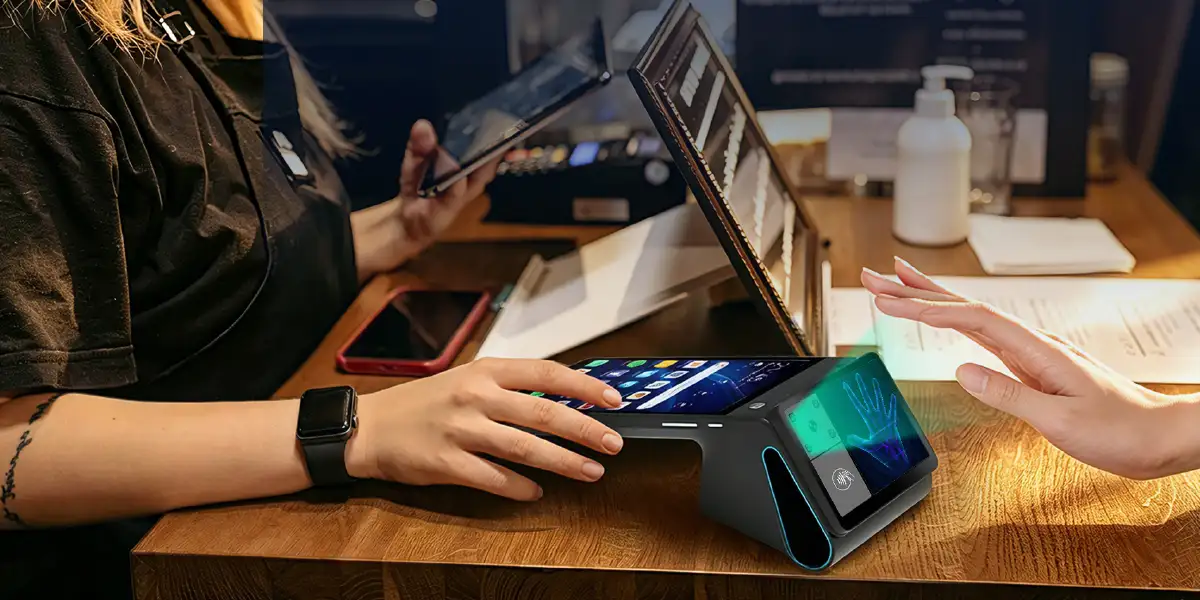
SAKULaLa biometric payment lets an enrolled customer use a finger vein match to retrieve a linked payment relationship. The customer does not store money in a finger, and the vein reader does not replace the payment processor. SAKULaLa supplies the identity result that allows the surrounding checkout system to find the permitted account data.
Tobu Railway and Hitachi describe SAKULaLa as a common digital identity platform rather than a single-purpose card reader. The same enrolled identity can support payment, loyalty points, membership confirmation or other approved services when the participating operator has connected those functions.
The initial retail implementation began at three Tobu Store locations in April 2024. The companies later announced expansion to other shops, hotels, transport and access-control settings. The September 2024 Hitachi announcement named FamilyMart as a future deployment and said introduction was scheduled to begin in fiscal 2026.
The phrase “100 locations” needs careful reading. The 2024 Hitachi announcement discussed more than 100 planned locations across several industries, not 100 confirmed FamilyMart stores. Tobu's later integrated report separately presented approximately 100 FamilyMart stores as a fiscal 2026-and-beyond target.
The FamilyMart project has progressed through planning disclosures, not a published 100-store completion notice. The public timeline separates confirmed SAKULaLa operations from the planned convenience-store deployment.
| Date | Public statement | What it confirms | What it does not confirm |
|---|---|---|---|
| April 2024 | SAKULaLa began at three Tobu Store locations | A live finger vein payment service existed in retail | FamilyMart participation |
| September 2024 | Hitachi and Tobu listed FamilyMart introduction from fiscal 2026 | FamilyMart was part of the expansion plan | A live store, store list or completed rollout |
| 2025 integrated report | Tobu showed approximately 100 FamilyMart stores from fiscal 2026 onward | A more specific deployment target | That all 100 stores had signed, installed or launched |
| May 2026 results material | Tobu continued to list convenience-store deployment at FamilyMart in its fiscal 2026 plan | The project remained on the corporate roadmap | A confirmed live-store count |
| November 5, 2026 review | No official FamilyMart launch notice or participating-store list was located in the sources reviewed for this article | Public confirmation remains incomplete | That no private pilot or installation work exists |
Tobu's 2025 integrated report places the 100-store target inside a longer expansion strategy. The document also states that plans may change in response to business conditions, which is normal for a multi-year corporate roadmap.
The correct wording is therefore “plans to introduce,” not “has deployed to 100 stores.” A confirmed rollout would normally require a launch date, participating locations, an eligible-user process and operating instructions. None of those items should be inferred from a target shown in an investor report.
Enrollment creates the link that a later finger scan can retrieve. A vein reader can compare vascular features, but it cannot determine which credit card or loyalty account belongs to an unknown shopper without a prior registration step.
The established SAKULaLa retail flow can be understood in five stages:
The enrollment relationship is the important part, not the finger image by itself. Hitachi describes its Public Biometric Infrastructure architecture as generating a public key during registration and regenerating the corresponding private key during authentication. The company's description says the cloud stores the public key rather than the biometric information or private key. This is a vendor-described security design, not an independent audit finding.
The separation between identity and payment remains essential. A correct vein match can identify the profile, but the linked card can still be expired, suspended or declined. Store software must wait for the payment result before treating the sale as complete.
The same account-linking principle appears in other systems, but the capture method changes. The palm vein scanning process uses a larger part of the hand, whereas SAKULaLa's original payment flow captures vascular features from a finger. The two systems are related biometric categories, not interchangeable enrollment databases.
Finger vein recognition needs an optical path designed to capture vascular information beneath the skin. A normal POS camera records visible light from a face, receipt or QR code. It does not automatically provide the illumination, finger positioning and image characteristics required for a finger vein match.
Hitachi's published SAKULaLa deployment used the company's C-1 finger vein reader. The sensor guides finger placement and captures the internal vein pattern for the biometric process. A self-checkout, tablet or payment terminal can run the merchant workflow, but the dedicated reader supplies the biometric input.
This hardware boundary matters during a FamilyMart rollout. A store would need more than a software button labeled “finger vein payment.” The deployment would have to address:
A dedicated sensor does not mean the complete payment happens inside the reader. The reader captures and supports authentication. The POS still owns the order total, the payment service submits the transaction, and the merchant records the receipt and reconciliation reference.
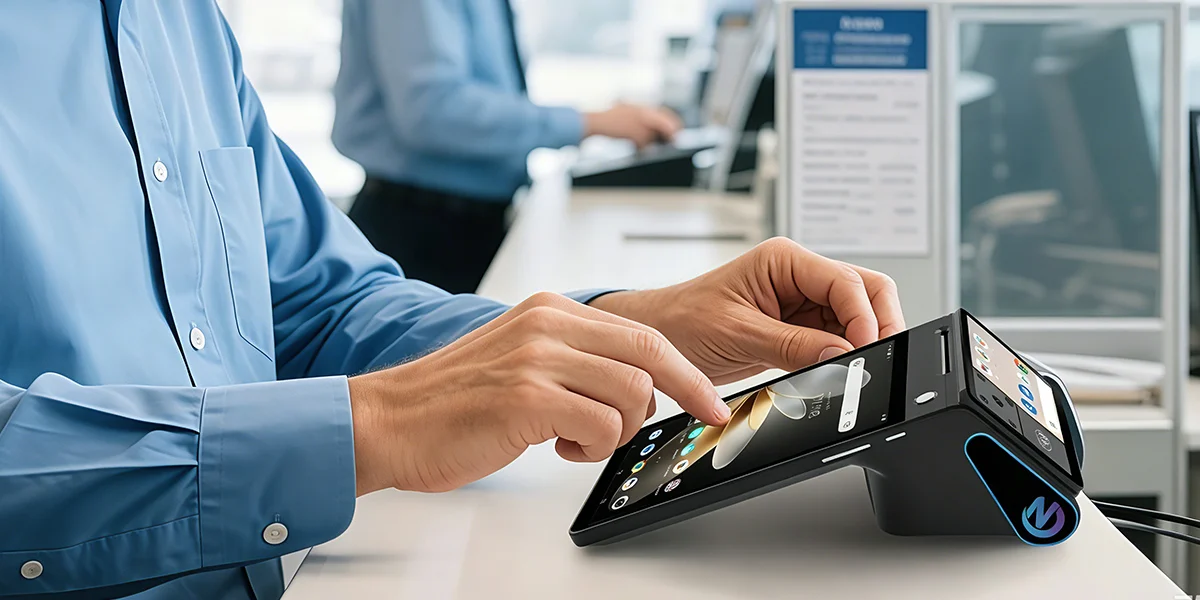
The announced JET-S connection is a SAKULaLa face-payment path, not evidence that a JET-S terminal can read finger veins. Hitachi and Tobu said SAKULaLa applications would be introduced to JET-S terminals from fiscal 2026, using the camera already installed for QR code payments to capture a face.
The November 2025 Hitachi announcement describes the flow directly: the user enters a registered phone number, completes face authentication on the JET-S terminal, and then uses a credit card registered in SAKULaLa. JCB is supporting the merchant-terminal and acceptance expansion around that route.
| Checkout route | Biometric capture hardware | Payment-terminal role | Status described by official sources |
|---|---|---|---|
| SAKULaLa finger vein payment | Dedicated Hitachi finger vein reader | Receives the sale and payment outcome through the integrated checkout setup | Proven in selected Tobu Store and other deployments |
| SAKULaLa face payment on JET-S | JET-S terminal's built-in QR camera | Runs the SAKULaLa application and supports the payment interaction | Announced for sequential introduction from fiscal 2026 |
| FamilyMart deployment | Not yet specified in enough public technical detail | Could use one or more supported checkout designs | Planned; a final store-level architecture has not been publicly confirmed |
JET-S can reduce extra hardware for face recognition because the terminal already has a suitable camera for that announced workflow. Finger vein checkout remains different because the terminal camera is not described as a substitute for the vein reader.
The distinction also prevents a second misunderstanding. JET-S is not the SAKULaLa identity database. The terminal provides a merchant-facing transaction endpoint, while SAKULaLa supplies the enrolled identity relationship and the registered payment choice. JCB and the payment-processing participants still handle functions outside biometric matching.
A plausible FamilyMart flow starts with enrollment and ends with a normal payment response, but the final operating steps remain unconfirmed. Existing SAKULaLa deployments show the general sequence, while FamilyMart has not published a store-level user guide for the planned rollout.
The finger vein version would likely require these actions:
This sequence remains a model based on the existing service, not a promise about FamilyMart's final interface. FamilyMart could choose a finger vein lane, a face-enabled JET-S flow, a combination of both biometrics or a staged pilot. The official disclosures available for this article do not establish which design every planned store will use.
The customer benefit also depends on more than scan speed. A person who already shops frequently, uses a loyalty account and wants hands-free age or identity checks may receive more value than an occasional visitor who can tap a card without enrolling.
The broader palm payment adoption analysis explains why repeat use, clear account recovery and a reason to register matter more than a short recognition demo. FamilyMart's scale could test those conditions, but a planned store count alone cannot prove customer adoption.
A credible rollout claim needs operational evidence at the store level. Corporate plans show intent and budget direction, but merchants and customers need details that establish actual availability.
The most useful confirmation points are:
A pilot can be genuine without being a completed rollout. One or several live stores would confirm operational use, while 100 functioning locations would confirm achievement of the disclosed target. Those are different milestones and should be reported separately.
A successful FamilyMart deployment would test whether biometric payment can work in a frequent, low-value retail setting. Convenience stores have short transactions, mixed payment preferences, high customer turnover and limited tolerance for checkout delays. Those conditions expose enrollment friction and exception handling quickly.
The project could also test whether one biometric identity can support several store tasks. SAKULaLa has been positioned for payment, loyalty and identity-linked services. Combining those functions could create more value than replacing a contactless card tap alone, but only if customers understand the choice and can keep using non-biometric payment methods.
The stronger long-term question is not whether a finger scan can authorize one purchase. The stronger question is whether SAKULaLa can make registration worthwhile across multiple merchants and services without making consent, account recovery or hardware support harder for users and staff.

No official source reviewed for this article confirms 100 live FamilyMart stores. Tobu Railway's 2025 integrated report presents approximately 100 FamilyMart stores as a fiscal 2026-and-beyond deployment target. The company's May 2026 results material still describes FamilyMart as part of the fiscal 2026 rollout plan rather than publishing a completed store list.
No. SAKULaLa uses a finger vein match to identify an enrolled digital identity. The linked payment credential supplies the route for the purchase, and the payment system still returns an approval or decline.
The official JET-S announcement does not say that it can. The announced SAKULaLa application uses the JET-S terminal's built-in camera for face recognition. Finger vein payment uses a dedicated vein reader.
Enrollment becomes more useful when the same biometric also retrieves loyalty, membership or age-related information. A customer who wants only a one-time payment may find a contactless card easier because it requires no new biometric account.
Finger vein and palm vein systems both use vascular features beneath the skin, but they capture different parts of the hand with different sensors and enrollment records. A person enrolled on one system should not be assumed to work on the other without a separate supported enrollment.
SAKULaLa has a credible retail history and a specific FamilyMart expansion target, but the 100-store figure remains a plan until official sources publish live locations. Enrollment links a finger vein reference to a digital identity and registered payment credential, while a dedicated sensor captures the finger at checkout.
JET-S expands SAKULaLa through face recognition rather than removing the finger vein reader. That distinction is the clearest way to understand the proposed FamilyMart deployment: one identity platform can support more than one biometric route, but each route still needs the right capture hardware, payment integration and operating process.







 Home
 How Should a Bar POS Apply Happy Hour Prices Across Time, Sizes, Discounts and Inventory?

