2026-11-18 Author : ZCS
NFC technology creates a short-range connection between compatible devices, but the application behind that connection decides what the tap accomplishes. A phone may open a product page, present an access credential or send payment data through the same basic radio interface. Those actions use different software, security rules and back-end systems.
The clearest way to understand NFC is to separate four layers.
Near Field Communication uses a 13.56 MHz radio field to establish a close-range data link between a reader, another powered device or a passive tag. The device operating mode defines who reads and who responds; the application credential defines the data; the connected service determines the final action.
This four-layer model explains why an NFC-enabled phone cannot automatically copy every access card or approve a bank payment by itself.
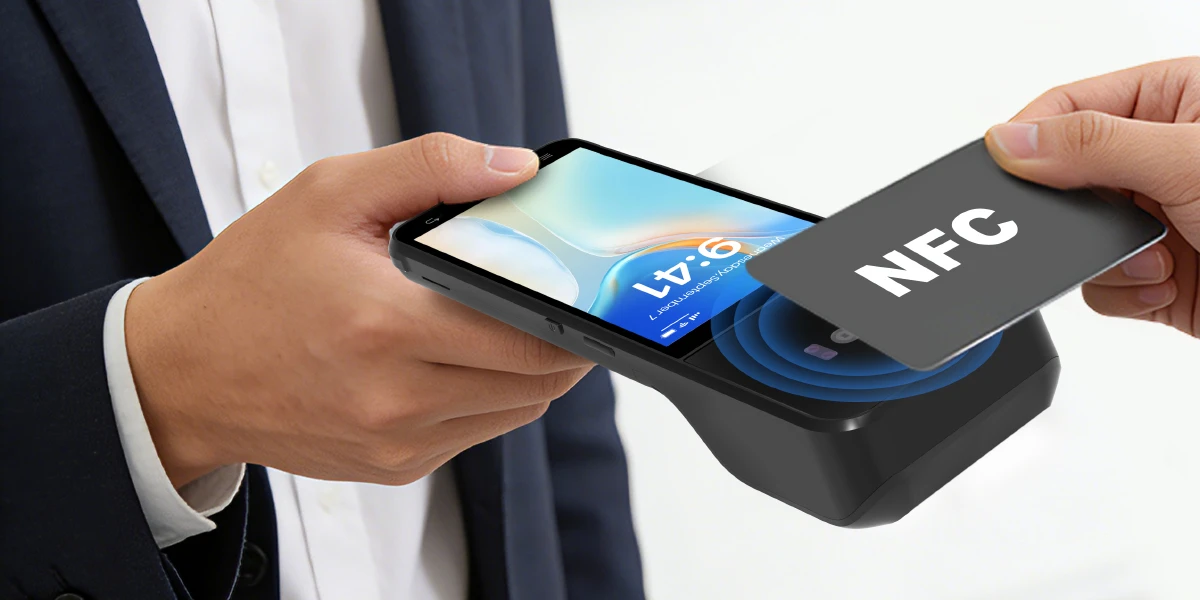
NFC technology starts a connection when two compatible antennas move within a short operating distance. One device creates a radio-frequency field, detects a compatible target and negotiates the exchange. The connection starts quickly because NFC is designed for deliberate tap interactions and small data payloads.
The NFC Forum technical overview defines a 13.56 MHz base frequency, a typical range of up to 2 cm and a certified compliant range of 5 mm. Actual reading distance depends on antenna design, device orientation, surrounding metal, power and the tag or card being presented.
A passive NFC tag takes operating power from the reader's radio field. Its antenna collects energy, powers the chip and allows the stored data to be returned. This design lets stickers, labels, cards and small embedded tags operate without batteries.
A powered phone or terminal can also communicate with another powered device. The important distinction is not whether every NFC product has a battery. It is whether the device generates the field, responds to it or can perform both roles.
An NFC tap transports a formatted message or a protocol response rather than a complete business process. NFC Forum tags commonly store an NFC Data Exchange Format, or NDEF, message. An NDEF record can contain a web address, text, contact information, a phone number, Wi-Fi settings or pairing data.
The receiving application decides what happens next. A URL record can open a browser confirmation. A product tag can direct the user to an online record. A configuration tag can supply network details. The same radio mechanism supports each case, but the stored content and application permissions differ.
NFC operating modes define which device initiates the exchange and which device behaves like a card or tag. Three modes explain most consumer interactions.
Reader and writer mode lets a phone or terminal read compatible tags and write to tags that permit modification. A read-only or permanently locked tag cannot be rewritten through an ordinary application. More advanced tags can also restrict access through passwords or cryptographic authentication.
The reader first detects the tag technology. It then parses an NDEF message or communicates through the tag's lower-level protocol. A successful radio connection therefore does not guarantee that the application can understand or modify the stored data.
Card emulation mode makes a phone or wearable appear to an external reader as a supported contactless card. The credential may be processed inside a secure element or through host card emulation software on the device.
A secure element is a protected chip or compatible SIM that handles sensitive commands separately from the main operating system. Host card emulation routes compatible commands to an application running on the device. Both designs require an application and protocol that the external reader understands.
Device-to-device mode allows two powered NFC devices to exchange small amounts of data or initiate another connection. NFC can pass pairing information to speakers, accessories or other hardware, after which Bluetooth or Wi-Fi handles the longer session.
This handoff reflects NFC's strength. NFC starts a deliberate interaction quickly; it is not designed to replace higher-throughput wireless links for large files or continuous streaming.
Android NFC capability depends on the hardware controller, antenna, system implementation and application permissions. Two phones running the same Android version may support different tag technologies, secure elements or card-emulation functions.
Google's Android NFC overview identifies two primary Android modes: reader/writer mode for passive tags and card emulation mode for communication with an external reader. Android applications can work with NDEF records or open lower-level connections to supported tag technologies.
An Android device can read a tag only when its hardware and software support that tag's technology. The operating system detects the tag, identifies compatible applications and passes the discovered data to the selected app. Antenna placement matters because the NFC antenna may sit near the top, center or lower part of the phone.
Writing also depends on tag state. A blank tag can accept a new NDEF message. A rewritable tag can accept updated content. A locked tag remains readable but cannot be changed through a normal write operation.
NFC hardware does not grant access to protected credentials. Payment cards, transit passes, employee badges and building-access cards can use different protocols, private keys and back-end checks. Android may detect a card without exposing its protected data or reproducing its behavior.
Host card emulation does not remove this boundary. The application must implement a supported protocol, and the receiving system must accept the credential it presents. A bank wallet, for example, receives provisioned payment credentials instead of copying the physical card's internal secrets.
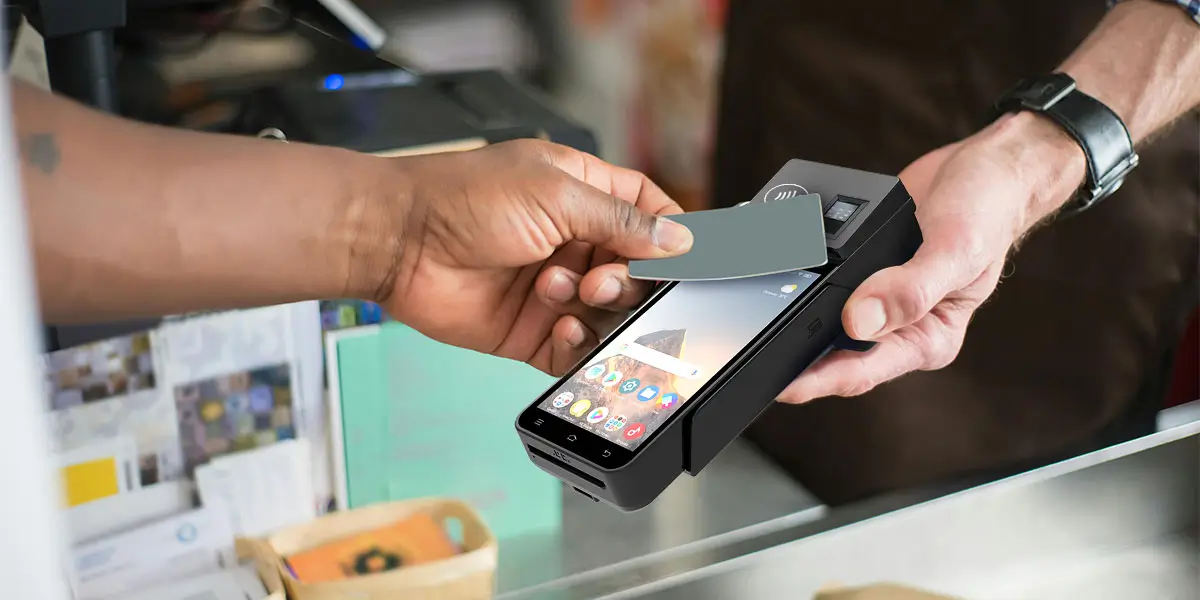
The same hardware distinction applies when a merchant turns a phone into a reader. Tap-on-Phone POS systems use the phone's NFC interface, but certified payment software and acquiring connections are still required to accept cards.
An NFC payment adds a payment application, transaction security and bank authorization to the short-range radio exchange. The tap begins the conversation; it does not make the approval decision.
A simplified payment flow has five steps:
The reader powers a passive card, exchanges protocol messages and passes the payment response into the terminal's payment application. It does not independently check the customer's bank balance or decide when merchant funds settle.
The detailed role of a contactless card reader ends at the hardware and protocol boundary. The payment kernel, terminal application, processor and issuer handle later stages.
A contactless card and a mobile wallet can use the same terminal interface while presenting different credentials. A physical card runs its payment application on the card chip. A mobile wallet can present a device-specific payment credential and may require a fingerprint, face scan or device passcode before use.
Phone authentication proves that an authorized user unlocked the wallet. It does not replace the issuer's transaction decision. A phone can authenticate its user successfully while the bank still declines the payment for funds, risk or account-status reasons.
NFC defines the short-range communication link, EMV Contactless defines payment interaction, and tokenization manages substitute payment credentials. EMVCo states that an EMV contactless transaction generates a one-time security code and supports both contactless chip cards and NFC-enabled mobile devices through approved chip, terminal and kernel specifications.
The EMVCo contactless guidance also separates reader hardware from the contactless kernel that processes payment functions. A device can therefore contain an NFC controller without being an approved payment terminal.
Internet access is another separate layer. The customer's card does not need internet to communicate with the terminal. The merchant terminal normally needs an acquiring connection for real-time authorization, although configured offline modes can store or approve limited transactions. Connectivity rules therefore affect authorization without changing the underlying NFC radio exchange.
NFC is one short-range tool within a wider set of identification and communication technologies. The right choice depends on distance, power, data volume and whether the interaction should require an intentional tap.
| Technology | Typical interaction | Power model | Setup | Common uses |
|---|---|---|---|---|
| NFC | Deliberate close-range tap | Active or passive | Minimal | Payments, access, tags and pairing |
| RFID | Reader detects compatible tags | Often passive | Dedicated reader infrastructure | Inventory, tracking and identification |
| Bluetooth | Ongoing wireless connection | Both devices usually powered | Discovery and pairing | Audio, peripherals and continuous data |
| QR code | Camera reads a printed or displayed image | No radio link | Visible code and camera | Links, tickets and account-based payments |
NFC belongs to the broader radio-frequency identification family, but not every RFID system is NFC-compatible. RFID covers several frequency bands, ranges and reader designs. NFC uses 13.56 MHz and specifications designed for close, interactive communication with phones, cards, tags and readers.
Longer-range RFID is better for detecting inventory or assets without a deliberate tap. NFC is better when proximity communicates user intent, such as opening a door, pairing a device or presenting a payment credential.
Bluetooth supports longer sessions and higher practical data volumes than a typical NFC tap. NFC starts quickly and uses little interaction to establish intent. Bluetooth maintains the connection after pairing.
Many products combine them: NFC supplies Bluetooth pairing details, then Bluetooth carries the ongoing audio or device data.
QR payments use a camera and encoded image instead of an NFC controller and antenna. The code can identify a merchant, transaction or wallet destination. The payment application then sends the request through its network.
NFC and QR can both support contactless checkout, but they solve the local exchange differently. NFC requires compatible radio hardware. QR requires a visible code, usable camera and application capable of interpreting it.
NFC supports product information, identity, access, transport, configuration and small-device power transfer. Payment is the most visible application, not the technical boundary.
Product tags can open authenticity records, maintenance instructions or digital product information. Access systems can use cards, phones or wearables to present credentials. Transit systems can read tickets or account identifiers. Digital keys can control vehicles, hotel rooms or office doors.
NFC also simplifies device setup by carrying Wi-Fi or Bluetooth pairing details. Current NFC wireless charging specifications support up to 1 watt, which fits styluses, trackers and other small electronics rather than normal smartphone fast charging.
Merchant hardware represents another application branch. NFC contactless POS terminals combine an NFC reader with payment software, certifications, connectivity and checkout functions. Those additions turn a general communication technology into an operational payment device.
NFC's short range reduces accidental communication but does not secure every application by itself. A secure system also needs authenticated credentials, controlled keys, trustworthy software and clear user confirmation.
Payment cards use transaction cryptography. Access systems can use challenge-response authentication. Secure elements isolate credentials from ordinary applications. Basic tags may contain only a public URL and offer no comparable protection.
Relay attacks illustrate the limit of proximity. An attacker can attempt to forward messages between a legitimate credential and a distant reader. Application timing controls, protocol protections and transaction monitoring help address this risk. Users should also inspect unexpected NFC prompts and verify web addresses before opening links from unfamiliar tags.
The practical rule is simple: short distance helps establish intent, while application security protects the credential and action.
The 2026 NFC roadmap focuses on faster communication, stronger security and more reliable multi-function taps. These items are development priorities, not features already present on every phone or reader.
According to the NFC Forum roadmap published in February 2026, six priorities guide upcoming standards work:
NFC Release 15, published in June 2025, had already delivered a larger operating volume and support for Digital Product Passport requirements. The 2026 roadmap builds on that release. Device manufacturers still need updated controllers, antennas, software and certification before roadmap capabilities reach deployed products.
No. NFC is a close-range 13.56 MHz technology within the broader RFID family. Other RFID systems can use different frequencies, longer ranges and reader designs that phones do not support.
The local NFC exchange does not need internet access. A tag can send stored data and a card can communicate with a terminal offline. The application may still need internet to open a website, validate an account or obtain payment authorization. The guide to offline contactless payments explains the separate limits and merchant risks that apply when a payment terminal loses connectivity.
No. The phone needs NFC hardware, compatible system support and an application that understands the tag technology. A tag may also be locked, protected or based on a protocol the phone does not support.
A phone cannot copy every NFC access card. Proprietary protocols, protected keys, secure elements and server-side checks can prevent reading or emulation even when the phone detects the card.
No. NFC carries payment messages between the credential and terminal. The EMV application, payment kernel, acquirer, network and issuer determine whether the transaction is valid and approved.
The answer depends on the device and credential implementation. Some secure-element or power-reserve functions can present selected transit or access credentials with a locked or low-power phone. Ordinary Android applications and host card emulation normally need the operating system to be running.
NFC works best when a person intentionally brings a device close to a reader for a fast, small and clearly directed exchange. Payments, access, tickets, product information and device pairing all benefit from that interaction model.
NFC is a poor substitute for long-range inventory detection, continuous wireless communication or large file transfer. RFID, Bluetooth, Wi-Fi and QR codes remain useful because they solve different physical and operational problems.
The word “tap” hides several systems. NFC creates the radio link. The operating mode assigns device roles. The credential supplies the data. The application and back-end service decide what the tap actually does.







 Home
 How AI Inventory Management Connects POS Sales, Demand Forecasts and Automated Replenishment?

