
2026-08-25 Author : ZCS
A POS terminal certified for checkout use in Rome will not automatically satisfy a tax inspector in Berlin, and the reverse is just as true. For the underlying hardware distinction behind that mismatch — why some fiscal devices work as standalone units and others depend on separate certified software — see fiscal printer vs fiscal POS terminal, which this comparison builds directly on.
EU fiscal compliance utilizes government-certified recording mechanisms to secure sales-tax data across member states. Current national frameworks bifurcate into hardware-based verification, represented by Italy's certified telematic registers, and software or cloud-based certification, utilizing centralized signing services like Spain's Verifactu system.
No single EU directive forces these frameworks into alignment, which is why the same checkout device can be fully compliant in one member state and legally unusable in the next.
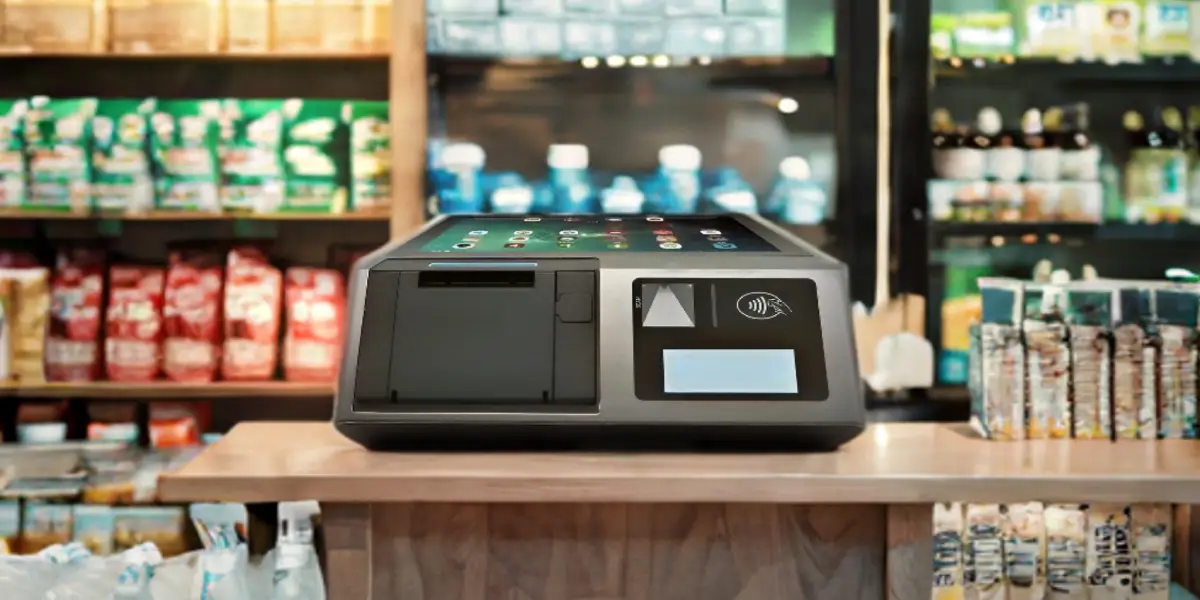
Fiscal compliance in the EU is a national competency, not a harmonized bloc-wide standard. Each tax authority — Germany's BSI, Italy's Agenzia delle Entrate, Spain's AEAT, France's DGFiP — writes its own certification rules, sets its own thresholds, and enforces its own penalties, even though every country is ultimately chasing the same goal of closing the VAT gap.
That national fragmentation produces three broad regulatory patterns, summarized below before the country-level detail.
| Model | Countries | Core mechanism |
|---|---|---|
| Hardware-first | Italy, Poland, Austria, Sweden | Certified physical device is the enforcement point |
| Hybrid | Germany, Belgium | Certified security module layered onto existing POS software |
| Software/cloud-first | Spain, France, Portugal | Certified software or cloud signing service, no dedicated hardware mandate |
| Country | Framework | Threshold / Scope | 2026 development |
|---|---|---|---|
| Italy | Registratori Telematici (RT) + documento commerciale | B2C transactions; RT-based fiscalization has generally applied since January 1, 2020 | Technical specifications for cloud fiscalization were published in March 2025. In 2026, approved software-based fiscal solutions can reduce reliance on a dedicated RT device. |
| Poland | Kasa fiskalna | B2C sales; fiscal cash-register obligations apply to in-scope retailers and service providers | Mandatory KSeF B2B e-invoicing started on February 1, 2026 for taxpayers with turnover above PLN 200 million and expanded to most other VAT taxpayers on April 1, 2026. Certain smallest businesses are deferred until January 1, 2027. |
| Austria | RKSV | Annual turnover above €15,000 and annual cash sales above €7,500 | The core RKSV framework remains stable; no major fiscalization change is expected in 2026. |
| Sweden | Kassaregister + certified control unit | Annual turnover above SEK 235,200; the cash register must be connected to a certified control unit | A certified cloud-based control system may provide the control-unit function through an API. Updated standardized data-export requirements take effect from January 1, 2027. |
Italy's telematic registers write each sale to certified fiscal memory and transmit daily totals to the Agenzia delle Entrate automatically; the March 2025 cloud-based alternative shown above lets businesses meet that same obligation without dedicated hardware. Poland's KSeF e-invoicing mandate sits alongside the existing kasa fiskalna requirement as a separate B2B reporting layer, rather than replacing it.
Austria and Sweden's threshold-based design — a hardware requirement that only kicks in past a set revenue level — keeps very small operators, like a market stall doing a few thousand euros a year, outside the certification burden entirely. Austria's RKSV additionally requires the certified device to be registered with the tax authority through the FinanzOnline portal before it can legally record a single sale, giving inspectors a direct link between a specific device ID and the business operating it — a registration step Sweden's Skatteverket mirrors for every kontrollenhet control unit brought into service.
Buyers trying to make sense of the alphabet-soup terminology tax authorities use for these certified devices — EFD, ETR, VFD, and similar acronyms — can find the full vocabulary breakdown in EFD, ETR, and VFD terminology explained for 2026, since the same underlying device categories get renamed country by country.
| Country | Framework | Threshold / Scope | 2026 development |
|---|---|---|---|
| Germany | Kassensicherungsverordnung (KassenSichV) + certified Technical Security System (TSS) | Electronic recording systems covered by Section 146a of the German Fiscal Code, including electronic cash registers. In-scope systems must use a certified TSS to secure transaction data. | Cash-register reporting through Mein ELSTER or an ERiC-enabled interface has been available since January 1, 2025. Systems acquired before July 1, 2025 had to be reported by July 31, 2025; systems commissioned from July 1, 2025 must generally be reported within one month, including TSS and register details. |
| Belgium | Registered Cash Register System (GKS) 2.0, replacing GKS 1.0 | In-scope HoReCa businesses required to use a registered cash-register system under Belgian fiscal rules. | GKS 2.0 becomes mandatory for newly established in-scope HoReCa businesses from July 1, 2026. Existing GKS 1.0 users transition by the purchase date of their current register: by July 1, 2027 for systems purchased before January 1, 2018; by July 1, 2028 for systems purchased from 2018 through 2021; and by January 1, 2029 for systems purchased from January 1, 2022 onward. |
Germany's TSS can run as a cloud-based service or as a hardware module physically attached to the register, and either option must carry certification from the Federal Office for Information Security before it can go live.
Belgium is mid-transition. The original GKS system paired a certified cash register with a black-box Fiscal Data Module and a VAT smart card, all installed on-site. GKS 2.0 replaces that hardware-heavy setup with cloud-based reporting directly to FPS Finance, cutting out most on-site inspections.
| Country | Framework | Threshold / Scope | 2026 development |
|---|---|---|---|
| Spain | VeriFactu billing-system rules; SII for certain VAT taxpayers; TicketBAI applies in the Basque Country under regional rules | Applies to taxpayers using computerized invoicing systems, subject to statutory exclusions and separate regional regimes. SII primarily applies to large businesses and certain other VAT taxpayers; TicketBAI requirements depend on the Basque territory. | VeriFactu compliance is phased: corporate-income-tax taxpayers must adapt from January 1, 2026, while self-employed individuals and other taxpayers have until July 1, 2026. POS and invoicing software should support compliant record generation, integrity controls, and required data transmission options. |
| France | Anti-VAT-fraud rules for cash-register software; NF525 or LNE third-party certification remains available | Applies to businesses subject to VAT that use cash-register software or systems to record payments from non-taxable persons, subject to statutory exemptions. | Vendor self-attestation was reinstated as an accepted proof of compliance from February 21, 2026. The previously proposed third-party-certification-only deadline of September 1, 2026 was cancelled. POS vendors may demonstrate compliance through an accredited certificate or a compliant vendor attestation. |
| Portugal | AT-certified invoicing software + ATCUD + QR code + SAF-T (PT) Billing | In-scope taxpayers issuing invoices must use certified invoicing software where certification rules apply. Invoices generally require an ATCUD and QR code, and billing data is reported through SAF-T (PT) or the relevant AT reporting method. | The core framework remains stable. Monthly SAF-T (PT) Billing reporting continues, generally due by the 5th day of the following month. POS and invoicing systems should maintain certified-software status and produce compliant ATCUD, QR-code, and SAF-T output. |
Spain runs fiscalization through five separate regional tax authorities rather than one national system: Verifactu applies nationally, while the Basque Country's TicketBAI and Navarra's still-developing rules operate as their own certification tracks.
France's 2026 shift closes a compliance gap the country opened when it first introduced certified cash-register software back in 2018: businesses could previously satisfy the rule through either accredited certification or a self-issued attestation, and regulators are now removing the self-attestation option for most vendors.
Portugal pairs its long-standing software certification with a mandatory unique document code (ATCUD) on every invoice, giving auditors a structured, machine-readable view of each transaction.
Nine countries and three regulatory models add up to nine separate certification processes in practice, and that fragmentation is the reality a retailer expanding across the EU has to plan around. A terminal certified for Poland's hardware-based kasa fiskalna regime carries no automatic standing in Germany's BSI-certified TSS system, and neither transfers to Spain's cloud-only Verifactu framework, even though all three are solving the same underlying VAT-fraud problem.
Poland's own B2B e-invoicing mandate illustrates how quickly these layers stack: the KSeF rule now sits directly on top of a fiscal cash-register requirement that predates it by decades.
Hardware vendors serving multi-country retail chains generally handle this by keeping a common terminal platform and swapping the certified fiscal module per market rather than redesigning the whole device for each country. Doing that well depends on how quickly a manufacturer can adapt firmware and payment stacks to a new jurisdiction's certification body — an Austrian FinanzOnline registration, a German BSI certificate, or a Spanish Verifactu integration each demand different engineering work even when the base hardware stays the same. None of that adaptation happens automatically; it requires firmware-level access and a manufacturer willing to prioritize a specific country's certification queue rather than treating every market as an afterthought.
That kind of country-specific engineering work is covered in custom Android POS manufacturing, from open SDK access through to the firmware-level changes a new market's fiscal authority typically requires before certification is granted.

Q1. Does the EU have one unified fiscal compliance standard?
No. Fiscal compliance is a national competency in the EU, so each member state sets its own certification body, technical requirements, and enforcement thresholds rather than following a single bloc-wide rule.
Q2. Which EU countries require hardware-based fiscal devices in 2026?
Italy, Poland, Austria, and Sweden all maintain hardware-based or hardware-optional fiscal requirements in 2026, though Italy now also permits an approved cloud-based alternative for businesses that prefer to go hardware-free.
Q3. What changed in France's fiscalization rules in 2026?
As of March 1, 2026, France requires mandatory third-party certification of POS software from an accredited body, removing the self-attestation option that had previously let vendors declare their own compliance.






 Home
Home  How Fiscal POS Hardware Differs from Standard POS Hardware?
