
2026-07-21 Author : ZCS
Ask an Australian or New Zealand small business owner what EFTPOS vs POS actually means, and most will admit the two terms get used interchangeably far more often than they should be. They're related, but they're not the same thing — one is a payment function, the other is the broader system that function sits inside. This guide clears up what EFTPOS actually means, what a POS system covers that EFTPOS doesn't, and how the two work together at checkout in 2026.
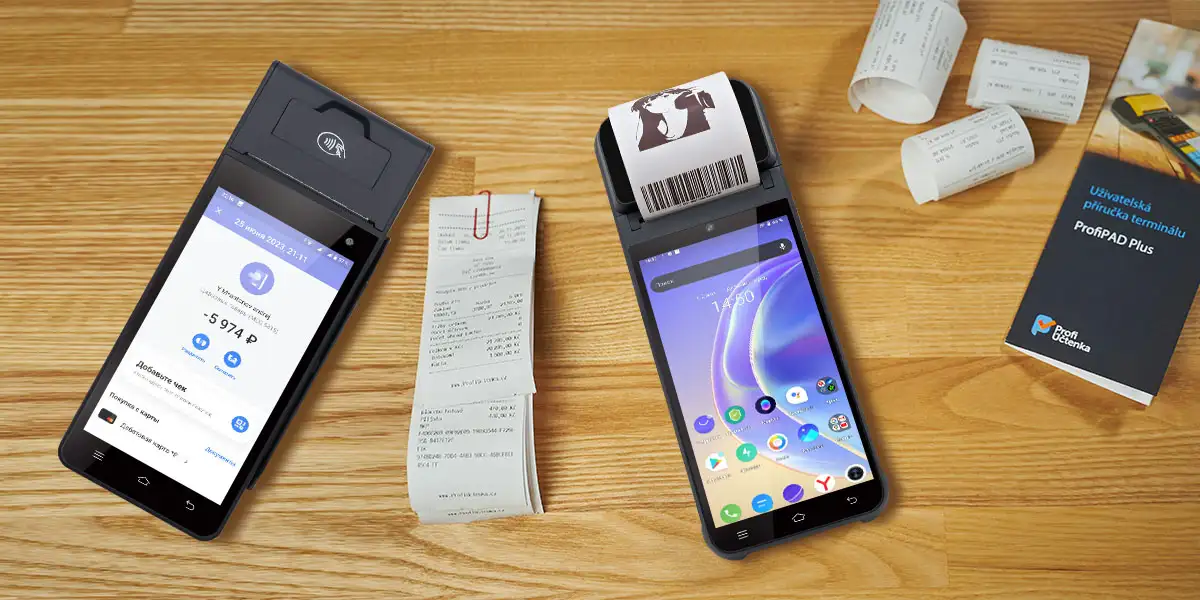
EFTPOS stands for Electronic Funds Transfer at Point of Sale — a payment method where funds move electronically from a customer's bank account to a merchant's account at the moment of purchase, rather than through cash. According to Moneysmart.gov.au, the Australian Government's consumer financial guidance service, EFTPOS is the network used across Australia for processing debit, credit, and charge card payments at the point of sale, and in some cases for withdrawing cash alongside a purchase.
There's a nuance worth knowing here that trips a lot of people up: in Australia and New Zealand specifically, "EFTPOS" carries two distinct meanings. Written generically, it describes the broader category of in-person electronic payment — the same concept used worldwide under different names. But in Australia, lowercase "eftpos" is also the proprietary brand name of a specific domestic debit card scheme, run separately from Visa or Mastercard's networks, historically known for lower transaction fees. Most day-to-day usage — including "what does EFTPOS stand for" as a general question — refers to the generic meaning, but the branded scheme is worth knowing about if you're comparing merchant fees.
A point-of-sale (POS) system is the broader software and hardware setup a business uses to run a sale from start to finish — ringing up items, tracking inventory, applying discounts, generating receipts, and recording the transaction for reporting purposes. Payment acceptance is one function within that larger system, not the whole of it. Businesses that move around rather than sell from a fixed counter — market stalls, tradespeople, delivery drivers — often start with a simpler question first: is a full POS setup even necessary, or would a mobile EFTPOS machine cover what the business actually needs day to day?
The confusion between the two terms usually comes down to one thing: EFTPOS is specifically the payment-processing function, while POS is the entire system that payment function operates inside. A standalone EFTPOS terminal can process a card payment on its own without any inventory tracking, reporting, or sales history — which is exactly what many small traders use if all they need is to take payment. A full POS system, by contrast, bundles that payment capability together with everything else a business needs to run a till: stock levels, staff logins, sales reporting, and often integration with accounting software.
| Dimension | EFTPOS | POS |
|---|---|---|
| Core function | Processes electronic payment | Manages the full sale (items, pricing, payment, reporting) |
| Scope | Payment only | Payment + inventory + sales data + reporting |
| Can operate standalone | Yes | Yes, and usually includes EFTPOS as its payment method |
| Typical hardware | Card terminal | Terminal, register/tablet, receipt printer, barcode scanner |
| Common AU/NZ example | A standalone eftpos machine at a market stall | An integrated Android POS terminal used in a retail store |
Scale gives a sense of just how embedded this distinction is in everyday Australian commerce. According to Stripe, there were more than 1 million EFTPOS terminals in use across Australia as of 2025 — a mix of standalone payment-only devices and terminals integrated into full POS systems, which is exactly why the two terms end up used so loosely in everyday conversation. That mix also spans hardware form factor, not just function — a fixed counter and a market stall have very different terminal needs, a distinction covered in our comparison of portable vs countertop EFTPOS terminals.
In an integrated setup, the two work together in a single motion: the POS system calculates the total for a sale, then hands that amount off to the EFTPOS component to collect payment — either through a built-in card reader or a connected terminal. The EFTPOS side handles communication with the customer's bank, while the POS side records the completed sale against inventory and daily reporting. A more detailed walk-through of that payment-side process — from card tap to funds settlement — is covered in our guide to how an EFTPOS machine actually works.
Even as digital and contactless payment options expand, electronic payment methods remain dominant in Australia by a wide margin. According to the Reserve Bank of Australia, cash accounted for around 15% of in-person payments in 2025 — a slight uptick from 13% in 2022, the first increase the RBA's survey has recorded since it began in 2007 — meaning EFTPOS and card-based payment still account for the large majority of everyday transactions despite that modest rebound in cash use.
For a market stallholder, tradesperson, or pop-up vendor who only needs to take payment, a standalone EFTPOS terminal is often enough — there's no inventory to track and no need for sales reporting beyond what the terminal itself logs. For a retail store, café, or any business managing stock and staff, a full POS system that includes EFTPOS as its payment layer is generally the better fit, since running payment and inventory through separate, disconnected tools creates reconciliation work that a combined system avoids. Whichever setup a business chooses, the fees attached to each transaction are worth understanding upfront — particularly with surcharging rules changing in Australia from October 2026, which affect what businesses can and can't pass on to customers. Businesses evaluating hardware for the first time — particularly what features actually matter versus what's marketing noise — can work through our EFTPOS terminal buying checklist for AU/NZ SMBs before comparing providers.
Q1. Is EFTPOS the same as a POS system?
No. EFTPOS is the payment-processing function specifically; a POS system is the broader setup that manages the full sale, including inventory, reporting, and often EFTPOS as its payment method.
Q2. What does EFTPOS stand for?
Electronic Funds Transfer at Point of Sale — the process of transferring payment electronically from a customer's bank account to a merchant's account at checkout.
Q3. Can a business use EFTPOS without a full POS system?
Yes. A standalone EFTPOS terminal can process card payments on its own, which suits businesses that don't need inventory tracking or detailed sales reporting, such as market stalls or one-off event vendors.
Q4. Is "eftpos" in Australia a brand name or a generic term?
Both, depending on context. Generically, EFTPOS describes electronic in-person payment worldwide. In Australia specifically, lowercase "eftpos" is also the proprietary name of a domestic card payment network distinct from Visa or Mastercard.
Q5. Do I need a different terminal for EFTPOS versus POS?
Not necessarily. Many modern POS terminals include EFTPOS payment processing built in, so a single Android-based device can handle both functions rather than requiring two separate pieces of hardware.






 Home
Home  Food Truck Point of Sale Buying Checklist: Specs Your Supplier Must Meet Before You Sign
