
2026-07-23 Author : ZCS
A customer taps their card, the machine beeps, and the payment goes through in under three seconds — but behind that brief pause, an EFTPOS machine is coordinating between several different banks and networks to confirm the payment is genuine and the funds are actually there. This guide breaks down how does EFTPOS work at the mechanical level: what an EFTPOS machine actually is, the step-by-step process behind every tap, insert, or swipe, what happens after a transaction is approved, and how the system keeps that process secure.
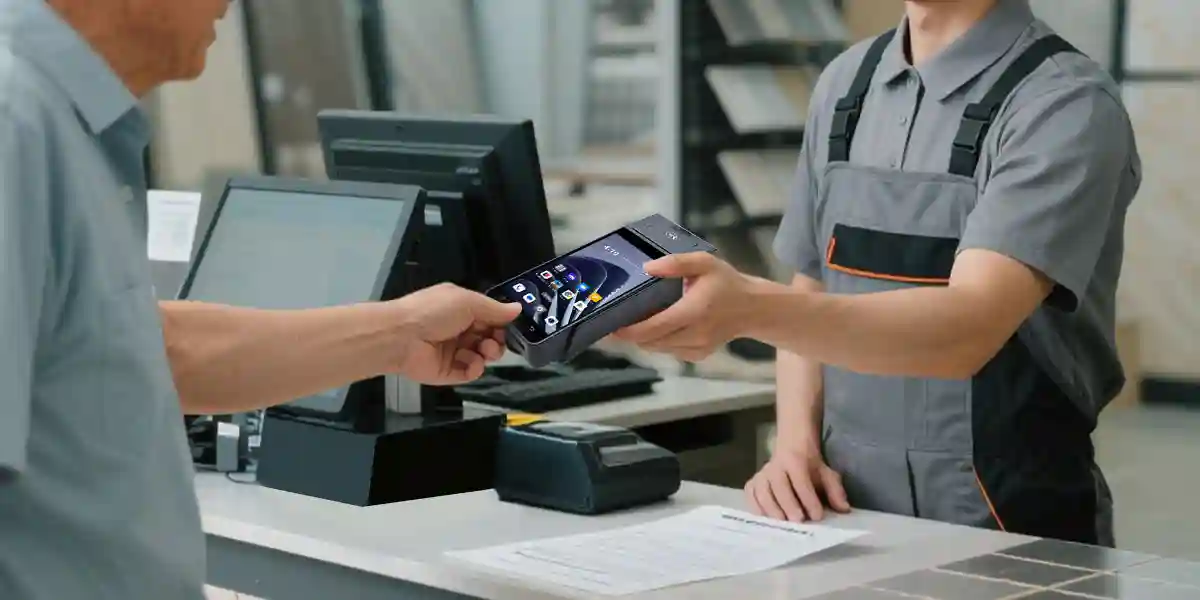
An EFTPOS machine is the physical device that reads a customer's card or mobile wallet and initiates the transfer of funds from their bank to a merchant's account. It can operate as a standalone unit that only processes payments, or as the payment component built into a larger POS terminal — a distinction covered in more depth in our breakdown of the core difference between EFTPOS and POS. The physical form that standalone unit takes varies a lot too, from a countertop device wired to a fixed line to a battery-powered handheld that moves with staff — our comparison of portable and countertop EFTPOS terminals walks through when each makes sense. Either way, the machine itself doesn't hold or move money directly; it's the entry point that captures card data and kicks off a chain of communication between banks that actually completes the transfer.
Every transaction follows the same underlying sequence, regardless of which bank or provider supplies the terminal.
This entire chain — from the acquirer processing the request, to the card scheme routing it, to the issuer confirming funds — typically completes within a few seconds, which is why the pause at checkout barely registers as a wait for most customers.
Approval isn't the same as the money landing in the merchant's account. Once a transaction is approved, funds are grouped into a batch and settled separately, usually once per business day. NAB explains that most Australian EFTPOS terminals settle automatically at a set time each day — commonly in the evening — transferring the day's approved transactions into the merchant's account as a single batch rather than crediting each sale individually as it happens. Settlement timing varies by provider, and businesses relying on same-day cash flow should confirm their specific settlement window rather than assuming funds land instantly.
Every step in the process above is encrypted in transit, and modern EFTPOS networks add a further layer for contactless payments specifically. According to Stripe, Australia's eftpos network uses industry-standard encryption to protect transaction data and applies tokenization to contactless payments — meaning the actual card number is never transmitted or exposed during a tap-to-pay transaction, only a substitute token that's meaningless if intercepted. This is part of why contactless payment has scaled so quickly without a corresponding rise in card-present fraud.
The transaction flow above happens the same way whether the terminal is a standalone EFTPOS machine or the payment module inside a full POS system — the difference is what happens on either side of it. A standalone machine's job ends at step 7; a POS-integrated terminal also logs that sale against inventory, applies it to daily reporting, and may need to decide which network to route the transaction through for the lowest processing cost, a decision known as least-cost routing. That routing choice happens inside the authorization step described above, and it's worth understanding on its own — our guide on what least-cost routing is and why your terminal needs to support it covers that mechanic in detail.
Understanding the approval chain also explains why declines happen, since each step is a potential failure point:
Most declines resolve on a second attempt or a different payment method, but a pattern of repeated declines on the same terminal is usually a connectivity or hardware issue worth raising with the provider rather than something on the customer's end.
Understanding these mechanics matters most in practice once a business is actually choosing hardware. Businesses that move around for work — rather than staying at a fixed counter — face a slightly different set of tradeoffs, covered in our guide to mobile EFTPOS machines for Australian and NZ small businesses. For a broader rundown of what to check before settling on any terminal, our 2026 EFTPOS terminal checklist walks through the practical side of that decision.

Q1. How long does an EFTPOS transaction take to process?
The authorization step — from card tap to approval — typically completes within a few seconds. Settlement of funds into the merchant's account happens separately, usually once per business day.
Q2. Does an EFTPOS machine store my card details?
No. Card data is encrypted during transmission and, for contactless payments, replaced with a token rather than the actual card number, so the raw card details aren't stored or exposed on the terminal.
Q3. Why did an EFTPOS transaction get declined even though the customer has funds?
Declines can happen for reasons beyond available balance — connectivity issues between the terminal and the bank, card restrictions, or terminal software problems can all interrupt the process before it reaches approval.
Q4. Is a standalone EFTPOS machine different from the payment function in a POS system?
The core transaction mechanics are the same either way. The difference is scope: a standalone machine only processes the payment, while a POS-integrated terminal also logs the sale against inventory and reporting.
Q5. What's the difference between a chip transaction and a contactless one?
Chip transactions typically require PIN entry to authenticate the cardholder. Contactless transactions under a set threshold often skip PIN entry for speed, with higher-value taps sometimes still requiring it depending on the card issuer's rules.






 Home
Home  What Should You Look for in an EFTPOS Terminal Before You Buy? A 2026 AU/NZ Checklist
