2026-06-10 Author : ZCS
The shift to cloud point of sale systems is no longer a trend on the horizon — it is already reshaping how merchants operate, compete, and grow. Whether you run a single boutique or a chain of thirty locations, the checkout counter has become a strategic asset, not just a transaction terminal. Cloud-based POS platforms have quietly moved to the center of that transformation, offering a new way to think about data, hardware, and operational continuity.
According to Market Research Future, the global cloud POS market is projected to grow from USD 7.73 billion in 2025 to USD 45.20 billion by 2033 — a compound annual growth rate of nearly 25%. Over 60% of retailers have already made the move. The momentum is unmistakable, yet many business owners still have unanswered questions: What exactly makes a POS system "cloud-based"? Why are so many merchants walking away from the setups they have relied on for years? And is the transition actually worth it?
This guide works through those questions in plain terms. We start at the conceptual level — what a cloud POS is and how it differs from a conventional system — then trace the real-world frustrations that push retailers toward a switch. From there we look at what the technology delivers day to day, address the security concerns that give operators pause, and close with practical guidance on choosing a solution that fits your business. ZCS's cloud-enabled POS infrastructure runs as a thread throughout, illustrating what modern, purpose-built hardware looks like when it is designed for a cloud-first world.
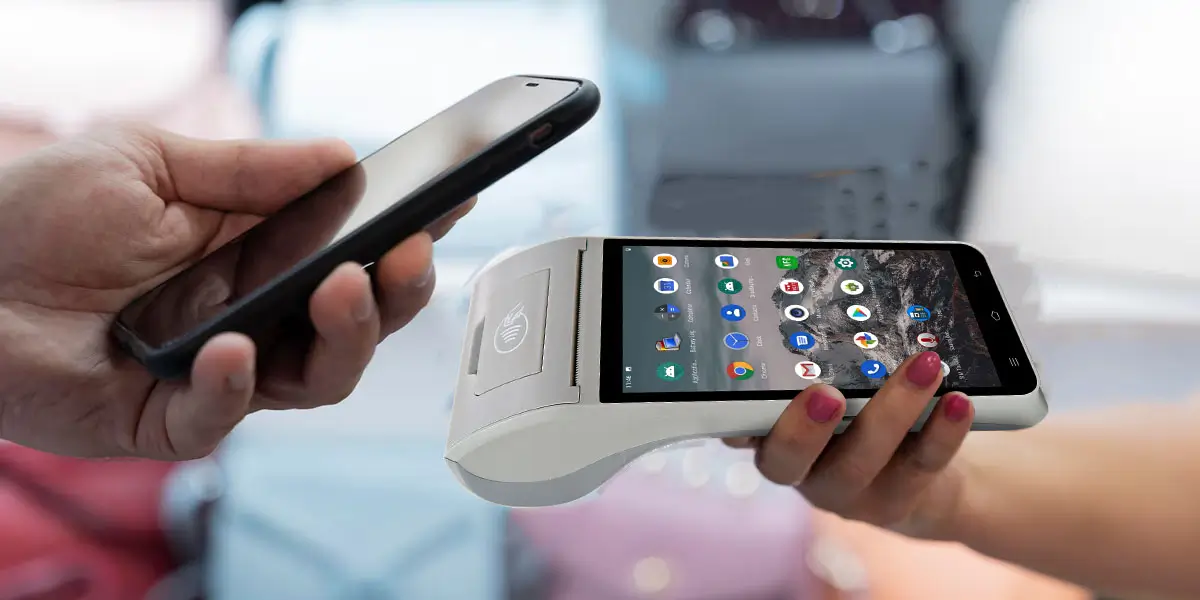
Start with the most concrete difference you can point to: where your data lives. A conventional, on-premise POS stores transactions, inventory counts, and customer records on a local server sitting somewhere in the back room. A cloud-based point of sale system sends that same data to remote servers accessed over the internet, where it can be retrieved from any authorized device at any time.
That single architectural shift has a cascading effect on almost everything else. With a legacy setup, software updates require a technician visit or at minimum a manual installation process initiated from the local machine. With a cloud checkout platform, updates deploy automatically in the background — often overnight — and every terminal in your network receives them simultaneously. There is no version mismatch between the register at till one and the register at till three.
Connectivity is the other question operators raise immediately. What happens if the internet goes down? Reputable cloud POS solutions address this through local caching: the system continues processing transactions using data stored on the device itself, then synchronizes with the cloud the moment connectivity is restored. The business keeps moving; the data catch-up happens invisibly.
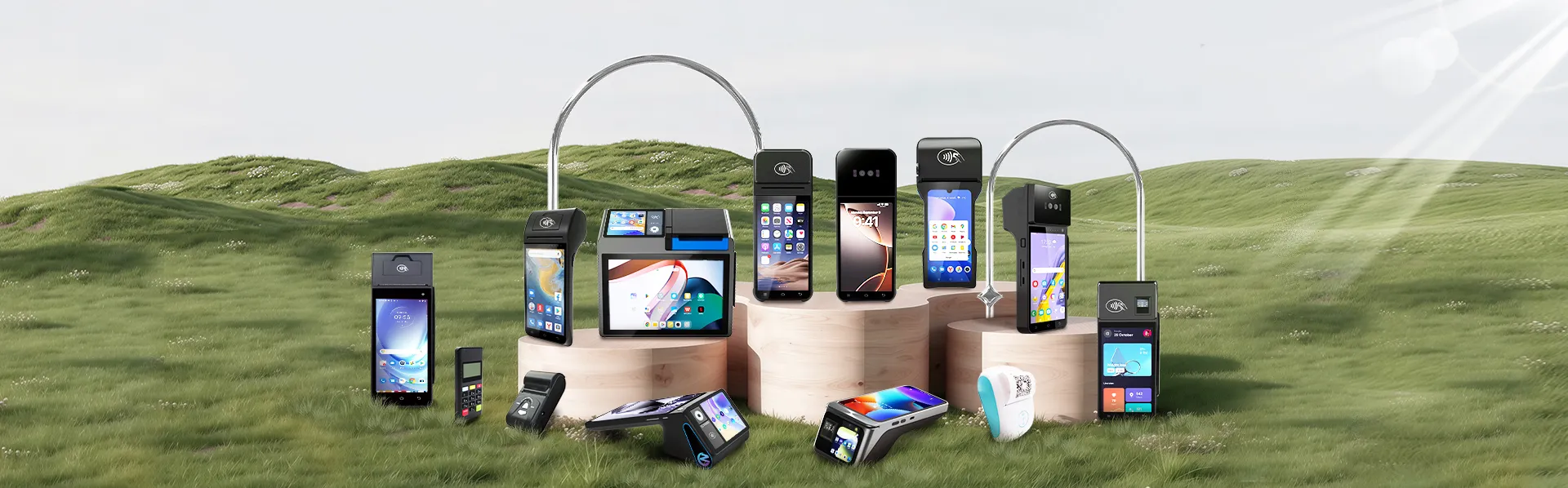
Hardware compatibility is broader than it once was. Many cloud-native retail management platforms run on standard Android tablets or purpose-built Android POS terminals, rather than proprietary equipment that locks you into a single vendor. ZCS terminals, for instance, are engineered specifically to pair with cloud back-ends — combining the open flexibility of Android with the reliability demanded in high-volume retail environments. The device becomes a window into the cloud infrastructure rather than the intelligence of the system itself.
Think of it this way: a traditional POS is like a filing cabinet in your office. A cloud POS is like a shared drive that every authorized person in your organization can open from wherever they happen to be sitting.
Frustration, more than innovation, tends to drive technology adoption in retail. The merchants switching to cloud-based solutions are not doing so because they read a market report. They are doing so because their current setup has caused them pain in specific, recurring ways.
Server failure is the most acute version of that pain. When the local machine that runs a conventional POS goes down, the entire store stops. No transactions, no inventory lookups, no employee clock-ins. Industry data shows that 81% of retailers experience POS downtime at least once a year, and 87% of those businesses wait four or more hours for a resolution from their supplier. The financial exposure is severe: research indicates that nearly half of retailers estimate they could lose approximately USD 13,000 for a single hour of outage, while roughly a quarter put that figure above USD 130,000.
Multi-location management compounds the problem. A retailer operating three or four stores on legacy systems faces a fragmented picture: inventory figures that differ between locations because they were last synced at different times, sales reports that require someone to log in remotely to each machine, and promotional pricing changes that have to be applied store by store. Real-time visibility across the network simply does not exist in the same way.
Maintenance overhead is a quieter but persistent drain. On-premise systems typically require paid service contracts for software upgrades, on-site technician visits for hardware issues, and manual backup routines that someone has to remember to run. Cloud-hosted architectures shift most of that burden to the service provider. Updates are automatic. Backups are continuous. Hardware support is separated from the software layer.
The data access barrier is perhaps the most underappreciated frustration. In a traditional setup, meaningful sales analytics — sell-through rates by category, peak hour traffic patterns, margin performance — often require a dedicated reporting module or an export process that only works from one specific machine. Cloud retail management platforms surface that data through browser-based dashboards accessible from a laptop, tablet, or phone. A store owner traveling to a trade show can still pull last night's closing figures without calling anyone.
Features listed on a vendor's website can sound impressive in isolation. What matters in practice is how those capabilities translate into the texture of an ordinary business day.
Inventory synchronization is the most immediate operational gain. When a customer purchases the last unit of a particular SKU at your downtown location, that depletion reflects across the entire system within seconds. Staff at your other locations stop inadvertently promising stock that no longer exists. Online order fulfillment pulls from an accurate count. Returns at any location update the same ledger. The manual reconciliation that used to absorb hours each week shrinks dramatically.
Device flexibility changes how teams work. A cloud-based point of sale system is not anchored to a fixed terminal. A floor associate carrying a tablet can check a customer's purchase history, look up inventory at a neighboring branch, and complete the sale without routing anyone to the main counter. During busy periods, additional mobile checkout points can be activated without new hardware installations — just a login on an existing device. ZCS's range of portable and countertop terminals is designed precisely for this kind of fluid deployment, with ZCS cloud services ensuring that every device, regardless of form factor, draws from and writes to the same live data environment.
Automatic software updates remove an entire category of operational friction. Security patches, new payment method support, updated tax tables — these propagate to every device on the network without staff involvement. The system you open with on Monday morning is already running the same version as the system your colleague used last Thursday in a different city.
Consolidated reporting gives managers and owners a unified view rather than a patchwork of location-specific figures. A single dashboard can surface the day's revenue across all stores, flag which product lines are gaining traction, and surface anomalies — an unusually high void rate at one terminal, for instance — that would take days to catch in a legacy reporting environment. For growing businesses, that visibility is not a luxury; it is the foundation of informed decision-making.

Security is the most common reason operators give for delaying a migration to cloud infrastructure — and it deserves a direct, honest response rather than a sales pitch.
The encryption baseline for any serious cloud POS system is AES-256, the same standard recommended by the National Institute of Standards and Technology and widely adopted across financial services infrastructure. Cardholder data in transit is protected by TLS protocols; data at rest is encrypted before it ever reaches the storage layer. The argument that local servers are inherently more secure ignores the fact that most on-premise retail environments lack the systematic patch management, physical security audits, and intrusion monitoring that reputable cloud providers maintain as a matter of course.
Payment Card Industry compliance is non-negotiable for any business processing card transactions. PCI DSS v4.0, which came into full effect in March 2025, introduced stricter requirements including mandatory multi-factor authentication for all users accessing cardholder data environments and application-layer encryption that goes beyond disk-level protection. Cloud POS providers who have achieved PCI DSS v4.0 compliance have already done the architectural work to meet these requirements. A retailer running a legacy system faces those same obligations — but without the compliance infrastructure already built in.
Offline resilience addresses a legitimate concern. Most well-designed cloud retail platforms operate with local transaction caching, meaning the system continues to function during connectivity interruptions and reconciles automatically once the connection is restored. The data is not lost; it is queued. ZCS hardware supports this architecture natively, so a network disruption does not translate into a business interruption.
Data ownership is the question retailers should ask explicitly when evaluating any provider. Reputable vendors articulate clearly in their service agreements that customer data belongs to the customer, that it is exportable in standard formats, and that it is not used for third-party purposes without explicit consent. Read the contract. That clause is more meaningful than any marketing claim about security.
Once the conceptual case is clear and the security concerns are addressed, the decision comes down to practical evaluation criteria. The right cloud point of sale system is not the one with the longest feature list — it is the one that fits how your business actually operates.
Hardware compatibility deserves the first look. If you are migrating from an existing setup, understand which peripheral devices — receipt printers, barcode scanners, cash drawers, payment terminals — are compatible with the new platform. Replacing hardware unnecessarily inflates migration costs. ZCS terminals are designed with broad peripheral compatibility and an open Android architecture, which reduces the likelihood of forced hardware replacement during a platform transition.
Pricing transparency is a practical filter. Cloud POS solutions typically operate on monthly subscription models, which lowers the upfront investment compared to perpetual license software. But the total cost of ownership depends on what is included. Ask specifically about transaction fees, add-on module costs, hardware maintenance coverage, and what happens to pricing at renewal. A low headline rate with opaque usage-based fees can become expensive quickly.
Data migration support determines how disruptive the switch will be. A provider who offers structured migration tooling — or dedicated migration assistance — signals that they have done this before and have thought through the edge cases. Ask for a concrete answer to: what happens to five years of transaction history? What is the process for transferring customer records and loyalty data?
Support responsiveness matters more than support hours. A 24/7 helpdesk that takes four hours to respond is less useful than a weekday team that picks up in under ten minutes. Ask for documented response time commitments, not just availability windows. Consider how support is delivered — whether by phone, chat, or a ticketing system — and whether that matches the way your team actually works when something goes wrong.
Contract flexibility reflects a vendor's confidence in their own product. Shorter initial terms with clear renewal conditions reduce the risk of locking into a platform before you have validated that it fits. Be cautious of multi-year commitments with steep early-termination penalties, particularly if you are evaluating the platform for the first time. ZCS cloud partnerships are structured to scale alongside the merchant, with infrastructure that can accommodate a single-store setup as readily as a national rollout.
The migration from conventional checkout infrastructure to cloud-native point of sale systems represents one of the most consequential technology decisions a modern retailer can make — and the window for uncertainty is narrowing. With more than 60% of retailers already operating on cloud platforms, and the global market growing at roughly 25% annually, the question for most merchants is no longer whether to make the shift but when and how.
What a cloud-based point of sale delivers in practice is straightforward: data that is always current, systems that update themselves, inventory that reflects reality across every location, and the flexibility to run a growing business without the operational fragility of local servers. Security, properly implemented through PCI DSS v4.0-compliant architecture and AES-256 encryption, is a strength of cloud infrastructure rather than a weakness. The concerns that once gave operators pause have largely been resolved by the maturity of the technology.
Choosing the right platform requires discipline: evaluate hardware compatibility, demand pricing transparency, test support responsiveness, and insist on contract terms that reflect your actual risk tolerance. ZCS cloud-enabled terminals and infrastructure are built for exactly this environment — combining the open flexibility of Android hardware with the connectivity, resilience, and data integrity that modern retail demands.
The checkout counter has always been where the business either earns the customer's trust or loses it. Cloud POS technology extends that moment of truth backward through the supply chain and forward into every data point that informs the next decision. That is the real case for switching.

Q1. Can a cloud POS system keep working if the internet connection goes down?
Yes, in most well-designed systems. Cloud POS platforms typically include local transaction caching, which allows the terminal to continue processing sales even during connectivity disruptions. Transactions are stored on the device and automatically synchronized with the cloud once the connection is restored. No data is lost, and operations continue without interruption. When evaluating a provider, confirm specifically how offline mode works and whether inventory updates and refunds are supported during outages.
Q2. How does a cloud-based POS system handle data security and PCI compliance?
Reputable cloud POS solutions use AES-256 encryption for data at rest and TLS protocols for data in transit. PCI DSS v4.0, which came into full effect in March 2025, sets the current compliance baseline — requiring multi-factor authentication for anyone accessing cardholder data environments and application-layer encryption beyond disk-level protection. Cloud providers who have achieved v4.0 compliance have already built this architecture into their infrastructure, which reduces the compliance burden on the merchant. Always ask a prospective vendor for their current PCI DSS certification status and their shared responsibility policy.
Q3. Is a cloud POS system more expensive than a traditional on-premise setup?
The cost comparison depends on the time horizon. Traditional POS systems typically require higher upfront investment in server hardware, software licenses, and installation, plus ongoing fees for maintenance contracts and upgrade visits. Cloud platforms operate on monthly subscription models that lower the initial outlay and include automatic updates and remote support. Over a two-to-three-year window, total cost of ownership tends to favor cloud deployments — particularly once downtime risk, hardware refresh cycles, and IT support costs are included in the calculation. The key is to evaluate the full pricing structure, not just the headline subscription rate.
Q4. How difficult is it to migrate transaction history and product data from an old POS to a new cloud system?
Migration complexity varies significantly between providers. The cleanest transitions involve vendors who offer structured data migration tooling or dedicated migration support — meaning they have a tested process for importing historical transactions, product catalogs, customer records, and loyalty balances. Before committing to a platform, ask specifically what data can be migrated, in what format, and whether there is hands-on support or a self-service import tool. The quality of this answer is a reliable signal of how seriously the provider has thought through the transition experience.
Q5. Does switching to a cloud POS require replacing all existing hardware?
Not necessarily. Many cloud POS platforms are compatible with standard peripherals — receipt printers, barcode scanners, cash drawers — that are already in use. The extent of hardware replacement depends on which terminal the new platform requires and whether your existing devices meet the connectivity and OS specifications. Android-based terminals, like those in the ZCS range, are designed with broad peripheral compatibility and an open software architecture that minimizes forced hardware replacement. Before finalizing any migration plan, request a compatibility assessment for your current peripheral inventory.
Related Posts
1. How Do POS Devices Protect Payment and Data Security? A Complete 2026 Guide
2. Android 14.0 POS Terminal Deep Integration: ZCS Optimization and GMS Certification
3. Cloud TMS Managed POS: Central Control for Global Distributed Terminals






 Home
Home  The Best POS System for Clothing Stores: Manage Sizes, Colors & Sales in One Place
