
2025-12-26 Author : ZCS
Modern commerce depends heavily on fast, seamless, and secure digital payments. As card transactions, mobile wallets, and contactless payments continue to grow, POS (Point-of-Sale) devices have become one of the most critical components in protecting customer information and merchant revenue. Security breaches are costly, and with rising cyber-attacks, merchants must rely on secure POS payment encryption standards, robust hardware designs, and globally recognized certifications.
This article provides a full, data-driven, highly practical guide on how POS devices protect payment and data security, what technologies are essential, and how leading POS manufacturers like ZCS build secure, compliant, and fraud-resistant payment systems.
POS security is not optional — it directly affects business survival. A data compromise can lead to chargebacks, legal penalties, customer loss, and brand damage. According to IBM’s 2024 Cost of a Data Breach Report,
The average global data breach cost reached USD $4.45 million, the highest on record.
For merchants using outdated POS devices, risk increases dramatically. Cybercriminals target POS systems because they process sensitive cardholder data at the exact point of transaction.
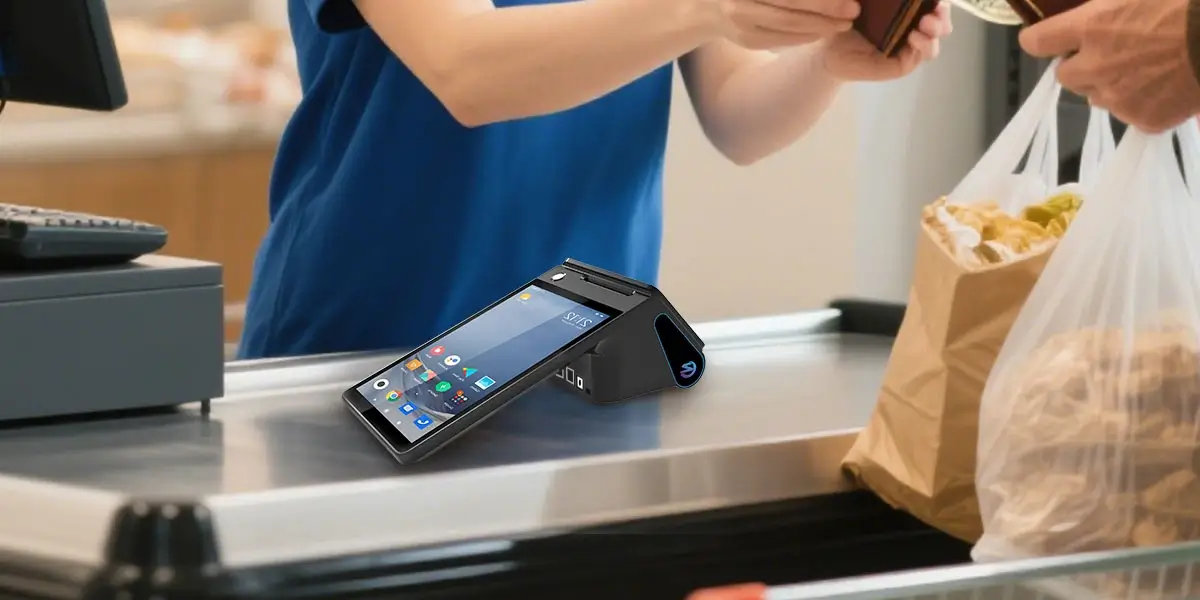
POS security relies on multiple combined technologies rather than a single mechanism rather than a single mechanism. Below are the most essential layers.
E2EE ensures that card data is encrypted immediately at the moment of card tap, swipe, or insert—before it even enters the operating system.
This prevents attackers from capturing raw card data or “sniffing” the communication channel.
Tokenization replaces sensitive card numbers with randomized tokens. These tokens are useless if intercepted, because they cannot be reverse-engineered.
Visa reports that:Tokenization can reduce payment fraud by up to 90%.
POS manufacturers like ZCS integrate tokenization as a foundational security layer in their Android POS and Mobile POS lineup.
EMV chips generate a unique cryptographic code for each transaction. Even if a hacker intercepts it once, it cannot be reused.
EMV drastically reduces counterfeit card fraud. According to EMVCo:Global EMV adoption has grown to over 93% of all card-present transactions.
PCI DSS applies to systems storing, transmitting, or processing card data. A compliant POS system must include:Firewalls and network segmentation,Strict access control,Encrypted data transmission,Continuous monitoring.
PCI PTS validates the physical and logical security of POS terminals, including:Secure key injection,Tamper-resistant hardware,Secure bootloader.
Many ZCS terminals follow global payment industry compliance, ensuring secure deployment across international markets.
Effective POS security goes far beyond software. Leading POS manufacturers implement hardware security elements to protect against tampering, cloning, and data theft.

Even the best POS hardware is unsafe without secure networking.
Modern POS devices allow secure remote updates to improve long-term protection.
ZCS supports over-the-air (OTA) security updates to protect merchants at scale.
POS security depends heavily on the POS manufacturer’s engineering standards, software integrity, and certification coverage.
Choosing poorly engineered devices increases risks of:Malware,Hidden backdoors,Weak encryption,High fraud liability.
ZCS is a global POS manufacturer providing:Secure Android POS terminals,Mobile POS,Contactless payment POS,PCI-compliant hardware & firmware,Long-term OTA updates,Enterprise-grade encryption.

Even with secure hardware, merchants must manage their infrastructure responsibly:Change default passwords,Enable multi-factor authentication,Keep devices updated,Segment payment networks,Use tokenization-enabled processors,Train employees on fraud patterns.
POS security will increasingly rely on:AI-driven fraud detection,Cloud security governance,Unified payment tokenization,Secure biometric authentication,Advanced hardware cryptography,Real-time risk scoring models,POS security will shift from reactive to predictive—stopping threats before they occur.
Modern POS devices protect payment data through encryption, tokenization, hardware security, compliance certifications, fraud detection, and secure cloud frameworks.
With increasing cyber threats, merchants must work with trusted POS manufacturers like ZCS to ensure safe payment acceptance.
Q1. Are POS terminals secure for storing customer card data?
No. Modern POS terminals do not store raw card numbers. They rely on tokenization and E2EE, making intercepted data unreadable.
Q2. How does EMV protect POS payments from fraud?
EMV chips generate a unique cryptographic code for each transaction. This prevents cloning and replay attacks.
Q3. What security certifications should a POS device have?
At minimum: PCI DSS, PCI PTS, EMV L1/L2 certifications.
Q4. Can POS devices be hacked?
Yes, but well-designed POS with encryption, secure boot, and firewalls minimize risks.
Q5. How do POS manufacturers like ZCS secure mobile POS systems?
Through encryption, TLS transmission, tokenization, secure OS architecture, and remote patch updates.

01.What Are the Key Differences Between Android POS and Windows POS?
02.How to Choose a POS Manufacturer with Open API Support?
03.How Android POS Systems Enable Rapid Multi-Payment Expansion?
04.Are Mobile Food Trucks Ready for Advanced POS Automation? A Complete Q&A Guide
05.How Can Multi-Language, Multi-Currency POS Systems Help Merchants Expand Globally?






 Home
Home  Omnichannel POS Architecture: Retail, Food Service & Subscription Models
