
2026-11-11 Author : ZCS
Biometric payment privacy begins before a customer looks at a camera or places a hand over a sensor. The merchant must first understand what data will be collected, why it is needed, which companies can handle it and what happens when the customer stops using the service. Our broader palm biometric identity guide explains how biometric recognition fits into an identity system. This article focuses on the legal and operational checks that Japanese merchants should make under the Act on the Protection of Personal Information, commonly called the APPI.
Under Japan’s privacy framework, a biometric payment can create several connected records: a source image or sensor sample, a biometric feature code, a customer or member ID, a payment-account link, match logs and transaction records. Each record may have a different owner, purpose, retention period and disclosure route. The practical task is therefore not simply to ask whether “biometric data” is protected. It is to map the complete data flow and apply the correct rule at each handoff.
This article is a general merchant checklist, not legal advice for a specific deployment. A merchant should obtain Japanese legal advice when its roles, overseas vendors or planned secondary uses are unclear.
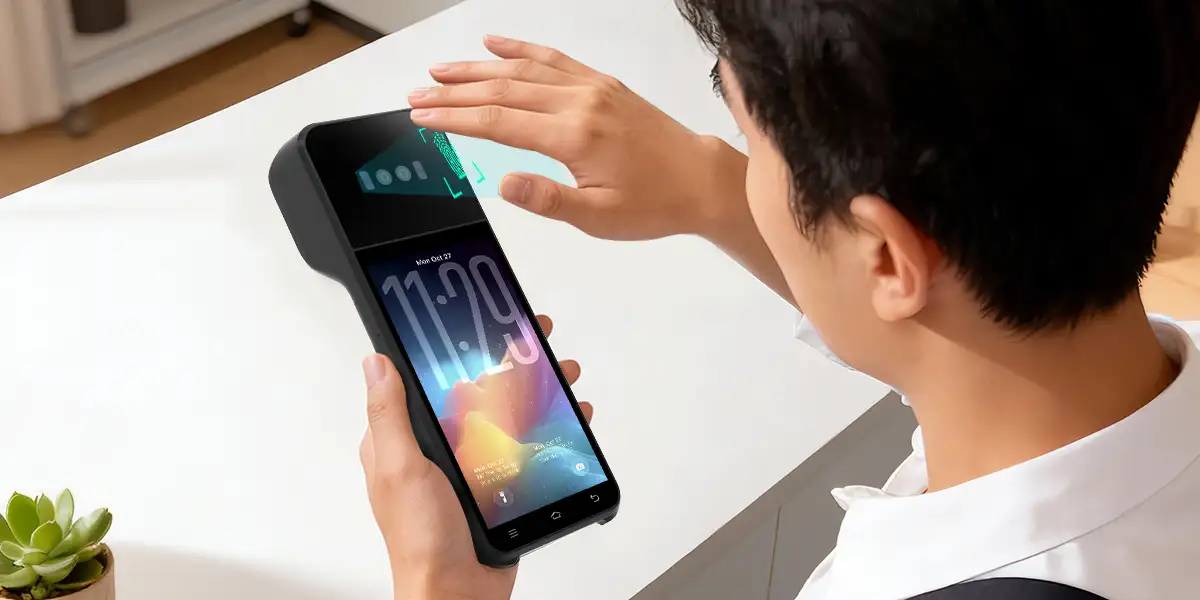
Biometric data used to identify a customer can be personal information even when the system does not retain an ordinary photograph. Japan’s Personal Information Protection Commission, or PPC, lists codes derived from facial appearance, iris patterns, voiceprints, gait, finger veins, fingerprints and palmprints among the examples that may qualify as individual identification codes when they are sufficient to identify a specific person.
The legal category can change as data moves through the system:
| Data object | Why it matters | Merchant question |
|---|---|---|
| Enrollment photo or sensor sample | It may identify the customer directly or when combined with account information | Is the source sample retained after the reference is created? |
| Biometric feature code or template | It may itself be an individual identification code | Can it identify or authenticate one person, and who can use it? |
| Customer-to-template mapping | It connects the biometric reference to an account or member | Which party controls the mapping and can change it? |
| Payment-account link | It tells the system which funding relationship to request after a match | Does the biometric provider see the card or wallet reference? |
| Match log | It may reveal when and where a person attempted to pay | Is it needed for support, security or analytics, and for how long? |
| Transaction record | It proves the sale, amount and payment result | Can it be kept without retaining the biometric reference? |
When these records are organized so that a person can be searched, they may form a personal information database and the records may be personal data. If the merchant has authority to disclose, correct or stop use of retained records, additional rules for retained personal data may also apply.
Biometric information is not automatically “special care-required personal information” merely because it comes from a body. However, a particular record may contain or reveal health, disability or other specially protected information. Merchants should classify the actual fields collected instead of assuming that every biometric record has the same legal status.
For a technical explanation of source images, templates and protection methods, see our separate guide on palm-vein data security. The present article does not repeat its encryption and storage discussion; it addresses why the data is collected, who handles it and when it should be removed.
The PPC’s consolidated APPI Q&A is dated October 30, 2026, but that date should not be presented as a new biometric-payment rule. The PPC’s change notice says the October update added two questions about the identifiability of genomic data. It did not announce a new consent standard for face, palm or finger-vein payments.
The date still matters because merchants should work from current guidance. The updated APPI Q&A contains relevant explanations about facial-feature camera systems, individual identification codes, use purposes, cloud services and overseas processing. The correct freshness claim is that the consolidated guidance was current as of October 30—not that biometric payments suddenly became subject to a new law on that day.
This distinction protects merchants from two opposite mistakes. One is treating old privacy notices as sufficient without checking current guidance. The other is creating a false compliance deadline based on an update that addressed a different kind of data.
The use purpose should be specific enough for a customer to understand what the merchant will do with the biometric information. “For identity verification at checkout” is clearer than “for improving our services.” If the same enrollment will also support loyalty recognition, age checks, store access, fraud investigation or customer analytics, those purposes should be evaluated and explained separately.
The PPC’s general APPI guidelines explain that a purpose should be specified so a person can reasonably predict how their personal information will be used. When a business acquires personal information directly from the person through a written or electronic form, the use purpose generally needs to be shown in advance, subject to statutory exceptions. A biometric enrollment screen is therefore not just a user-interface step; it is a key compliance point.
A practical enrollment notice should identify:
Signage at the store entrance or payment lane can alert customers that biometric recognition is in use, but a short sign cannot carry every detail. A layered approach works better: a concise notice at the point of capture, plus a link or QR code to the full policy and request procedure.
Japan’s APPI does not support a simple rule that every collection of ordinary biometric data always requires explicit consent. The answer depends on the data category, how it is acquired, the stated purpose and whether it is later provided to another party or transferred to a foreign third party.
That legal distinction should not be used to design a forced enrollment. In practice, payment enrollment should be a clear, voluntary choice because the customer is creating a reusable identity-to-payment relationship. A normal card, QR code, cash or other supported route should remain available where feasible. A customer should also be able to stop biometric payment without losing access to an unrelated account or service.
The merchant should avoid a bundled checkbox that silently combines payment authentication, marketing analytics and access control. Separate choices are easier for customers to understand and easier for the business to defend if one purpose later changes.
The need for a clear alternative becomes even stronger when the user has a dependent relationship with the operator—for example, in an employee cafeteria, school, residential facility or benefit program. In those settings, the merchant should examine whether refusal creates a practical disadvantage even if the screen technically offers a “decline” button.
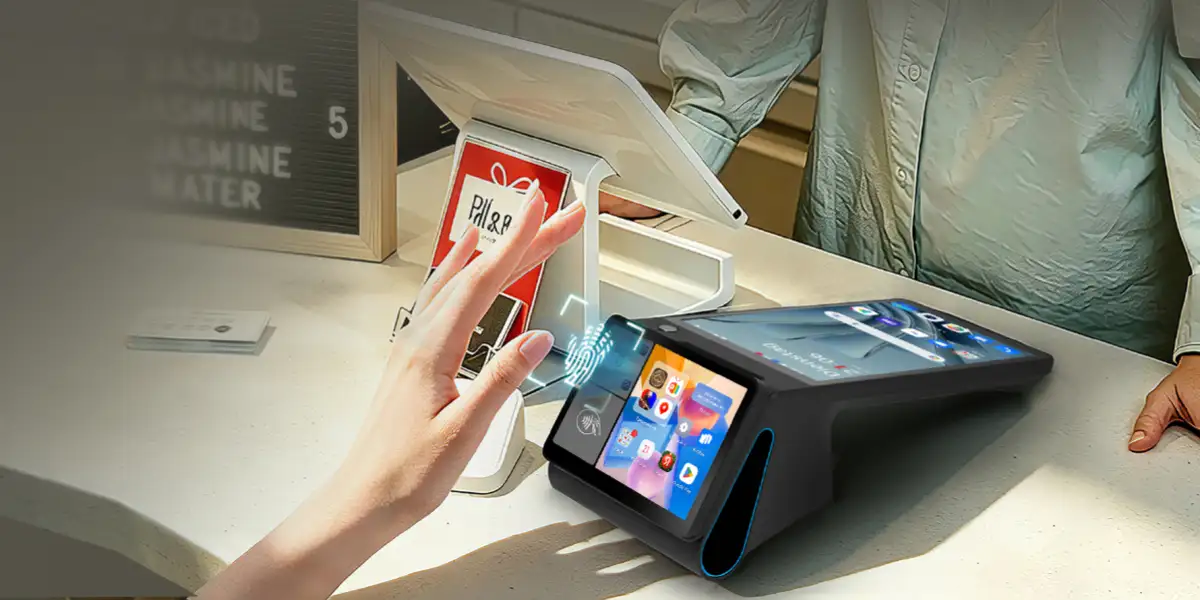
The merchant should draw a role map before signing the biometric or payment contract. A complete checkout may involve the merchant, the biometric platform, the POS integrator, a cloud host, a payment processor, an acquirer and one or more support subcontractors. They do not all need the same data.
| Party | Data it may need | Data it may not need |
|---|---|---|
| Merchant | Enrollment status, customer account link, payment result and support record | Raw card credentials or vendor-wide biometric database access |
| Biometric provider | Enrollment reference, fresh sample and match result | Full basket details or card-account data unless the design requires it |
| POS provider or integrator | Order amount, selected tender and final result | Reusable biometric reference if matching occurs elsewhere |
| Payment processor or acquirer | Payment credential or token, amount and transaction references | Face, palm or vein data when it is not needed for payment processing |
| Cloud or support provider | Only the data and access necessary to operate the assigned service | Independent reuse for analytics, model training or other customers |
This separation resembles the payment boundary explained in our Tencent palm payment workflow: biometric matching can retrieve an enrolled payment relationship, while the payment network still decides whether the transaction is approved. A merchant’s privacy map should keep those two paths distinct even if the customer experiences them as one gesture.
The merchant remains responsible for understanding its own use of personal data. Outsourcing hosting or recognition does not outsource the need to specify purposes, choose appropriate vendors, supervise processing and respond to customers.
A service provider that processes data only on the merchant’s instructions and within the necessary scope of the stated purpose may be treated as an outsourced contractor rather than a separate third-party recipient. In that case, the merchant still needs appropriate vendor selection, contract controls and supervision.
The conclusion can change if the vendor independently decides to reuse biometric records, combine them across merchants, train a general model, market to the users or build its own identity service. Those activities may go beyond outsourced processing and may require a different legal basis, additional notice or prior consent for third-party provision.
Three arrangements should not be mixed together:
The PPC’s third-party provision guidelines also address confirmation and recordkeeping duties. Merchants should record the actual transfer, recipient and legal route where those duties apply. A contract heading that says “processor” is not enough if product settings or operational behavior permit independent reuse.
Sending a biometric record from a Japanese store to a cloud service does not by itself prove that data was transferred to a foreign third party. The merchant needs to establish where the service is hosted, which legal entity receives the data, who can access it, where support staff work and which subprocessors or backup locations are involved.
A server in Japan does not end the analysis. If an overseas vendor’s personnel can access customer records for administration, troubleshooting or security work, the data may be handled in a foreign country. Conversely, a cloud provider may supply infrastructure without handling the personal data in a way that counts as third-party provision, depending on the service design and access controls.
For a foreign third-party transfer, the APPI generally requires prior consent after providing prescribed information about the foreign country’s privacy system and the recipient’s safeguards, unless an applicable exception or recognized equivalent arrangement is used. The PPC’s foreign third-party transfer guidelines should be checked against the exact data flow rather than the vendor’s headquarters alone.
Before launch, the merchant should document this route:
`Sensor or camera → POS or enrollment app → biometric service → identity mapping → match log → support tools → backups`
For every arrow, ask which company receives the data, in which country, for what purpose and under which contract. Also ask whether remote administrators can export records, whether logs contain customer identifiers, and whether a subprocessor can move data to another region without approval.
There is no single APPI retention period that applies to every biometric payment deployment. The merchant should retain personal data only while it remains necessary for the disclosed purpose and should define what happens when that purpose ends.
A useful schedule is event-based:
| Record | Possible deletion trigger to define | Operational question |
|---|---|---|
| Failed or abandoned enrollment sample | Enrollment is cancelled or times out | Was any image or partial template written to logs? |
| Active biometric reference | Customer closes the account, withdraws or becomes inactive under the policy | Can the payment link be disabled immediately? |
| Customer-to-template mapping | Enrollment ends or identity relationship changes | Is deletion synchronized across merchant and vendor systems? |
| Match and support logs | Support, security or dispute window expires | Can logs be kept without a reusable biometric reference? |
| Backups | Backup cycle expires after production deletion | Will a restored backup re-create a deleted enrollment? |
| Transaction and accounting record | Separate legal or business retention period ends | Can the sale record remain without keeping the biometric template? |
Payment records and biometric references should not share a retention period merely because they were created by the same checkout. A merchant may need transaction evidence for accounting, refunds or chargebacks after the customer’s biometric enrollment has been deleted. The architecture should allow those records to be separated.
Deletion also needs a verification step. The merchant should be able to confirm removal from the active biometric database, identity mapping, support exports and vendor systems, while documenting when backup copies will expire.
A customer should not have to identify the correct technology vendor before asking what happened to their biometric enrollment. The merchant-facing policy should provide a clear contact route and explain which organization handles requests for disclosure, correction, suspension of use or deletion where the APPI grants those rights.
The support team needs enough information to distinguish several requests:
The merchant should test this process before launch. A deletion promise that customer support cannot send to the biometric vendor is not an operational control. The same applies to a privacy notice that says customers can opt out while the store has no alternative payment procedure.
Biometric privacy and payment security overlap, but neither replaces the other. Payment controls protect card or wallet credentials, transaction messages and terminal behavior. Privacy controls address collection purposes, access, reuse, disclosure, retention and individual rights for biometric records.
Our guide to contactless POS security explains the payment-side standards and responsibilities. A biometric project should review that payment path separately from the identity path, then focus on the mapping service that connects a successful biometric match to a payment credential or token.
At minimum, the merchant should restrict staff access, keep audit records, prepare an incident-response route and confirm which party will assess and report a personal-data leak. The exact security measures depend on the data and risk. This article intentionally does not turn those controls into an encryption tutorial; the legal purpose and party map must be correct even when the technical controls are strong.
A merchant should be able to answer all of the following before collecting the first enrollment:
If the answers depend on undocumented vendor behavior, the deployment is not ready. The merchant should obtain the data-flow diagram, subprocessor list, access model, deletion procedure and transfer terms before accepting a general statement such as “data is stored securely.”

It can be. A code derived from a face, iris, voice, gait, finger vein, fingerprint or palmprint may qualify as an individual identification code when it can identify a specific person. Replacing a source image with a template does not automatically take the record outside the APPI.
Not solely because the data is biometric. The requirement depends on the data category, acquisition method, purpose, third-party provision and overseas transfer. Merchants should still make enrollment voluntary and clearly explain the identity-to-payment relationship.
No. A vendor acting only under the merchant’s instructions may be an outsourced contractor, while independent reuse may create a third-party relationship. The actual service behavior and contract determine the analysis.
It may be. Overseas support or administrative access can mean the data is handled in a foreign country. Merchants should check people, entities, remote access and subprocessors, not only the server region.
The APPI does not set one universal period for all biometric payments. The merchant should define a necessary, purpose-based schedule for enrollment samples, active references, mappings, logs and backups, and delete data when it is no longer needed.
Not silently. The merchant should determine whether the new use fits the disclosed purpose and applicable APPI limits. A materially different purpose may require a revised notice, a new customer choice or another legal step.
No such rule was identified in the PPC update notice. The consolidated APPI Q&A was updated on that date, but the stated additions concerned genomic data. Merchants should use the current Q&A without describing the update as a new face- or palm-payment law.
Japan’s biometric payment privacy rules are best managed as a data-flow problem. Merchants must know what is collected, which purpose justifies it, who can use it, whether anyone overseas can access it, how long each record remains and how the customer leaves the service.
A secure sensor or certified payment terminal cannot answer those governance questions. Before launch, the merchant should make the enrollment notice, vendor roles, foreign access, retention schedule, customer requests and fallback payment route work as one operating process. That is the practical meaning of applying Japan’s APPI to biometric payments.






 Home
 How NEC and SBPS Connect Facial Recognition to PayCAS?

