
2026-10-12 Author : ZCS
The best Android POS terminal manufacturer is not necessarily the supplier with the longest feature list or the lowest sample price. It is the supplier that can turn a specification into a controlled product lifecycle: documented components, reproducible firmware, validated peripherals, model-specific approvals, traceable production, and accountable field support. Buyers still defining that stack should first review this full-stack Android POS guide.
An Android POS terminal manufacturer converts a hardware specification into a controlled product lifecycle covering Android builds, peripherals, certification, production, and support. Buyers encounter Integrated Payment POS providers, Uncertified White-Label POS vendors, and Pure-Hardware ODM/OEM POS manufacturers; each model assigns software, compliance, and field responsibility differently.
That distinction matters because a polished sample proves very little about repeatability. A factory may demonstrate NFC without payment approval, install Google apps without documenting GMS status, or provide an SDK without a version policy. The following 12-question checklist replaces those claims with evidence a procurement, engineering, quality, and compliance team can verify before approving mass production.
The practical answer to how to choose a POS manufacturer is to verify the product configuration and the organization responsible for it. Search phrases such as Android POS manufacturer China describe a sourcing market, not a proven capability. Use the sections below as a POS terminal factory audit checklist, whether the candidate is a factory, brand owner, or contract-manufacturing network.

Supplier comparisons fail when each bidder is quoting a different configuration. Before requesting samples, create a one-page user requirement specification, or URS, that fixes the commercial and technical baseline.
At minimum, define:
The URS should become an appendix to the request for quotation. Every exception should be stated against a numbered requirement. Without this baseline, a cheaper quote may simply omit GMS, a payment-certified configuration, a scanner engine, a charging cradle, or long-term firmware support.
The first question is not “Are you a factory?” It is “Which legal entity owns each part of this delivery?” A supplier may legitimately combine a brand owner, contract factory, export company, and payment-certification partner. The risk arises when those relationships are hidden or cannot be documented.
Ask for:
A product showroom, corporate video, or generic factory photograph is not manufacturing evidence. During a remote audit, select a work order and ask the supplier to follow its material lot, assembly record, test station, serial number, and finished-goods status in real time.
Buyers planning a regional sourcing program can use this China POS factory sourcing guide for the broader commercial due-diligence process. The checklist in this article focuses on whether the specific terminal can be reproduced and supported.
Pause the project if: the contract entity cannot explain its relationship with the factory, the supplier refuses a reasonable live audit, or the product model appears on several unrelated factories’ catalogs with no disclosed design owner.
Certification should be managed as a product-configuration matrix, not a folder of logos. For every approval, record the scheme, approval number, applicant, product name, exact model, hardware version, firmware version, laboratory, issue date, expiry date, target market, and relevant limitations.
A valid company certificate establishes only the scope stated on that certificate. It does not automatically approve every terminal sold by the company. Likewise, CE or FCC documentation does not establish PCI PTS or EMV approval, and an approval held by one product-family member does not automatically cover a different reader, secure component, PCB, or firmware build.
For payment hardware, the commercial name alone is insufficient. PCI SSC advises purchasers to compare the device model, hardware number, firmware, and approval information with its official listing. Its device-purchasing bulletin also explains why device changes need assessment rather than assumption.
Ask the supplier to populate a table like this:
| Required field | Evidence to request | Buyer check |
|---|---|---|
| Approval scheme | Certificate, listing, or letter of approval | Is this the required scheme for the target market? |
| Exact identity | Model, hardware, and firmware identifiers | Do they match the quotation and sample labels? |
| Applicant | Legal entity named in the record | Is its relationship with the supplier documented? |
| Validity | Issue, expiry, and renewal status | Will approval remain usable at launch? |
| Configuration | Reader, PIN, wireless, and software scope | Are optional components actually included? |
| Change control | Assessment or recertification process | What happens after a component or firmware change? |
EMV Level 1 evaluates the card-device interface, while Level 2 concerns the payment kernel. Neither phrase should be used as a generic synonym for a deployment-ready payment solution. EMVCo’s PCD Level 1 approval process illustrates that testing and a formal letter of approval apply to a defined device and approval scope.
Buyers who need a practical explanation of where these controls sit can review the relationship among PCI and EMV approval layers. The internal reference is educational; the supplier still needs to provide independently verifiable records for the exact unit being purchased.
Pause the project if: the supplier provides only company-level certificates, removes identifying pages from reports, cannot explain EMV L1 versus L2, or asks the buyer to accept an approval for a “similar” model.
An Android version on a specification sheet describes one release point. A manufacturer policy should describe what happens afterward: who owns the board support package, how security issues are assessed, which product variants receive an update, how the build is signed, and how a failed release is recovered.
Request a written policy covering:
Ask for a sanitized version history covering the previous 12 months and select one resolved issue for demonstration. The manufacturer should be able to show how the issue entered its tracking system, which build corrected it, which models received the update, how testing was recorded, and how customers were notified.
Application distribution must be part of the same discussion. Android Enterprise guidance published in October 2026 describes developer-verification considerations effective September 30, 2026 for private apps on certain unmanaged, Play Protect-certified devices, while managed work-profile and fully managed deployments follow different rules. A buyer should therefore decide the enrollment and distribution model before approving firmware, not after production.
Pause the project if: the update promise is verbal, release notes do not exist, the supplier cannot reproduce an older approved build, or the only recovery method is returning every device to the factory.
Android terminology needs precise answers. AOSP is the open-source platform. Android compatibility is demonstrated against the Compatibility Definition Document and test suites. GMS is a licensed Google application and service package. Play Protect certification indicates that Google has tested the device for compatibility and related security requirements. Android Enterprise Recommended is a separate program with additional requirements for eligible device categories.
GMS availability should be verified by exact SKU, market, and shipping build. A Google Play icon, an installed APK, or a login demonstration does not establish that the production configuration is licensed or Play Protect certified.
Google states that an Android-compatible device must comply with the CDD and pass the CTS; compatibility can then make the device eligible to seek GMS licensing. The official Android compatibility overview is therefore a useful reference when a supplier treats CTS, GMS, and Play Protect as interchangeable labels.
Request:
Google also provides a user-facing method for checking whether a device is Play Protect certified. Use it as one check, then retain the supplier’s configuration evidence in the technical file.
Pause the project if: the sample and mass-production builds differ without a new compatibility review, the supplier proves GMS with screenshots only, or Google services have been sideloaded onto an AOSP device.
An OEM Android POS terminal supplier should provide more than a demonstration application. The engineering team needs a versioned interface contract for every peripheral and system service the production application will use.
Create an SDK manifest containing:
| Interface | Evidence to request | Acceptance test |
|---|---|---|
| Thermal printer | API reference, status codes, sample project | Print text, bitmap, barcode, QR code, and paper-out recovery |
| Barcode scanner | Supported symbologies and trigger API | Read damaged, reflective, curved, and low-contrast codes |
| NFC | Supported modes, protocols, and permissions | Read each approved credential type repeatedly |
| MSR and ICC | Interface scope and security boundary | Verify intended non-payment or approved payment workflow |
| Camera | Resolution, focus, preview, and permission behavior | Capture in real lighting and kiosk mode |
| Biometrics | Module identity, template flow, and SDK policy | Enroll, match, delete, and recover from errors |
| Customer display | Layout and transport APIs | Test text, images, and app lifecycle changes |
| Serial, USB, GPIO | Pinout, voltage, protocol, and examples | Connect the production peripheral and restart repeatedly |
The package should include API documentation, sample source code, a test application, error definitions, supported Android versions, an SDK-to-firmware compatibility matrix, release notes, migration guidance, and a deprecation policy. The supplier should also explain whether the interface is an Android service, AAR, JAR, native library, broadcast, or vendor-specific framework modification.
Use the process in this open API manufacturer guide to test documentation and integration support in more depth. For this audit, require the supplier to compile its sample from a clean environment and reproduce at least one exception-and-recovery path live.
Pause the project if: the “SDK” is only an APK, sample code cannot compile, documentation has no version number, or a firmware update can change APIs without notice.
A sample should answer a written set of questions. Before it ships, assign a sample ID and record its model, PCB revision, BOM revision, firmware build, SDK version, accessories, radio configuration, certificates represented, and deviations from the proposed production unit.
The acceptance plan should use real workloads:
Once approved, identify a golden sample or an equally controlled golden configuration. “Sample approved” is too vague if production can quietly use a different display, battery, memory package, scanner, wireless module, or firmware branch.
Pause the project if: the manufacturer cannot provide configuration identifiers, describes the sample as “for reference only,” or refuses to make production equivalence a purchase-order requirement.
Quality claims should trace one unit from incoming materials through shipment. Ask the factory to choose a serial number from a recent order and show the corresponding material lots, assembly record, operator or station data, functional-test result, aging record, inspection result, repair history, and shipment batch.
Review these controls:
Do not accept an unsupported claim such as “industrial grade” as a test result. Drop, electrostatic-discharge, ingress, temperature, battery, vibration, and radio performance claims need the applicable test method, sample configuration, limits, date, and report outcome.
This article on POS hardware quality controls explains the manufacturing stages in more detail. During the supplier audit, concentrate on whether records are current, attributable to the quoted product, and connected to corrective action.
Pause the project if: reports omit the tested model, critical stations rely on unversioned software, repaired devices reenter production without traceability, or the factory cannot show a completed corrective-action example.
Long deployments rarely use an unchanged supply chain. Displays, memory, wireless modules, cameras, batteries, printer mechanisms, and chipsets may reach end of life or become constrained. The relevant capability is not promising “no changes”; it is controlling changes before they reach the customer.
Require a process that defines:
The purchase agreement should identify controlled components and state that “equivalent specification” is not blanket permission to substitute them. A display with the same diagonal size can behave differently in brightness, touch firmware, electromagnetic emissions, power use, and mechanical fit.
Pause the project if: the supplier will not disclose BOM revisions, cannot map serial numbers to important components, or considers certification impact only after a substitution has shipped.
Warranty replacement alone is not a fleet-maintenance plan. Ask which parts can be stocked, replaced locally, repaired only at a depot, or replaced only as a complete terminal. The policy should cover batteries, power supplies, charging docks, cables, screens, touch panels, printer heads, platen rollers, paper doors, scanners, and mainboards as applicable.
Document:
Ask the supplier to show a previous EOL notice and a closed RMA case with customer information removed. These samples reveal whether the written process is used in practice.
Pause the project if: parts are referenced only by informal descriptions, EOL notification is discretionary, or the supplier cannot state how long the approved Android build and SDK will remain retrievable.
MOQ should be broken down by the source of the constraint. A stock color with standard packaging may have a different minimum from a custom housing, printed logo, new cable, regional power supply, memory configuration, cellular module, private mold, or new PCB.
The commercial schedule should distinguish:
The phrase “free customization” often hides a constraint elsewhere in unit price, volume, tooling ownership, or schedule. The quotation should state which deliverables become the buyer’s property and which remain licensed manufacturer assets.
Pause the project if: engineering scope is not attached to the NRE quote, tooling ownership is undefined, or software-use rights end when the commercial relationship ends.
A single lead-time number conceals several schedules. Separate design review, sample preparation, engineering validation, tooling, certification, pilot production, long-lead material procurement, mass production, outgoing inspection, and shipping readiness.
Ask the manufacturer to support its timeline with:
Factory-wide annual capacity is not enough. A product may be constrained by one calibration fixture, aging rack, secure-injection process, printer supplier, or regional radio module. Ask which step is the bottleneck for the quoted configuration.
Pause the project if: sample, pilot, and mass-production dates are treated as interchangeable, the lead time assumes buyer approval with no review period, or the supplier cannot name the schedule’s critical dependency.
“Fast response” is not a service level. The agreement should define severity levels, service hours, communication channels, first-response targets, containment or workaround targets, root-cause-analysis timing, firmware-fix objectives, escalation owners, RMA handling, and reporting frequency.
A practical SLA matrix identifies:
Test the process during the pilot. Open a realistic issue, supply the agreed diagnostic package, and record how the manufacturer classifies, escalates, investigates, communicates, and closes it.
Pause the project if: sales chat is the only support channel, no engineering escalation owner exists, or the warranty promises replacement but says nothing about a defect affecting the whole installed fleet.
The following signals do not always prove that a supplier is unsuitable, but each one requires a documented resolution before deposit or mass-production approval.
| Red flag | Why it matters | Required resolution |
|---|---|---|
| Only company-level certificates are provided | They may not cover the product | Obtain model-specific records and verify their scope |
| The supplier cannot explain EMV L1 and L2 | Payment claims may be copied or misunderstood | Review approval numbers, kernels, and responsible partners |
| GMS is demonstrated with screenshots | Apps may have been sideloaded | Verify SKU, build, CTS evidence, and Play Protect status |
| The SDK is only an APK | The buyer cannot integrate or maintain it | Obtain versioned documentation, source examples, and libraries |
| No firmware rollback exists | A failed update can disable a fleet | Demonstrate signed recovery and retain approved packages |
| Sample identifiers are missing | Production equivalence cannot be enforced | Record BOM, PCB, firmware, SDK, and option versions |
| There is no PCN process | Substitutions can bypass buyer approval | Add notice, assessment, sample, and approval rules |
| Test reports omit model or method | Performance claims are not attributable | Obtain complete, configuration-specific evidence |
| Capacity is stated only at company level | The quoted product may have a bottleneck | Verify line, station, material, and schedule capacity |
| SLA language says only “timely support” | Response and correction cannot be enforced | Add severity, time, owner, escalation, and remedy terms |
A weighted score can make a weak mandatory control look acceptable. Keep certification validity, software security, configuration traceability, and legal accountability as pass-or-fail gates. Score commercial preferences only after those gates pass.
| Audit question | Minimum evidence | Buyer owner | Validity reference | Result |
|---|---|---|---|---|
| 1. Factory identity | Licenses, entity map, and live or onsite audit | Procurement | Audit date | Pass/Fail |
| 2. Product approvals | Model and configuration certificate matrix | Compliance | Approval expiry | Pass/Fail |
| 3. Android maintenance | Policy, build history, OTA, and recovery proof | IT/Security | Build and review date | Pass/Fail |
| 4. GMS and compatibility | CTS evidence and SKU/build verification | IT/Security | Build fingerprint | Pass/Fail |
| 5. SDK completeness | Manifest, samples, documents, and version matrix | Engineering | SDK version | Pass/Fail |
| 6. Sample validation | Acceptance record and golden configuration | Engineering | Sample ID | Pass/Fail |
| 7. Quality controls | Traceability, test, calibration, and CAPA records | Quality | Audit date | Pass/Fail |
| 8. Change control | BOM revisions, PCN, and qualification process | Quality | Procedure revision | Pass/Fail |
| 9. Spares and EOL | Parts plan, repair terms, and EOL policy | Service | Contract term | Pass/Fail |
| 10. MOQ and ownership | MOQ breakdown, NRE, tooling, and IP schedule | Procurement/Legal | Quotation date | Pass/Fail |
| 11. Capacity and lead time | Milestone, material, and bottleneck plan | Operations | Forecast period | Pass/Fail |
| 12. After-sales SLA | Severity, timing, escalation, and RMA matrix | Service | Contract term | Pass/Fail |
For each “Pass,” store the evidence file, document owner, review date, expiry date, and applicable product configuration. A green cell without retrievable evidence is still an unverified claim.
The audit result must be interpreted in the context of the chosen supply model. Different models are not automatically better or worse; they place responsibility in different organizations.
| Supply model | Best fit | Buyer advantage | Main diligence focus |
|---|---|---|---|
| Integrated Payment POS | Merchants wanting coordinated hardware, payments, and software | Fewer commercial and technical interfaces | Country, processor, application, fee, and support constraints |
| Uncertified White-Label POS | Controlled non-payment tasks or low-risk prototypes | Low entry cost and broad catalog choice | Design ownership, firmware maintenance, evidence, and lifecycle risk |
| Pure-Hardware ODM/OEM POS | Software vendors, distributors, and enterprises controlling more of the solution | Branding, peripheral, software-image, and configuration flexibility | Integration ownership, certification selection, MDM, change control, and field support |
ZCS represents the third model: a pure-hardware ODM/OEM POS supplier serving buyers that bring their own applications, channel relationships, or payment partners. A configurable device such as the Z101 OEM/ODM terminal can be a useful engineering starting point, but buyers should still apply the same evidence requirements to the final SKU, build, peripherals, and market.
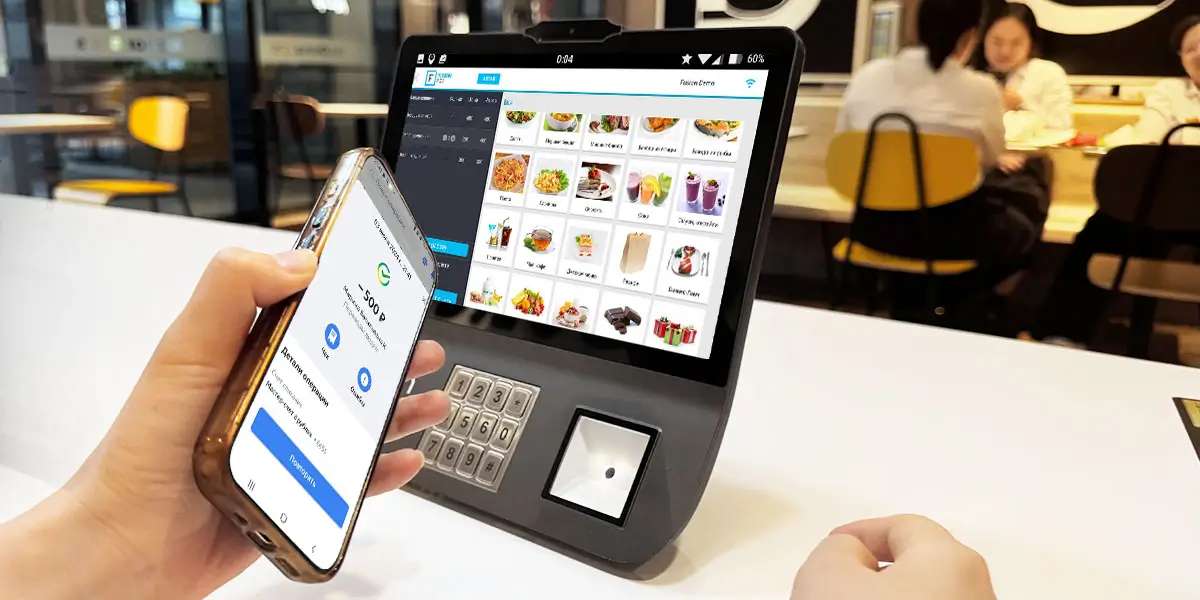
This is where the manufacturer checklist becomes commercially useful. A buyer does not need every supplier to own the entire solution. The buyer does need an explicit responsibility map showing who owns Android maintenance, payment approval, application integration, device management, component changes, repair, and end-of-life support.

Compare the contracting entity with the business license, manufacturing address, audit records, production work orders, employee roles, and serial-number traceability. If manufacturing is outsourced, require the brand owner to disclose the factory relationship and identify which party controls engineering changes, quality release, and warranty.
Request a product specification, configuration-specific certificate matrix, BOM revision, firmware and SDK version matrix, Android update policy, GMS and compatibility evidence where applicable, sample acceptance record, quality plan, PCN procedure, spare-parts and EOL policy, production schedule, and after-sales SLA.
Match the quoted device’s model, hardware version, firmware, and approval number with the appropriate official listing or letter of approval. Then confirm what the approval covers. PCI PTS, EMV Level 1, EMV Level 2, a payment application, and acquirer acceptance are different layers.
No. Android compatibility, CTS results, GMS licensing, Play Protect certification, and Android Enterprise Recommended describe related but distinct requirements. Ask for evidence tied to the exact SKU, target market, and shipping build rather than accepting “supports Google” as a complete answer.
Test the actual application, every required peripheral, network transitions, charging and battery behavior, sustained load, sleep and wake, kiosk or MDM enrollment, OTA update, rollback or recovery, factory reset, reenrollment, and the longest realistic transaction or print workflow. Record all hardware and software versions.
There is no universal figure. MOQ depends on whether the order uses a stock product or changes color, logo, packaging, memory, radios, peripherals, PCB, tooling, or certification. Ask the supplier to identify the specific material or process that creates each minimum.
A product change notification, or PCN, tells the buyer that a component, design, process, factory, firmware, or other controlled attribute will change. A useful PCN identifies affected products, reason, schedule, risk, validation evidence, certification impact, last-order options, and the approval required from the buyer.
It should define issue severity, support hours, first-response and containment targets, permanent-correction expectations, escalation owners, diagnostic requirements, firmware responsibilities, RMA rules, systemic-failure handling, and service reporting. Test the SLA with a real pilot issue before committing to volume.
Choosing an Android POS manufacturer is a configuration-control decision before it is a price decision. The supplier must be able to connect the contract entity, factory, exact hardware, Android build, SDK, certifications, quality records, change process, spare parts, production schedule, and support obligations into one auditable delivery.
Complete the 12-question scorecard before comparing final prices. If a mandatory item fails, record the missing evidence, responsible owner, and closure date. Do not allow a discount, feature, or verbal assurance to compensate for an invalid approval, an uncontrolled firmware build, an untraceable BOM, or an undefined support obligation.
The objective is not to find a factory that claims to do everything. It is to select a smart POS terminal supplier whose evidence matches the exact product, market, software stack, and lifecycle your deployment requires.






 Home
Home  How to Choose a Handheld POS Terminal With a Built-In Printer in 2026
