
2025-12-29 Author : ZCS
Consumers today move between online stores, physical locations, mobile apps, self-service kiosks, delivery platforms, and subscription services — often within a single purchase journey. A POS system that handles only in-store transactions is no longer a viable foundation for this environment.
Omnichannel POS architecture is the technology framework that connects every one of these touchpoints through a single, real-time data layer. This guide explains how that architecture is structured, how data flows through it, and what hardware and integration capabilities retailers and food service operators need to build it reliably.
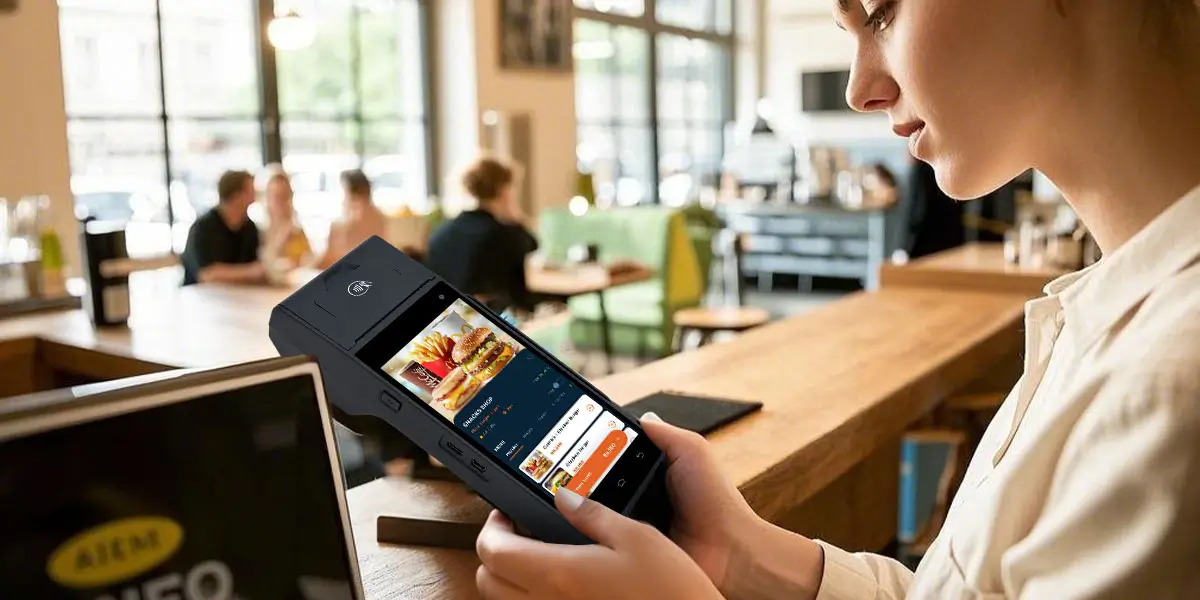
Omnichannel POS architecture is a unified technology framework that synchronizes transactions, inventory, payments, customer data, and order management across both online and offline channels in real time.
Instead of operating separate systems for the in-store POS, e-commerce platform, delivery integrations, and loyalty program, an omnichannel architecture connects all of these through a shared data layer. Every channel reads from and writes to the same source of truth.
Key characteristics of a properly implemented omnichannel POS system:
This architecture replaces fragmented, siloed operations with a connected infrastructure — the operational baseline for retail chains, supermarkets, multi-location restaurants, cloud kitchens, and convenience stores operating at scale.
These terms are often used interchangeably but describe different levels of integration — a distinction that matters when evaluating POS systems.
Omnichannel means providing consistent customer experiences across multiple channels. A retailer can be omnichannel while still running separate backend systems for inventory, loyalty, and e-commerce — as long as the customer experience feels consistent.
Unified commerce goes further: all systems operate from a single shared data model. There is no reconciliation between platforms because there is only one platform. Inventory, loyalty points, order history, and promotional rules are identical everywhere, in real time.
For retailers evaluating a unified commerce retail POS system, the practical question is whether the architecture truly eliminates backend silos or merely presents a unified front end over fragmented systems. The difference shows up in inventory accuracy during high-demand periods, loyalty redemption reliability, and the ability to support complex fulfillment models like BOPIS or subscription renewals.
All of these interfaces feed transaction data into the same unified commerce engine, ensuring that a sale on any channel immediately updates inventory, loyalty balances, and reporting.
The cloud layer is the synchronization hub for:
This layer enables food service operators to run hybrid cloud POS environments — where the cloud manages data centrally but each terminal can continue operating offline during connectivity interruptions.
Third-party integration happens at this layer. A modern omnichannel POS architecture requires:
The openness of this layer determines how flexibly a retailer can add, swap, or upgrade software components without replacing the entire POS infrastructure.
POS terminals operate at the edge of the architecture — processing transactions locally to ensure speed and resilience regardless of cloud connectivity status. Edge capabilities include:
Hardware built on open Android architecture gives operators and ISVs the flexibility to run custom applications and integrations directly on the terminal, without proprietary middleware constraints. ZCS Android POS terminals are designed for this edge computing role across retail and food service environments.
The omnichannel model generates unified data across all channels, enabling:
This centralized analytics pipeline is what makes omnichannel architecture operationally valuable beyond just customer experience — it gives operators the data foundation for demand-driven decisions.
One of the fastest-growing use cases for omnichannel POS architecture in food service is subscription and meal plan management — an area where legacy POS systems consistently fall short.
A restaurant or meal kit operation running subscription services needs its POS architecture to handle:
Recurring billing and renewal management
Subscription renewals trigger automatically based on billing cycle, updating customer entitlements in real time. The POS terminal recognizes subscription status at checkout without requiring manual lookup or staff intervention.
Meal plan redemption across channels
A customer with an active meal subscription should be able to redeem meals in-store, through a mobile app, or via a kiosk — with entitlement balances updating instantly across all channels. This requires the loyalty and subscription data to live in the same centralized layer as transaction data.
Flexible plan modification
Pause, upgrade, downgrade, and cancellation requests need to flow from any customer touchpoint (app, in-store terminal, website) into the same subscription management system, with immediate effect on the customer's POS-visible entitlements.
Integration with delivery platforms
For meal subscription operators using third-party delivery, the architecture must route subscription orders through the same order management system as walk-in and online orders — with inventory deducted from the correct location in real time.
Omnichannel POS systems that support meal subscription renewals do so by connecting the subscription billing engine to the cloud management layer via API, ensuring that every channel — POS terminal, mobile app, kiosk — has current visibility into each customer's subscription status and remaining entitlements.
Step 1: Customer initiates a transaction
A retail customer scans an item at a smart POS terminal. A restaurant customer places an order via self-service kiosk. A subscription customer triggers a meal plan renewal through a mobile app. Each event is captured at the edge device.
Step 2: Terminal processes locally
Item validation, price verification, order assembly, and payment initiation happen at the terminal. If connectivity is interrupted, the edge layer continues processing and queues sync events for when connection is restored.
Step 3: Cloud layer syncs across all channels
The completed transaction is recorded in the centralized order management system. Inventory is deducted from the correct location. Loyalty points are updated. Subscription entitlements are adjusted. Reporting dashboards reflect the new state immediately.
Step 4: Data distributed to connected systems
Transaction data flows to accounting software, ERP, WMS, CRM, and marketing platforms. Delivery orders are routed to kitchen display systems or fulfillment queues. Payment data is tokenized and sent to the payment gateway.
Buy Online, Pick Up In Store (BOPIS)
Customers check real-time stock availability online and reserve items for in-store pickup. The POS terminal confirms the reservation and updates inventory at the moment of pickup — no manual reconciliation required.
Endless Aisle
When a product is out of stock at a physical location, the cashier can locate available inventory at another branch or warehouse and place an order directly from the POS terminal. The customer leaves with a confirmed order rather than an empty-handed experience.
Unified Loyalty Across Touchpoints
Points earned from an online purchase are immediately available for redemption at any physical terminal. Promotional eligibility updates in real time based on the customer's unified transaction history, regardless of which channel generated each purchase.
Multi-Currency and Cross-Border Transactions
For retailers operating across markets, omnichannel POS architecture supports multi-currency pricing and payment routing — with exchange rates and tax rules managed centrally and applied consistently at every terminal.
Cloud Kitchen Order Integration
Orders from multiple delivery platforms (Uber Eats, DoorDash, Meituan, and others) flow into a single centralized order management dashboard. Kitchen staff see a unified queue regardless of order origin, and inventory deductions happen in real time across all channels.
Multi-Store Menu Synchronization
Restaurant chains update menus, pricing, and availability across all locations from a single management interface. Changes propagate instantly to every terminal, kiosk, and online ordering platform — eliminating the manual update cycles that cause pricing inconsistencies.
Cross-Channel Order Routing
Whether an order originates from a kiosk, QR code scan, mobile app, or delivery platform, it enters the same order management system and is routed to the appropriate preparation queue. This unification is essential for cloud kitchens and ghost restaurant operations handling high order volumes across multiple platforms simultaneously.
Meal Subscription Renewals
As covered in Section 4, subscription-based food service operations use the omnichannel architecture to manage renewal billing, entitlement redemption, and plan modifications across every customer touchpoint — with the POS terminal always reflecting current subscription status.
The success of omnichannel architecture depends on hardware that can operate reliably at the edge while maintaining seamless integration with the cloud and middleware layers.
Key hardware evaluation criteria:
| Criteria | Why It Matters |
|---|---|
| Open API and SDK support | Determines ISV integration flexibility without proprietary lock-in |
| Android platform | Enables custom application deployment and third-party software integration |
| Edge computing capability | Ensures offline resilience when cloud connectivity is interrupted |
| Peripheral compatibility | Supports barcode scanners, customer displays, printers, and payment modules |
| Multi-protocol payment support | Handles NFC, EMV, QR, and mobile wallet transactions across markets |
| Multi-store scalability | Terminal management system (TMS) supports centralized configuration across locations |
ZCS Android POS terminals are built for omnichannel deployment environments, with open platform architecture that supports direct SDK integration with inventory systems, loyalty platforms, delivery aggregators, and subscription management software. Available in desktop, handheld, and portable form factors, ZCS hardware covers the terminal requirements of both retail and food service omnichannel operations.

Omnichannel POS architecture is not a future investment — it is the current operational baseline for retailers and food service operators competing across multiple channels. Businesses running fragmented systems face compounding disadvantages: inventory inaccuracy, loyalty inconsistency, fulfillment failures, and the inability to support subscription or delivery models at scale.
The transition to a unified, API-driven, cloud-and-edge architecture requires the right software stack and hardware foundation. Getting the hardware selection right — open platform, reliable edge processing, strong peripheral support — determines whether the software integration succeeds in practice.
Q1. What is an omnichannel POS system?
A unified POS architecture that synchronizes transactions, inventory, payments, loyalty, and customer data across online and offline channels in real time — so every touchpoint operates from the same data source.
Q2. What is the difference between omnichannel POS and unified commerce?
Omnichannel POS provides consistent customer experiences across channels but may still use separate backend systems. Unified commerce goes further: all systems — POS, inventory, CRM, loyalty, and promotions — share a single data model, eliminating backend reconciliation entirely.
Q3. Can an omnichannel POS system support meal subscription renewals?
Yes. Omnichannel POS systems with subscription support connect recurring billing engines to the central cloud layer via API, giving every terminal and customer touchpoint real-time visibility into subscription status, entitlement balances, and renewal schedules.
Q4. What POS architecture works best for multi-location businesses?
A hybrid cloud architecture with local edge processing is the most reliable for chains. The cloud layer manages centralized data and configuration; edge terminals handle local transaction processing and maintain offline resilience.
Q5. How does omnichannel POS integrate with delivery platforms?
Through API middleware, delivery platform orders are ingested into the centralized order management system, inventory is deducted in real time, and kitchen or fulfillment queues are updated alongside in-store orders — without requiring separate management interfaces.
Related Posts
1. Grocery Store POS: Smarter Checkout & Inventory Guide
2. Why Convenience Stores Need a Smart POS Cash Register: ZCS Solutions for High-Volume Checkout
3. Is Your Gas Station POS System Actually Built for the Forecourt






 Home
Home  What Fiscal Compliance Requirements Must Public Transportation POS Meet? A Comprehensive Guide for 2026
