
2026-10-19 Author : ZCS
Aiello's latest integration connects guest conversations to hotel POS order creation. The announcement extends phone, voice and mobile interactions into food and beverage operations. For buyers evaluating restaurant POS hardware and workflows, the useful question is how a confirmed request becomes an order that staff can prepare, deliver and reconcile.
AI ordering POS integration needs a traceable path from conversation to execution. The implementation analysis below uses an illustrative room-service order to show the decisions between those points. The proposed architecture and tests are buyer recommendations, not descriptions of undocumented Aiello or Infrasys functionality.
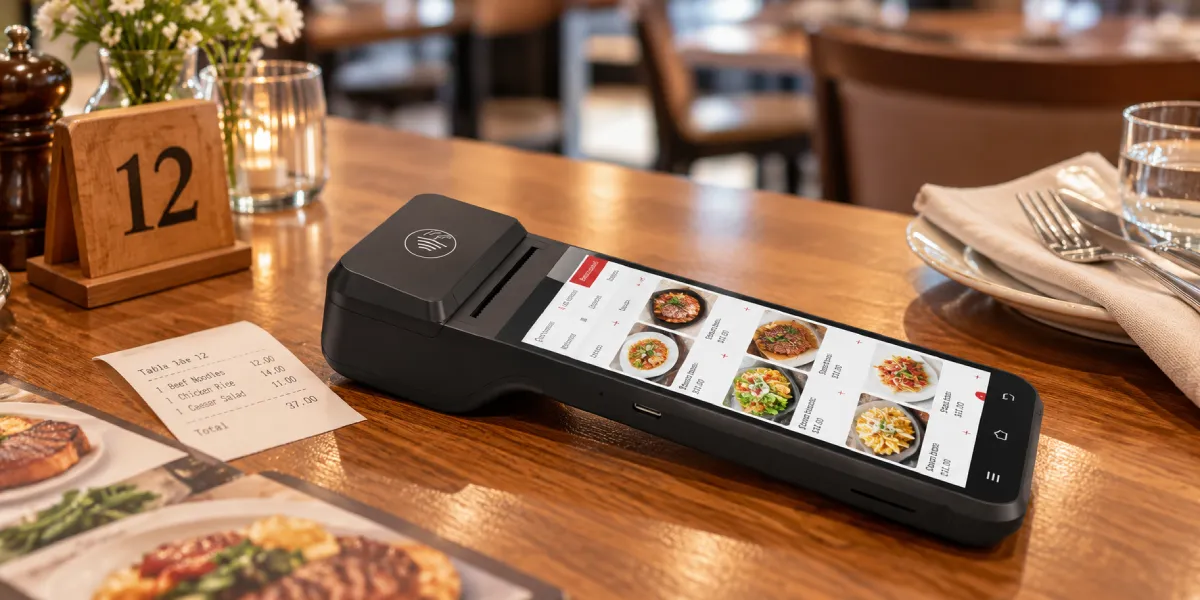
Aiello announced integration and certification of Call Agent, Aiello Voice Assistant and GuestWeb with Shiji Infrasys POS on October 13, 2026. Guests can use voice or text channels to explore dining options and place orders, with confirmed order information transmitted automatically to the POS.
The announcement leaves several implementation questions open. Aiello does not publish the menu-update mechanism, retry contract, cancellation rules or kitchen acknowledgment process in that release. Advanced service-charge, discount and bundle applications are described as subjects for further exploration according to hotel requirements. Buyers should establish the scope enabled at their property before estimating integration effort. These reporting boundaries follow the Aiello Infrasys integration announcement, published in October 2026.
| Publicly described capability | Evidence still needed for a specific project |
|---|---|
| Phone, voice and mobile ordering channels | Supported products, versions and deployment conditions |
| Confirmed order information sent to Infrasys POS | Acceptance response, rejection handling and status queries |
| Hotel-configured menu and service information | Update ownership, refresh frequency and availability checks |
| Further exploration of configurable dining options | Exact charges, discounts and bundles enabled locally |
The broader procurement lesson is to evaluate each handoff separately. A conversation can be understandable while its item mapping is wrong; a POS order can exist while its kitchen ticket is missing. A project demonstration should expose those intermediate results instead of showing only a conversation and a finished dish.
A guest request must become a constrained order object before submission. Consider an illustrative instruction: “Send two burgers to room 812. No onions on one, and add cheese to the other.” The AI needs to preserve the difference between the two burgers, not attach both instructions to a quantity-two line indiscriminately.
The transformation has a clear technical boundary.
AI ordering POS integration converts a guest's conversation into structured items, quantities, modifiers and fulfillment details, validates the request against restaurant rules, and submits the confirmed order through a supported interface. POS acceptance and kitchen execution remain separate events requiring their own status handling, records and recovery procedures.
For the room-service example, a useful draft represents two distinct item configurations before asking the guest to approve the total.
| Order field | Illustrative value | Validation question |
|---|---|---|
| Property and outlet | Hotel A, room-service outlet | Is this outlet serving the room now? |
| First item | Burger, quantity 1, no onion | Is removal supported for this recipe? |
| Second item | Burger, quantity 1, cheese modifier | Is the modifier available and correctly priced? |
| Fulfillment | Delivery to room 812 | Has the delivery destination been verified? |
| Pricing | Current outlet price and applicable charges | Has the authoritative system calculated the total? |
| References | Conversation, request and eventual POS order IDs | Can staff trace the same order across systems? |
The API contract should define required fields and permitted values. The OpenAPI Schema Object specification provides a standard way to describe request and response data structures. An integration can use such a contract to check field types, required properties and allowed states, while restaurant-specific logic separately checks whether an item can actually be sold.
Ambiguous requests should produce clarification or a staff handoff. “Make it like last time” is not an executable modifier unless an authorized, reliable reference exists. Ingredient questions and allergy requests need a documented human escalation policy when verified menu information cannot support an answer. The AI should not invent ingredients or promise an allergy-safe preparation.
Restaurant menu synchronization needs an authoritative source for each field. The POS or menu service may own items and pricing, while a separate availability service owns temporary sellouts. The project must identify those owners rather than let the AI combine conflicting copies of the menu.
Menu synchronization should preserve IDs as well as names. Two outlets can sell identically named dishes with different prices, recipes or modifiers. The order should identify the correct property, outlet, item variation and supported modifier IDs, together with the applicable menu version or freshness information where available.
The order needs a final availability and price check near submission. A burger available when the conversation started can sell out before confirmation. A stale draft should return for correction or reconfirmation when the total, contents or service promise changes; a background substitution should not silently alter the guest's purchase.
Hotel service rules make context essential. Breakfast, late-night room service, pool dining and restaurant takeaway can have different menus, delivery areas and charges. The hospitality POS systems guide places those decisions in the wider property workflow. The AI order needs the same outlet and service context that a trained employee would select.
Free-text notes should supplement supported modifiers rather than replace them. “Extra cheese” might change both price and kitchen instructions. A note that the cashier can read but the pricing engine cannot interpret leaves the transaction incomplete. The integration should reject unsupported combinations or send the request to an authorized employee.
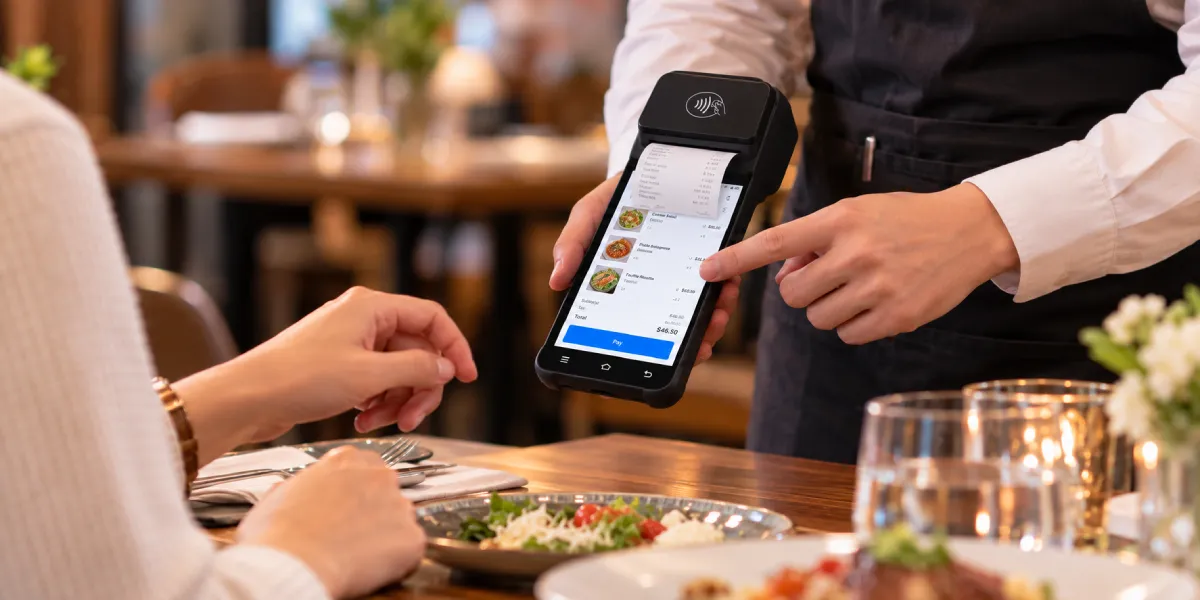
Order states should describe evidence the system actually has. A guest saying “yes” proves agreement with a presented basket. A successful POS creation response proves a different event, and a kitchen acknowledgment proves another. The integration should avoid one generic “confirmed” label for all three.
The following is a suggested state model, not a claim about Infrasys API names:
| Suggested state | Evidence required | Guest-facing meaning |
|---|---|---|
| Draft | Parsed items and fulfillment details | Request is being assembled |
| Validated | Required item, modifier and pricing checks pass | Basket can be presented for approval |
| Guest confirmed | Guest approves the current basket and total | Permission to submit is recorded |
| Submitted | Request sent with a durable reference | Submission is in progress |
| POS accepted | POS order ID or documented acceptance result | Restaurant system has accepted the order |
| Routed | Documented routing result or staff verification | Order has entered the execution workflow |
| Completed | Defined fulfillment evidence | Service is complete under local rules |
Exception states should remain visible to operators. Rejected, unknown, cancellation requested and cancelled require different actions. An unknown result means the integration lacks a reliable answer; labelling the result “failed” can trigger an unnecessary second order.
The integration should retain a durable mapping between references. Staff need to connect conversation ID, submission reference, POS order ID and relevant fulfillment record without searching unrelated logs. Diagnostic records should minimize guest information and follow the property's access and retention controls.
Order changes need different treatment before and after POS acceptance. Before submission, the application can revise a draft and request renewed guest approval. After acceptance, a change must follow the target POS's supported update process, including permissions, version checks and kitchen notification where applicable.
Automatic retries need a documented duplicate-prevention contract. The HTTP idempotency and retry rules explain why clients should not automatically retry non-idempotent requests without a basis for knowing the operation is safe or was not applied. Order creation commonly uses POST; the method alone does not guarantee that resending it creates only one order.
A request ID prevents duplicates only when the receiving system enforces the rule. The project should specify key scope, retention, behavior for simultaneous retries and handling of a reused key with changed contents. A timeout should lead to recovery of the original result through the documented API or a controlled reconciliation path.
A middleware queue alone cannot prove exactly one POS order was created. The POS may accept the order immediately before the connection fails, leaving the queue without its response. Integration teams need receiving-side duplicate controls, a searchable correlation reference or a staff reconciliation process before creating another order.
The recovery rule must remain useful when a response disappears.
Duplicate prevention in AI ordering requires a durable request identity, enforced deduplication and a recoverable POS result. After a timeout, the integration should query or reconcile the original submission before creating another order. A locally generated identifier alone cannot prevent duplicates when the receiving system ignores the identifier.
For the room-service request, staff should recover the original burger order rather than prepare a second pair because the guest-facing screen timed out.
Cancellation is a workflow request until the responsible system accepts it. A kitchen may already be cooking, an employee may have edited the check, or a payment may require separate reversal. The AI should acknowledge the cancellation request accurately and escalate cases outside its authority instead of promising that every downstream action has stopped.
Network recovery should reflect where the failure occurred. A dropped phone call, an unavailable POS endpoint and an offline kitchen printer create different uncertainties. The customer message and staff task should identify the affected stage.
| Failure location | Recommended behavior | Release condition |
|---|---|---|
| Voice or text session | Preserve permitted draft data and identify the returning guest | Guest reviews the recovered basket |
| Connection to POS | Retain a pending request under documented queue rules | POS acceptance is established |
| Response after submission | Mark outcome unknown and recover the original result | Original order is found or non-creation is established |
| Kitchen or printer route | Alert staff and apply an approved fallback | Execution is verified without duplicate preparation |
Queued requests need an expiry and revalidation policy. A late-night order cannot simply be replayed after the kitchen closes. Recovery should recheck availability, price, outlet hours, fulfillment timing and whether the guest still wants the order. Material changes require renewed confirmation.
Offline behavior must be a supported project feature. A device storing a draft does not establish that the restaurant has accepted the order. The integration should tell the guest when staff confirmation is pending and define who watches the pending queue, how quickly an alert escalates and how stale requests are resolved.

A POS order needs an explicit route to the people who prepare and deliver it. The room-service burger order may require a hot-kitchen ticket, a delivery task and a check visible to the restaurant supervisor. Creating the POS record is only one part of that sequence.
The kitchen route should preserve item-level meaning. The onion removal must remain attached to the first burger, the cheese addition to the second, and room 812 to the delivery destination. Station routing, course timing, language, ticket layout and priority should be checked with real staff rather than inferred from an API success response.
Printer behavior belongs in operational acceptance testing. The food service POS workflow guide covers the relationship between ordering, payment and receipts. For AI orders, buyers should additionally verify that kitchen production tickets reach the intended destination with all modifiers intact.
Print submission is not proof of physical output or kitchen acceptance. A spooler can accept a job while the printer is disconnected or out of paper. Hardware and software may expose different levels of status, so the project should document what can be observed and provide staff checks where acknowledgment is unavailable.
Reprints should be identifiable and controlled. A replacement ticket needs the original order reference and a visible reprint label where supported. Staff procedures should prevent a reconnecting printer and a manually reprinted ticket from causing the same meal to be prepared twice.
A device SDK and a business-order API solve different parts of the integration. Printing, scanner control and customer-display rendering require device-level handling; order creation and kitchen routing require supported business interfaces. The Android POS SDK integration guide explains the peripheral layer. An open SDK does not establish compatibility with a particular AI service or POS platform.
A hotel room number identifies a destination without independently proving charging authority. The room-service workflow should use the property's approved guest-verification and room-charge process. The integration must handle a checked-out guest, blocked room account, wrong destination or unavailable property-management connection according to local rules.
POS order acceptance does not establish payment completion. The application should track the order result separately from card authorization, settlement or room-account posting. An approved payment followed by rejected order creation needs recovery; an accepted order followed by failed payment needs a different staff decision.
Cancellation should preserve financial and operational references. Removing an item from a check, stopping kitchen work, refunding a card payment and reversing a room charge can involve separate systems and permissions. Each action needs an owner, result and reconciliation record rather than one optimistic cancellation message.
Pilot acceptance should measure correct execution under failures. Speech recognition and conversational fluency matter, but the restaurant also needs evidence that menu rules, order state and fulfillment remain consistent when systems disagree.
| Test case | Evidence of a satisfactory outcome |
|---|---|
| Similar dish names or uncertain speech | Clarification occurs before confirmation |
| Missing required size or preparation choice | Order cannot pass validation incomplete |
| Different modifiers on two identical items | Correct modifier remains attached to each item |
| Price change during the conversation | Guest approves the revised total |
| Sellout at submission | Supported rejection or substitution-confirmation flow |
| Simultaneous duplicate submissions | One business order or an explicit reconciliation exception |
| POS acceptance followed by response loss | Original order recovered without another preparation ticket |
| Staff and AI edit the same order | Conflict resolved without silently overwriting changes |
| Cancellation after preparation begins | Authorized operational and financial handling |
| Printer offline or out of paper | Alert, fallback and controlled reprint |
| Room-charge rejection or payment failure | Separate order and financial states remain traceable |
| Human takeover | Staff receive the current basket, history and submission status |
Pilot metrics should use defined denominators and project-specific targets. Useful measures include validation failures per attempted order, duplicate POS orders per logical request, handoff rate, POS acceptance latency and routing exceptions per accepted order. The team should document traffic mix and test conditions before comparing releases.
The production decision should depend on recoverable outcomes. Buyers should approve the integration only after the provider demonstrates the supported POS version, menu contract, order states, retry behavior, kitchen route and operational ownership. A successful conversation becomes commercially useful when the restaurant can execute the right order and resolve the exceptions.

An AI menu chatbot answers questions, while AI ordering POS integration submits structured orders through a supported interface. A complete deployment also validates items and prices, tracks POS acceptance and handles execution or recovery.
AI ordering should validate the current item and modifier combination against the authoritative restaurant data. Unavailable items or changed prices should trigger correction, renewed guest confirmation or staff assistance before the order proceeds.
An AI ordering system may preserve a draft or pending request when its supported design permits it. The guest should not receive a restaurant-acceptance promise until the integration establishes the actual order result.
An integration needs enforced duplicate controls and a way to recover or reconcile the original submission. Retrying with an arbitrary new reference can create a second order when the first request was already accepted.
Kitchen delivery depends on the POS configuration, interface and station-routing workflow. Buyers should verify KDS or printer behavior independently and establish a staff fallback where technical acknowledgments are unavailable.
The Aiello announcement does not establish universal Android terminal compatibility. The article makes no claim that ZCS supports the announced integration; a specific deployment needs confirmation from the software providers and testing on its intended hardware and workflow.






 Home
 SPoC and CPoC Sunset on October 31, 2026: A SoftPOS Procurement Action Plan

