
2025-11-14 Author : ZCS
Convenience stores operate under conditions that punish slow checkout: high customer turnover, impulse-driven basket sizes, restricted product compliance requirements, and extended hours that demand consistent system performance around the clock. A traditional cash register handles transactions. A smart POS cash register for convenience stores handles transactions, inventory, compliance, and multi-payment routing — simultaneously, at speed.
This guide covers the hardware features that matter most for high-volume convenience store checkout, what to evaluate when selecting a system, and how the right POS hardware improves both operational efficiency and profitability.
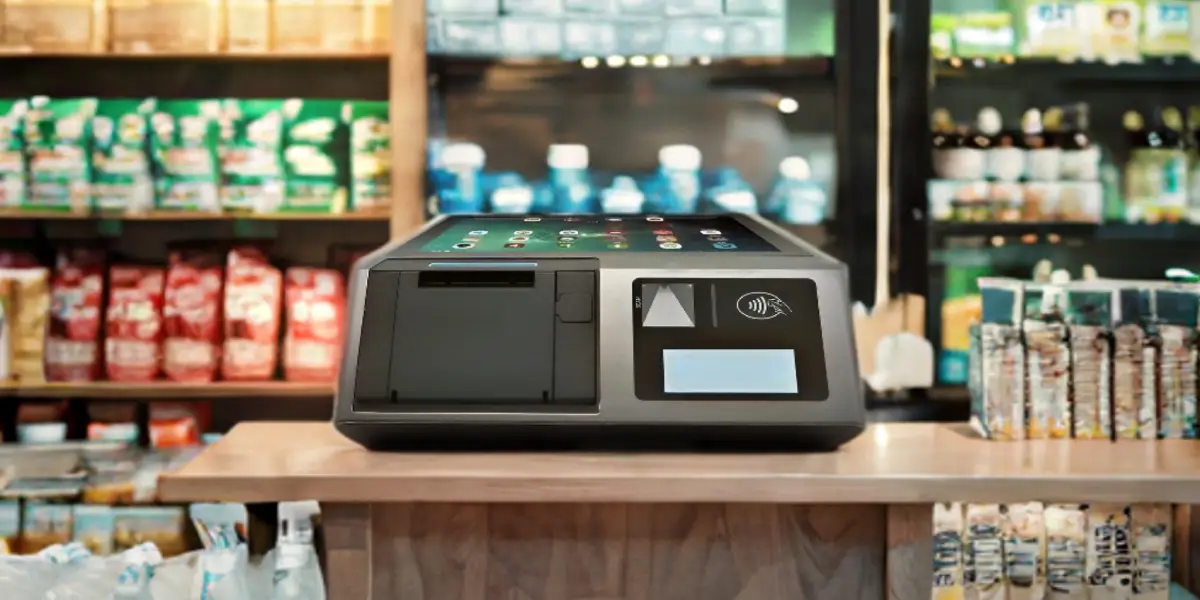
Convenience retail is not a scaled-down version of supermarket retail. The operational profile is distinct:
Over 165 million people visit convenience stores daily in the United States alone — a transaction volume that exposes every hardware limitation in a POS system.
Checkout speed requirements also differ significantly across retail formats. The volume and basket size patterns in convenience retail create different hardware priorities than those found in grocery store POS systems, where larger basket sizes and longer transaction times shift the performance emphasis toward inventory management and loyalty integration rather than raw checkout throughput.
For a broader view of how convenience store POS fits within the wider retail hardware landscape, the complete guide to smart retail POS systems covers selection criteria across retail formats and store sizes.
The primary hardware requirement for convenience store POS is throughput. Every second added to average transaction time reduces the number of customers served during peak windows.
Hardware specifications that directly affect checkout speed:
Convenience stores carry high-turnover, low-margin items where stockout timing is critical. Running out of a top-selling beverage during a morning rush is a direct revenue loss — and manual inventory checks cannot catch it in time.
IBM research on retail inventory accuracy estimates that inventory distortion — encompassing both stockouts and overstock — costs global retailers nearly $1.1 trillion annually.
A smart POS cash register addresses this through hardware-level inventory sync:
For convenience store chains, this real-time sync capability is the difference between reactive restocking and proactive inventory management.
Convenience store customers expect to pay however they prefer — and any payment method friction increases the likelihood of abandoned transactions. A smart POS cash register for convenience stores must support:
The hardware requirement here is a multi-protocol payment module that handles all of these without requiring multiple separate terminals at the checkout counter.
Tobacco, alcohol, and lottery product sales require point-of-sale compliance checks. Manual age verification depends on staff consistency — which is unreliable under high transaction volume conditions.
Smart POS cash registers for convenience stores address this with:
This reduces legal exposure and removes the reliance on staff discretion during busy periods.
Convenience store checkout counters have limited footprint. Hardware design matters:
ZCS designs Android POS terminals for high-volume, small-format retail environments. The open Android platform allows ISVs and retailers to integrate convenience store management software — inventory systems, loyalty platforms, age verification modules — directly onto the terminal without proprietary middleware constraints.
ZCS terminal configurations relevant to convenience store deployment:
ZCS hardware is designed for the continuous operational demands of convenience retail — including 24-hour environments where system uptime directly affects revenue.
The business case for upgrading from a legacy cash register to a smart POS system is measurable across several operational dimensions:
Transaction throughput: Faster checkout processing increases the number of customers served per hour during peak windows — directly translating to higher daily revenue without additional staffing.
Inventory loss reduction: Real-time stock sync reduces both stockout revenue loss and perishable overstock waste. For a high-SKU convenience store, the cumulative inventory accuracy improvement has meaningful margin impact.
Compliance risk reduction: Automated age verification reduces the legal and financial exposure associated with restricted product non-compliance.
Labor efficiency: Automated scanning, payment routing, and inventory updates reduce the manual tasks required per transaction, allowing smaller teams to sustain throughput during non-peak hours.
Multi-location visibility: For chain operators, centralized reporting across terminals gives ownership real-time performance data without requiring physical store visits.
Hardware evaluation criteria for convenience store POS procurement:
| Criteria | Why It Matters for Convenience Retail |
|---|---|
| Processing speed | Directly affects checkout throughput during peak hours |
| Multi-payment protocol support | Eliminates payment friction for diverse customer base |
| Dual-screen option | Compresses transaction time, enables customer-facing content |
| Integrated printer | Reduces counter footprint and hardware failure points |
| Real-time inventory sync | Prevents stockout revenue loss on high-turnover items |
| Age verification workflow | Automates compliance for restricted product categories |
| Open Android platform | Enables ISV software integration without lock-in |
| TMS support | Allows centralized terminal configuration for chains |
| 24/7 operational durability | Non-negotiable for extended-hours convenience retail |
For operators evaluating multiple retail formats or planning chain expansion, the complete guide to smart retail POS systems provides a broader hardware selection framework covering supermarkets, specialty retail, and food service alongside convenience store requirements.

Q1. What features should a cash register for a convenience store have?
At minimum: high-speed barcode scanning, multi-payment protocol support (NFC, EMV, QR), real-time inventory sync, and age verification prompts for restricted products. For chain operators, cloud-based multi-store reporting and TMS compatibility are also essential.
Q2. Why do convenience stores benefit from a dual-screen POS?
A dual-screen configuration allows the customer to confirm items and initiate payment on the customer-facing display while the cashier continues processing — compressing total transaction time. The customer display also supports promotional content delivery without additional hardware.
Q3. How does real-time inventory sync work on a convenience store POS?
Every item scanned at checkout triggers an immediate update to the central inventory count. Low-stock thresholds generate automatic alerts, and multi-location chains can view stock levels across all terminals from a centralized dashboard.
Q4. What payment types should a convenience store cash register support?
EMV chip, NFC contactless, QR code wallets, mobile wallets (Google Pay, Apple Pay), stored-value cards, and cash — all processed through a single integrated payment terminal to avoid counter clutter and checkout delays.
Q5. How does a smart POS cash register help with tobacco and alcohol compliance?
Restricted product SKUs trigger automatic age verification prompts in the checkout workflow, requiring ID confirmation before the transaction proceeds. Compliance events are logged for audit purposes, removing reliance on staff discretion during high-volume periods.






 Home
Home  Portable Dual-Screen POS Devices: A New Solution for Pop-Up Stores and Mobile Vendors
