
2025-12-16 Author : ZCS
Throughout this article I’ll reference authoritative industry reporting and PCI guidance so you can act on verifiable recommendations. Key resources include the PCI Security Standards Council, Verizon’s DBIR, Visa ecosystem reports, and third-party risk research.
Short version: attackers are combining traditional tactics (skimming, malware, credential theft) with AI-driven reconnaissance and exploitation, targeting third-party vendors, abusing misconfigured cloud POS services, and automating fraud at scale. At the same time, compliance expectations evolved: PCI DSS 4.x emphasizes targeted risk analysis (TRA), continuous monitoring, and stronger authentication across payment environments. Businesses that treat compliance as a checkbox will lose ground to adversaries who exploit day-to-day operational gaps.
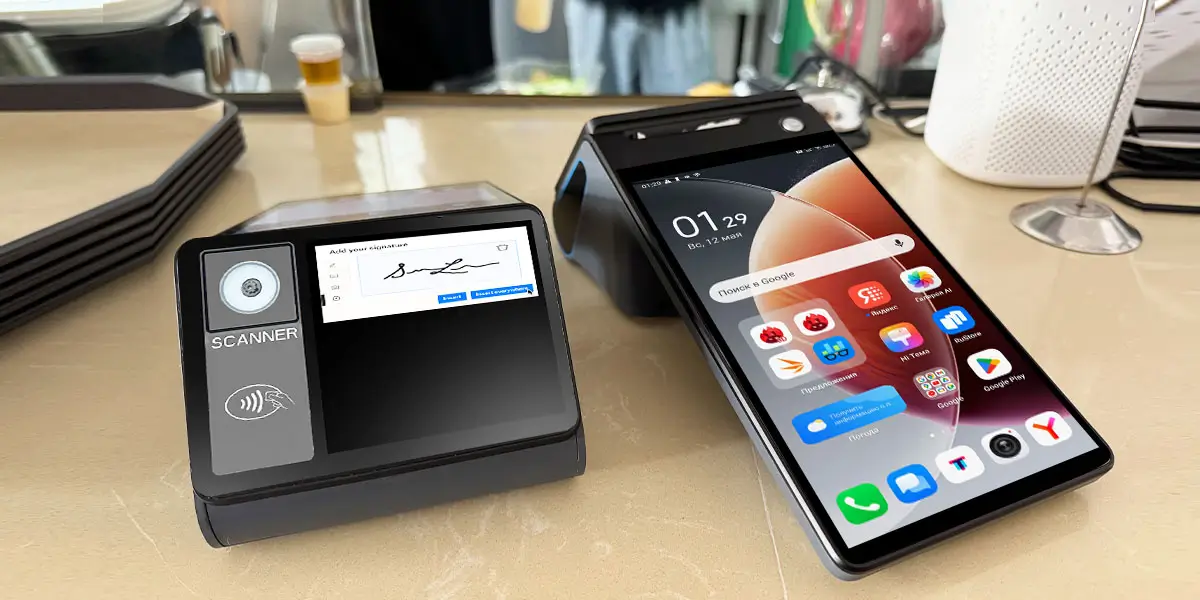
Attackers use machine learning to enumerate POS endpoints, craft convincing phishing campaigns, and discover weak points in POS APIs and vendor portals. Automation allows attackers to scale small successful tactics into mass fraud quickly — increasing the risk of fraudulent POS transactions and credential theft. Industry observers note a rapid rise in AI-assisted scams and malware targeting payment ecosystems in 2024–2025.
Ransomware remains a top risk: shutting down checkout systems or exfiltrating cardholder data yields both operational disruption and extortion income. The DBIR and related reporting highlight that attackers frequently combine credential theft and ransomware to escalate impact.
POS environments heavily depend on third-party services — payment processors, software vendors, and hardware suppliers. Breaches at those vendors can ripple to merchants. Recent third-party breach studies show a meaningful increase in vendor-sourced incidents, making vendor due diligence and continuous oversight critical.
As merchants move parts of the POS stack to cloud services (analytics, back-office sync, OTA updates), improperly configured storage or APIs become high-value targets. Attackers exploit misconfigurations to access logs, payment telemetry, or tokenization keys.
While digital tactics grow, physical attacks (skimmers, inserted devices, tampering) remain effective — particularly for unattended or mobile POS terminals. PCI controls around tamper detection and device hardening are still essential.
Weak or reused credentials across POS admin interfaces and vendor portals continue to be a leading cause of breaches. PCI DSS 4.x pushes broader multi-factor authentication (MFA) coverage for CDE access to reduce this risk.
PCI DSS version 4.x is explicitly built to support modern payment ecosystems. Below are the practical ways the standard protects your business:
Below is a practical program that aligns with PCI DSS 4.x and addresses 2025 risks. ZCS POS customers can adopt many of these measures directly with ZCS hardware and services; ZCS’s product pages and support material explain secured configuration options.

POS manufacturers play a critical role: device design, firmware signing, secure default configurations, and providing secure OTA update channels. ZCS builds POS terminals with configurability for PCI environments and offers documentation to help merchants achieve compliance. A good manufacturer will:
Inventory POS endpoints and map data flows.
Implement MFA for all CDE access and remote management.
Ensure terminals use e2e encryption or approved P2PE.
Segment POS networks from corporate and guest Wi-Fi.
Acquire PCI Attestation of Compliance (ROC or SAQ) for your merchant level.
Schedule quarterly vulnerability scans and annual penetration tests.
Maintain vendor PCI attestations and SLAs.
Q1: What are the top POS security threats in 2025?
A: The top threats include AI-assisted fraud and reconnaissance, ransomware and extortion, third-party/supply-chain compromises, cloud misconfigurations, and credential misuse — all amplified by automation and scale.
Q2: How does PCI DSS 4.x change POS compliance requirements?
A: PCI DSS 4.x emphasizes targeted risk analysis, broader MFA coverage, continuous monitoring, improved logging/forensic readiness, and stronger secure-development controls — giving merchants flexibility while raising baseline expectations.
Q3: Can cloud-based POS systems be PCI compliant?
A: Yes — cloud POS can be PCI compliant, but merchants must ensure secure segmentation, correct API and storage configurations, vendor attestations, and end-to-end encryption/tokenization where appropriate.
Q4: What steps should small merchants take immediately to reduce POS risk?
A: Immediately enforce MFA for admin access, segment POS networks, enable encryption/tokenization, vet third-party vendors, apply device hardening and timely patches, and run routine vulnerability scans and staff training.
Q5: How can a POS manufacturer like ZCS assist with PCI DSS readiness?
A: Reputable manufacturers provide secure hardware features (tamper detection, secure boot), documented secure configurations, support for encryption/tokenization, and artifacts needed for audits — making merchant compliance faster and more reliable.
In 2025 protecting POS systems requires blending modern security practices (Zero Trust, continuous monitoring, AI-assisted anomaly detection) with PCI DSS 4.x compliance principles (targeted risk analysis, MFA, logging). For merchants, this is not a one-time project — it’s an operational program: configuration, monitoring, vendor governance, and testing. POS manufacturers such as ZCS play a crucial role by providing secure terminals, secure update channels, and configuration guidance that minimize compliance scope and accelerate audit readiness. For implementation help and device guidance, see ZCS: https://www.szzcs.com






 Home
Home  New POS Security Risks in 2025 and How Merchants Can Respond
