
2026-05-11 Author : ZCS
The food truck industry runs on speed and accuracy — two things that are surprisingly hard to guarantee when you're operating out of a moving vehicle with a line of hungry customers at your window. One missed detail, one miscommunicated order, and the seamless street-food experience your customers expect falls apart instantly. .The global food truck market was valued at USD 6.1 billion in 2024 and is projected to grow at a CAGR of 7.1% through 2034, according to Global Market Insights — a trajectory that makes operational efficiency not just a competitive edge, but a baseline requirement for survival.
This is precisely why the Dual-Screen Handheld Order Receiver has emerged as a game-changer for food truck operators. By putting a real-time, two-sided display directly in the hands of your staff, it eliminates the guesswork between taking an order and confirming it — bridging the gap between mobile dining's big promise and its everyday operational reality.
In this guide, we'll walk you through everything you need to know: from its space-saving hardware design and transparency-boosting dual-screen interaction, to real-world outdoor performance, revenue-driving marketing features, and a practical checklist for choosing the right terminal for your mobile kitchen.
Step inside a food truck and the first thing you notice isn't the menu — it's how little room there is to work. Every inch of counter space is contested territory, and in this environment, the physical footprint of your POS setup isn't a minor consideration. It's a make-or-break operational decision.
Traditional setups rely on a patchwork of separate devices — a tablet, an external thermal printer, a card reader — each demanding its own power source and counter space. The Integrated Thermal Printer Order Tablet consolidates all of this into a single handheld unit. Tickets print instantly from the built-in thermal head, cables disappear, and your workstation stays clear. For a vendor operating in tight confines, that consolidation translates directly into faster, more reliable service.
A fixed terminal assumes you always serve from the same position. Food trucks don't operate that way. Queues shift, festival layouts change, and peak-hour surges often push staff outside the truck entirely. A Handheld Terminal lets your team take orders at the queue, process payments before customers reach the window, and pivot instantly when your location changes. Mobility here isn't a convenience feature — it's what keeps service flowing regardless of where the crowd moves.
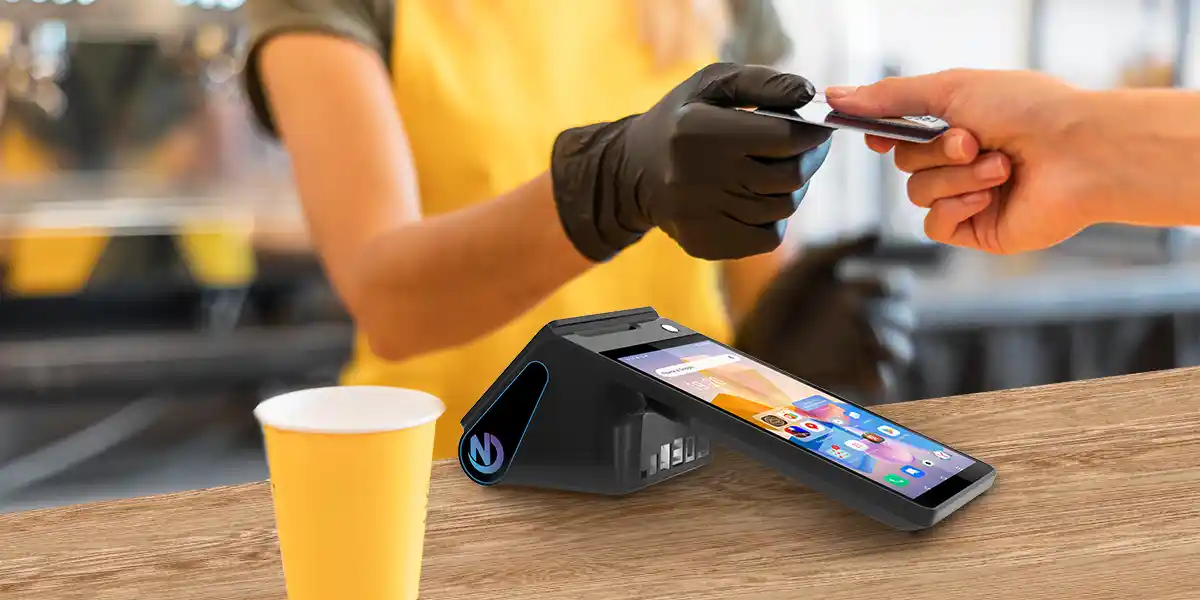
In a noisy outdoor environment, verbal communication between staff and customer breaks down faster than most operators realize. A misheard topping or a payment amount that doesn't match the order — in a high-turnover food truck setting, these small errors accumulate into slower lines and customers who don't come back.
A client-facing screen solves this by making the order visible in real time — every item, every modification, every subtotal — displayed directly to the customer as it's being entered. When customers can see their order building on screen, they catch errors immediately rather than at the pickup window, keeping the line moving without back-and-forth clarification.
Checkout is where accumulated friction either gets resolved or compounds. A double-display portable POS terminal compresses the checkout sequence by showing payment details and order summary to the customer simultaneously, while the operator's screen moves straight to the next order. The integrated 2D scan engine reads QR codes from any mobile wallet instantly, and digital receipts can be issued on the spot — no separate printing step, no counter clutter.
Together, these two screens don't just speed up service — they make the entire transaction feel professional, which is increasingly what separates a food truck customers return to from one they simply tried once.
A food truck doesn't get to choose its conditions. Midday sun, crowded festival grounds, back-to-back lunch orders — your equipment has to perform regardless. This is where hardware quality separates a reliable operation from one held together with workarounds. The ZCS Z108 is built precisely for these demands. According to Accio Business, over 68% of food truck vendors have reported plans for digital transformation by 2026 — and the terminal you choose today will determine whether your operation leads that shift or scrambles to catch up.
During a lunch rush, orders don't arrive one at a time. The Z108 handles this through online order receiving and queue management built directly into the terminal — allowing staff to process concurrent incoming orders without switching between devices or losing track of the line. Backed by a robust Android 14 operating system, the device maintains stable performance under sustained load. When the system manages order flow at the device level, bottlenecks stay out of the kitchen.
Outdoor brightness renders most standard screens unreadable at the worst possible moment. The Z108's 8.0" HD 800×1280 touch screen keeps menu items, order details, and payment prompts clearly visible even in direct sunlight — so staff aren't squinting at a washed-out screen while customers wait.
A shift doesn't end when the battery does. The Z108's removable battery design allows a depleted pack to be swapped out mid-service in seconds, with no reboot and no downtime. Combined with a build quality suited to the bumps, heat, and occasional splashes of outdoor food service, the Z108 runs as long as you do.

Most operators think of a POS terminal as a cost — a necessary piece of infrastructure that processes transactions and nothing more. The client-facing screen changes that equation. Every checkout becomes a brief but direct moment of customer attention, and that attention has real commercial value.
While your staff is entering an order, the customer-facing screen doesn't have to sit idle. An Order Tablet with dynamic display capability can surface promotional items, combo upgrades, or limited-time offers at exactly the moment a customer is already engaged and making decisions. This isn't intrusive advertising — it's contextual merchandising at the point of sale, where conversion rates are naturally highest. A well-timed "add a drink for $1" prompt on the secondary screen requires no staff effort and no printed signage.
The built-in high-quality thermal printer closes the transaction quickly, but the receipt itself can do more than confirm a purchase. A printed QR code directing customers to a loyalty program or a follow-us prompt turns a routine receipt into a retention tool — capturing repeat business from customers who would otherwise walk away with no further connection to your brand. In a competitive street food market, that post-transaction touchpoint is often the lowest-cost, highest-return marketing channel available to a food truck operator.
Not every handheld terminal is built with food trucks in mind. Before committing to a device, evaluate it against the operational realities of mobile food service rather than generic POS benchmarks. To help you evaluate these critical hardware requirements, we have put together a comprehensive food truck point of sale buying checklist to guide your decision.
Software Compatibility The Z108 runs on Android 14, ensuring access to the latest POS applications, security patches, and a wide ecosystem of compatible software. For operators with custom workflows, built-in SDK support means your development team can build directly against the hardware — no middleware, no workarounds, no vendor lock-in.
Network Stability A food truck operates across different venues, each with inconsistent connectivity. With support for 4G, Wi-Fi, and LAN, the terminal adapts automatically to whatever network infrastructure is available — whether you're at a dedicated event with a managed network or a street corner relying on a mobile data connection. That flexibility means payment processing and online order receiving stay live regardless of location.
After-Sales Support and Build Quality Hardware fails at inconvenient times. The SDK support offered post-purchase means your software integration remains maintainable as your business grows or your operational needs change. For outdoor food service, also verify the device's dust and moisture resistance, as exposure to cooking oils, humidity, and rain is routine rather than exceptional.
A terminal that scores well across all three criteria won't just survive a food truck environment — it'll become the operational backbone your business scales on.
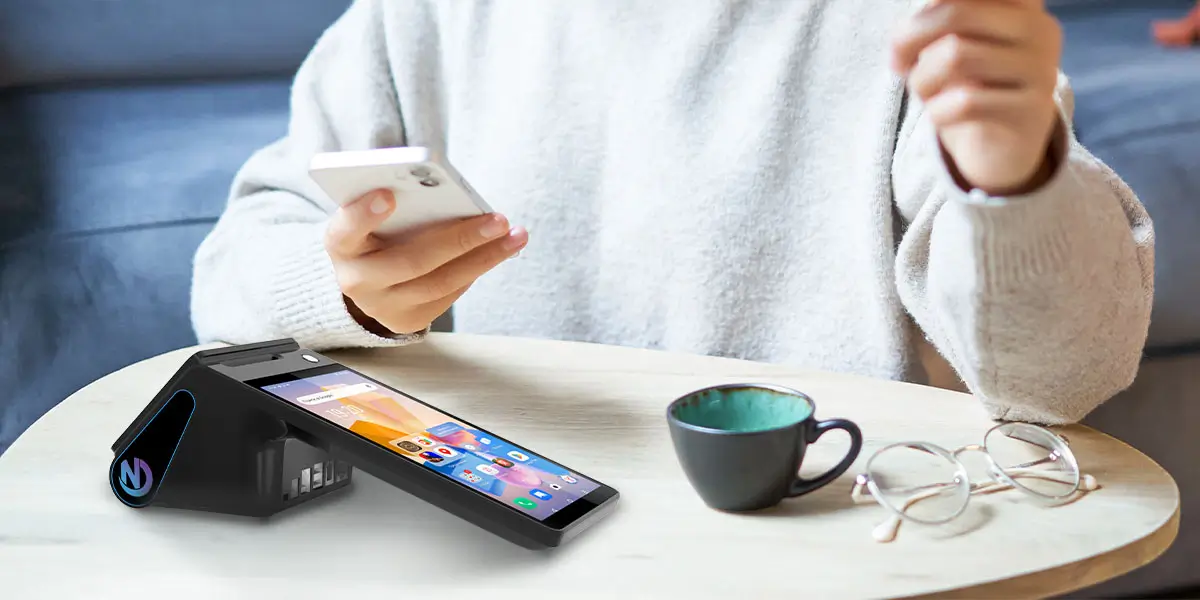
Running a successful food truck isn't just about the food — it's about how efficiently you can serve it. From managing counter space and processing orders accurately to engaging customers at the moment of payment, every operational detail adds up. A dual-screen handheld order receiver like the ZCS Z108 addresses all of these challenges in a single, compact unit, turning what was once a pain point into a genuine competitive advantage.
As the food truck industry continues to grow and digitize, the operators who invest in the right infrastructure today will be the ones best positioned to scale tomorrow. Whether you're just starting out or looking to upgrade an existing setup, the terminal in your staff's hands is more than a transactional tool — it's the operational core your entire business runs through.
Choose wisely, and it will pay for itself every single shift.
Q1: What device do restaurants use to take orders?
Most restaurants today use a handheld POS terminal that combines order entry, payment processing, and receipt printing in one device. For food trucks, a Dual-Screen Handheld Order Receiver like the ZCS Z108 is ideal — its client-facing screen and integrated thermal printer remove the need for multiple separate devices while keeping counter space clear.
Q2: What is the best way to start a food truck business?
Start by securing the necessary local permits and licenses, then focus on three essentials: a reliable vehicle, a streamlined kitchen setup, and a capable POS system. Choosing a terminal with mobile network support (4G, Wi-Fi, LAN) from day one ensures you can take payments and manage orders at any location without interruption.
Q3: What is the most popular food truck item?
Burgers, tacos, and grilled cheese are consistently top sellers — fast to prepare, easy to eat on the go, and highly customizable. These high-demand items put pressure on order speed and accuracy, which is where a dual-screen terminal makes a measurable difference.
Q4: What technological trends affect your industry food truck?
Key trends include mobile payment adoption (QR codes and digital wallets), cloud-based online order receiving, and queue management systems. The broader shift toward Android-based open POS platforms with SDK support gives operators the flexibility to integrate custom workflows as their business grows.
Q5: How long does a handheld POS terminal battery last during a full food truck shift?
Top terminals tackle this with a removable battery design, allowing a depleted pack to be swapped in seconds without shutting the device down — keeping your system running continuously through back-to-back service periods without interruption.
Related Posts
1. Selecting the Ideal POS System for Food Trucks in 2025
2. Smart POS Systems for Food Trucks: The Future of Mobile Restaurants
3. Mobile POS for Food Trucks, Street Vendors and Outdoor Stalls: A Complete Guide
4. Top POS Terminals for Food Trucks and Street Events in 2025






 Home
Home  Best Plam Vein POS Solutions for Global Buyers in 2026?
