
2026-09-03 Author : ZCS
At many petrol stations, customers still need to finish fueling, walk into the store, wait at the counter, pay, collect a receipt, and then return to their vehicle.
For full-service petrol stations, fleet fuel sites, and stations with attendants working directly on the forecourt, this is not always the most efficient workflow.
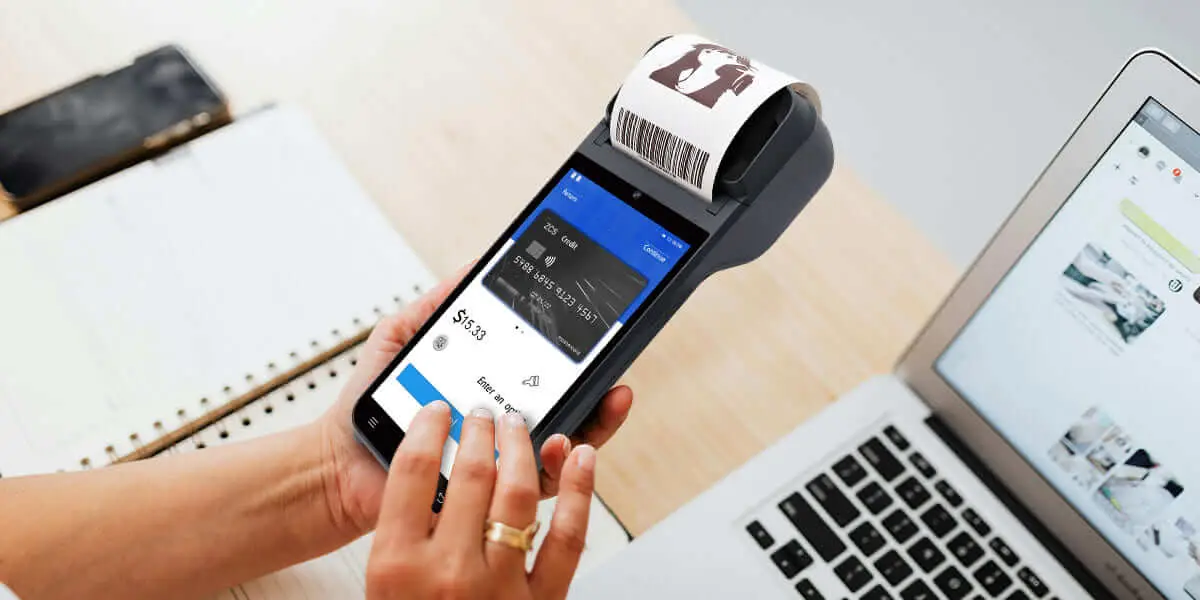
A fuel attendant POS allows staff to bring transaction functions closer to the customer. Instead of relying entirely on a fixed cashier counter, attendants can use a handheld Android terminal to access station software, identify transactions, scan QR codes, manage customer or fleet information, and print receipts while moving around the site.
This creates a growing use case for handheld POS for gas stations, particularly in markets where attendant-operated fueling and mobile payment are common.
However, not every portable Android device is suitable for this job. Petrol station operators, software vendors, distributors, and system integrators need to consider connectivity, printing, battery life, application compatibility, scanning, portability, and system integration before choosing hardware.
The biggest advantage of a petrol station mobile POS is mobility.
A traditional POS terminal creates one fixed checkout point. Employees and customers must move toward that terminal.
A handheld POS allows the transaction interface to move with the employee.
Depending on the software deployed by the station, attendants may be able to use the device to:
● identify the pump or transaction;
● enter or retrieve a fuel amount;
● scan a QR code or customer ID;
● access loyalty or fleet accounts;
● record additional products or services;
● initiate supported payment workflows;
● print a receipt;
● synchronize transaction information with the station backend.
2.This can be useful in several petrol station environments.
At full-service stations, attendants already move between vehicles and pumps.
Giving them a handheld POS can reduce the need to repeatedly return to an indoor cashier counter.
The employee can potentially handle more of the checkout process near the vehicle, depending on the station software and payment architecture.
During busy periods, a fixed cashier can become a bottleneck.
Adding mobile POS terminals gives operators additional service points without building another permanent checkout counter.
This can help distribute transaction workloads between indoor cashiers and attendants.

Stations serving taxis, delivery fleets, trucks, buses, or corporate vehicles often require more information than a simple consumer fuel transaction.
The application may need to identify a driver, vehicle, fleet account, authorization number, QR code, or customer ID.
A handheld Android POS can provide the physical interface for these workflows.
One important distinction should be made before choosing hardware.
A handheld fuel attendant POS is not automatically the same as an unattended pay-at-pump terminal.
A pay-at-pump terminal is normally installed inside or beside a fuel dispenser and may require specific environmental protection, payment security, installation, and forecourt certifications.
A handheld Android POS such as the Z92 is better understood as an employee-operated mobile terminal that can run the station’s software and communicate with its backend systems.
The complete workflow may involve several layers:
Handheld POS → Petrol Station Application → Backend/POS System → Forecourt Controller → Fuel Dispenser
The exact architecture depends on the fuel-management software, payment provider, station equipment, and local market.
For this reason, B2B buyers should evaluate the handheld terminal as one part of a complete fuel station system rather than assuming the hardware itself directly controls pumps.
For petrol station projects, several hardware characteristics matter more than they do in a traditional countertop POS.
Fuel attendants rarely remain beside one fixed router.
They may move between fueling lanes, the store, parking areas, and other parts of the station throughout the day.
A useful gas station handheld POS should therefore support multiple communication options.
4G connectivity allows the terminal to remain connected when Wi-Fi coverage is weak or unavailable, while Wi-Fi provides another communication option around the station.
Bluetooth can also be useful when connecting compatible peripheral devices.
For larger petrol station networks, mobile connectivity is particularly important because the same hardware may be deployed across dozens or hundreds of locations.
A smartphone can run an Android application, but printing usually requires a separate device.
For attendants who need to provide physical receipts, carrying both a phone and portable printer is inconvenient.
An Android POS with a built-in thermal printer combines both functions into one device.
This can be used for:
● fuel receipts;
● fleet transaction records;
● order confirmations;
● prepaid transactions;
● account documentation.
Integrated printing reduces the number of devices attendants need to carry and can simplify daily operations.
Modern petrol station software may need to display:
● pump numbers;
● fuel amounts;
● customer accounts;
● fleet information;
● loyalty programs;
● QR codes;
● transaction status.
A touchscreen Android interface gives software developers more flexibility when designing these workflows.
Instead of relying on fixed physical keys, the application can guide attendants through each step visually.
This can also reduce staff training time across large station networks.
QR codes and digital identifiers are increasingly common in payment, loyalty, fleet, and customer-management applications.
A camera or scanner can support tasks such as:
● reading QR payment codes;
● identifying fleet accounts;
● scanning loyalty IDs;
● recording transaction references;
● scanning product barcodes.
The exact functionality depends on the software installed on the POS, but having compatible hardware gives solution providers more options when designing the system.
Battery performance matters significantly for attendants who work away from a charging point.
Actual battery life will vary according to:
● screen brightness;
● 4G usage;
● Wi-Fi usage;
● printing frequency;
● application activity;
● transaction volume.
For B2B projects, operators should test the device under real working conditions rather than evaluating battery capacity alone.
Charging bases, spare terminals, or shift-based charging procedures can also help reduce downtime.
A fuel attendant POS must be comfortable enough to carry during a working shift.
Procurement teams should consider:
● device dimensions;
● weight;
● one-handed operation;
● protective cases;
● wrist straps;
● carrying bags.
These details can seem minor during hardware selection but become important when dozens or hundreds of employees use the devices every day.

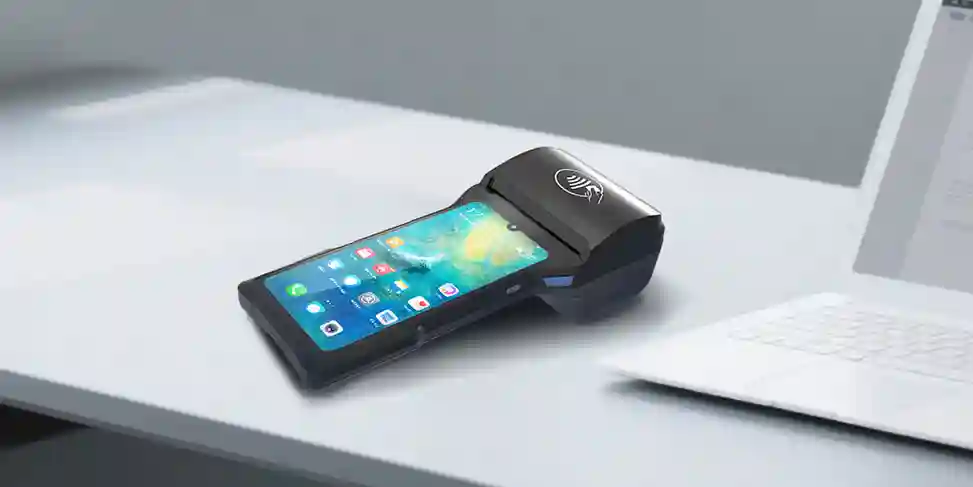
The ZCS Z92 is a portable Android handheld POS that can be considered for fuel attendant and other mobile transaction projects.
It runs ZOS based on Android 13 and uses a quad-core processor with a clock speed of up to 2.0 GHz.
The terminal features a 5.5-inch capacitive touchscreen with a resolution of 720 × 1280, providing enough screen space for Android-based POS, fleet-management, and transaction applications.
Multiple memory configurations are available depending on the project.
A handheld petrol station POS is particularly relevant to several B2B buyer groups.
Fuel retailers operating multiple locations may want standardized Android hardware that can run the same application across the network.
For a petroleum ISV, the hardware is not the complete gas station solution.
Instead, it provides the device on which the software runs.
The software company can focus on fuel management, fleet accounts, reporting, forecourt integration, and payment logic while using Android hardware as the employee-facing interface.
Integrators building complete petrol station solutions may need to combine several components:
● Android POS hardware;
● station-management software;
● payment systems;
● forecourt controllers;
● fuel dispensers;
● cloud platforms.
A configurable handheld device can become one component within this larger system.
POS distributors and solution providers may also require custom branding, accessories, packaging, software installation, or hardware configurations for larger deployments.
This makes OEM/ODM capability particularly important for project-based orders.
Petrol stations are different from ordinary retail stores.
Before deploying any mobile POS around a fuel station, buyers should confirm local regulations covering electrical equipment, hazardous areas, wireless devices, and payment security.
The Z92 has a specified operating temperature of 0°C to 50°C, but this should not be interpreted as an explosion-proof or intrinsically safe certification.
If hardware needs to be permanently installed directly on a fuel dispenser or inside a hazardous area, a dedicated certified forecourt payment terminal may be required.
For employee-operated handheld applications, the system integrator should still confirm where the device can legally and safely be used within the station.
Before choosing a fuel attendant POS, B2B buyers should confirm:
● Can our Android application run on the terminal?
● Which 4G bands are needed in the target country?
● How will the application communicate with the petrol station backend?
● How will pump data be obtained?
● Which payment methods need to be supported?
● Is receipt printing required?
● Will employees scan QR codes or barcodes?
● Are hand straps or protective cases required?
● What battery performance is needed for a full shift?
● Which local certifications are required?
● Do we need OEM branding or customized software installation?
These questions are more important than simply comparing specification sheets.
A fuel attendant POS can help petrol stations move selected transaction functions away from the fixed cashier counter and closer to the vehicle.
For full-service stations, fleet fuel sites, and petroleum software projects, a handheld Android terminal can provide a practical interface for station applications, mobile connectivity, scanning, customer identification, and receipt printing.
The ZCS Z92 combines Android 13-based software flexibility, a 5.5-inch touchscreen, 4G connectivity, dual-band Wi-Fi, dual SIM, camera functions, a 58 mm thermal printer, and optional NFC and scanning capabilities in one portable device.
For petroleum software vendors, POS distributors, system integrators, and fuel station operators, it can be evaluated as a hardware platform for mobile attendant workflows.
The key is not simply choosing a handheld POS that has enough features.
The better question is whether the hardware can integrate reliably with the fuel station software, payment architecture, and operational workflow required by your project.
ZCS supports B2B Android POS projects, OEM/ODM customization, and hardware configuration for different application environments. For a fuel station POS project, buyers can provide the target market, software requirements, expected order quantity, and intended workflow to evaluate whether the Z92 is suitable.
10.FAQs
Q1. What is a fuel attendant POS?
A fuel attendant POS is a mobile terminal used by petrol station staff to handle transaction-related tasks away from a fixed cashier counter. Depending on the software, it can support functions such as transaction lookup, QR code scanning, fleet account identification, receipt printing, and communication with the station backend.
Q2. Can a handheld POS connect directly to a fuel dispenser?
Usually not by itself. In most petrol station systems, the handheld POS communicates with the station software or backend, while pump control and dispenser data are handled through a compatible forecourt controller or fuel management system. Integration requirements depend on the station's existing infrastructure.
Q3. What features are most important in a handheld POS for gas stations?
Important features include 4G and Wi-Fi connectivity, reliable battery life, a built-in receipt printer, barcode or QR scanning capability, Android software compatibility, a portable form factor, and support for the payment or identification methods required by the project.
Q4. Can the Z92 be used for fleet fuel station applications?
Yes, the Z92 can be used as a hardware platform for fleet-oriented applications when combined with compatible software. Its Android-based system, camera, optional scanner, 4G connectivity, dual SIM, and built-in printer can support workflows such as driver identification, fleet account lookup, QR scanning, and receipt printing.
Q5. Is the Z92 suitable for pay-at-pump installation?
The Z92 is designed as a handheld Android POS rather than a permanently installed unattended pay-at-pump terminal. Buyers who need hardware installed directly on or beside a fuel dispenser should evaluate dedicated forecourt payment terminals with the environmental, safety, and payment certifications required in their target market.






 Home
Home  Fiscal POS Terminal Tanzania: How to Specify Android Hardware for Tax and Revenue Collection Projects
