
2026-10-27 Author : ZCS
Shenzhen is using APEC 2026 to expand a payment environment that international visitors can understand and merchants can operate. The visible result is more places to tap a foreign card, scan a familiar wallet or obtain RMB cash. The less visible work sits behind the counter: acquiring connections, payment applications, terminal certification, transaction confirmation and settlement.
That distinction matters because APEC 2026 is not creating a new regional payment network. Shenzhen is improving access to existing card, mobile-wallet, QR and cash channels before a period of concentrated international travel.
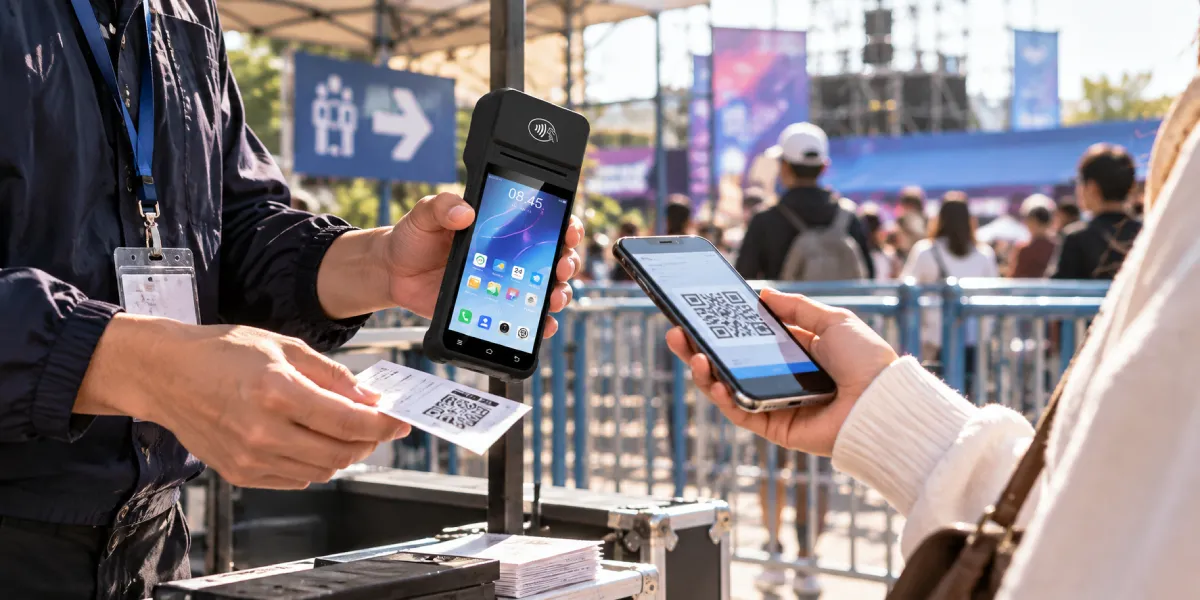
The APEC Economic Leaders’ Meeting gives Shenzhen a fixed deadline for improving international visitor services. China’s Ministry of Foreign Affairs states that the meeting will take place in Shenzhen on November 18–19, 2026, alongside the APEC CEO Summit and ministerial meetings. The official APEC 2026 meeting schedule also places digital economy, transport, tourism, finance and small business on the wider China-year agenda.
Payment access is one of the most immediate tests of that preparation. Delegates, business travelers and other visitors may arrive with an overseas-issued card, a home-country e-wallet, Weixin Pay or Alipay linked to an international card, or cash. A city payment system has to provide several workable routes because no single method suits every visitor, merchant and transaction.
Shenzhen’s APEC 2026 payment program expands four acceptance layers: overseas-issued bank cards at enabled POS terminals, cross-border QR wallets at participating merchants, mobile-payment apps linked to eligible international cards, and cash access through ATMs, banks and exchange counters. Each layer uses a different account, processing route and merchant setup.
The program is therefore broader than installing more card machines. Airports, border checkpoints, hotels, shopping districts, transport services and tourist locations need clear acceptance signs, trained staff, reliable connectivity and a fallback when the visitor’s preferred method fails.
Shenzhen had expanded overseas-card acceptance to 41,000 merchants and 51,000 POS terminals by the end of June 2026. The Shenzhen Branch of the People’s Bank of China reported coverage across airports, border checkpoints, major commercial districts, hotels and cultural and tourism sites.
The same Shenzhen international payment update, published on August 11, reported several additional changes:
These figures measure access rather than universal acceptance. A citywide terminal count does not mean every shop accepts every foreign card, wallet or phone-based payment. Visitors still need to check the payment logos at the checkout, and merchants still need the correct acquiring configuration for each enabled method.
International visitors have four practical payment routes in Shenzhen: direct card payment, a Chinese mobile-payment app linked to an international card, a supported overseas wallet or RMB cash. The best route depends on the visitor’s card issuer, wallet provider, merchant setup and transaction type.
China’s 2026 Payment Guide in China presents mobile payments, bank cards and cash as parallel options rather than forcing every visitor into one channel. That is the right way to read the Shenzhen upgrades.
| Payment route | What the visitor uses | What the merchant needs | Main limitation |
|---|---|---|---|
| Direct card payment | An eligible overseas-issued contact or contactless card | Enabled terminal, acquiring relationship and supported card scheme | Acceptance varies by merchant and card issuer |
| Linked mobile payment | Weixin Pay or Alipay linked to an eligible international card | Merchant QR acceptance through the relevant platform | Registration, verification and card-linking rules apply |
| Overseas e-wallet | A participating home-country wallet or PayPal route | Connected cross-border QR acceptance | Only participating wallets and markets are covered |
| RMB cash | Banknotes obtained before arrival, from an ATM or through exchange | Cash drawer, change and cash-recording process | Less convenient for some transport and automated services |
Direct card payment is the most familiar route for visitors who do not want to install another application. The customer inserts, taps or swipes where the terminal and merchant display the relevant acceptance mark. The issuing bank then applies its own authorization, currency-conversion and fraud controls.
A contactless symbol on a terminal does not guarantee that every overseas card will work. The merchant must have the correct acquiring service and payment application, while the card must be permitted by its issuer for the transaction. A decline may come from the issuer, acquiring setup, risk controls, network connectivity or an unsupported card product.
A linked mobile-payment app lets the visitor pay at many QR-enabled merchants without the merchant directly handling the overseas card. The visitor completes the platform’s registration and verification process, links an eligible card, and then scans the merchant code or presents a payment code.
The funding source remains the linked card rather than a balance stored inside the QR image. The platform and its payment partners translate the user’s authorization into a transaction that the participating Chinese merchant can receive through its existing acceptance arrangement.
A supported overseas wallet can remove the need to register for a separate Chinese wallet. The customer uses a familiar wallet interface, while a cross-border gateway connects that wallet to the participating merchant’s QR acceptance network.
Tencent announced additional inbound-payment measures ahead of APEC 2026, including a PayPal World connection that initially allows eligible U.S. PayPal users to scan Weixin Pay merchant codes. Tencent’s APEC 2026 inbound payment announcement also describes payment guidance in 16 languages and a limited fee waiver for qualifying first-time international-card users.
The home-wallet route is still partnership-specific. A wallet working in one APEC economy does not mean that every wallet from that economy is connected, and a listed partnership does not establish acceptance at every merchant or for every transaction category.
RMB cash remains an important fallback when a card or mobile-payment route cannot complete. Shenzhen’s expanded ATM and currency-exchange coverage makes that fallback more accessible to international visitors.
Merchants should still record cash inside the POS order rather than treating it as an off-system exception. The receipt, till balance and shift close must distinguish cash from card and QR sales so the store can reconcile each payment route separately.
A cross-border QR payment connects a visitor’s wallet to a Chinese merchant acceptance route. The QR code identifies the merchant or transaction, but it does not contain the merchant’s money or complete settlement on its own.
The operating sequence is straightforward:
A cross-border QR payment does not move funds through the printed image. The visitor’s wallet authorizes a funding source, the connected payment services route the request, and the merchant receives confirmation and settlement through its contracted acceptance provider. A successful customer screen is not a substitute for merchant-side confirmation.
The same separation applies across the wider region. Thailand, Indonesia, Vietnam and other APEC markets have developed different QR infrastructures, participation rules and merchant experiences. The Southeast Asia payment hardware guide explains why one QR-capable device still needs market-specific software and acquiring connections.
QR adoption does not remove the need for POS terminals because international checkout is a multi-tender workflow. One visitor may tap a card, another may scan a wallet, and a third may pay cash. The merchant still needs one order record that identifies how each sale was paid.
POS hardware can support several parts of that workflow:
The terminal is an endpoint rather than the payment network. A merchant can own technically capable hardware and still be unable to accept a particular foreign card or wallet. The missing layer may be the acquirer contract, payment application, scheme approval, merchant onboarding or production configuration.
Merchants should test complete payment journeys instead of checking only whether a card reader or QR scanner powers on. A realistic test begins with a live order and ends with merchant confirmation, a correct receipt and a transaction that appears in the expected report.
| Merchant check | Question to answer |
|---|---|
| Payment coverage | Which overseas cards, linked wallets and home-country wallets are actually enabled? |
| Merchant confirmation | Which screen proves that the transaction succeeded? |
| Amount control | Does the POS send the amount, or must the customer enter it? |
| Receipt | Does the receipt identify the payment route without exposing sensitive account data? |
| Connectivity | What happens when Wi-Fi, cellular service or a provider connection fails? |
| Refunds | Can staff locate the original transaction and use the authorized refund route? |
| Reconciliation | Can each successful payment be matched to an order, provider record and settlement entry? |
| Fallback | Can staff offer another card route, QR option or cash without duplicating the sale? |
Certification should be checked by exact terminal configuration. PCI PTS, EMV contact, EMV contactless and payment-scheme approvals address different parts of the card-acceptance stack. The POS terminal certification stack explains why an NFC specification, a payment logo and a live acquiring approval are not interchangeable evidence.
Staff procedures deserve the same attention as technical integration. Cashiers should know how to identify a pending transaction, find a merchant-side reference, avoid requesting a duplicate payment too quickly and escalate a customer-debit dispute without issuing an uncontrolled cash refund.
APEC 2026 gives payment providers a high-visibility test of interoperability, not a shortcut to universal acceptance. A provider serving international visitors must coordinate terminal hardware, merchant software, acquiring connections, wallet partnerships, settlement reporting and customer support.
The operational challenge increases when the same provider serves airports, hotels, restaurants, transport, retail and temporary event locations. Those sites may use different connectivity, checkout software, receipt formats and service hours even within one city.
A reusable hardware platform can reduce device variation, but software profiles must remain controlled. Payment providers need to assign the correct applications, keys, merchant identifiers and network settings to each terminal group. Remote monitoring should show which devices are online, which software version is installed and whether a failed update affects only one site or a larger estate.
The multi-country POS deployment guide extends that control model beyond Shenzhen. A terminal used across APEC markets needs separate country profiles for language, payment routing, receipt rules, radio configuration and local approvals rather than one copied global setup.
No APEC policy statement changes those market-level responsibilities. Regional cooperation can encourage connectivity and interoperability, but the provider deploying the terminal still owns the practical work of certification, onboarding, testing and support.
ZCS can supply configurable Android POS hardware for payment providers and software integrators, but ZCS does not create card or wallet acceptance by hardware alone. The acquiring institution, payment application and scheme partners determine whether an exact deployment can process a particular overseas card or cross-border wallet.
ZCS positions the Z90 as a payment-focused Android terminal. The manufacturer’s specification lists contact-card and NFC interfaces, a built-in 58 mm thermal printer, and model-level payment certifications. Buyers should verify the exact hardware version, firmware, certificate status, payment application and acquirer approval before treating those specifications as a production-ready acceptance path.
The Z90 payment terminal platform can provide a device starting point for card acceptance, QR-enabled merchant applications and receipt printing. ZCS also supplies SDK and terminal-management support for integrators building their own merchant workflows. Those manufacturer-provided capabilities still require project-specific integration and testing.
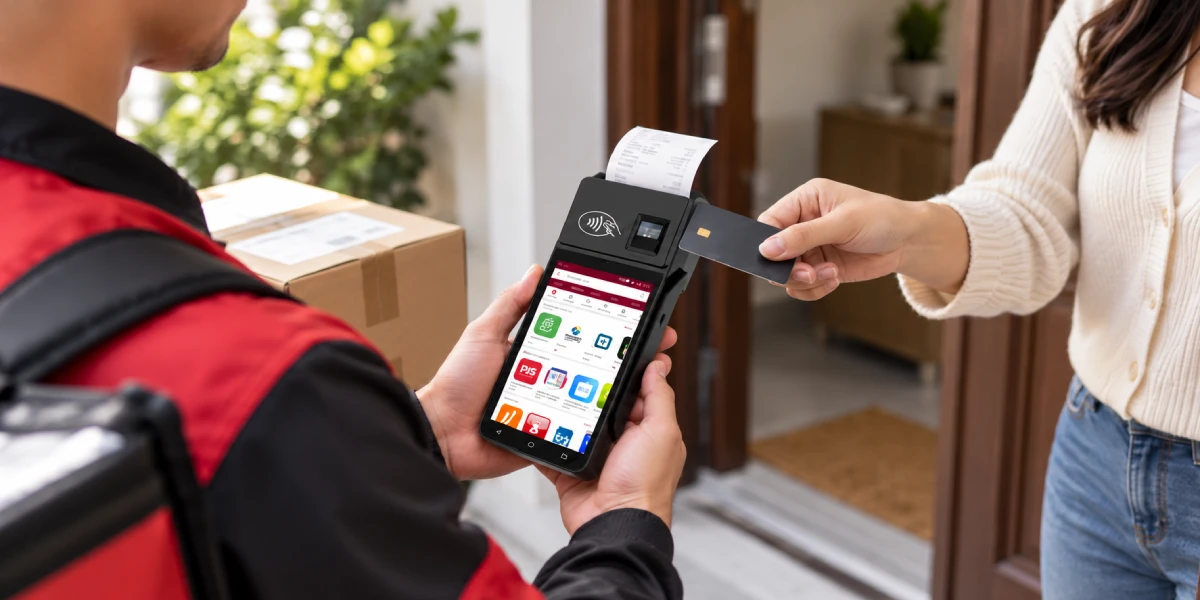
The lasting value of Shenzhen’s payment upgrade will be measured after the delegates leave. Airports, border checkpoints, hotels, shopping districts, transport systems and tourist sites serve international visitors throughout the year.
The 68% increase in overseas-card transactions and 350% increase in overseas-wallet volume indicate that demand was already growing before the leaders’ meeting. APEC 2026 accelerates deployment and public attention, but inbound tourism and business travel provide the longer operating case.
The strongest future model is multi-route acceptance rather than one mandatory app. Direct cards suit visitors who prefer familiar bank infrastructure. Linked mobile-payment apps provide wider access to Chinese QR merchants. Home-country wallets reduce onboarding friction where partnerships exist. Cash protects accessibility when digital methods fail.
Merchants will judge the system by exceptions rather than promotional coverage numbers. A payment environment feels international when staff can handle a declined card, a pending QR payment, a missing merchant record, a refund request and a cash fallback without losing the order trail.
APEC 2026 therefore offers a useful test of payment infrastructure in a global city. Shenzhen is expanding the number of ways a visitor can pay, but each successful transaction still depends on coordinated consumer credentials, merchant acceptance, terminal hardware, payment software and regulated financial networks.
Yes, overseas-issued cards can be used at enabled Shenzhen merchants and contactless transit gates. Acceptance still depends on the card scheme, issuing bank, merchant acquiring setup and displayed acceptance marks.
No single application is mandatory for every payment. Visitors may use an accepted overseas card, a linked mobile-payment app, a participating overseas wallet or RMB cash, depending on the merchant and transaction.
Tencent announced an initial PayPal World connection for eligible U.S. PayPal users, with additional markets expected in phases. Availability should be checked in the user’s wallet before relying on it.
No. NFC hardware is only one part of contactless acceptance. The terminal also needs the appropriate payment application, certifications, scheme support, acquiring relationship and production configuration.
The merchant should confirm success through its own merchant application, portal or integrated POS response. A customer screenshot does not provide independent proof that the merchant received a successful transaction.
No. APEC promotes economic and technical cooperation, but member economies retain different payment networks, regulations, wallet systems and acquiring arrangements. Interoperability comes from negotiated connections and technical integration, not one universal APEC payment rail.
One hardware platform may support several markets, but the deployed configuration usually changes. Payment applications, certifications, language, currency, receipt rules, network settings and acquiring connections must be validated for each target market.






 Home
 What Is a PIN Pad and How Does Customer PIN Entry Connect to a POS Payment?

