
2025-08-13 Author : ZCS
A Smart POS system replaces a cash register and a separate card terminal with one connected device that processes payments, tracks inventory, and reports sales in real time. Setting one up correctly takes four steps: connect the hardware, load product and inventory data, configure payment and security settings, and assign staff roles. This guide walks through each step, the core features a Smart POS system should have, and what the setup actually costs in 2026.
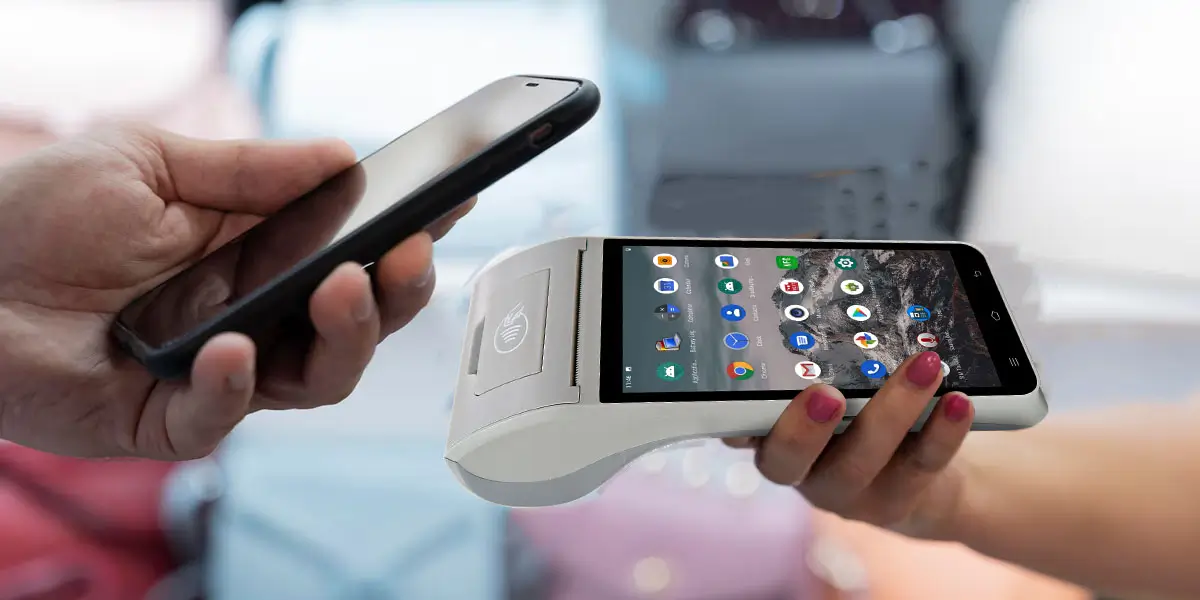
A Smart POS system is a point-of-sale device that runs on a full operating system — usually Android or iOS — instead of closed, single-purpose payment firmware. That distinction is what makes it "smart": the terminal can run inventory software, loyalty apps, and reporting dashboards side by side with the payment function, and update all of them independently over the internet. A traditional countertop terminal processes cards. A Smart POS system processes cards, tracks stock, and reports sales trends from the same screen.
Connect the terminal, receipt printer, barcode scanner, and cash drawer, then confirm each peripheral is recognized by the POS software before taking a first transaction. Most Android-based terminals detect USB or Bluetooth peripherals automatically; older serial-connected printers may need a manual driver step.
Enter product name, price, SKU, and category for every item, then turn on real-time inventory tracking so stock counts update with each sale. Retailers with size and color variants — clothing and footwear in particular — need a POS built for variant-level tracking rather than a single SKU per style; managing size and color inventory at checkout is a common configuration gap that shows up only after go-live if it isn't planned for during setup.
Enable the card, mobile wallet, and contactless payment methods the business plans to accept, then confirm the terminal encrypts and tokenizes cardholder data rather than storing it in cleartext. Tokenization replaces the card number with a non-reversible token immediately after the card is presented, which is the control most POS terminals use to stay inside PCI DSS scope. The PCI Security Standards Council maintains the PIN Security and token-related standards that govern how this data has to be handled at the point of sale.
Assign role-based permissions — cashier, manager, refund authority — so staff only access the functions their role requires, and turn on built-in time tracking if payroll needs shift data from the same system.
Barcode scanning speeds up checkout, and sales reporting shows which SKUs to reorder before they sell out. Apparel and footwear retailers get the most value from a POS built specifically around variant tracking rather than a generic retail template.
Order management streamlines the path from order-taking to kitchen ticket, and table management handles reservations and seating assignments without a separate system.
Portability lets a business accept payments away from a fixed counter, and offline mode keeps transactions running when there's no live internet connection, syncing once connectivity returns.
The terminal underneath a Smart POS system determines what the software layer can actually do. Three hardware factors matter most when evaluating options.
Open SDK and ODM customization. A terminal with a published SDK lets a business — or its software vendor — build or customize functionality directly, instead of waiting on the hardware manufacturer's release cycle. Retailers with non-standard hardware requirements, such as a built-in scale or a custom peripheral, typically need a manufacturer that supports ODM customization on an open-SDK Android POS platform rather than a fixed, closed configuration.
Manufacturer sourcing. Most Smart POS hardware sold in North America and Europe is manufactured or ODM-produced in China, so vetting the manufacturer directly — not just the software brand reselling the hardware — is part of due diligence. A closer look at how to evaluate Chinese POS terminal manufacturers covers certification, MOQ, and support questions worth asking before ordering hardware at volume.
Biometric identification. A smaller set of terminals extend staff login or customer identification past PIN codes and cards into biometric methods. Palm vein recognition is one option in commercial use; palm vein biometric authentication identifies a person from the vein pattern under the skin rather than a surface fingerprint, which is harder to spoof and doesn't degrade with worn or dirty hands — a relevant detail for staff clock-in on a retail or restaurant floor. This is only usable when the terminal's SDK exposes the sensor as a documented API, which ties directly back to the open-hardware requirement above.
Software typically runs $0 to $150 per month depending on feature tier, and hardware ranges from roughly $300 for a basic card-reader-and-tablet setup up to $2,000 for a multi-peripheral countertop station. Card processing adds 2.3% to 3.5% per transaction on top of either cost, and is usually the largest line item over a year of operation, not the monthly software fee. According to a 2026 POS pricing breakdown, per-terminal add-on fees for loyalty or online ordering modules can add another $9.95 to $40 per register monthly — worth checking before comparing two vendor quotes side by side.

Q1: What is a Smart POS system?
A Smart POS system is a point-of-sale terminal running a full operating system, typically Android. It processes payments, tracks inventory, and reports sales from one connected device, unlike closed, single-purpose card terminals limited to payment processing alone.
Q2: How much does a Smart POS system cost?
Software generally costs $0 to $150 per month, and hardware ranges from $300 to $2,000 depending on peripherals. Card processing fees, typically 2.3% to 3.5% per transaction, usually represent the largest ongoing cost over a full year.
Q3: Can a Smart POS system work without an internet connection?
Most Smart POS systems include an offline mode that queues transactions locally and syncs once connectivity returns. Coverage varies by vendor — some support full offline sales and refunds, others restrict offline mode to card-present sales only.
Q4: Is staff training required to use a Smart POS system?
Smart POS interfaces are generally touchscreen-based and intuitive, but training is still recommended. Role-based permissions, refund workflows, and inventory adjustments are easy to misuse without a short onboarding session for new staff.
Q5: Can one Smart POS system manage multiple store locations?
Yes, when the software includes multi-store management. A single dashboard can track inventory, sales, and staff activity across locations, provided each terminal stays connected to the same cloud account.






 Home
Home  How to choose a reliable POS manufacturer in China?
