
2026-02-05 Author : ZCS
Today's retailers can no longer afford isolated systems for sales, inventory, loyalty, and promotions. Customers move fluidly between online stores, physical shops, mobile apps, and social commerce — and they expect a consistent experience at every touchpoint. The unified commerce POS system was built to meet this expectation: a single platform that connects every part of a retail operation through one shared data model.
This guide explains what a unified commerce POS solution does, how it synchronizes inventory, loyalty programs, and promotions across channels, and what hardware capabilities make that synchronization reliable in practice.
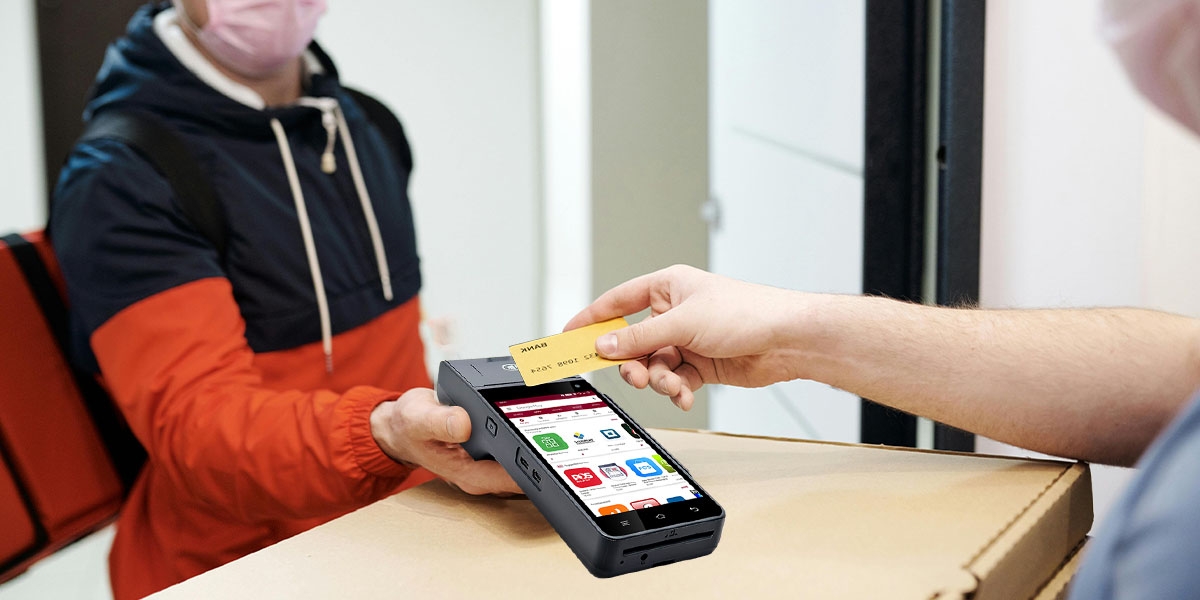
A unified commerce POS system is a point-of-sale platform that connects inventory management, customer loyalty, promotions, order management, and backend operations through a single, centralized data layer. Every channel — in-store terminals, e-commerce platforms, mobile apps, and third-party marketplaces — reads from and writes to the same data source in real time.
This is a meaningful departure from traditional POS systems, which store data in separate silos and require manual reconciliation. With unified commerce, stock levels, customer profiles, and promotional rules are consistent everywhere, automatically.
The architecture is especially important for retailers running models like BOPIS (Buy Online, Pick Up In Store), mobile checkout, or cross-channel fulfillment, where data inconsistencies directly cause order failures and customer complaints.
Every sale — online or in-store — triggers an immediate update to a central inventory count. This prevents overselling during promotional spikes, reduces manual stock reconciliation, and gives buyers accurate availability information at the moment of decision.
Retailers without real-time sync frequently face stockouts during high-demand periods precisely because their channel data lags. Unified inventory eliminates that lag.
Customer loyalty data — points balances, tier status, purchase history — is stored centrally and accessible from any sales terminal or online checkout. A customer who earns points from a weekend in-store visit can redeem them through the brand's app on Monday without any manual adjustment.
This continuity improves customer lifetime value (CLV) and drives repeat purchases, particularly when loyalty rewards are connected to personalized promotions.
Promotions managed inside a unified commerce POS system apply consistently across every channel. A discount configured once in the backend triggers automatically whether the customer is checking out at a physical terminal or completing an online order — no mismatched pricing, no channel-specific exceptions.
A common misconception is that unified commerce is primarily a software challenge. In practice, the hardware layer is where integration either succeeds or breaks down.
Unified commerce POS software manages the data logic — syncing records, applying rules, generating alerts. But the terminal running that software determines whether the integration is reliable under real retail conditions: high transaction volumes, intermittent connectivity, multi-peripheral environments (scanners, printers, payment modules).
Hardware built on open Android architecture gives retailers and ISVs the flexibility to connect unified commerce software without proprietary lock-in. Open SDK access means inventory APIs, loyalty engines, and promotion managers can be integrated directly into the POS terminal's operating environment, rather than running as external services that occasionally fall out of sync.
This is why hardware selection is not a secondary decision in a unified commerce deployment — it is a foundational one.
A deployed unified commerce POS solution typically connects the following systems through a shared data layer:
The result is that a store manager checking stock levels, a customer service agent looking up a loyalty balance, and an e-commerce platform displaying product availability are all working from identical, current data.
For multi-location retailers, this architecture also means that stock can be allocated intelligently across locations — transferring inventory from an overstocked branch to fulfill an online order from a nearby warehouse, for example.
Operational efficiency: When inventory, sales data, and marketing rules live in one system, managers no longer reconcile spreadsheets from four separate platforms. Decision-making during high-traffic periods — seasonal promotions, flash sales — becomes faster and less error-prone.
Customer experience: According to Adobe's 2025 Digital Trends Report, 71% of consumers expect brands to anticipate their needs and deliver personalized experiences. Fragmented systems make personalization structurally impossible; unified commerce makes it the default.
Revenue impact: Retailers adopting unified commerce strategies report measurable improvements in conversion rates and reduced cart abandonment, driven by consistent pricing, real-time stock visibility, and promotions that work the same way everywhere.
This workflow eliminates the manual reconciliation cycle that causes most inventory discrepancies in multi-channel retail operations.
Loyalty and promotional data follow the same centralization logic as inventory:
The practical effect is that marketing efforts are not duplicated or lost in translation between systems. A promotion configured once reaches every customer at every touchpoint without manual channel-by-channel setup.
ZCS Android POS terminals are built for the integration requirements of unified commerce deployments. The open Android platform supports direct SDK integration with third-party inventory systems, loyalty platforms, and promotion engines — giving ISVs and retailers the flexibility to connect their existing software stack without hardware constraints.
ZCS terminals support the peripheral ecosystem that unified commerce operations typically require: barcode scanners for real-time inventory updates, NFC and multi-protocol payment modules for consistent checkout across payment types, and customer-facing displays for loyalty and promotional transparency at the point of sale.
For retailers evaluating unified commerce POS hardware, ZCS offers Android terminals across desktop, handheld, and portable form factors to match different store environments.
Note: Payment certification for ZCS hardware (excluding the Z90) is managed through the integrating PSP or ISV. The Z90 holds independent PCI PTS, EMV L1/L2, Visa, Mastercard, UnionPay, PayPass, and PayWave certifications.
Q1. What is the difference between unified commerce and omnichannel POS?
Omnichannel POS provides consistent customer experiences across channels but may still rely on separate underlying data systems. Unified commerce goes further: all systems — POS, inventory, CRM, loyalty, and promotions — operate from a single shared data model, eliminating reconciliation entirely.
Q2. How does a unified commerce POS system improve loyalty programs?
Customer profiles and points balances are stored centrally and updated with every transaction, regardless of channel. This means customers can earn rewards in-store and redeem them online — or vice versa — without any manual adjustment or delay.
Q3. Can small businesses implement a unified commerce POS solution?
Yes. Cloud-based unified commerce platforms have reduced the infrastructure cost significantly. Small and mid-sized retailers can access real-time inventory sync, centralized loyalty management, and cross-channel promotions without enterprise-scale IT investment.
Q4. Does unified commerce POS support real-time inventory synchronization?
Real-time sync is the core function of a unified commerce architecture. Every sale updates central inventory immediately, giving all channels — online storefronts, physical terminals, mobile apps — accurate stock data at the same moment.
Q5. How do cross-channel promotions work in a unified commerce system?
Promotions are configured once in a central management interface and applied automatically across every channel. Whether a customer checks out in-store or online, the same discount rules, loyalty multipliers, and eligibility criteria apply — no channel-specific exceptions.
Related Posts
1. Omnichannel POS Architecture Guide: Retail and Food Service
2. Why Convenience Stores Need a Smart POS Cash Register: ZCS Solutions for High-Volume Checkout






 Home
Home  Next-Gen POS Payments: Contactless & Biometric Support Explained
