
2026-09-08 Author : ZCS
The global payment industry is undergoing comprehensive digital transformation. Traditional fixed cash registers are gradually phased out and replaced by intelligent, cloud-connected Android POS terminals that support multi-region compliance, multi-scenario adaptation, and diverse modern payment methods. For global wholesalers, system integrators, project contractors, and retail chain operators, choosing a professional and reliable POS manufacturer is the core determinant of project stability, long-term operation cost, after-sales maintenance efficiency, and cross-border market compliance.
Most B2B purchasers fall into a common procurement misunderstanding: focusing only on hardware appearance and unit price while ignoring core indicators such as SDK openness, firmware iteration capability, local certification support, and long-term component supply stability. Low-cost generic POS hardware always brings huge hidden risks, including third-party payment application incompatibility, delayed system updates, certification failure in target markets, and discontinued spare parts supply within two years after mass procurement.
As a professional POS manufacturer focusing on Android smart payment hardware R&D, customization, and mass production, ZCS provides one-stop POS hardware solutions for global enterprise clients. We focus on vertical scenario optimization, secondary development technical support, and cross-border project customized deployment. For full product details and project consultation.
According to the latest 2026 industry statistics released by Worldmetrics, cloud-based POS solutions will capture 55% of the global POS market share by 2027. Small and medium-sized merchants in emerging markets have become the fastest-growing customer group for smart Android POS hardware procurement.
Samuel Okafor, senior industry analyst at Worldmetrics, pointed out in the official industry report: “The core competition of the global POS manufacturing industry has shifted from basic transaction function realization to ecological compatibility and scenario-based customization. Excellent POS manufacturers no longer simply sell hardware equipment, but provide scalable, developer-friendly hardware platforms to help integrators shorten project cycles and reduce secondary development costs.”
This blog systematically analyzes 2026-2027 global POS industry changes, blue-ocean vertical application scenarios, core evaluation standards for qualified POS manufacturers, practical industry deployment strategies, and common procurement pitfalls. It also summarizes five high-search-volume Google FAQ questions to provide comprehensive and actionable procurement guidance for global B2B buyers.
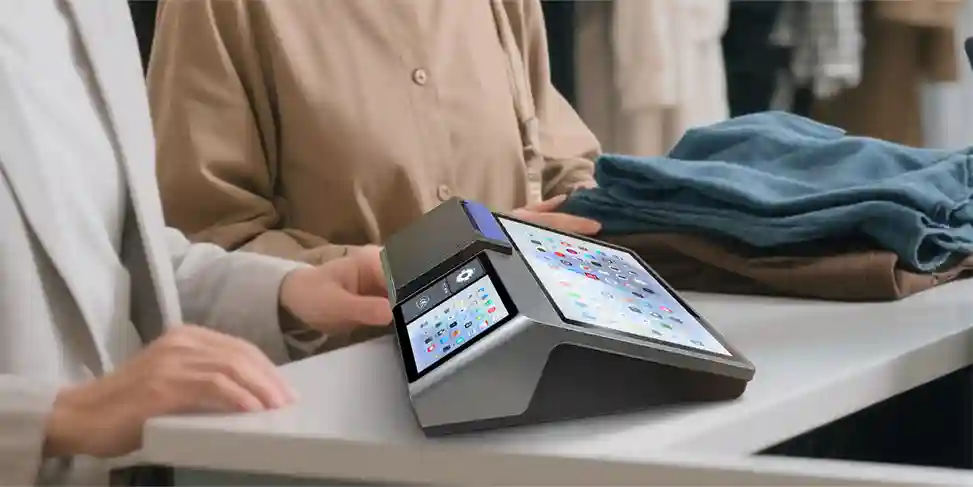
Traditional Linux-based POS devices feature closed system architecture, limited application expansion capabilities, and poor compatibility with emerging payment methods such as dynamic QR code payment, biometric verification, and offline identity recognition. In contrast, Android POS terminals support flexible APK installation and debugging, rich peripheral expansion, and system-level permission customization, which perfectly adapts to retail, catering, government welfare deduction, gas station payment, campus canteen consumption, and other diversified scenarios.
Fortune Business Insights data shows that the global cloud POS market will maintain a compound annual growth rate of 14.2% from 2026 to 2034. The market demand for intelligent Android POS hardware in Africa, Southeast Asia, and Latin America is growing far faster than that in mature European and North American markets.
Merchants in emerging markets have unique and rigorous hardware requirements, including wide-voltage power supply for unstable local power grids, dustproof and drop-resistant structural design, multi-language font library support, and high-temperature and high-humidity resistant thermal printing modules. Most generic off-the-shelf POS hardware lacks targeted optimization for these complex environments, creating huge blue-ocean market gaps for professional scenario-oriented POS manufacturers.

Most buyers only associate POS terminals with supermarket checkout and restaurant ordering. In fact, multiple low-competition, high-profit blue-ocean segmented markets are continuously releasing new procurement demands. These niche scenarios have few standardized mature products and huge development potential for forward-looking hardware suppliers.
Palm vein biometric POS is a typical high-growth blue-ocean track. In emerging regions with low bank card coverage for residents, palm vein recognition combined with Android POS hardware realizes offline identity verification and secure transaction deduction, widely applied in government food subsidy distribution, rural retail outlets, and community public service stations. This scenario requires stable biometric SDK docking, large-capacity offline data storage, low-power optimization, and strict data privacy protection. ZCS Z90NP and Z92 palm vein POS terminals are specially developed for such government-level projects, providing complete open SDK for secondary development.
Gas station POS equipment requires professional anti-static design, fuel dispenser module docking interface, multi-level account permission management, offline transaction record caching, and high-temperature resistance for outdoor working environments. Ordinary consumer-grade POS terminals cannot meet the safety and stability standards of gas station scenarios, forming a professional segmented market with high technical barriers.
Canteen POS terminals focus on extreme offline stability. When the local network is disconnected, consumption records must be safely stored locally and automatically synchronized after network recovery. The equipment needs to support IC card swiping, QR code scanning, and auxiliary facial recognition verification simultaneously. Unlike traditional fixed-function cash registers, Android POS can connect with campus and factory management systems through open interfaces, realizing intelligent data interconnection.
The large-chain retail POS market has fallen into severe price competition. However, decentralized micro-retailers in township and rural areas need cost-effective handheld Android POS with 4G network, built-in thermal printer, and long battery life for outdoor all-day operation. This long-tail blue-ocean demand is ignored by most mainstream POS brands, bringing stable profit space for professional POS manufacturers.
In the past, B2B purchasers prioritized hardware parameters and unit prices. Currently, professional project buyers focus on five core capabilities of POS manufacturers: target market certification assistance, secondary development SDK completeness, long-term component supply guarantee, customized firmware modification service, and overseas technical after-sales response efficiency.
For cross-border bulk projects, hidden losses caused by certification failure, hardware discontinuation, and incomplete technical documents far exceed the small cost savings from low-priced generic hardware.
2. Core Criteria for Selecting a Qualified POS Manufacturer
To avoid procurement traps and select long-term reliable hardware suppliers, B2B buyers can evaluate POS manufacturers from the following five core dimensions.
A professional and reliable POS manufacturer must have independent hardware circuit design, structural design, and firmware development teams, instead of simply assembling generic motherboards from upstream suppliers. Manufacturers with self-R&D capabilities support personalized customization, including peripheral interface adjustment, exclusive pre-installed applications, system permission locking, customized boot logos, and dedicated system parameter configuration for project clients.
Suppliers without independent R&D capabilities cannot provide in-depth customization services, and all special project requirements need to be transferred to upstream manufacturers, resulting in uncontrollable delivery cycles and unstable product quality. As a mature POS manufacturer, ZCS owns a complete in-house R&D team covering hardware structure, Android firmware, and SDK development, supporting exclusive personalized customization for global bulk-order clients.
For system integrators, SDK quality directly determines the secondary development cycle and project success rate. High-quality POS supporting SDK should cover thermal printer calling, QR code scanner control, card reader interface, biometric module invocation, GPIO peripheral control, and local transaction data storage interface, equipped with complete demo codes, official API manuals, and sample APK files.
Many small-scale POS manufacturers only provide bare hardware with fragmented technical documents, forcing integrators to spend weeks debugging basic peripheral functions and delaying the overall project progress. ZCS always provides full-set open SDK and standardized technical documents for all Android POS products, greatly reducing the development threshold for global partners.
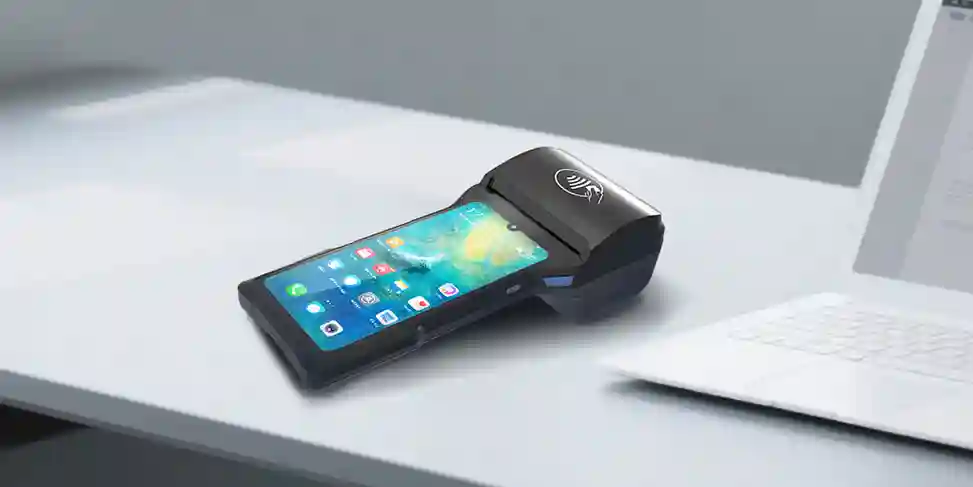
Different countries and regions have mandatory certification standards for payment terminals, involving electromagnetic compatibility, safety specifications, and payment industry compliance requirements. Excellent POS manufacturers can provide pre-test assistance, dedicated test hardware versions, and complete technical files to cooperate with clients’ third-party certification institutions.
It is worth noting that any hardware modification after certification will invalidate the original certification report. Therefore, purchasers must confirm all customized requirements with the POS manufacturer in advance to ensure the customized equipment meets local certification standards.
Most small hardware factories adopt short-life-cycle motherboard solutions. Core chips will be discontinued within 6 to 12 months after product launch, leading to the full discontinuation of POS models. For project clients, this means no spare parts for equipment maintenance and forced overall equipment replacement, resulting in huge additional project costs.
Formal POS manufacturers will conduct strict supply chain assessment when selecting core components, prioritizing long-cycle chips and raw materials, and actively inform clients of component supply risks in advance.
Cross-border hardware procurement faces challenges such as time zone differences and regional barriers. Professional POS manufacturers need to provide full-cycle layered support, including pre-sales technical consultation, sample testing guidance, mass production progress tracking, remote fault diagnosis, RMA processing, and free firmware iteration services.
Before cooperation, buyers need to confirm the supplier’s English technical support capability, ticket response SLA, bulk order warranty policy, and after-sales processing mechanism to avoid long-term operation risks.

3. Practical Experience: Core Android POS Deployment Strategies & Blue-Ocean Market Layout Solutions
With the rapid upgrading of global intelligent payment infrastructure, standardized generic POS hardware can no longer meet the differentiated and customized needs of cross-border projects and vertical industry scenarios. The core pain points of current B2B purchasers and system integrators are no longer the difficulty of purchasing POS equipment, but the mismatch between universal hardware and scenario requirements, high secondary development costs, and unstable long-term operation and maintenance. Based on years of cross-border POS R&D, customization, and large-scale deployment experience, ZCS summarizes three practical and replicable industry layout strategies to help global partners avoid homogeneous price competition and efficiently seize high-value blue-ocean segmented markets.
More than 90% of generic POS devices on the market adopt unified public-version solutions, which are only suitable for conventional supermarket and catering scenarios. When deployed in special scenarios such as government welfare projects, gas stations, and rural micro-retail, generic hardware is prone to frequent crashes, data loss, and peripheral failure. As a scenario-focused POS manufacturer, ZCS abandons homogeneous public-version design and carries out targeted hardware optimization for various blue-ocean tracks to solve the pain points of generic equipment.
For government welfare and rural livelihood projects, conventional POS devices lack large-capacity offline data storage and biometric adaptation capabilities, which cannot support offline identity verification and transaction recording in network-unstable areas. ZCS customized Android POS terminals are equipped with exclusive optimized firmware and built-in high-capacity local database, supporting offline storage of tens of thousands of user data records. Equipped with mature palm vein and fingerprint biometric SDK, the equipment perfectly adapts to zero-network and no-bank-card transaction scenarios, becoming the preferred hardware solution for emerging market government livelihood projects.
For harsh working scenarios such as gas stations, outdoor stalls, and industrial parks, POS equipment needs to resist high temperature, static electricity, and voltage fluctuation. ZCS POS hardware adopts professional three-proof and anti-static design, with 85-265V wide-voltage power supply adaptation, which can operate stably for a long time in high-temperature and unstable power environment, completely solving the frequent failure problems of generic POS equipment in special working conditions.
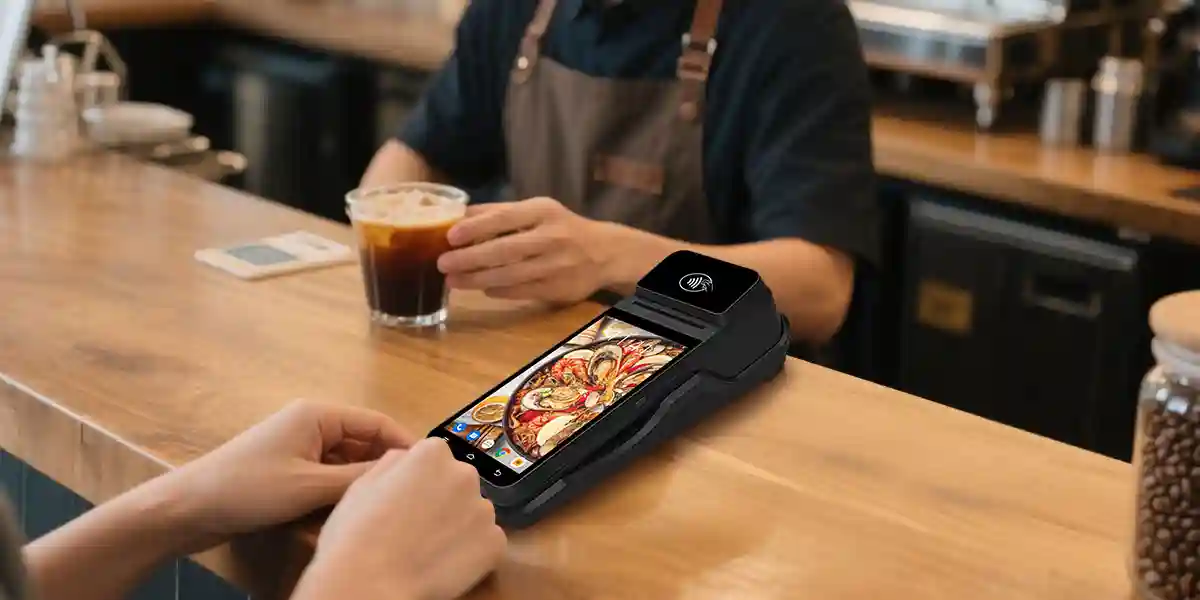
Most small and medium-sized system integrators and cross-border traders have limited R&D team scale and technical reserves. Complex hardware adaptation and secondary development will greatly extend the project cycle and increase labor costs, which is the main reason why many partners give up high-profit blue-ocean projects. Most small and medium-sized POS manufacturers only provide bare hardware without supporting technical services, requiring buyers to complete all peripheral debugging and system docking independently, with extremely high project threshold.
ZCS thoroughly solves this industry pain point. As a one-stop POS hardware service provider, we provide global clients with full open-source SDK, standardized API interface, complete demo codes, and detailed technical manuals, covering one-click invocation of printers, scanners, card readers, biometric modules, and all other peripherals. Integrators only need simple upper-layer application adaptation without bottom-level hardware development, shortening the original 1-2 month development cycle to 3-7 days and greatly reducing the threshold for blue-ocean project deployment.
Meanwhile, ZCS provides exclusive firmware pre-customization services for bulk orders, supporting client exclusive APP pre-installation, system permission locking, customized boot interface and parameter modification. The equipment can be put into use directly after leaving the factory without secondary debugging, perfectly adapting to large-scale cross-border batch deployment projects.
The core competitiveness of cross-border POS projects lies in long-term stable operation, continuous firmware iteration, and reliable spare parts supply, rather than short-term low-price sales. Many purchasers choose low-cost generic POS hardware but finally face equipment discontinuation, un-upgradable firmware, and no after-sales support, resulting in project stagnation and lost long-term client resources.
Relying on self-owned R&D team and stable global supply chain system, ZCS promises more than 3 years of long-term supply for all POS models, free lifelong firmware iteration, and localized overseas after-sales support. For overseas batch deployment projects, we provide remote technical debugging, fault elimination, and online firmware upgrade services to solve after-sales barriers caused by time zone and regional differences. In addition, all ZCS POS terminals support pre-adaptation of multi-national certification standards, assisting clients in quickly completing market compliance certification, helping partners deeply layout blue-ocean markets and obtain sustainable long-term benefits.

Hardware parameters such as CPU, RAM, ROM, and screen resolution cannot represent actual equipment stability. The real service performance of POS terminals depends on firmware optimization, peripheral debugging accuracy, power management logic, heat dissipation structure, and anti-interference capability. High-parameter generic devices often crash, jam printers, and fail to scan codes in complex actual scenarios. Sample testing under simulated real working environments is essential before bulk procurement.
Most merchant demos are completed under stable network conditions. In actual deployment scenarios with unstable 4G or wired networks, POS terminals without mature offline caching mechanisms will lose transaction data, causing direct capital risks for merchants. Purchasers must simulate network disconnection scenarios during sample testing to verify offline data storage and automatic synchronization functions.
Firmware modification, peripheral interface adjustment, and exclusive APP pre-installation all require professional R&D cycles. Buyers need to reserve sufficient technical verification time for customized projects instead of blindly compressing the development cycle, which will lead to project delays.
Some suppliers offer extremely low unit prices but provide incomplete SDK and missing technical documents, transferring all debugging pressure to integrators and generating huge hidden labor costs. Complete SDK and standardized technical documents are core delivery contents of B2B POS projects, which must be confirmed clearly in the early stage of cooperation.

Q1: What is the difference between generic Android POS and customized POS from a professional POS manufacturer?
A: Generic Android POS is designed for ordinary retail merchant scenarios with fixed firmware and almost no modification space. Customized POS provided by professional POS manufacturers supports system-level optimization, peripheral interface adjustment, special module integration such as palm vein biometrics, and harsh environment targeted optimization. It is equipped with complete secondary development SDK and official technical documents, specially serving batch project deployment needs of system integrators and solution providers.
Q2: What preparations are required before submitting POS hardware for national certification?
A: First, confirm all hardware customization items with your POS manufacturer, since any hardware modification will invalidate the finished certification. Request hardware block diagrams, BOM lists, official spec sheets, firmware version files, and pre-test reports from the supplier. Clarify local certification standards in advance and confirm the hardware version meets test requirements to avoid rework and extra costs.
Q3: How to verify a POS manufacturer’s long-term supply stability for bulk projects?
A: Buyers can verify from four dimensions: 1) Confirm whether the manufacturer has independent hardware and firmware R&D capabilities instead of pure assembly; 2) Learn about the supplier’s component risk response mechanism and chip phase-out notification policy; 3) Request long-term bulk project cooperation cases; 4) Obtain written warranty and spare parts supply commitments in formal business contracts.
Q4: Is palm vein biometric POS suitable for large-scale deployment in emerging markets?
A: Palm vein biometric POS is very suitable for emerging market scenarios with low bank card and ID card coverage, such as rural government subsidy distribution and decentralized township retail. It requires database docking by integrators, and the hardware needs mature biometric SDK, large-capacity offline storage, and unstable power grid adaptation. ZCS palm vein POS series provides ready-to-use open SDK for global secondary development.
Q5: What core items should be included in the Android POS sample testing checklist before mass procurement?
A: The key testing items include: 1) High-load continuous operation stability test; 2) Offline data storage and network recovery automatic synchronization test; 3) Full-function verification of printer, scanner, card reader and biometric modules; 4) Voltage fluctuation adaptation test; 5) SDK demo code debugging verification; 6) Long standby stability test; 7) Customized firmware function verification. Only qualified sample testing can support formal bulk order placement.
The global intelligent POS industry is in a period of rapid iteration and upgrading. With the popularization of cloud payment architecture and accelerated digital transformation of merchants in emerging markets, the market demand for scenario-customized, high-stability Android POS hardware continues to grow steadily. For B2B procurement practitioners, selecting an excellent POS manufacturer is not only a hardware procurement behavior, but also a long-term strategic partner selection for project operation.
Purchasers should avoid excessive pursuit of low unit prices and comprehensively evaluate suppliers’ R&D strength, SDK service capability, certification support, supply chain stability, and overseas after-sales system. Deeply exploring blue-ocean vertical tracks including biometric welfare POS, gas station dedicated POS, offline canteen deduction POS, and township handheld POS will create new profit growth points for global hardware distributors and system integrators.
As a professional and reliable POS manufacturer, ZCS continues to iterate and upgrade Android smart POS terminals and biometric payment hardware, providing global partners with sample testing, SDK technical support, and personalized bulk customization solutions.






 Home
Home  OEM Android POS Terminal with GMS Certification: Why Global Brands Prioritize GMS Hardware
