
2026-05-25 Author : ZCS
Hospital payment and registration workflows are under pressure from two directions simultaneously. On the patient side, expectations have shifted: over 85% of consumers now want to complete payments, pre-visit forms, insurance verification, and arrival check-in through digital means rather than at a staffed counter. On the clinical side, infection control requirements have made every shared touchpoint — card readers, PIN pads, signature screens — a hygiene liability that standard payment hardware was never designed to address.
The response from healthcare administrators is accelerating. Contactless payment and check-in technology is no longer a patient experience enhancement — it is an operational and infection control requirement. This guide examines what that technology looks like in a hospital context, why standard payment terminals fall short, and what healthcare operators should evaluate when selecting a contactless payment terminal for clinical deployment.
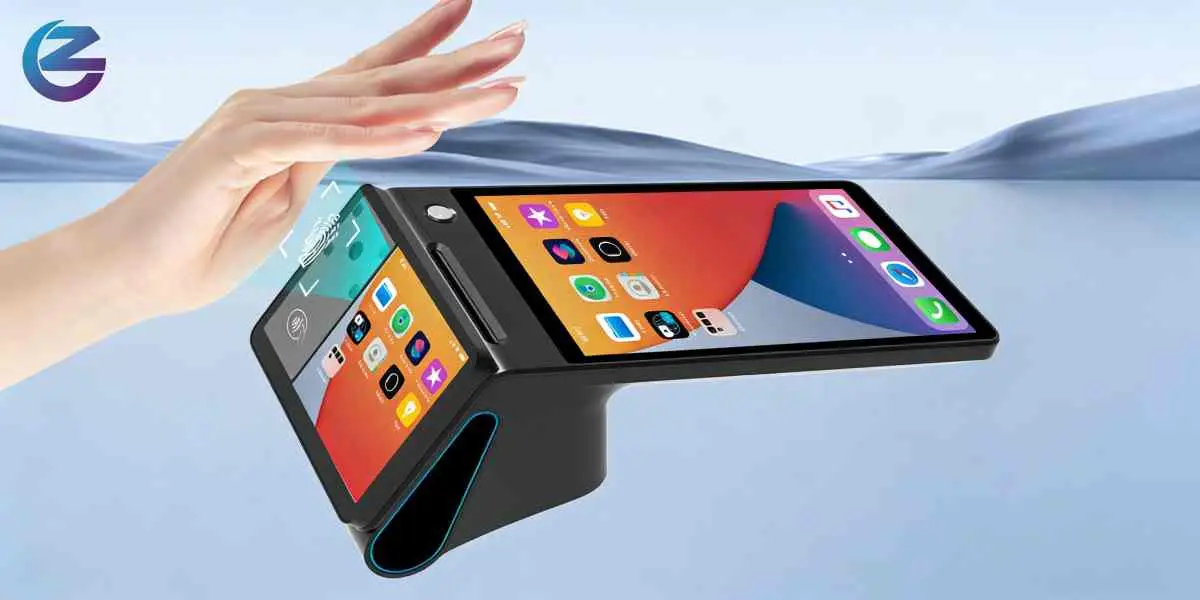
A standard retail or hospitality payment terminal is engineered for one thing: fast, reliable transaction processing in a commercial environment. It is not designed for a setting where the person using it may be elderly, in pain, immunocompromised, or unfamiliar with the device — and where the device itself becomes a potential infection vector the moment the next patient touches it.
The infection exposure problem is quantifiable. Healthcare-associated infections (HAIs) affect more than 680,000 patients annually in the United States alone, and approximately 1 in every 31 hospital patients acquires at least one HAI during their stay. High-touch devices are a documented transmission pathway: shared touchscreens and PIN pads can carry bacterial contamination rates between 41.2% and 97.8% depending on the environment. Every time a patient touches a payment terminal, they interact with a surface that previous patients have also touched — often without disinfection between contacts.
Beyond infection risk, standard payment terminals also fail on operational grounds. They separate identity verification from payment, requiring staff to manually cross-reference patient records before processing a transaction. They have no mechanism for the elderly or vision-impaired patient who cannot read the screen clearly or locate the contactless card in their wallet. And in a high-volume outpatient environment — where a busy registration desk may process hundreds of patients per day — the physical bottleneck of a single staffed terminal creates queue congestion that delays care, increases staff workload, and degrades patient satisfaction.
Hospitals need a payment terminal that is contactless by design, integrates with patient identity systems, and eliminates shared physical contact without requiring patients to have a smartphone, a functioning card, or the dexterity to use a standard checkout device.
A contactless payment terminal processes transactions without requiring physical card insertion or PIN pad entry. In a hospital context, this encompasses three distinct approaches, each with different capability levels.
NFC-based contactless card and mobile wallet payment is the baseline. The patient taps a contactless card or mobile device to the terminal's NFC reader, and the transaction completes without physical key entry. This eliminates the PIN pad as a shared contact surface but still requires the patient to produce and handle a card or phone — which may be difficult for elderly, sedated, or mobility-impaired patients, and does not resolve the identity verification gap between payment and patient record.
QR code payment allows patients to scan a code displayed on the terminal using their own smartphone, completing payment through a banking or health insurance app without touching the terminal at all. This works well for digitally capable patients but excludes those without smartphones or the technical confidence to use them — a significant proportion of the hospital patient population, particularly in geriatric or rural settings.
Biometric contactless payment — specifically palm vein recognition — represents the highest tier of both hygiene and identity integration. The patient holds their palm near a near-infrared sensor without touching it. The sensor images the unique vascular pattern beneath the skin's surface, matches it against an enrolled record, and simultaneously verifies identity and authorizes payment. No card, no phone, no PIN, no surface contact.
For healthcare, the combination of all three modalities on a single terminal — NFC for card-capable patients, QR for smartphone users, and palm vein for enrolled patients who need or prefer a fully touchless option — creates a payment and identity platform that serves the full patient population without excluding any group. A well-configured contactless payment terminal in a clinical setting handles all three within the same device and the same workflow.
Of the available contactless payment and identity technologies, palm vein recognition is the most clinically appropriate for hospital environments. Its advantages over other biometric and contactless modalities are not marginal — they are structural.
No surface contact. The patient's palm is held near the sensor, not on it. Near-infrared light penetrates the skin to image subcutaneous vascular patterns at a distance, meaning there is no shared physical surface between patients. This is categorically different from fingerprint readers, which require direct skin contact with a sensor surface that must be disinfected between uses, and from touchscreen-based biometrics, which create the same shared-surface hygiene problem as a standard PIN pad.
Identity that cannot be borrowed, lost, or forgotten. A hospital card can be forgotten at home, lost in a bag, or handed to a family member. A phone can be dead or inaccessible. A palm vein pattern is biologically permanent and patient-specific — it cannot be transferred, shared, or misplaced. For hospitals dealing with elderly patients who frequently arrive without their insurance card or cannot remember their patient ID number, this removes a class of front-desk problem that currently consumes significant staff time.
Accuracy at clinical standards. Commercial palm vein systems achieve a False Acceptance Rate (FAR) of 0.0001% or lower — fewer than 1 in 1,000,000 verification attempts incorrectly accepted. In a medical context, where the consequences of misidentifying a patient extend to clinical decision-making, billing, and medication administration, this level of identity assurance is not a feature — it is a patient safety requirement. Standard fingerprint systems run FAR between 0.01% and 0.1%, and facial recognition in uncontrolled environments can reach 1–2%.
Liveness detection built in. Palm vein recognition requires active blood flow to produce a readable vascular image. A photograph, a mold, or a replica of a hand is insufficient to fool the sensor. This makes spoofing attempts functionally impractical in a clinical setting — an important consideration given that healthcare identity fraud costs the US system an estimated $68 billion annually.
Skin-condition independence. Fingerprint recognition degrades in accuracy when skin is dry, wet, cracked, or damaged — conditions common among elderly patients, patients undergoing chemotherapy, and patients with dermatological conditions. Palm vein recognition is unaffected by skin surface condition because it images beneath the skin. This reliability advantage matters most in exactly the patient population most likely to struggle with alternative authentication methods.
The ZCS Z108P is a purpose-built palm vein terminal with an 8-inch touchscreen, contactless near-infrared vein scanning with liveness detection, and 1:1,000,000 recognition capability at under one second. Its wall-mount and desktop deployment options make it practical for placement at registration counters, triage points, and payment kiosks throughout a hospital facility.
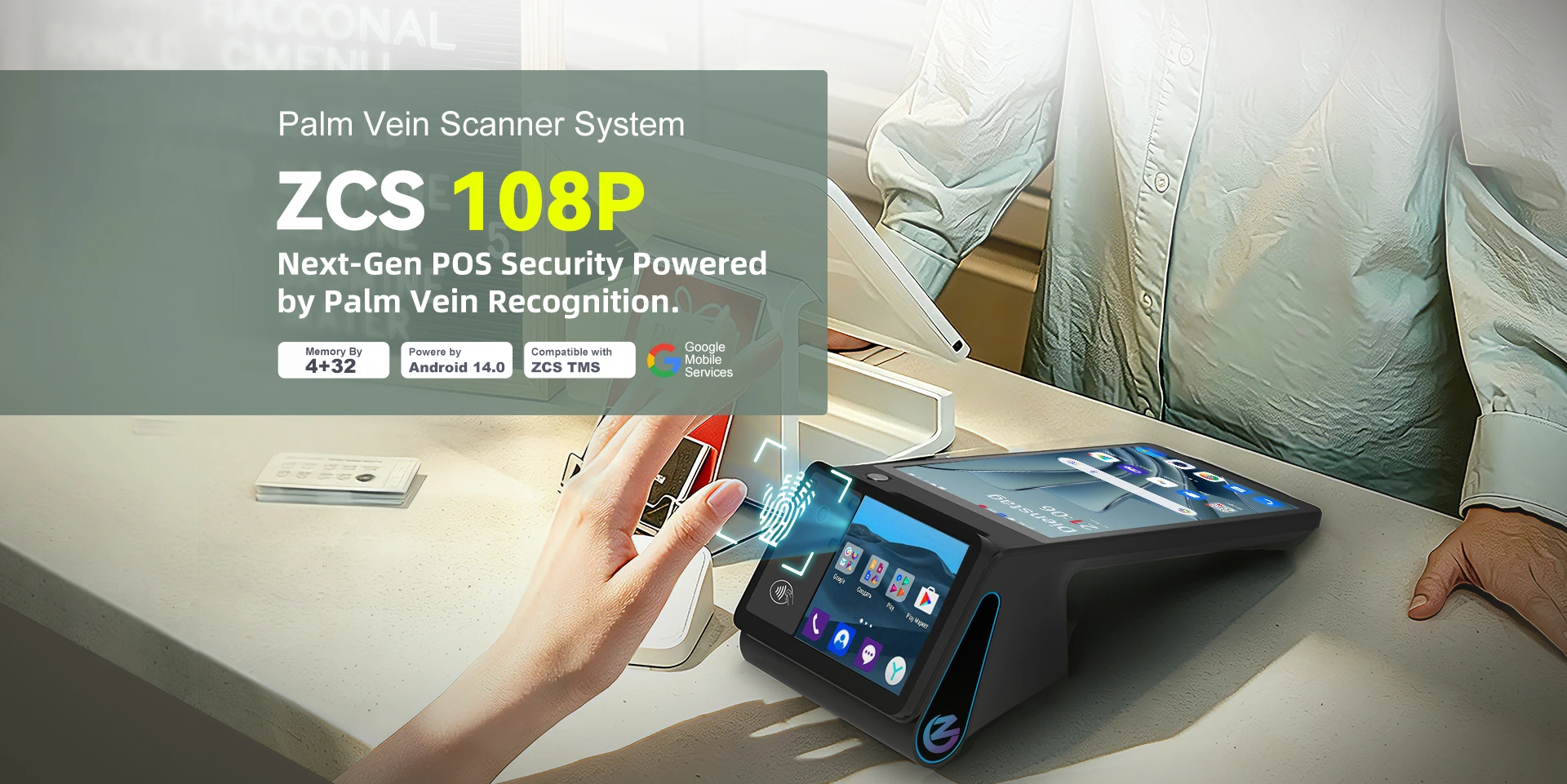
The workflow problem in most hospital outpatient environments is not any single interaction — it is the accumulation of manual steps across an entire patient journey that each add seconds or minutes and collectively create the queues that frustrate patients and overload front-desk staff.
A fully contactless workflow, anchored by palm vein identity verification, changes the operational model at each stage.
Registration. The patient arrives and authenticates at a self-service kiosk or staffed terminal using their enrolled palm vein. The system retrieves their record — demographics, insurance, appointment, outstanding balance — without any manual lookup or card presentation. Staff verify appointment details on screen; the patient proceeds directly to the waiting area. Hospitals implementing automated check-in processes have reduced patient waiting times by up to 16 minutes in some cases, alongside clinics reporting return on investment of up to 20 times their initial implementation cost.
Queue management and triage. Because the patient's identity was captured at arrival, the queue management system has real-time visibility of who has checked in, their appointment priority, and their clinical pathway. Automated call systems can notify patients by SMS or display screen when their number is next — eliminating the crowded waiting room dynamic where patients cluster near the desk to confirm their status.
Payment at point of care. Rather than directing all patients back to a central cashier window after their consultation, payment can be initiated at the consultation room or at distributed terminals. The patient authenticates with their palm again, confirms the charge against their insurance record, and completes payment without returning to the front desk. For hospitals that previously funneled all post-consultation billing through a single cashier queue, distributing payment terminals with biometric identity integration removes a structural bottleneck.
Discharge and settlement. For inpatient discharge, the same palm vein identity record links to the full stay's billing — medication charges, procedure fees, accommodation — for a single settlement interaction that is both accurate and contactless. The patient authenticates once; the system presents the consolidated balance for payment confirmation.
Over 85% of consumers want to complete payments, forms, and check-in through digital means rather than at a staffed counter. The contactless patient journey — from pre-arrival registration through to discharge settlement — is not a vision for a future hospital. It is what patients already expect, and what the right terminal infrastructure makes operationally achievable.
Hospital procurement for payment technology is more complex than commercial retail because the requirements span clinical, administrative, financial, and IT domains simultaneously. These are the dimensions that matter most.
Hygiene standards and material compliance. The terminal's physical materials should be compatible with the disinfection protocols used in your facility — typically IPA-based or quaternary ammonium solutions. Terminals with exposed ports, textured surfaces, and non-sealed seams are difficult to disinfect thoroughly. For palm vein terminals in particular, confirm the sensor housing and surrounding surfaces meet the cleaning requirements of your infection control team.
Patient identity and EMR integration. A contactless payment terminal that cannot communicate with your Electronic Medical Records system or patient administration system (PAS) creates a data silo — payment transactions must be manually reconciled against patient records, duplicating work and creating reconciliation errors. The terminal or its software layer must support integration with your EMR via standard healthcare interoperability protocols (HL7 FHIR or equivalent), or through a middleware layer that your IT team can manage.
Accessibility for all patient groups. The terminal interface must be usable by elderly patients, patients with limited mobility, and patients with visual impairment. This means large, high-contrast text; clear visual guidance for palm positioning; audio prompts where needed; and a screen height and angle appropriate for both standing and wheelchair access. Palm vein recognition is inherently more accessible than card-based or PIN-based payment for patients with limited fine motor control — but only if the physical terminal placement and interface design support that accessibility.
Offline transaction capability. Hospital IT infrastructure is generally reliable, but network outages occur — particularly in older facilities with legacy infrastructure. A payment terminal that becomes non-functional when connectivity drops is unacceptable in a care setting. Confirm that the terminal can store transactions locally and sync automatically when the network restores, without requiring staff intervention or losing transaction data.
Data security and payment compliance. Healthcare payment data intersects HIPAA, PCI DSS, and in some jurisdictions additional national data protection requirements. One important distinction that hospital procurement teams should understand: payment certification — PCI, EMV, and regional scheme approvals — sits with the payment software and the payment service provider (PSP), not with the terminal hardware itself. Open-platform terminals that expose a well-documented SDK allow hospitals to deploy whichever certified payment application their PSP or software vendor provides, without being locked into a single payment stack. This separation of hardware and payment software gives procurement teams more flexibility to meet their specific compliance obligations. Biometric data must be stored as non-reversible encrypted templates, subject to the same retention and deletion controls as other protected health information — a requirement enforced at the software layer.
Deployment flexibility. Hospital payment touchpoints are not uniform: a busy outpatient registration desk has different physical requirements than a pharmacy counter, a ward discharge point, or a self-service kiosk installation. The ZCS Z108P's support for both wall-mount and desktop configurations — combined with TMS-based remote provisioning and monitoring — makes it practical to deploy and manage the same terminal model across multiple points within a facility, without requiring on-site configuration visits for each unit. This matters particularly in large hospitals where payment terminals may be distributed across multiple floors and departments.

The case for contactless payment infrastructure in hospitals is not primarily about modernization — it is about measurable outcomes: reduced HAI transmission risk, shorter patient wait times, fewer staff hours spent on manual reconciliation, and a payment experience that actually works for the full patient population, including those who are elderly, unwell, or without digital devices.
Start with a workflow audit, not a device shortlist. Map every point in your patient journey where identity verification, payment, or registration currently creates a queue, a hygiene risk, or a manual workaround. These points — typically outpatient registration, post-consultation payment, and inpatient discharge — are where contactless terminal deployment delivers the highest return.
Confirm your integration requirements before evaluating hardware. The most capable biometric terminal in the world adds limited value if it cannot communicate with your EMR, patient billing system, or insurance verification layer. Define the integration requirements first; evaluate hardware against those requirements second.
Plan for the full patient population. A contactless payment system that works for smartphone-capable patients in their 30s but creates barriers for elderly patients or those without digital literacy does not solve the hospital's payment problem — it splits it. The right solution handles NFC, QR, and palm vein within a single terminal workflow, with no patient excluded by their device ownership or technical capability.
Pilot before scaling. Deploy a terminal at one high-volume registration desk or payment point, instrument the queue metrics and patient satisfaction scores before and after, and use that data to build the business case for facility-wide rollout. The data will also surface integration issues and staff training requirements that are easier to resolve at single-terminal scale than across a full deployment.
The shift to contactless hospital payment infrastructure is underway across healthcare systems globally. The question for most operators is not whether to make this change, but how to sequence it so that the infrastructure deployed today can scale as patient volumes grow and as palm vein enrollment rates rise across the patient population. Starting with a clearly identified workflow bottleneck, the right integration architecture, and hardware capable of serving the full range of patient needs is the clearest path to a rollout that delivers on its operational and clinical promise.
Q1: Why do standard retail POS systems fail as a contactless payment terminal in hospitals?
A: Standard retail terminals focus purely on transaction speed, ignoring clinical environments. In healthcare, shared screens and PIN pads are documented infection pathways, carrying bacterial contamination rates up to 97.8%. Furthermore, standard POS terminals separate identity verification from billing, creating manual back-office reconciliation errors and lines at registration counters.
Q2: How does palm vein recognition improve hospital contactless payment and check-in?
A: Palm vein biometrics capture unique subcutaneous vascular patterns under near-infrared light without any surface contact, completely eliminating the hygiene risks of shared PIN pads or fingerprint readers. This biometric identity cannot be lost or forgotten, providing clinical-grade security with a False Acceptance Rate (FAR) of under 0.0001% to prevent medical identity fraud.
Q3: Can a contactless payment terminal continue to process check-ins during network outages?
A: Yes. Since a 24/7 care facility cannot pause registration or emergency triage due to connectivity issues, an enterprise-grade contactless payment terminal features native offline transaction capability. The device securely caches patient check-ins and billing data locally and synchronizes automatically with the central server once the network restores.
Q4: Does a hospital contactless payment terminal automatically include EMR and PCI compliance?
A: Compliance is split into two layers. While data privacy (HIPAA) and payment encryption templates are managed at the software layer, actual payment certifications (PCI, EMV) sit with the payment service provider (PSP), not the terminal hardware. Choosing open-platform terminals with rich SDKs allows hospital IT teams to deploy certified payment applications and integrate seamlessly with Electronic Medical Records (EMR) via HL7 FHIR protocols.
Q5: How do contactless payment terminal workflows accommodate elderly or digitally divided patients?
A: A true medical-grade contactless payment terminal features an all-in-one architecture that supports multiple modalities. By providing touchless NFC for card-holders, QR codes for smartphone users, and zero-device palm vein recognition for enrolled patients, hospitals ensure that no elderly or low-dexterity patient is excluded due to digital literacy barriers.
Related Posts
1. POS System for Pharmacy Stores: Features, Compliance & Solutions
2. Top Features of Contactless POS Terminals: What You Need to Know
3. POS Machine with NFC Support
4.Is Contactless POS Payment Secure? What Compliance Standards Are Required?






 Home
Home  Bar POS System: The Complete Guide to Running a Faster and More Profitable Bar
